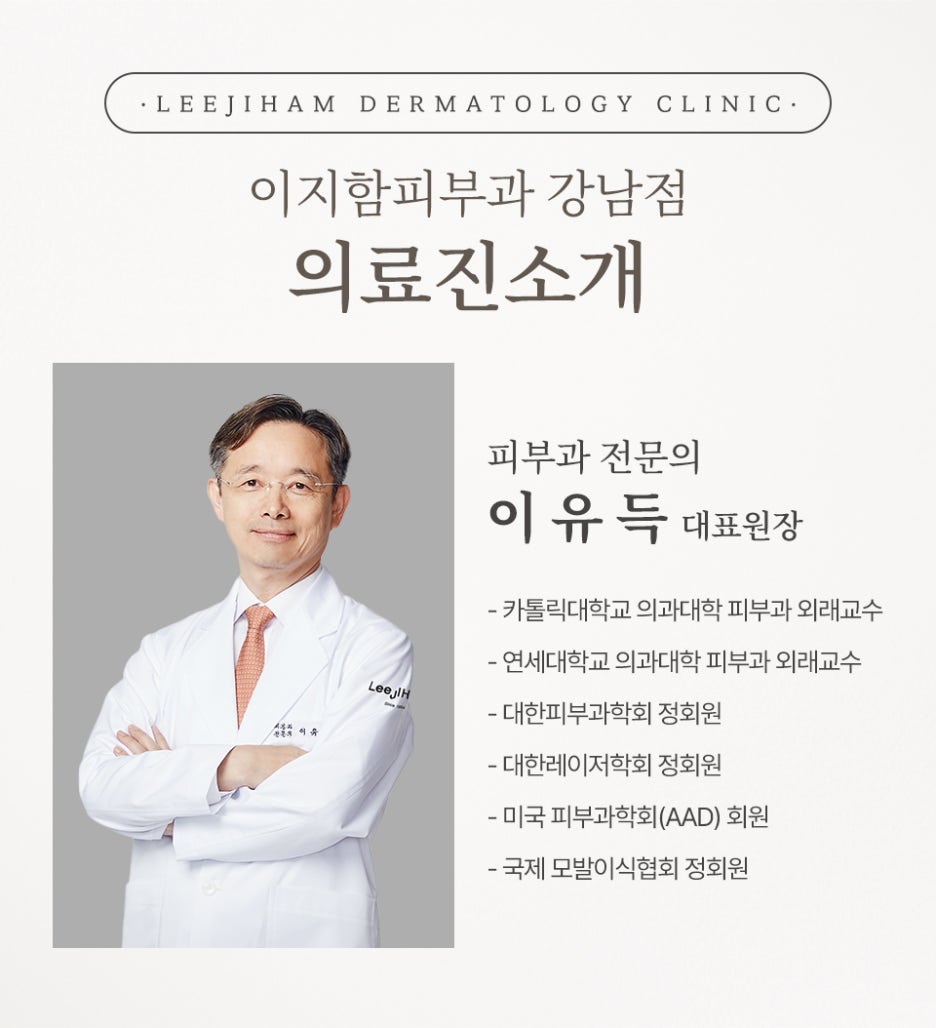
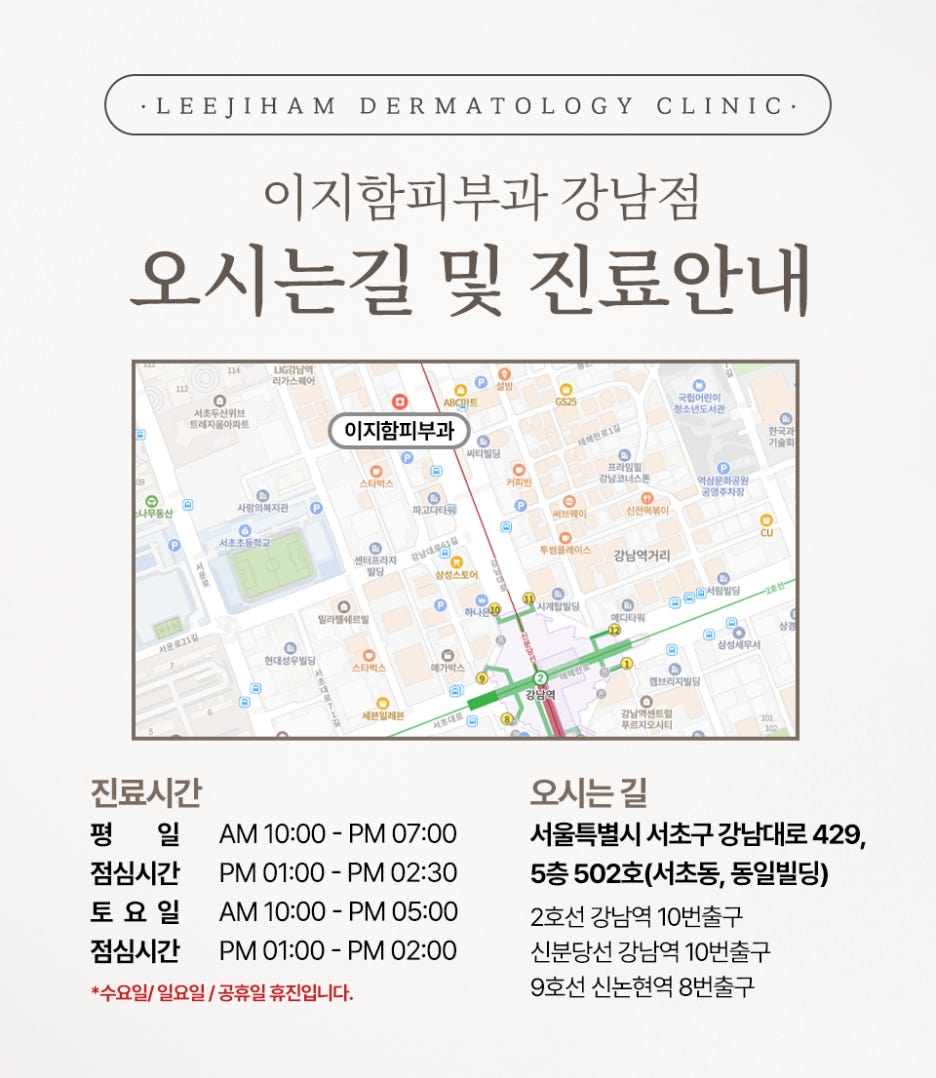
Hello, this is the Gangnam branch of Lee Jiham Dermatology.
Every morning when I open the clinic room door, I meet people who are struggling because of acne. Many of them have already been to several hospitals, but still seem exhausted because they have not found a solution. Acne is not only a symptom on the surface of the skin. Behind it are many complex factors, including an imbalance in sebum secretion, worsening inflammation, and sometimes even psychological stress.
A few days ago, a 28-year-old patient came in for treatment. I still remember how cautiously they were covering their face when I first saw them. The moment they lowered their mask, I could see inflamed lesions that were red and swollen along both cheeks and the jawline, and traces of long-standing acne remained across the skin. The patient began speaking with an anxious expression.
"Doctor, the acne that started when I was in high school has become completely unbearable. I’ve been to several hospitals and taken the prescribed medicine, but it only seems to improve for a while before getting worse again. I’m afraid that if I touch it with my hands, it will leave marks, but if I leave it alone, it seems to get worse... I’m afraid to look in the mirror every morning, and I avoid meeting people. Even when I try to hide it with makeup, it seems to cause more problems."
At that moment, seeing the patient’s trembling voice and reddened eyes, I was reminded once again that acne is not just a dermatological problem. It is an issue connected to an individual’s self-esteem, daily life, and overall happiness in life. The patient continued, saying, "People around me keep saying, ‘It’ll be fine with time,’ but I’ve been dealing with this for years already. Whether I’m going to an interview or meeting someone, I always feel self-conscious and lose confidence because of my face. Now I really want a definite solution."
Acne, why does it keep recurring?
As I continued the consultation, I explained it step by step to the patient. Acne develops in the sebaceous glands inside the pores. Our face has countless sebaceous glands, and they produce sebum, the oil that protects the skin. In a normal state, this sebum is released appropriately and helps keep the skin smooth and strong.
However, problems arise when the sebaceous glands become overly active. It is like a factory that cannot control its production and keeps overproducing. The glands release far more oil than needed. This excess sebum blocks the pores, and within the blocked space, sebum and dead skin cells accumulate and bacteria begin to multiply.
"Doctor, then why are my sebaceous glands so overactive?" the patient asked. There are various causes of overactivity in the sebaceous glands. Hormonal changes, psychological stress, lack of sleep, and eating habits all have an influence. In particular, during the teenage years and the twenties, androgen hormones increase sebum production. When this increased sebum blocks the pores, bacteria grow inside and an inflammatory response occurs.
The problem is that this inflammatory process repeats itself. Just because the visible lesions have calmed down does not mean the problem has been completely solved. If the sebaceous glands themselves remain active, excess sebum can be secreted again at any time, the pores can become blocked, and the cycle of inflammation can continue. It is similar to cutting off the visible part of a tree while leaving the roots behind. "So that’s why it kept coming back no matter how much treatment I received..." The patient nodded as if they understood.
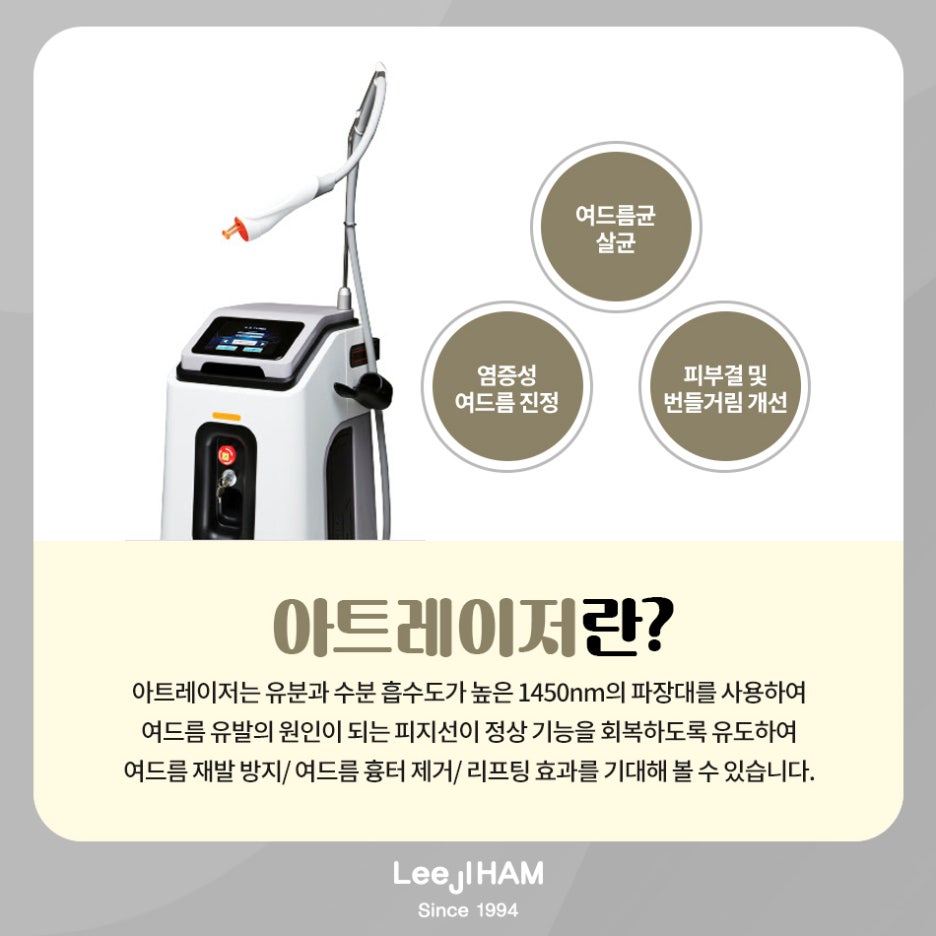
Art Laser, a fundamental treatment that acts directly on the sebaceous glands
After carefully examining the patient’s skin, I suggested the Art Laser treatment. Art Laser differs from conventional acne treatments in its approach. Rather than simply removing visible lesions on the surface, it directly targets and regulates the "overly activated sebaceous glands," which are the core cause of acne.
"The word laser may feel intimidating at first, but please rest assured. Art Laser was developed to use specially designed wavelengths of laser light so that energy is delivered selectively only to the sebaceous glands. It works precisely on the necessary area, like a highly accurate targeting system."

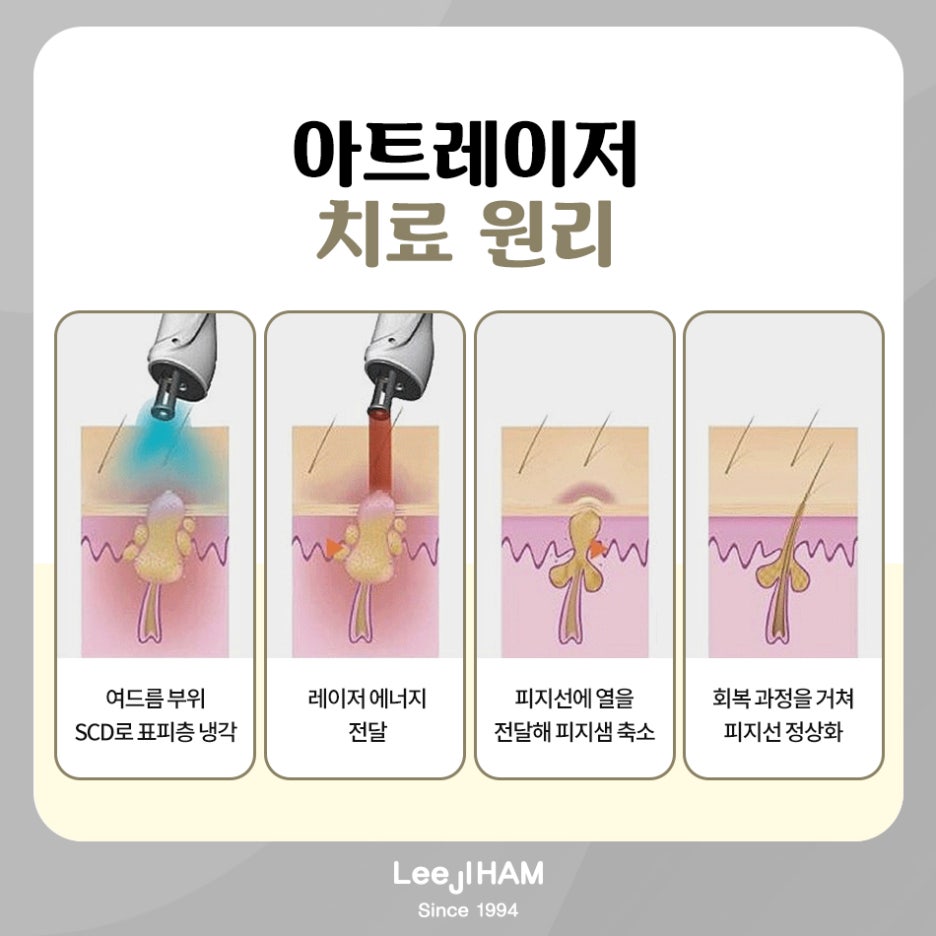
How does Art Laser work?
When the laser beam passes through the skin and reaches the sebaceous glands in the dermis, heat is generated there. This heat calms the overactive sebaceous glands. Once the sebaceous glands stabilize, sebum production decreases, and the likelihood of pores becoming blocked naturally drops.
Another benefit is that Art Laser helps not only the sebaceous glands but also the pores themselves. The thermal stimulation from the laser activates collagen synthesis in the dermis, which can gradually reduce enlarged pores. Just like making a stretched rubber band elastic again, the skin’s own elasticity improves and the pores become smaller.
The patient asked worriedly, "Doctor, will it hurt a lot during the procedure? And I’m afraid that laser treatment might damage my skin..."
Looking at the patient’s anxious expression, I calmly explained, "The level of pain varies from person to person, but in general it feels like a mild sting. You can think of it like being lightly flicked with a rubber band. If you are concerned about pain, we can apply a numbing cream. And because Art Laser works selectively on the sebaceous glands rather than destroying the skin surface, if it is performed correctly, you do not need to worry about skin damage or wounds."

An 8-week journey, the changes we shared
After enough discussion with the patient, we decided to begin an 8-week acne care program. This program is centered on Art Laser and aims to relieve acne step by step while preventing recurrence.
On the day of the first Art Laser session, the patient lay on the treatment bed with a tense expression. "Doctor, I’m really nervous. Will this time really make a difference?" In response, I gently held the patient’s hand and said, "Let’s take it step by step together. Skin, like us, has the ability to recover on its own when given time. I’ll be with you through that process."
The procedure began. Each time the laser touched the skin, there was a slight sting, but the patient looked more comfortable than expected. As I worked carefully on each area, I continued to explain, "The laser is now acting on the sebaceous glands beneath your skin. You may not be able to see it yet, but the sebaceous glands are gradually calming down."
After the procedure, I gave the patient instructions. "For the first two weeks, there may not be any noticeable change. Some people may even feel as if the lesions are temporarily becoming more raised. But this is part of the process of things that were hidden deep in the skin coming to the surface. Don’t rush, and continue receiving care consistently with me."
Your skin can become healthy too
By sharing this patient’s experience, I want to speak to everyone who is currently struggling with acne. Acne is a skin condition that can improve sufficiently. What is needed is an accurate diagnosis and a fundamental approach.
Every person’s skin is different. Even if it looks like the same acne, the cause, current condition, and necessary care can all be different. It is difficult to find the answer that fits your skin based only on internet search results or someone else’s experience.
If you are struggling with acne, please do not worry alone. It can improve enough with accurate diagnosis and care. Your skin can recover, and your confidence can recover too. In order to become a place that comes to mind first when skin problems arise, we will continue to provide honest and safe treatment without change.











 Previous image
Next image
Previous image
Next image








 Previous image
Next image
Previous image
Next image