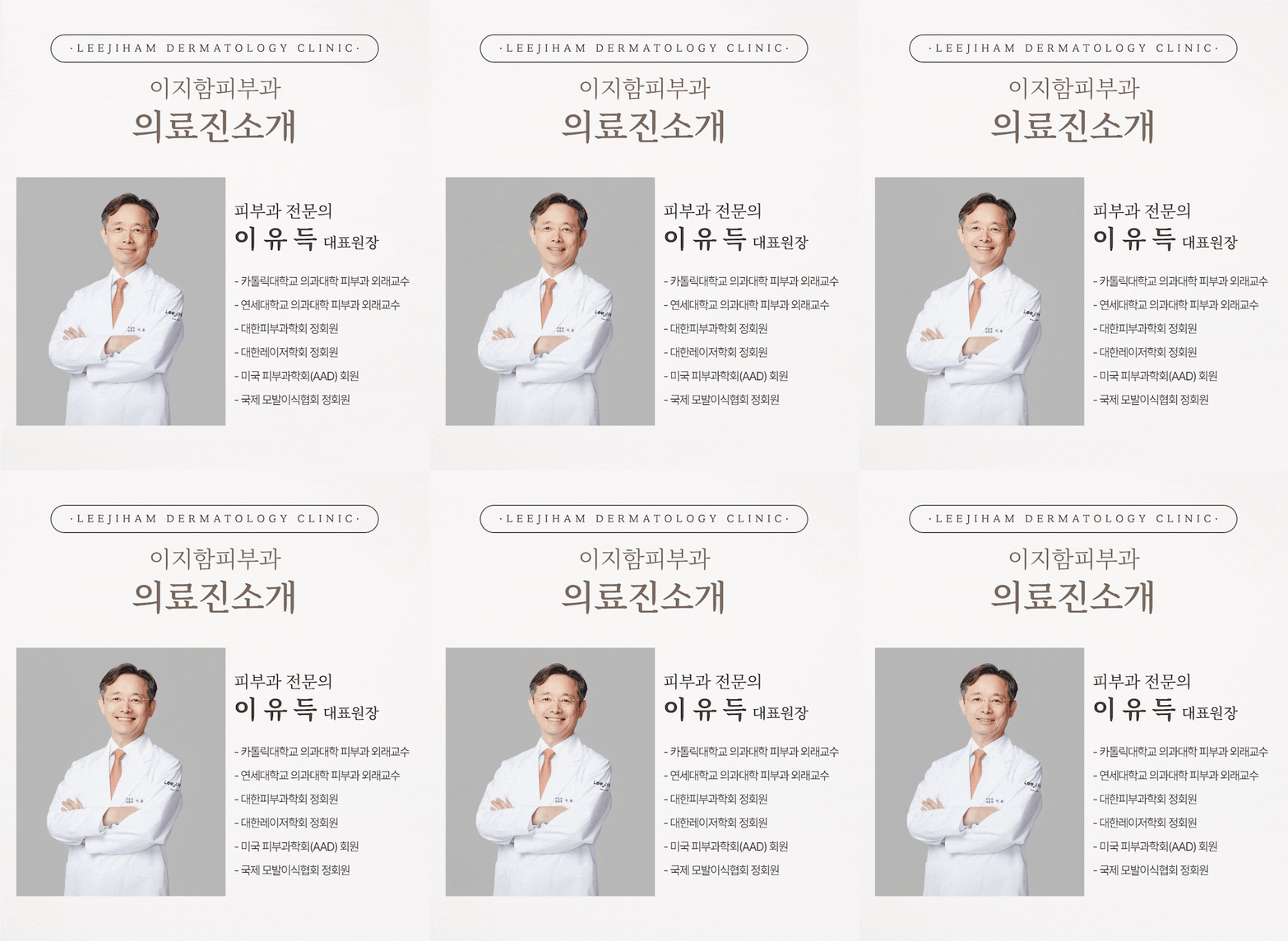
[Dermatology Specialist Lee Yudeuk]
Concerns That Begin in Front of the Mirror
This is Ijiham Dermatology Clinic.
If you are considering lifting for the first time, the wide variety of options can make it hard to know what to choose. Some of you may have spent a long time looking in the mirror because your cheeks seemed to be sagging little by little, or because the nasolabial folds seemed to be getting deeper. Feeling unfamiliar with that sensation and having mixed emotions about it is completely natural.
From the perspective of a Gangnam dermatology specialist, I often see these concerns in the clinic. Today, I will walk you through the types of lifting methods and the key points you should know when making a choice.
After reading this post, even those considering lifting for the first time will be able to establish much clearer criteria.
Causes of Skin Sagging
and the Aging Process
As we get older, collagen and
elastin in the skin naturally decrease,
causing the skin to sag in the direction
of gravity.
This is not a problem that appears only in
certain skin types,
but part of the aging process
that occurs in everyone.
Lifting works by applying thermal energy
to the support structure within the skin,
which helps bring about positive
changes in collagen.
It is similar to restoring the resilience of an
old spring that has lost its elasticity through
appropriate stimulation.
From the perspective of a Gangnam dermatology
specialist, lifting is viewed not simply as a way
to change appearance,
but as one form of preventive care to help
maintain skin health over time.
Consistent care from the early stages of sagging
can lead to much more natural results later on.
The Difference Between Ultrasound and Radiofrequency
Lifting is broadly divided into
ultrasound-based methods and
radiofrequency-based methods.
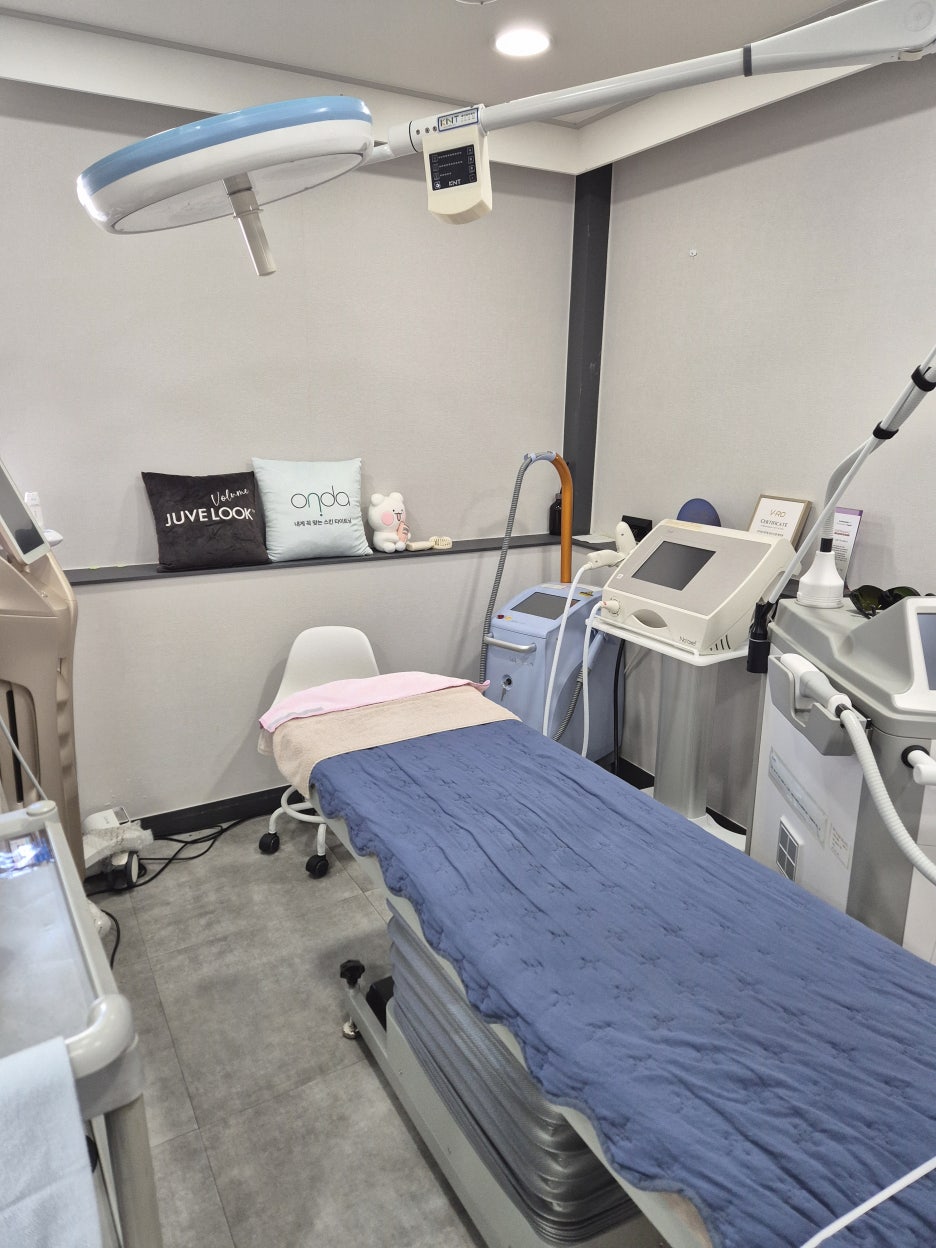
At Ijiham Dermatology Clinic, ultrasound lifting
devices such as Doublo Gold, Vro, and
Shurink are used, while Thermage is
used as the radiofrequency method.
Ultrasound lifting (HIFU) concentrates
energy delivery down to the SMAS layer,
the deeper layer of the skin,
and may be helpful when sagging has
progressed noticeably.
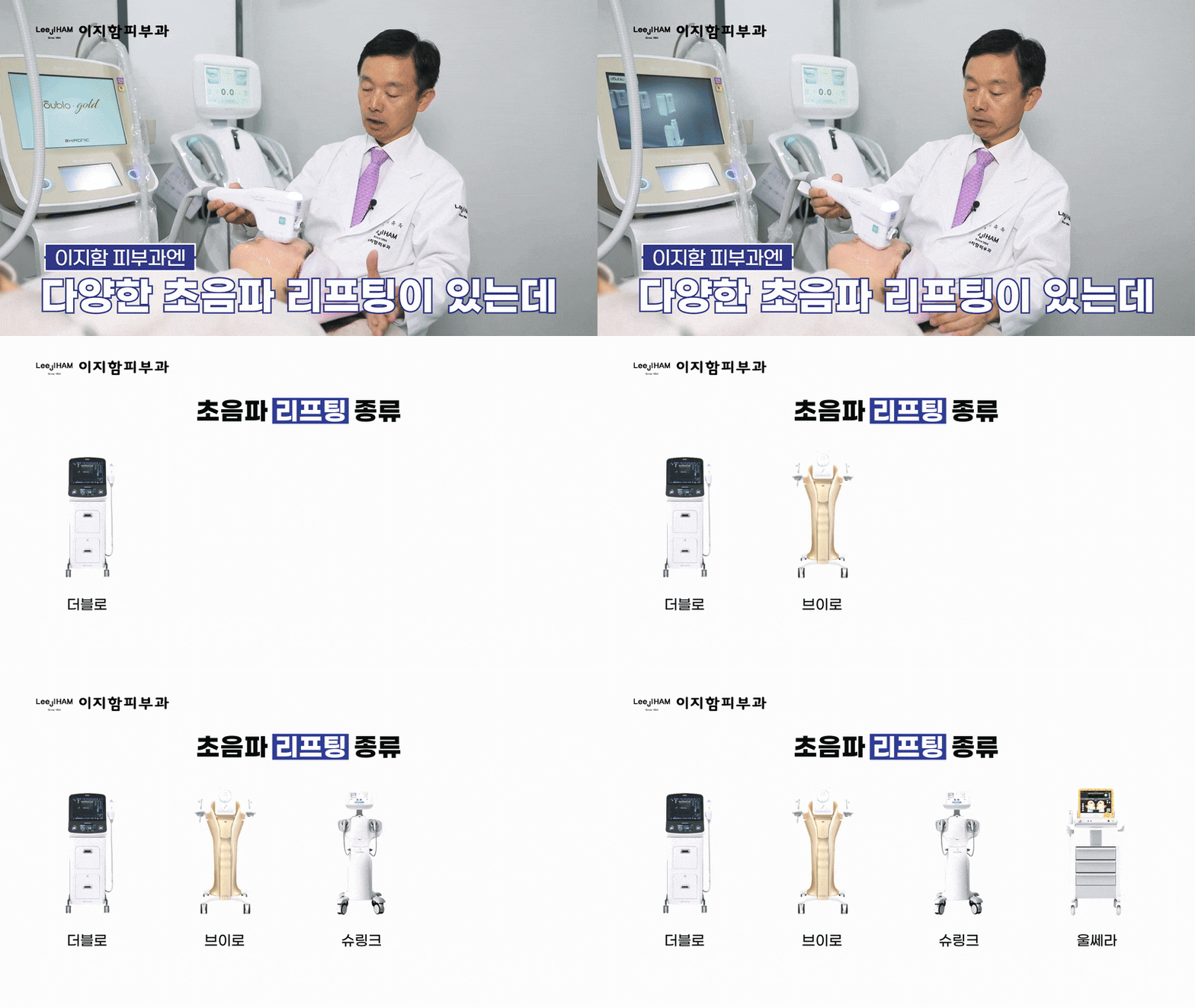
Doublo Gold is HIFU-based and
concentrates heat in the deeper layers
of the skin,
while Vro and Shurink are selected according to
their respective energy delivery methods,
the skin thickness, and the degree of sagging.
Thermage delivers radiofrequency energy
evenly across the skin,
which may help with positive changes in
collagen and the skin texture as well.
If ultrasound focuses on specific points,
Thermage is a method that treats a broader
area evenly, and using both methods together
can create synergy.

Selection Criteria for Lifting Based on Skin Condition
Rather than asking which device is better,
the starting point is to first determine
what this skin needs right now.
This is also the point I always emphasize
as a Gangnam dermatology specialist.
The appropriate approach differs between
cases where sagging has progressed a lot
and early-stage loss of elasticity.
It is important to examine the skin thickness,
the degree of sagging, and the overall skin
condition together before choosing a method
that suits the individual.
We can also explain during consultation whether
lifting alone is sufficient, or whether it would
be better to combine it with a skin booster
to address hydration and skin texture as well.
Our treatment direction is to work together
with each visitor to find the approach that
fits their skin condition.

Points to Check Before Treatment
When considering a lifting method, the first
thing you should check is whether it is the
right approach for your current skin condition.
Because the approach differs between cases
where sagging has progressed significantly
and early-stage cases, an accurate assessment
is necessary.
If you are pregnant, if there are any metal
foreign bodies near the treatment area, or if
you have a heart-related condition, restrictions
may apply, so you must inform the medical
staff in advance.
On the day of treatment, avoid heavy makeup,
and if there is inflammation or a skin issue,
it is advisable to proceed only after the
condition has stabilized.
“Stronger” and “more” should not be the
criteria.
It is much wiser to plan according to how
much your skin needs right now and in a way
that can be maintained consistently.

Lifestyle Care to Maintain Firmness After Lifting
The effects of lifting do not appear immediately
after treatment; rather, they gradually become
visible over 4 to 12 weeks as collagen undergoes
progressive changes.
Post-care is important for guiding this recovery
process well.
For about one week, it is best to avoid
environments that rapidly raise body temperature,
such as saunas, jjimjilbangs, and high-intensity
exercise.
Sun protection is basic care for both skin
recovery and the prevention of pigmentation,
and we recommend applying sunscreen with
SPF 50+ carefully when going outside.
Adequate hydration and moisturizing also help
recovery, and regular sleep and a balanced diet
have a real impact on maintaining skin condition.
As a Gangnam dermatology specialist, I would
say that, in general, considering retreatment
every 6 months to 1 year can be helpful, and
that combining lifting with a skin booster can
help address both firmness and hydration.

Lasting Change Begins with Consistency
As a Gangnam dermatology specialist, after
looking at many people’s skin over a long time,
one thing I have felt is that the changes that
last the longest are not rushed.
Lifting is not a method that changes everything
after just one treatment;
it truly shines over time only when consistent
care and lifestyle habits come together.
Based on the philosophy of a comfortable face
rather than excessive change, Ijiham Dermatology
Clinic aims to find a solution that suits each
person’s skin through honest treatment and
proven methods.
Previous image
Next image