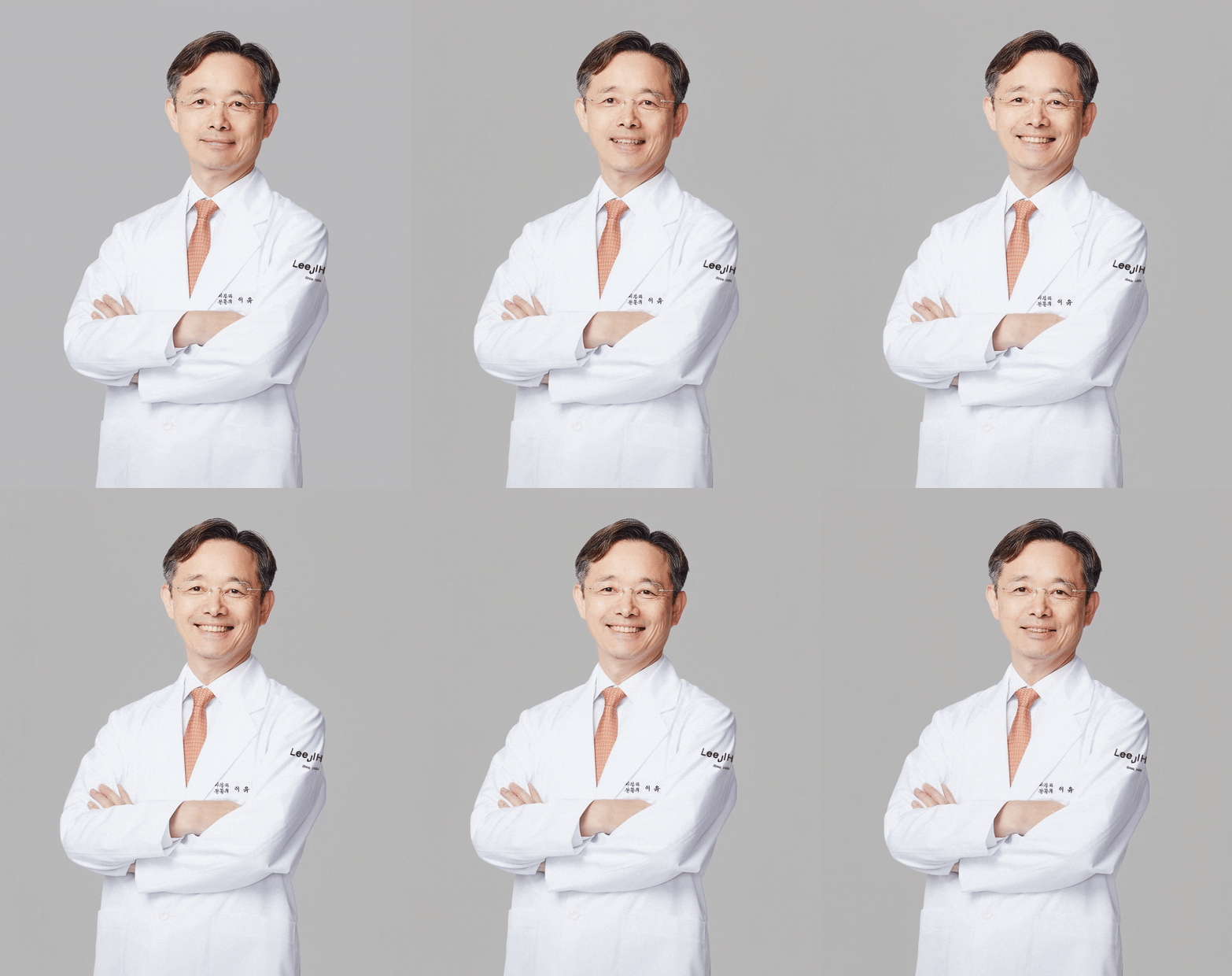
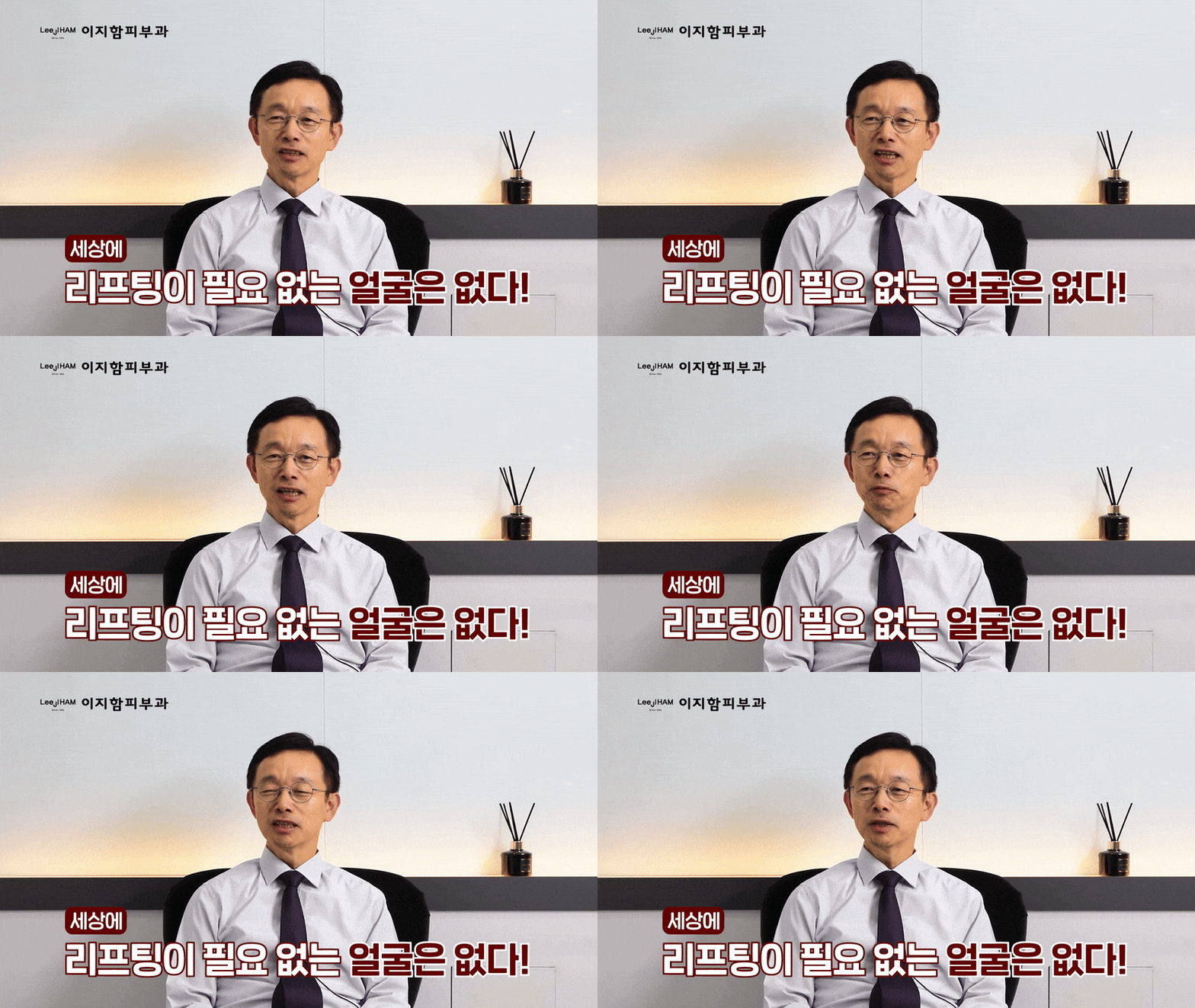
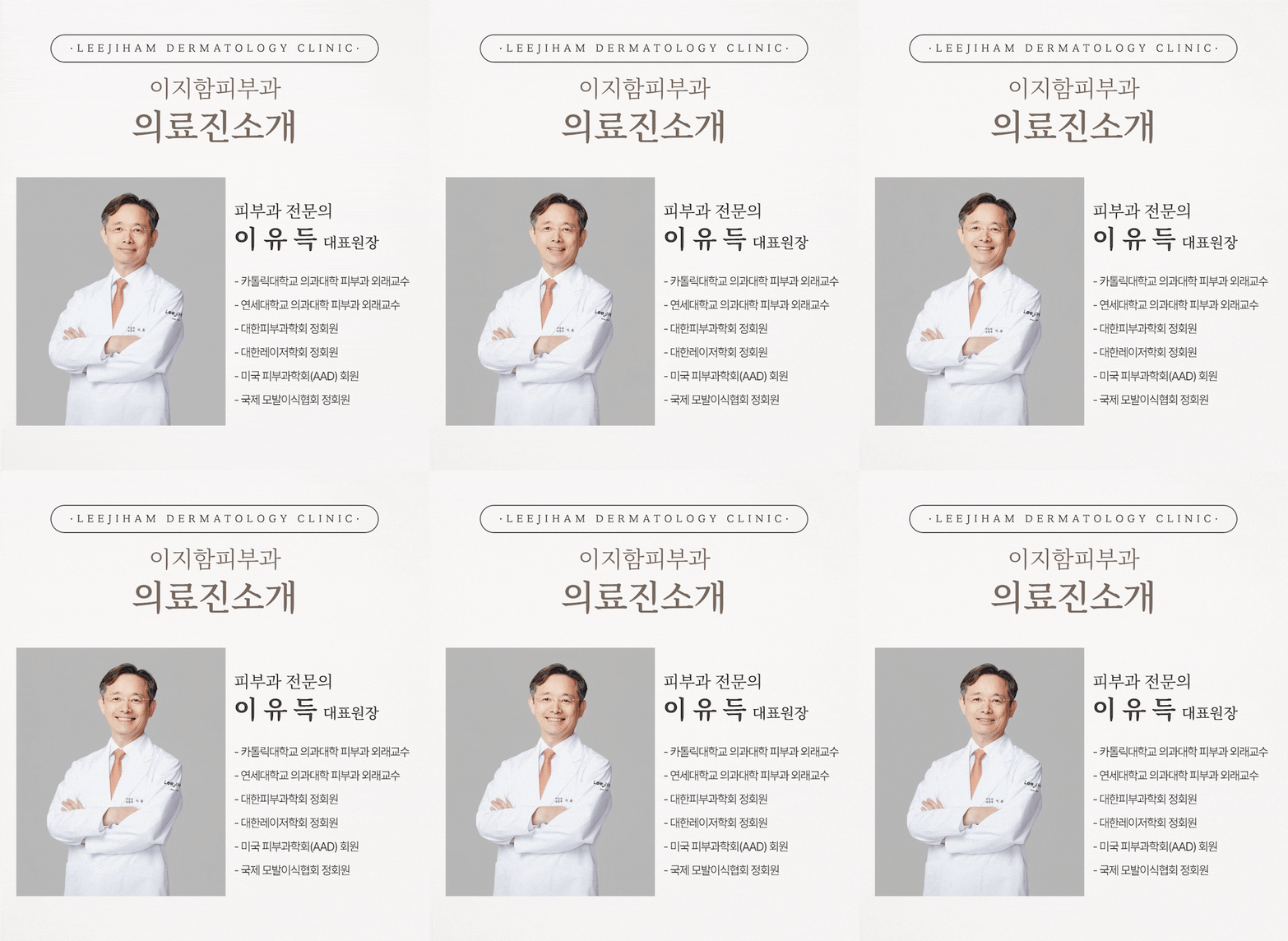
[Lee Euddeuk, Dermatology Specialist]
For those who want a more comfortable-looking face,
this is a message from Ijiham Dermatology.
In the clinic, I meet patients with various skin concerns every day. I often hear people say, "My face seems to have sagged more than before" or "When I look in the mirror, it feels unfamiliar." If you are reading this, you may be feeling something similar.
For those who find it difficult to maintain skin elasticity in middle age, today I would like to calmly explain why skin elasticity declines and how Thermage lifting may help.
I hope this article helps you organize your concerns, from the causes of skin changes to the direction of care.
Although it is said to change naturally,
why skin sags as we age
When you first understand the causes of
reduced skin elasticity, it becomes
clear what kind of care is needed.
Inside our skin are proteins called collagen and
elastin, which are responsible for
supporting and maintaining skin elasticity.
Collagen acts as the skin’s "framework,"
and elastin is the component that keeps
the skin elastic like a "rubber band."
However, after the mid-20s,
the synthesis of these two components
begins to gradually decrease.
As people enter their 40s, the pace
becomes more noticeable,
and in women, after menopause,
decreasing estrogen tends to accelerate
collagen loss even further.
When this is combined with cumulative UV exposure,
lack of sleep,
and chronic fatigue,
the dermis becomes thinner,
and changes such as cheek sagging,
nasolabial folds, and a less-defined jawline
appear in combination.
This is not simply a change caused by
a lack of moisture; it is because the skin’s
structure itself changes, which is why
maintaining skin elasticity in middle age
cannot be done with moisturizer alone.

How radiofrequency energy acts on the skin
Thermage lifting is a lifting method that
delivers radiofrequency (RF)
energy deep into the dermis to provide
heat stimulation.
A key feature of this method is that it
induces collagen synthesis from within
the skin without surgery.
The hot energy simultaneously contracts
the existing collagen in the dermis and
promotes the production of new collagen.
It is similar to how fibers contract and
become firmer when an old sweater is
washed in hot water.
At Ijiham Dermatology, Thermage is used,
and this device can help with skin tightening
by evenly delivering energy to the dermis
and the SMAS layer beneath it.
Effects may gradually appear between
4 and 12 weeks after treatment,
and many people notice clear changes
after 2 to 3 months as collagen is synthesized.
It is best to understand that this is not
an immediate result, but a process of
gradual recovery within the skin.
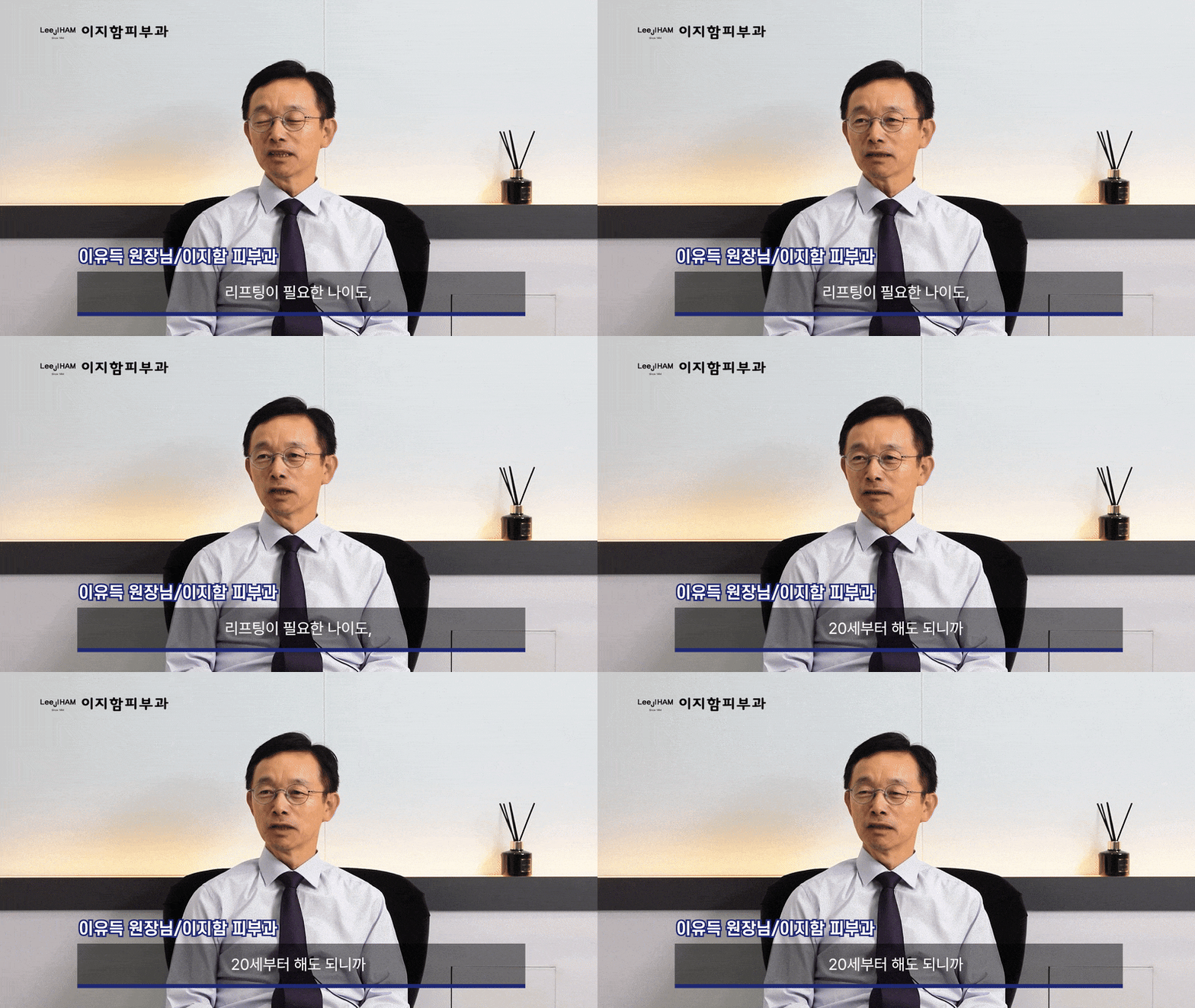
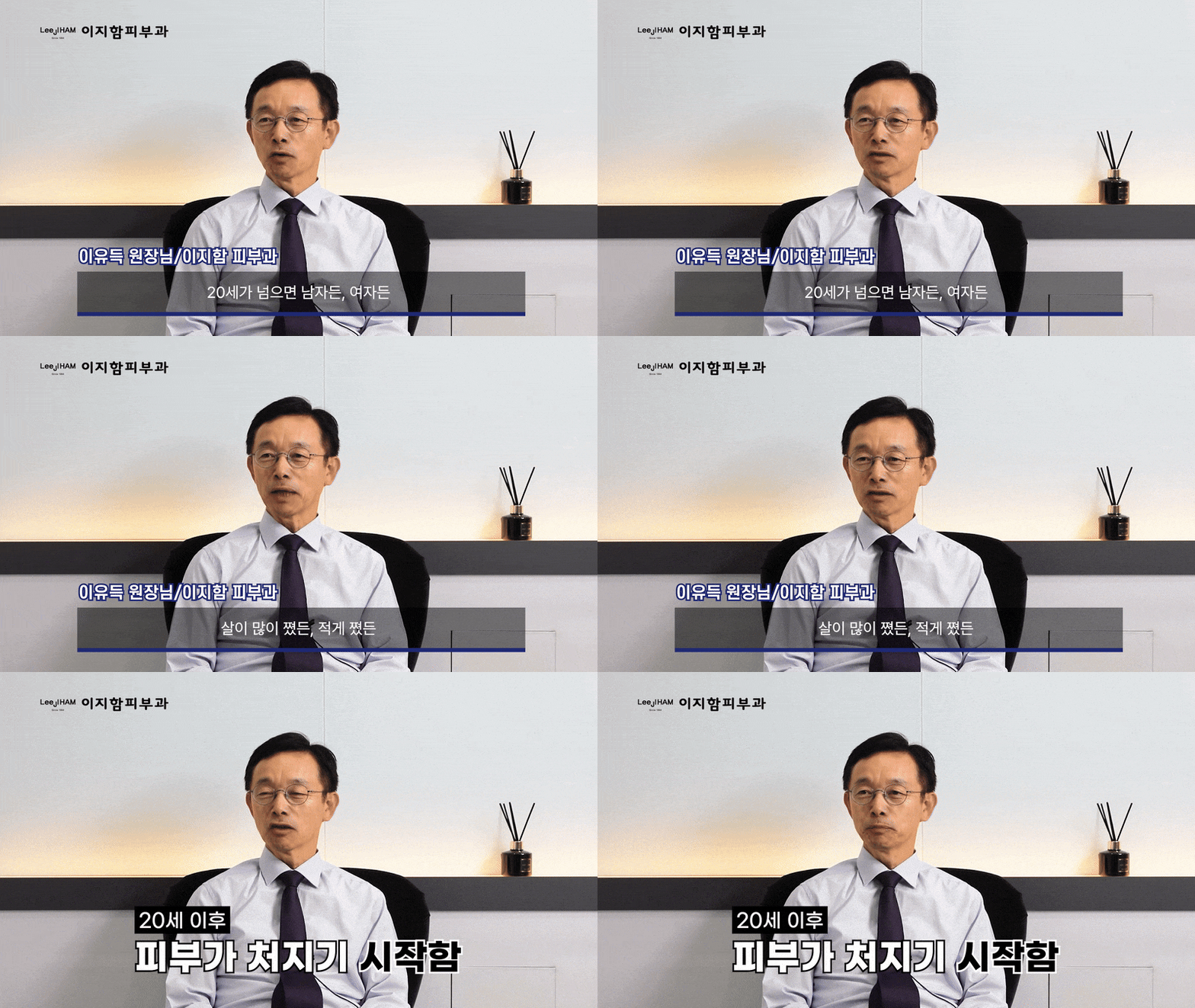
Features of Thermage and the treatment process
Unlike ultrasound lifting, Thermage lifting
uses radiofrequency energy, so heat is
applied directly within the dermis without
damaging the skin surface.
Another reason many people choose it is that
it causes almost no disruption to daily life
after the procedure.
There may be slight warmth or redness
immediately afterward, but in most cases
it settles within a few days, and washing
your face and going out are often possible
from the same day.
It can be applied not only to tighten the
entire face but also to the neck area,
so it can be used for neck wrinkles
and neck sagging as well.
After applying a numbing cream, the
procedure usually takes about 30 minutes
to 1 hour, and during the treatment you may
feel warmth or a slight stinging sensation.
Some people notice changes after just one
treatment, but depending on the skin condition
and degree of sagging, repeated treatments
or combining it with ultrasound lifting may
also be recommended.
The direction for maintaining skin elasticity
in middle age is determined based on
a diagnosis tailored to each patient's skin condition.

Daily care to do together after lifting
Daily care after the procedure also affects
the results.
For about one week after the procedure,
it is best to avoid high-temperature
environments such as saunas or jjimjilbangs.
We recommend applying sunscreen carefully
with an SPF50+ product.
Because ultraviolet rays are one of the main
factors that interfere with collagen synthesis,
sun protection is important for protecting
collagen that is in the process of forming.
Adequate hydration and moisturizing care
also help create a skin environment where
collagen can be maintained.
In daily life, regular sleep habits,
not smoking, and a balanced diet can have
a positive effect on maintaining skin elasticity
in middle age.
Although results vary from person to person,
they generally may last about 6 months to 1 year,
so setting up a regular care plan according to
that cycle can help you maintain steady changes.
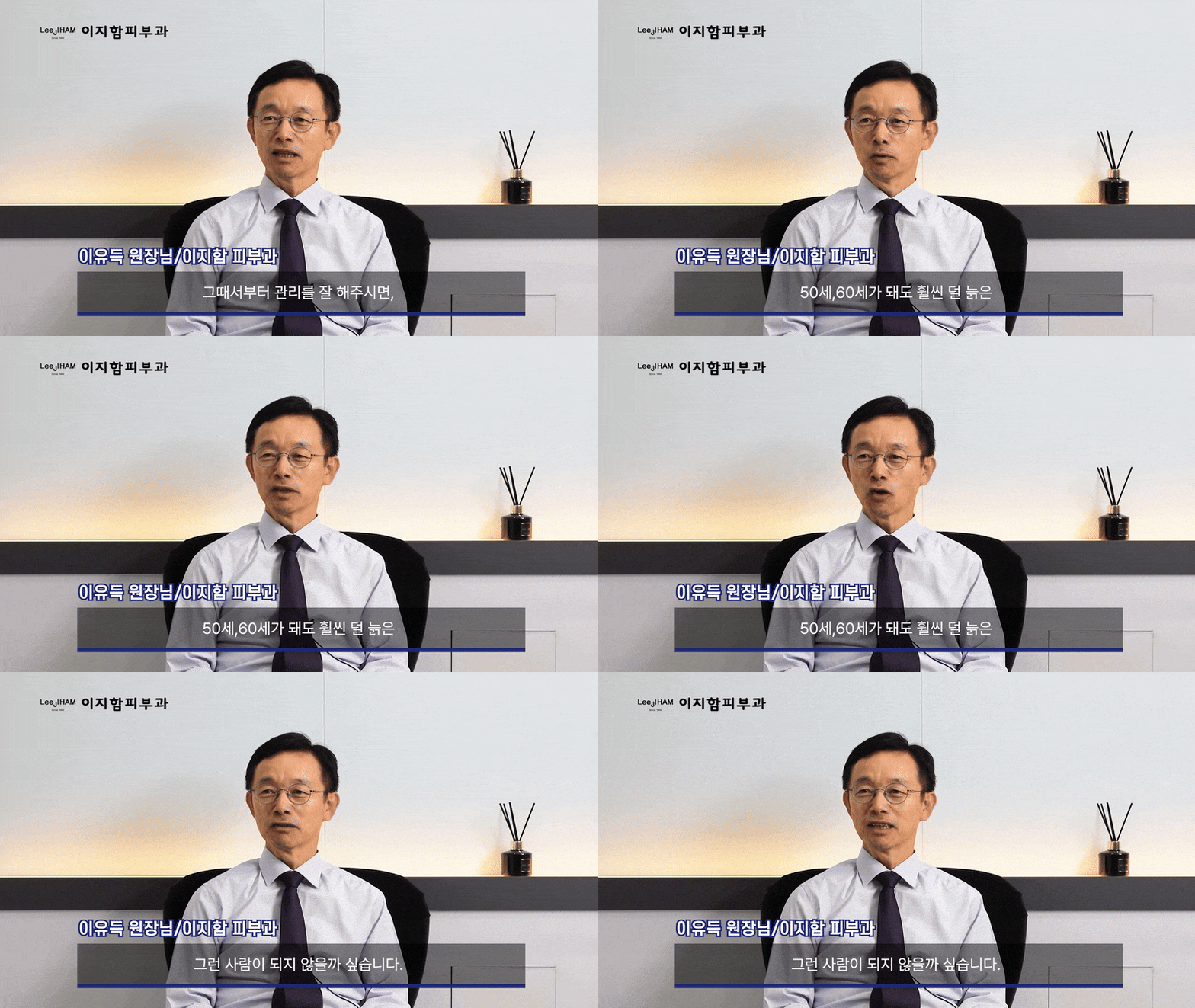
Direction for continuing positive changes
Changes in the skin do not appear suddenly
at some point.
They are a natural process that occurs as
collagen in the skin gradually decreases,
and this process can be delayed and managed
with the right methods.
What matters is starting by accurately
understanding the current skin condition.
Even among people of the same age group,
the appropriate care direction differs depending
on skin thickness, the degree of sagging,
and lifestyle habits.
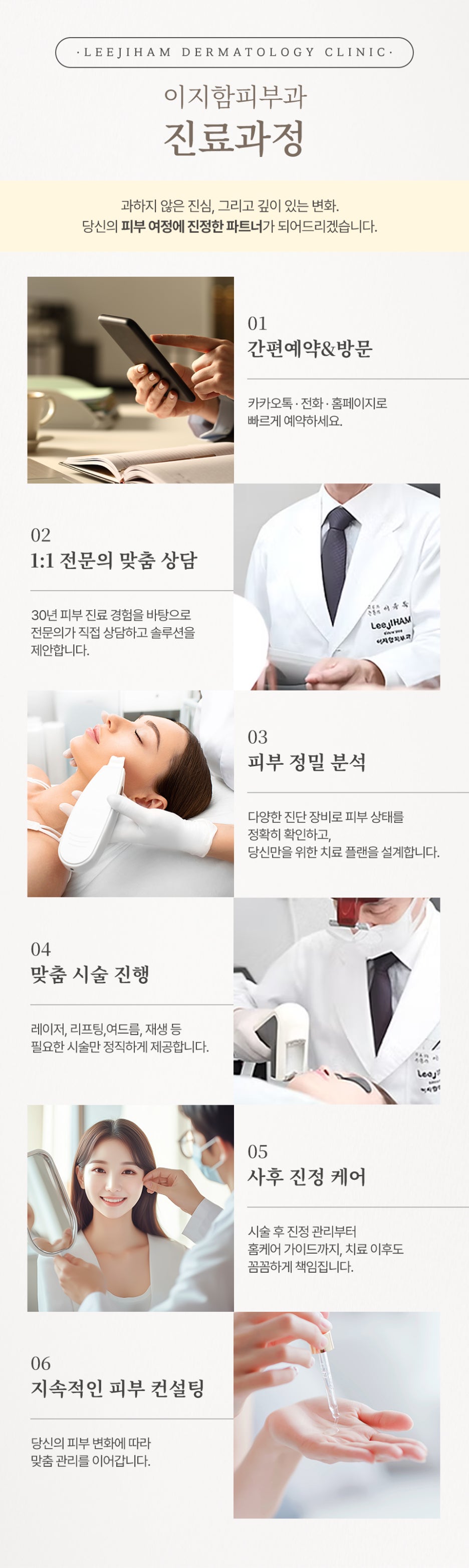
The process of examining the skin condition
through consultation and finding the right
method for it is the most important part.
Rather than flashy words, our principle of care
at Ijiham Dermatology is to provide trust
through actual positive changes in the skin.
Finding a face that feels comfortable to you,
rather than excessive change,
comes first.

Lastly, a few words from Lee Euddeuk
Maintaining skin elasticity in middle age
is not something that changes everything
with just one method;
it becomes possible only when steady attention
and honest diagnosis accumulate over time.
Ijiham Dermatology provides diagnosis and
direction tailored to each patient's skin condition.
If you are worried about skin changes,
I hope this article today can serve as
a small guide.
At this moment,
I want to tell those who are thinking alone
in front of the mirror that it is never too late
to start now.
Previous image
Next image










Previous image
Next image









Previous image
Next image