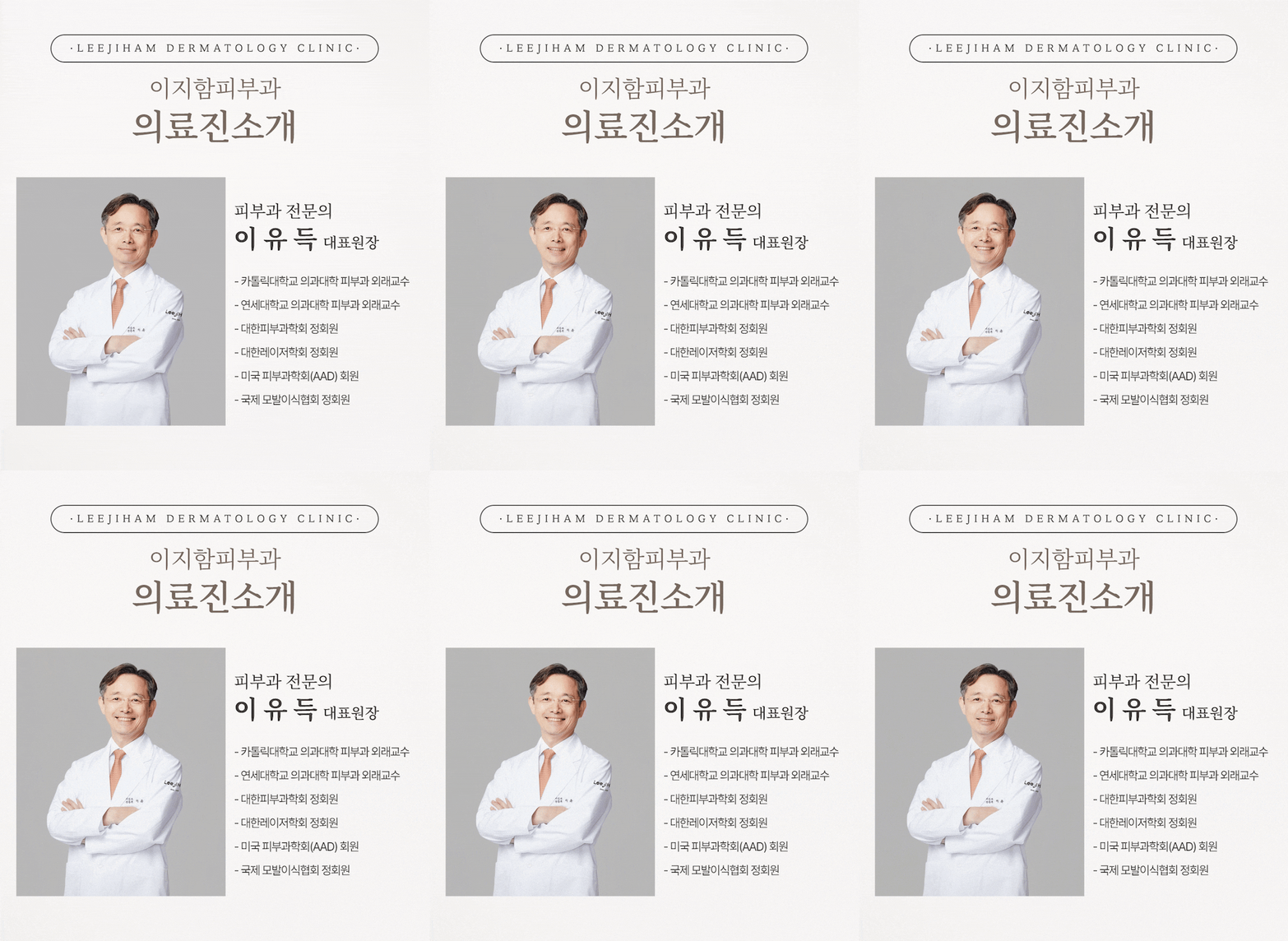
[Dermatology Specialist Ryu Eui-deuk]
From deep within the skin to the surface,
A layered approach to lifting.
At Easyham Dermatology,
we will explain it in detail.
Among those who visit Gangnam Eonju Station Dermatology, many say that as skin elasticity gradually decreases, it feels as though the entire face can no longer support its own weight. The feeling of the cheeks descending, the jawline becoming less defined, and the texture of the skin seeming different from before is often not just a problem of the surface.
Skin sagging and loss of elasticity progress in a complex way, starting from the epidermis and extending to the dermis and even the deeper fascial layer, the SMAS layer. Because aging occurs across multiple layers like this, using only one type of energy creates limitations, as it tends to focus on just one layer.
This is precisely why a combined lifting approach that applies different energies by layer is meaningful. Today, let’s talk about how the Ulthermage method works and how each device acts on different layers of the skin.
It does not happen in just one layer
Skin aging
The skin consists of multiple layers,
including the epidermis, dermis, and the fascial layer
called the SMAS layer.
As aging progresses, each layer
undergoes gradual changes.
As collagen decreases and the fascia
loosens, the skin becomes affected by gravity
and slowly begins to sag downward.
Rather than simply an increase in
surface wrinkles,
the sensation of the entire skin
settling downward is linked to these
deep-layer changes.
Sagging and loss of elasticity appear
in a complex way from the epidermis
to the SMAS layer,
so energy that targets only one layer
has difficulty fully addressing
those changes.
To approach the skin step by step,
from the inside to the surface,
it is helpful to use energies suited
to each layer together.
This is why a method that combines
two different devices, like Ulthermage,
is chosen.
Ulthermage, a combined lifting method using two energies
Ulthermage is a combined lifting
method that applies Ultherapy Prime,
a ultrasound lifting device,
together with Thermage,
a radiofrequency device.
These two work on different
skin layers and use different
types of energy, so when used together,
they can be expected to address a broader range of skin changes.
The skin is made up of multiple layers,
including the epidermis, dermis, and SMAS layer,
and using only one type of energy
creates the limitation of focusing on just one layer.
Using both together allows a step-by-step
approach from the inside of the skin
to the outer surface.
At Gangnam Eonju Station Dermatology,
the direction of device application is adjusted
depending on the visitor’s skin condition,
the degree of sagging, and the areas of concern.
Ultherapy Prime – changes that begin in the deeper layers of the skin
Ultherapy Prime is based on
High-Intensity Focused Ultrasound,
or HIFU technology.
It precisely concentrates ultrasound energy
on a specific point inside the skin,
creating thermal coagulation points
and inducing collagen formation
and tissue contraction through that stimulation.
Like focusing sunlight to a single point
with a magnifying glass, it is characterized
by stimulating only the deeper internal layers
without affecting the skin surface.
In particular, because the energy reaches
the SMAS layer, it can stimulate the very structure
that supports the facial contour,
beyond simply refining skin texture.
Through cartridges of various depths,
the approach can be adjusted according to
skin thickness and the degree of sagging,
allowing a more precise application
based on the visitor’s skin condition.
The approach is centered on cartridges suited
to the depth of areas where sagging is felt,
such as the cheeks and jawline.
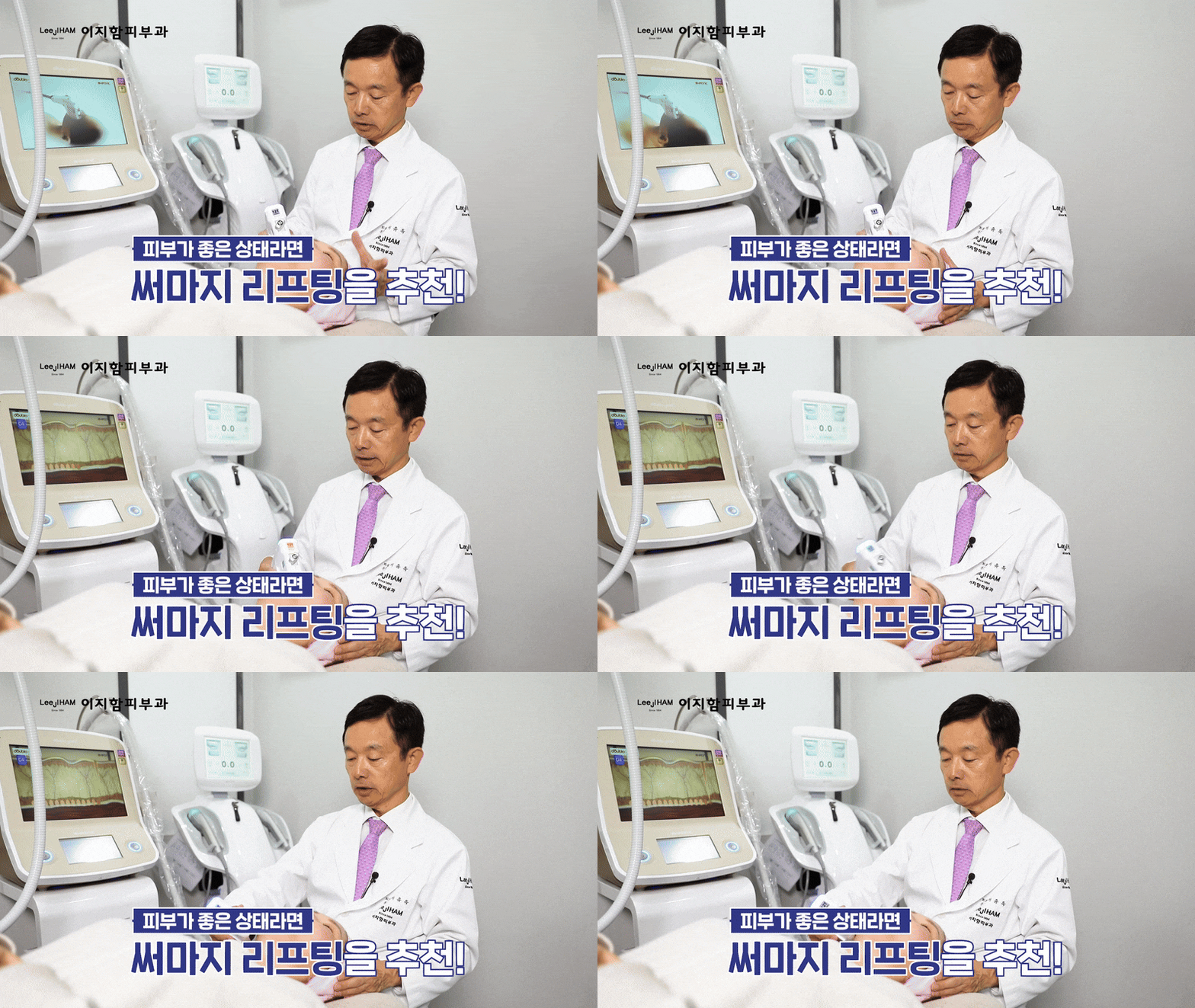
Thermage – gently caring for the dermis as a whole
Thermage is a device that uses
radiofrequency energy.
When radiofrequency is delivered to
skin tissue, water molecules within the tissue
vibrate and generate heat.
This heat contracts collagen in the dermis
and acts by promoting the formation of
new collagen.
If Ultherapy Prime focuses on structural
lifting in the deeper layers,
Thermage plays a role in helping the skin’s
elasticity and density change more evenly
across the dermis.
Because it refines skin texture in the layers
closer to the surface and adds an overall tightening effect,
applying it together with Ultherapy Prime
makes it possible to approach both
the inside and the surface of the skin.
At Gangnam Eonju Station Dermatology,
the energy intensity is carefully adjusted
and applied according to skin condition
and sensitivity.
Some people notice that the firmness
of the skin surface gradually feels different
after the procedure.

The meaning of using both energies together
The reason the Ulthermage method,
which applies both devices together,
is meaningful is that skin changes caused
by aging never occur in just one layer.
Sagging and loss of elasticity progress
in a complex way from the epidermis
to the SMAS layer.
Ultherapy Prime stimulates the fascia in the deeper layer,
creating a lifting-oriented change,
while Thermage acts on collagen throughout the dermis,
which can lead to positive changes
in the skin surface’s elasticity and texture as well.
Because the result of a lifting method
comes from the process of new collagen
forming inside the skin, many people
notice changes gradually over several weeks.
At Gangnam Eonju Station Dermatology,
we provide detailed guidance on the flow of changes
after the procedure and help you look at the natural
process of change inside the skin rather than
setting unrealistic expectations.
Daily care should go along with the procedure
After Ulthermage, the skin begins the process
of creating changes from within,
so managing your daily routine alongside it can be even more helpful.
For about one week after the procedure,
it is recommended to avoid environments
that apply direct heat to the skin,
such as saunas or jjimjilbangs.
A rapid rise in body temperature
from excessive exercise
is also the same.
Sun protection is a basic habit for slowing
skin aging regardless of lifting procedures,
so it is important to consistently use
sunscreen with SPF 50 or higher.
Hydration and moisturizing care may also help
maintain a better skin environment during
the period when collagen formation is activated.
Above all, a lifting procedure is
a starting point of sorts,
and the lifestyle habits and skin care that follow
greatly affect how well those changes continue.
At Gangnam Eonju Station Dermatology,
we check your skin condition together before and after
the procedure and discuss a care direction
suited to your situation.
Previous image
Next image










Previous image
Next image









Previous image
Next image