When you start to feel
that your skin is sagging,
what should you look at first?
One of the most common concerns we see in the clinic is decreased skin elasticity.
Many people who visit in their late 30s to early 40s say, “My face looks heavier than before,” or “It feels like my skin is sinking down.”
In this article, I would like to explain the principles of Thermage, which uses radiofrequency energy, and share what criteria may be helpful when considering skin elasticity care at a Gangnam dermatology clinic.
The reason skin elasticity decreases is
not a surface-level issue
Decreased skin elasticity is not simply
changes on the skin’s surface;
it begins deep in the dermis.
The key proteins that maintain
skin elasticity, collagen and
elastin, begin to gradually decline
starting in the late 20s,
and the rate accelerates
after entering the 40s.
In women, around menopause,
declining estrogen levels
significantly reduce the body’s
ability to synthesize collagen,
and during this period, changes such as
a blurred facial contour or
sagging in the cheek area appear.
A reduction in the volume of the
subcutaneous fat layer and repeated
movements of facial muscles are also
known to accelerate these changes.
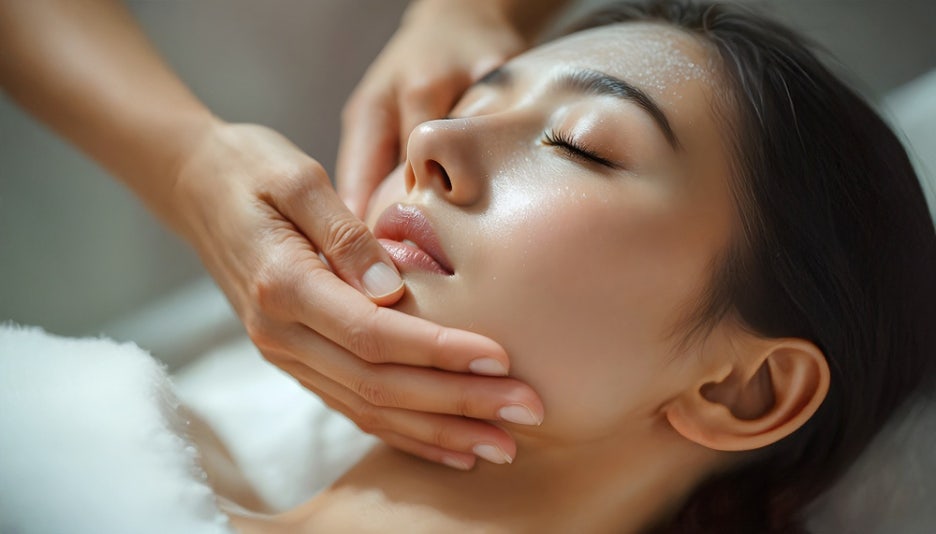
 How radiofrequency energy works deep within the skin
Thermage is a method that
delivers radiofrequency (RF)
energy to the skin’s dermis and
the fibromuscular fascia layer (SMAS layer)
to create thermal stimulation.
This thermal energy induces an
immediate tightening effect by
contracting existing collagen fibers,
and at the same time, it is
known to stimulate new collagen
synthesis over the long term.
It is similar to the process of
shrinking a loose sweater with heat,
but inside the skin, a much more
precise biological process of
collagen synthesis takes place as well.
When considering Thermage for
skin elasticity care at a Gangnam dermatology clinic,
it is characterized by the fact that,
because a single energy source is
delivered through the full layer,
changes appear gradually over
the months after treatment.
 How are ultrasound lifting and radiofrequency lifting different?
When exploring lifting methods,
you come across two major categories:
ultrasound-based methods and radiofrequency-based methods.
Ultrasound (HIFU) lifting, such as Doublo Gold or Shurink, is a method that precisely targets focused energy at a specific depth to form strong coagulation points.
By contrast, Thermage is closer to a method that evenly delivers radiofrequency energy over a wide area to warm the skin as a whole.
If sagging is pronounced and volume shift is significant, ultrasound lifting may be a more direct approach. If you want overall improvement in skin density and elasticity, Thermage may be more suitable.
Understanding the difference between these two methods is important when considering skin elasticity care at a Gangnam dermatology clinic.
 The approach should vary depending on skin type and condition
Before deciding the direction of skin elasticity care at a Gangnam dermatology clinic, we comprehensively examine the thickness of the skin layers, the degree of sagging, and the distribution of subcutaneous fat.
Every skin type is different.
Even within the same age group, skin thickness and the pattern of elasticity loss can differ, so rather than following a trending method, the priority is to accurately assess the condition of each individual skin type before proceeding.
In particular, the care direction changes depending on which area of the face shows the most noticeable sagging, whether the skin density itself has decreased, or whether volume loss is the main cause.
 Before and after Thermage, the process the skin goes through and precautions
On the day of treatment, a mild warmth and heat sensation are accompanied, and you may feel a certain degree of tightening effect immediately afterward.
The main collagen synthesis is known to occur over about 4 to 12 weeks, and the maximum effect often appears after 2 to 3 months.
For one week, avoid high-temperature environments
(saunas, jjimjilbang) and excessive exercise,
and be especially careful about sun protection.
The key to care is to prevent external stimulation from interfering with collagen synthesis in the dermis. Maintaining adequate hydration and moisturizing care together may help support the skin’s recovery environment.
While Thermage stimulates collagen production in the deeper layers of the skin, combining it with skin boosters such as Juvelook or Rejuran can provide complementary effects in terms of dermal hydration and skin activity.
Whether to combine the two methods, the order, and the interval may vary depending on the skin condition, so it is advisable to establish a plan after sufficient evaluation.
 For long-lasting natural elasticity rather than excessive change
The most important thing in skin elasticity care at a Gangnam dermatology clinic is the naturalness of the result.
Creating a comfortable face rather than an excessive change is our treatment philosophy.
Through gradual changes, Thermage aims for natural positive changes to the extent that people around you may think, “Your skin looks better these days.”
It is important to keep monitoring skin condition through consistent care, and rather than completing everything with a single method, it is a process of continuing together through ongoing evaluation and management.
Based on honest treatment and verified methods, we will continue to care for each visitor’s skin over the long term.
 Previous image
Next image
Previous image
Next image









 Previous image
Next image
Previous image
Next image








 Previous image
Next image
Previous image
Next image