Changes that make the face
feel heavy and
sag downward
begin beneath the skin.
"I’m not sure when it started, but I feel like my cheeks have begun to sag." This is a concern that is especially common around the age of 40.
A common feature among those who inquire about facial firmness care at Gangnam Station is that they notice “structural changes” rather than changes on the skin’s surface.
A loss of firmness is not simply an issue of skin texture.
It begins with changes occurring deep within the dermis. Today, I will calmly explain the background behind these changes and how Thermage radiofrequency lifting works.
The process in which the structures
that maintain firmness
break down
The skin consists of three layers: the epidermis, dermis, and subcutaneous fat layer.
The key to skin firmness lies in the dermis.
Collagen and elastin fibers densely distributed throughout this layer act as structures that support the skin from within.
The problem is that after the mid-30s, the rate of collagen synthesis begins to fall behind the rate of collagen breakdown.
Gravity further complicates these changes.
As the fat layer beneath the dermis shifts downward, hollowness can appear in the area beneath the eyes and along the boundary of the cheeks, and the depth of the nasolabial folds may also change.
This is why even the use of high-quality skincare products cannot easily reverse these structural changes.
Why energy needs to reach the SMAS layer:
Discussing the depth of lifting
When discussing lifting, the term “SMAS layer” often appears.
It refers to the Superficial Musculo Aponeurotic System, the layer that connects the facial muscles and skin.
It is also the very layer directly addressed during a facelift in plastic surgery.
The reason nonsurgical lifting has attracted attention is that energy can be delivered to this deep layer without an incision.
While ultrasound-based devices form concentrated thermal coagulation points at specific depths, radiofrequency-based methods stimulate the entire dermal layer and subcutaneous tissue more broadly and evenly.
Because these two methods differ in the layers they affect and the way energy is delivered, the appropriate approach varies according to each visitor’s skin structure.
How Thermage radiofrequency stimulates collagen
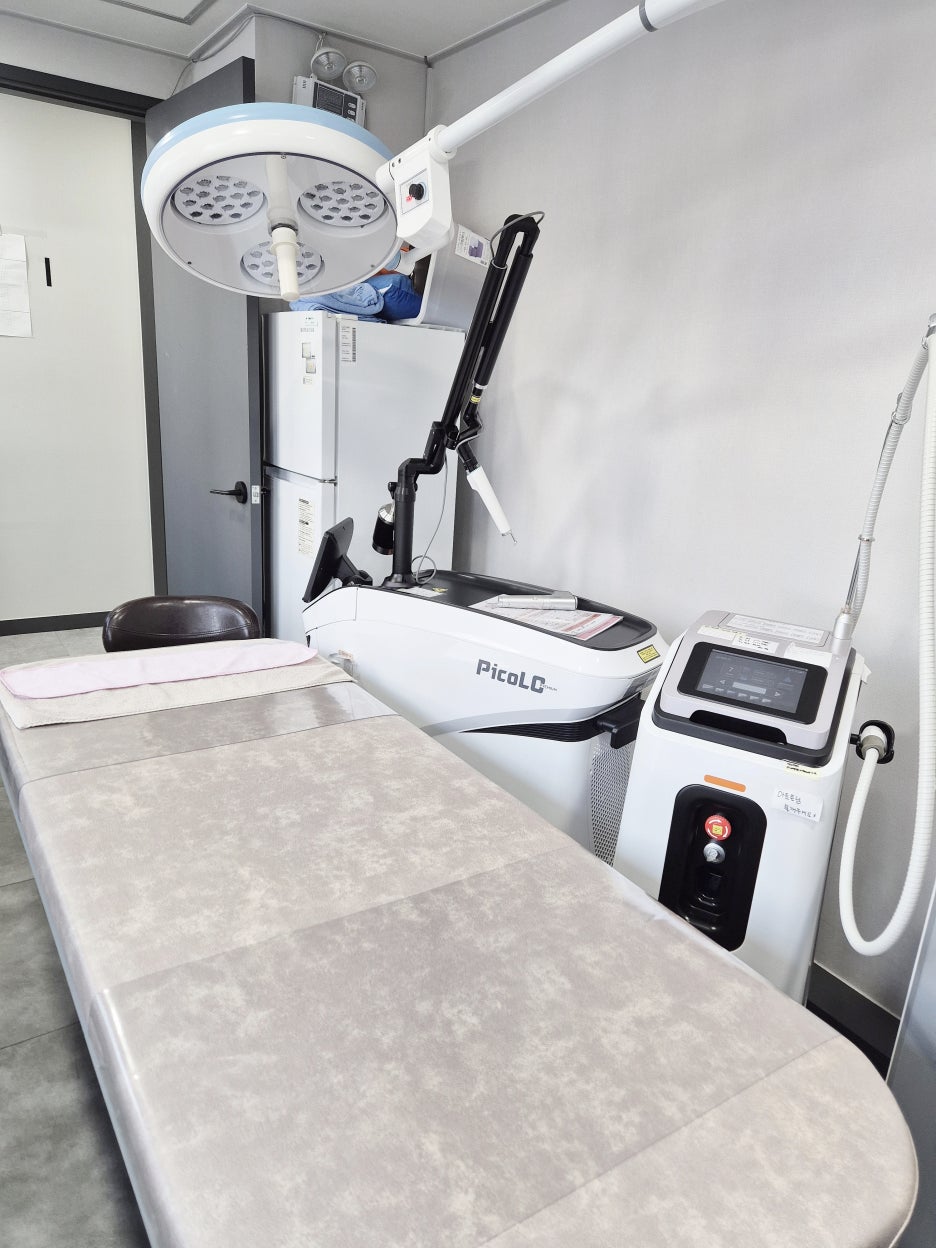
Thermage is a lifting device that uses radiofrequency energy.
When radiofrequency energy reaches the dermis, the temperature of the tissue rises to a certain range, and two changes occur in sequence.
The first is immediate collagen contraction.
Heat causes the helical structure of existing collagen fibers to contract, producing immediate tightening.
The second is the production of new collagen.
Fibroblasts exposed to thermal stimulation become activated and continuously produce new collagen.
Because this remodeling process takes place gradually over three to six months after treatment, it is also why radiofrequency methods are an important consideration in facial firmness care at Gangnam Station.
The outside of the skin is cooled at the same time, protecting the epidermis while selectively delivering energy only to the deeper layers of the dermis.
This cooling-and-heating mechanism is a distinctive technical feature of Thermage.

Not all skin requires the same approach
Those considering Thermage for facial firmness care at Gangnam Station often ask:
"Does everyone receive the same treatment?"
No.
Energy density and the method of application should vary according to skin thickness, the degree of sagging, the distribution of the fat layer, and age.
The treatment plan should be designed differently for someone in their early 40s whose firmness has only just begun to decline and someone in their mid-50s whose tissue displacement has progressed considerably, even when the same device is used.
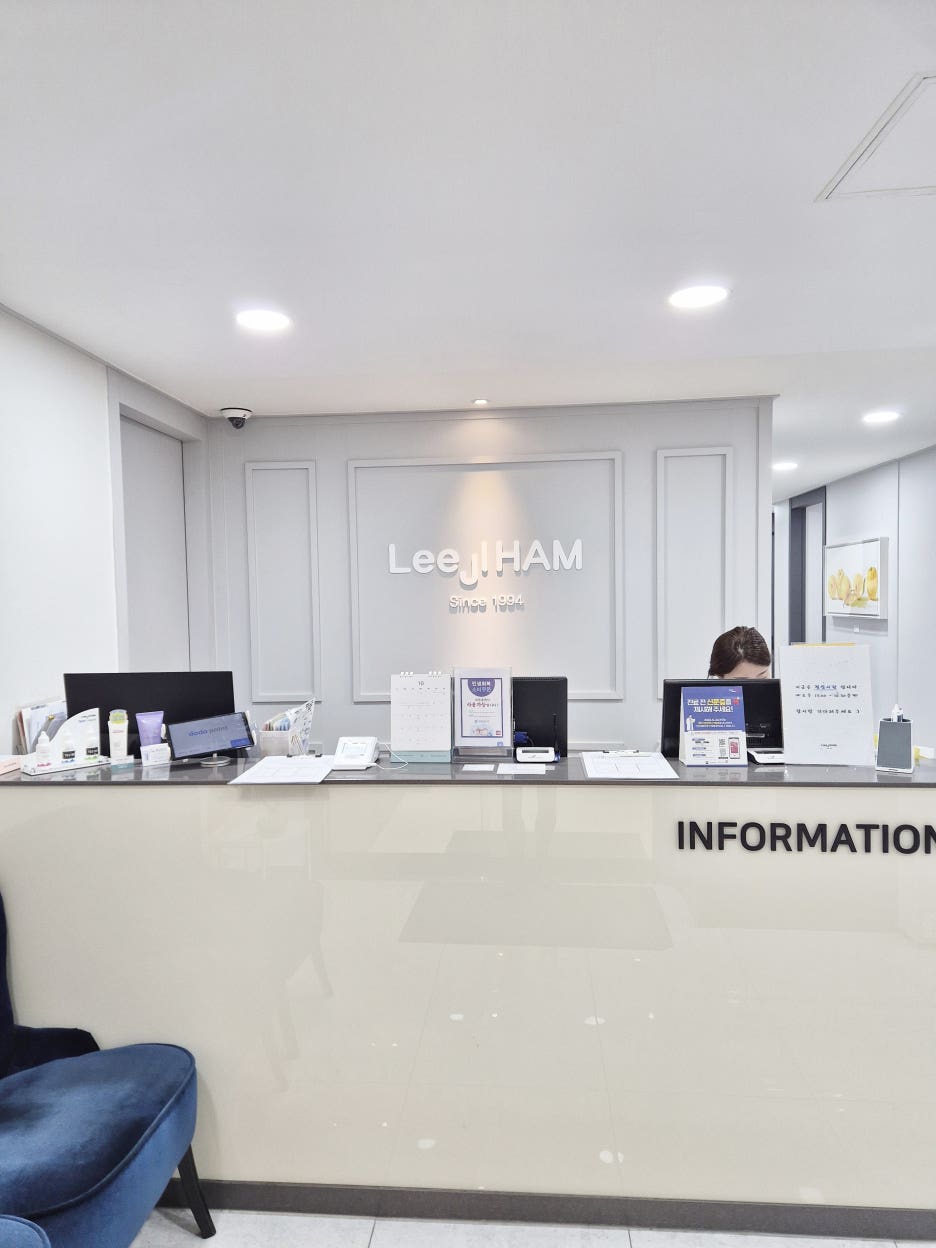
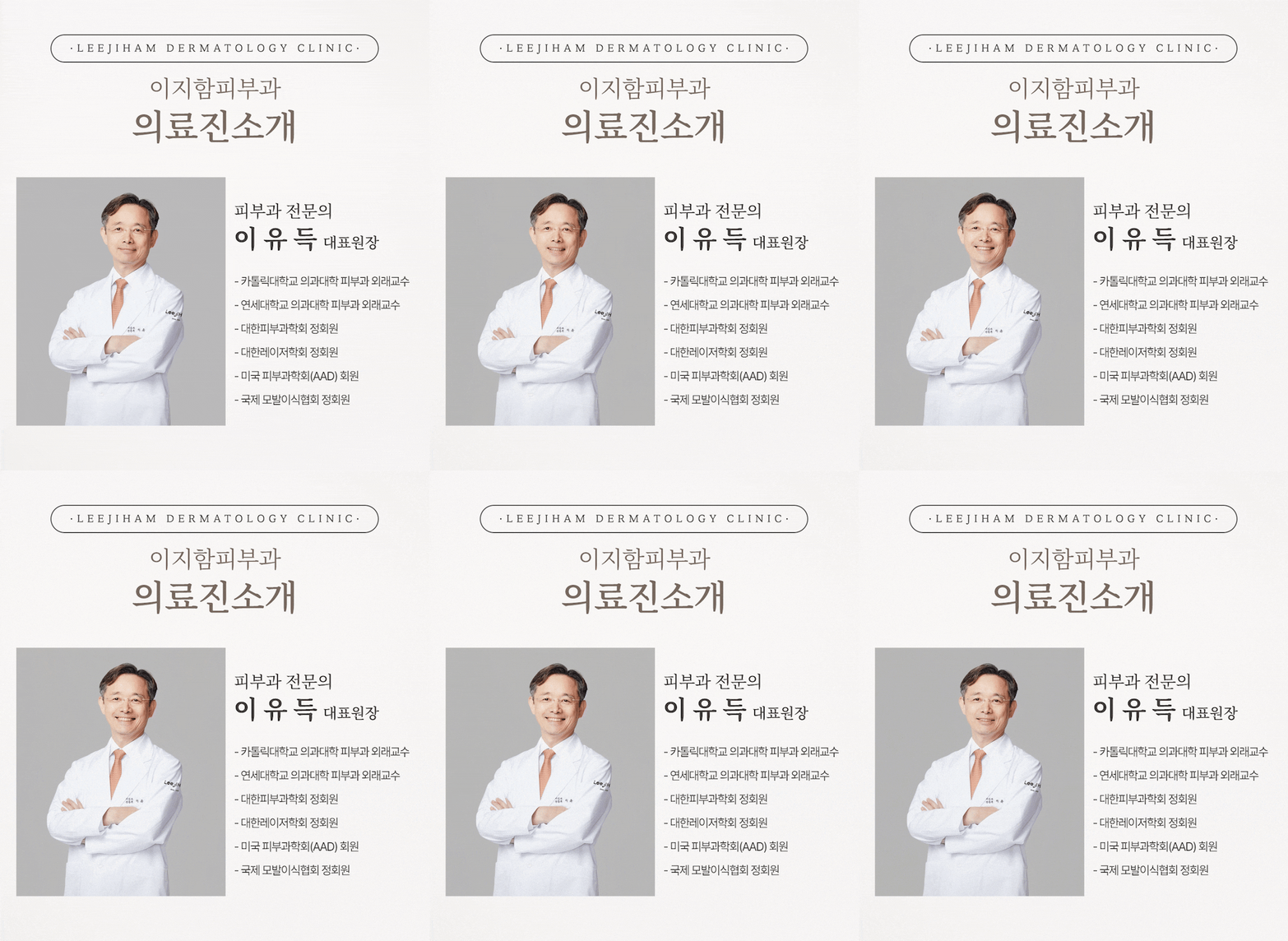
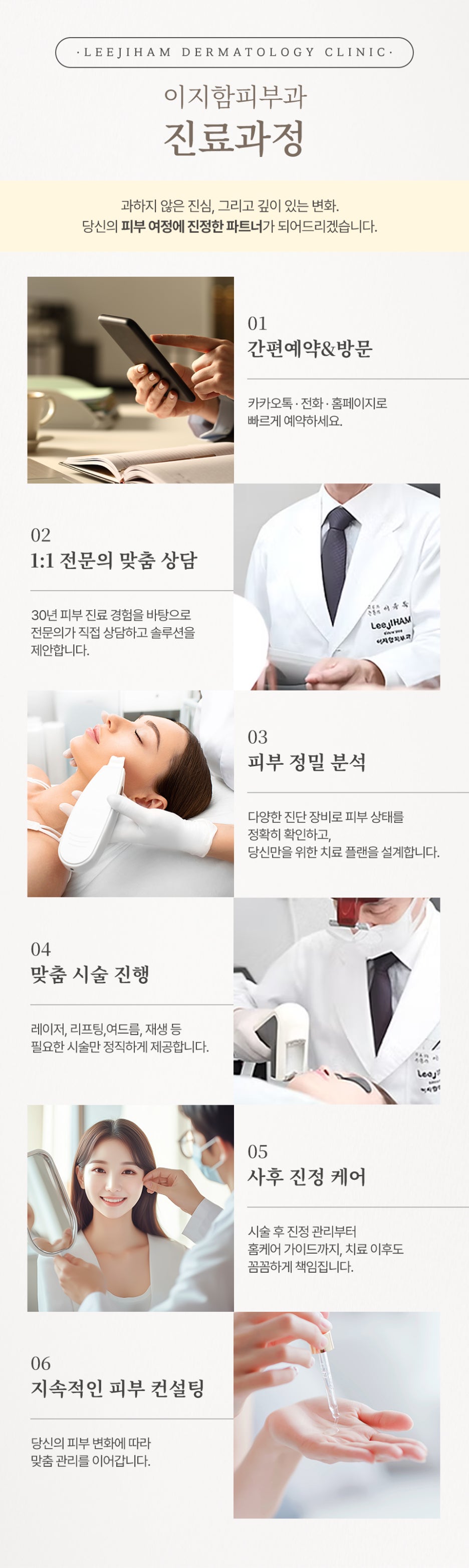
At 이지함피부과, we first assess each visitor’s skin structure through a preliminary examination and then create an energy-delivery plan.
This is different from simply completing a set number of shots.

What changes when combined with ultrasound lifting
Although Thermage alone may bring positive changes in skin firmness, in some cases, combining it with ultrasound-based lifting treatments such as Doublelo Gold, Shurink, or Viro may also be considered.
While radiofrequency evenly stimulates a broad area of the dermis, ultrasound-based methods form concentrated energy points in specific layers.
The characteristics of these two types of energy may complement each other.
Whether to approach facial firmness care at Gangnam Station with a single method or design a combined treatment is decided after an assessment is completed first.
Accurate assessment comes before combining methods.

Post-treatment care and conditions that support collagen remodeling
After Thermage treatment, the collagen remodeling process takes place over an extended period.
During this period, sun protection and sufficient moisturization are basic requirements.
Because the dermis is actively being remodeled, it is advisable to avoid intense heat exposure, such as saunas and jjimjilbangs, for several weeks.
Adequate water intake and antioxidant care may also help create an environment for collagen synthesis.
Supporting the tissue recovery process taking place internally through external care is a way to maintain the changes over the long term.

The path to a more comfortable-looking face does not need to be rushed
Every person’s skin is different.
If you are considering facial firmness care at Gangnam Station, it is important to first understand what stage your own skin structure is at, rather than focusing on information about which method is supposedly best.
This is because conditions that appear similar may have different causes, and the approach needs to match the cause.
이지함피부과 is a clinic that provides guidance based not on a one-size-fits-all method, but on assessment and care designed for each person’s skin.
Rather than pursuing excessive change, we will accompany you through the process of creating a more comfortable-looking face, with honest consultations and established methods.
Previous image
Next image










Previous image
Next image









Previous image
Next image