
Even Small Bumps
Why They Should Not Be Taken Lightly
People who first visit the consultation room because of closed comedones usually share a similar story.
They say that, because the bumps were not yet red, inflamed, or painful, they did not think much of them—until they suddenly noticed that they had spread across their entire forehead and cheeks.
Many people who visit a Gangnam dermatology clinic for closed comedones come in after repeating ineffective skin-care practices for several months.

The Blockage Is Not on the Skin's Surface
It Is Inside the Pores
The medical term for closed comedones is
closed comedones.
Sebum and dead skin cells become trapped inside the pores and harden beneath the skin's surface, making them appear as small, raised bumps.
When touched, they feel rough and uneven, and they become more noticeable when light shines across the skin from the side.
The absence of inflammation does not mean that the condition is mild.
If approached incorrectly, it may worsen into inflammatory acne.
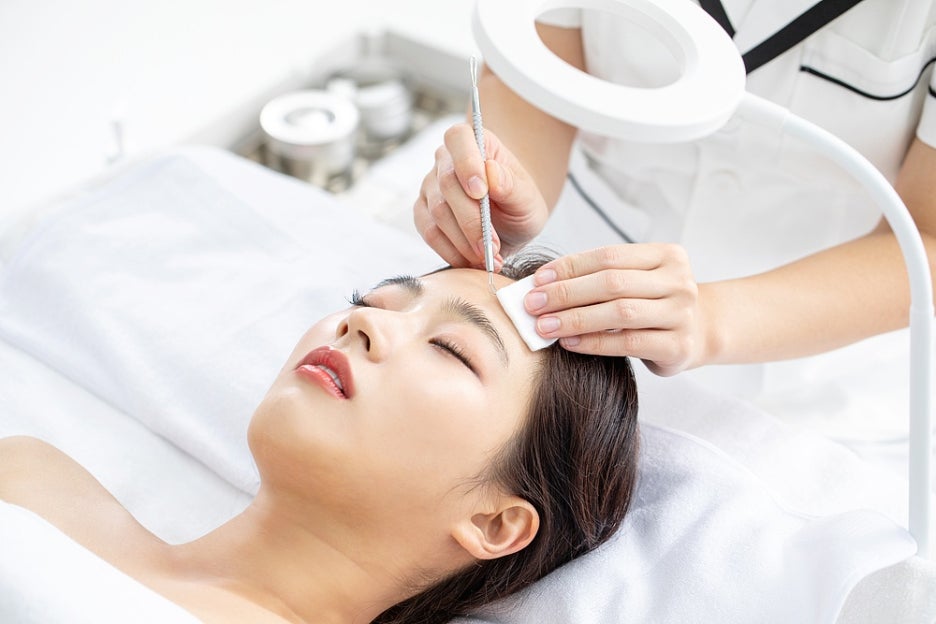
Squeezing Does Not Reduce Closed Comedones
Many people think that squeezing closed comedones firmly will make them go away.
However, because the openings of closed comedones are almost completely blocked, forceful extraction can damage the tissue around the pores and lead to hyperpigmentation or scarring.
The underlying cause is an imbalance between the amount of sebum produced and the rate at which dead skin cells are shed.


The Approach Should Focus on Dissolving Dead Skin Cells
Treatments provided at a dermatology clinic can broadly be divided into two categories: topical treatment and medical procedures.
Topical retinoids help normalize the skin-cell turnover cycle and inhibit the process by which dead skin cells harden inside the pores.

Salicylic acid and azelaic acid may help dissolve dead skin cells and regulate sebum production.
There is a substantial difference between the concentrations used in ordinary cosmetics and those used in prescription products, so products purchased at a pharmacy and prescription topicals may have different effects.
At a Gangnam dermatology clinic, the treatment plan is established by considering the skin type, the extent of comedone distribution, and the condition of the skin barrier together.

A Step-by-Step Approach May Help Reduce the Chance of Recurrence
Chemical peels, which help clear the outer layer of dead skin cells; comedone extraction, which removes the contents of the pores; and laser-based methods that help regulate sebum production may be combined in stages depending on the condition of the skin.
At a Gangnam dermatology clinic, taking this step-by-step approach rather than relying on just one method may help reduce the chance of recurrence.
When the skin barrier has been weakened, external irritants may penetrate the skin and trigger an inflammatory response. For this reason, the recovery of the skin barrier is also monitored throughout the treatment process.

Daily Skin Care Is Also Necessary
Even after treatment begins, comedones may reappear in the same areas if daily skin care does not provide adequate support.
It is advisable to cleanse twice a day, making sure to remove any residue without excessive friction.
After cleansing, it is advisable to apply an adequate amount of a gentle moisturizer that helps support the recovery of the skin barrier.
Ultraviolet rays can accelerate sebum oxidation and may affect comedone formation, so sunscreen is recommended even on cloudy days.
In terms of diet, some studies suggest that reducing high-glycemic-index foods and increasing foods rich in zinc and omega-3 fatty acids may have a positive effect on regulating sebum production.

Skin Changes Take Time
It takes at least several weeks to several months for noticeable changes in the skin to appear.
Accurately assessing the condition of the skin at a Gangnam dermatology clinic and establishing an appropriate care plan may be the first step toward positive changes that last over time.

Previous image
Next image












Previous image
Next image









Previous image
Next image









Previous image
Next image