
Though They May Look Similar
Two Completely Different Lesions
When something small and bumpy, resembling millet grains, appears around the eyes or on the cheeks, many people become confused about whether it is simply a skin problem or a mole.
One of the questions we frequently hear in the consultation room is, “Is this milia or syringoma?”
Although the two lesions may look similar on the surface, they are separate conditions with different locations within the skin and different underlying mechanisms.
Many people who visit 이지함 while looking into Gangnam Station syringoma treatment also find this distinction difficult to understand.
Today, we will carefully explain how the two differ and why diagnosis must come first.
Different Roots
Two Types of Lesions
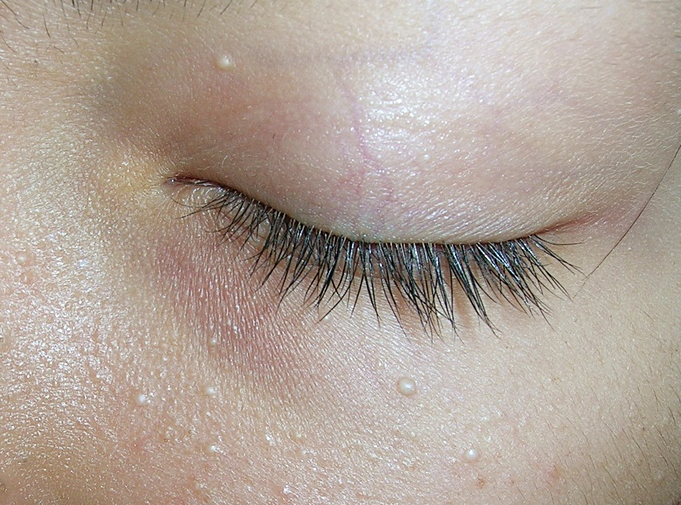
Milia form close to the skin’s surface when dead skin cells cluster together in small, sac-like structures.
When touched, they feel firm, like small white or yellowish grains.
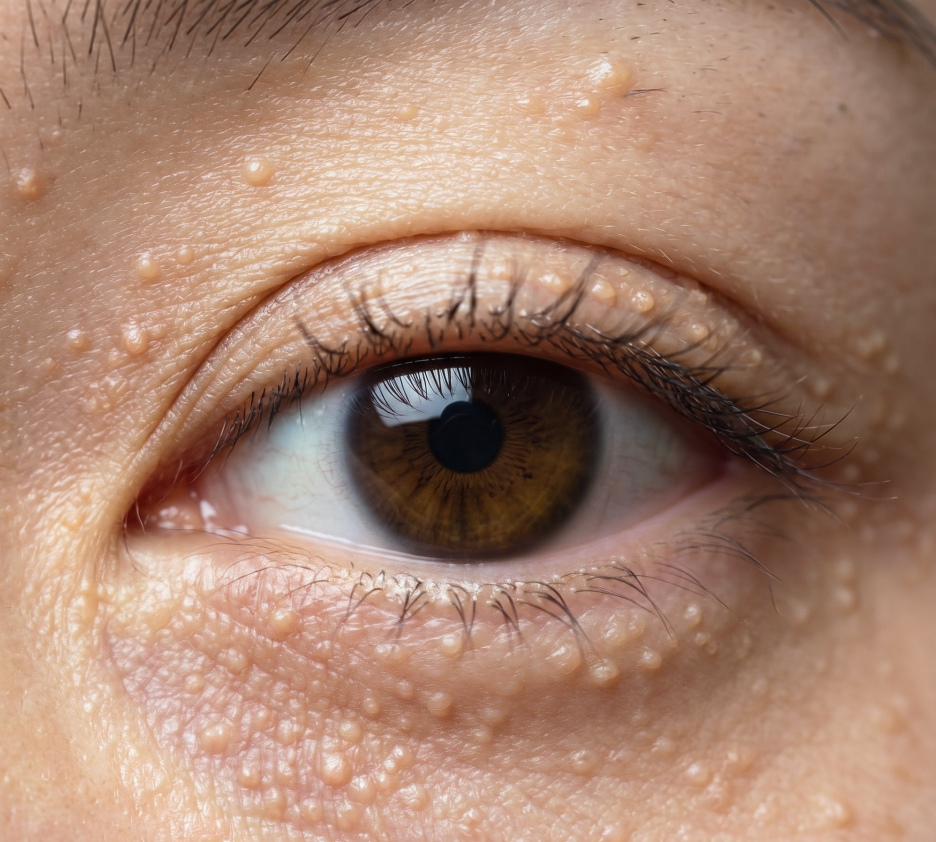
Syringomas, on the other hand, are benign tumors that develop when eccrine sweat gland tissue, which produces and releases sweat, grows abnormally.
They are usually skin-colored or have a pale apricot hue.
They commonly appear as multiple lesions clustered symmetrically on the lower eyelids and around the eyes.
Epidermis or Dermis? Depth Is the Deciding Factor
An important criterion for distinguishing the two lesions is “depth.”
Milia remain relatively shallow, near the boundary between the epidermis and dermis.
For this reason, they can often be removed relatively easily by making a small opening and extracting the contents.
Syringomas, however, are different.
They have roots deep in the dermal layer, where the sweat glands are located, and extend inward through the skin.
This is why an approach that only smooths the surface is not sufficient for Gangnam Station syringoma treatment.
Why They May Feel as Though They Have Come Back
The reason syringomas are known to be difficult to treat also lies in their depth.
If the eccrine gland tissue deep in the dermis is not addressed sufficiently, the lesions can easily reappear in the same location over time.
They may also look more prominent during hot seasons or in environments where you sweat heavily.
Genetic predisposition is also common, so many people have family members with a similar pattern.
An increase in the number of lesions has also been observed during periods of frequent hormonal changes.
Therefore, rather than simply shaving down the raised areas, diagnosis should come first, taking into account both the depth and distribution of the lesions.
Assessing the Depth and Making a Precise Adjustment
At 이지함, the equipment used to treat syringomas is a CO2 laser.
It works by using light at a wavelength absorbed by water to vaporize the target tissue precisely.
The key is how precisely the depth can be controlled.
The output and depth are carefully adjusted to reach the eccrine gland tissue in the dermis while minimizing thermal stimulation to the surrounding normal skin.
This is also the point that many people looking into Gangnam Station syringoma treatment are most curious about.

Why Results Can Differ Even with the Same Equipment
Even when the same CO2 laser is used, results can differ depending on the treating medical professional’s judgment.
If the lesion is treated too superficially, eccrine gland tissue may remain, leaving room for it to reappear.
Conversely, going too deep may leave scars in the dermis.
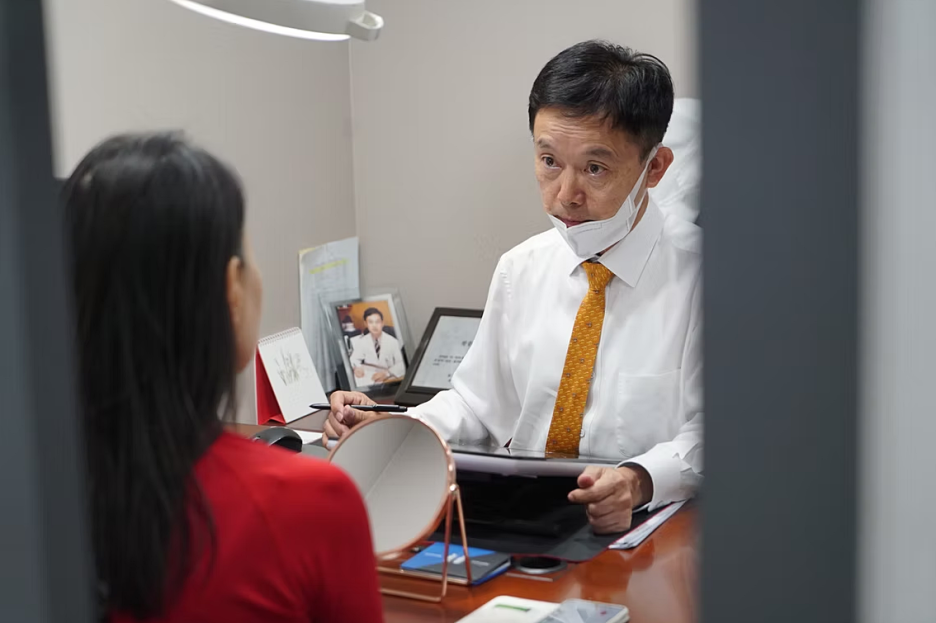
For this reason, after assessing the size and depth of each lesion, treatment may be divided into sections while taking the skin’s capacity for recovery into account, rather than proceeding too aggressively all at once.
When there are many lesions, this kind of careful planning becomes even more necessary in Gangnam Station syringoma treatment.
We Will Proceed at a Pace Suited to Your Skin, Without Rushing
Small scabs form after CO2 laser treatment.
These scabs are a natural process that protects the skin while new tissue grows. It is best not to remove them forcibly and to wait until they fall off on their own.
Because the skin becomes more sensitive to ultraviolet rays for a while, take care to protect it from the sun when going outdoors and maintain sufficient moisture.
Avoiding saunas, Korean-style heated rooms, and strenuous exercise for about a week may help with recovery.
If you are considering Gangnam Station syringoma treatment, it is important to first confirm exactly what the lesion on your skin is and how deep it extends.
At 이지함, recognizing that every person’s skin is different, we will work with you to find a diagnosis and treatment approach suited to your individual skin.











Previous image
Next image









Previous image
Next image