
Thinking of a comfortable
face rather than drastic changes,
I would like to greet you.
As summer approaches, many people find that their faces become flushed more often, and sigh in front of the mirror because of red, swollen breakouts.
Today, I would like to explain step by step how to manage pus-filled acne in summer for those experiencing these concerns.
After reading this post to the end, I hope your vague worries will feel a little lighter and that you will be able to consider for yourself which direction best suits your skin.
That concern that returns every summer,
I understand it well
I hear stories like these
very often in the consultation room.
People tell me they have
visited several places,
but that it seemed to help only temporarily.
Some people also say they hesitated
to visit a clinic
even when a sudden breakout appeared.
When you are busy throughout the day,
cleansing and skincare
naturally keep getting pushed back.
If you felt upset,
wondering whether you were the only one,
I would first like to tell you
that you certainly are not.
I fully understand that feeling.
I hope today’s discussion can become
a small clue
that eases that sense of uncertainty
a little.
Let’s first take a look together
at what pus-filled acne is
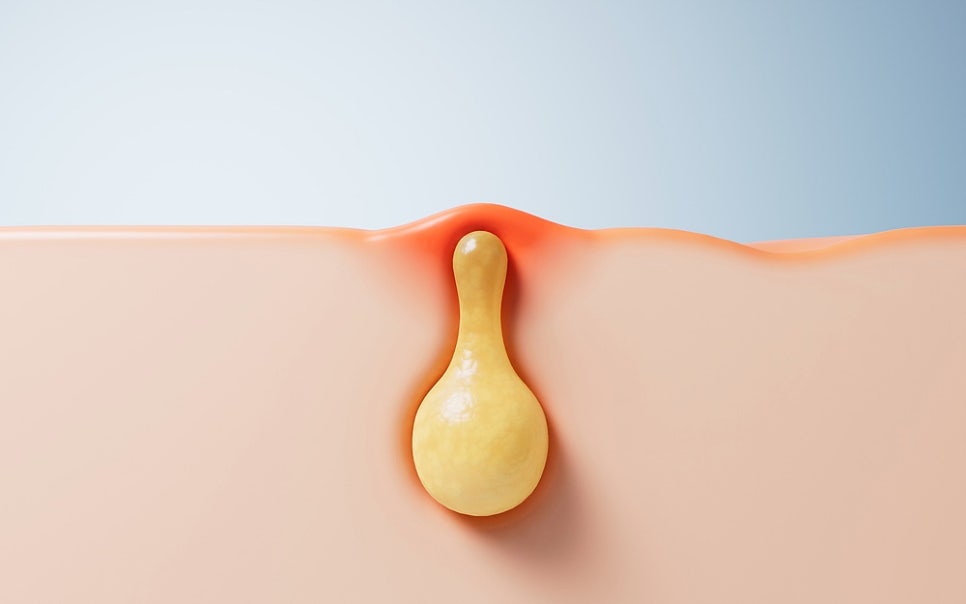
Pus-filled acne refers to a condition
in which inflammation is deeply established
inside the pores.
As if a small spark were spreading
beneath the skin, it can become red
and swollen, with a throbbing pain
when pressed.
As it worsens, pus may build up,
and even after it subsides,
it can easily leave red marks or scars.
When it appears in visible areas,
such as along the jawline or around the mouth,
it can also make you feel self-conscious.
That is why simply squeezing it
is unlikely to improve the condition,
and a method of managing pus-filled acne
that also looks into the root of the inflammation
is needed.
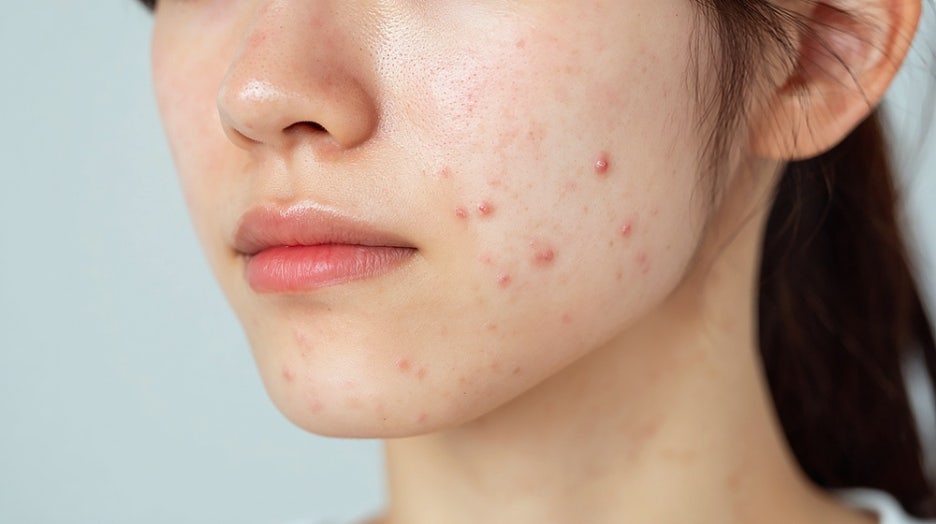
Why does it get worse in summer,
and what should you be careful about?
As temperatures and humidity rise
in summer, sebum production increases.
When sweat and sebum block
the pore openings like a plug,
the inside becomes an environment
where bacteria can multiply easily.
When strong UV exposure is added,
inflammation and pigmentation
can also become more pronounced together.
That is why
lifestyle habits are especially important
when managing pus-filled acne in summer.
After sweating, gently cleanse
with lukewarm water,
and protect your skin barrier
with a low-oil moisturizer.
It is best to avoid frequently touching
your skin with your hands
or forcibly squeezing breakouts,
as this can leave scars.
Covering the area with a mask or hat
may cause sweat to build up
and feel even more stuffy,
so pay attention to ventilation as well.
Do not forget to apply
sunscreen regularly.
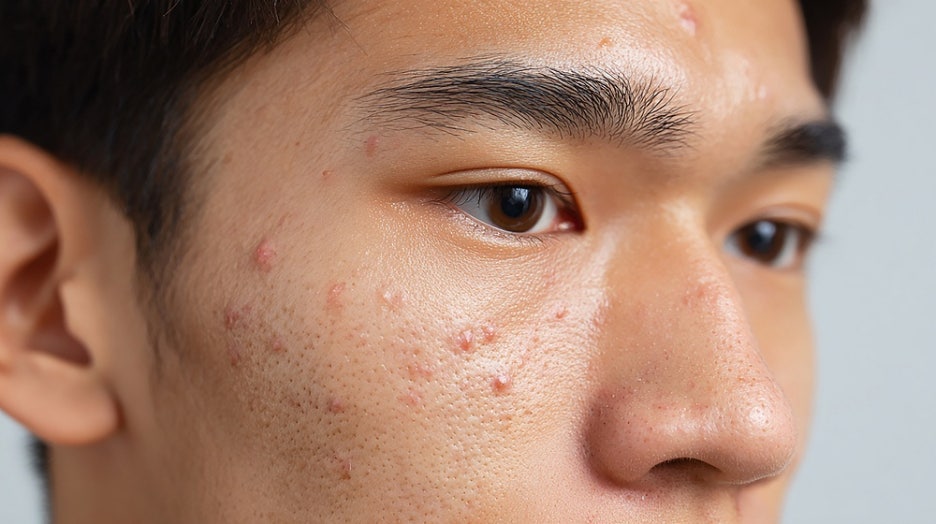
How can a dermatology clinic
help with this?
The methods used at a dermatology clinic
to manage pus-filled acne
can generally be divided
into several approaches.
First, Art Laser acts selectively
on the sebaceous glands,
reducing sebum production
as if lowering the output
of an overactive oil factory.
In the process, you may also
expect to see the pores
gradually become smaller.
Skin scaling and PDT
Scaling gently clears away debris
from clogged pores,
helping to slowly open
a blocked drain.
If red marks or facial flushing remain,
IPL may be helpful.
Like calmly settling flushed marks,
the light acts on dilated blood vessels
and pigmentation.
However, the procedure may cause
a stinging sensation or temporary redness,
and the results and recovery process
vary from person to person.
Rather than pushing yourself
to undergo an intense treatment all at once,
it is ultimately more comfortable
to proceed at a pace your skin can tolerate.
That is why it is important
to first examine your skin condition
and then decide together
which method is appropriate.
Answers to the questions
we hear most often in the consultation room
Q1.
Is it okay to receive acne treatment
in summer?
A.
Yes, it is possible.
However, since this is a season
with strong UV exposure,
it is best to adjust the treatment intensity
and be more thorough than usual
about sun protection.
Q2.
Can I receive a procedure
while taking medication?
A.
Common acne medications
are generally fine.
However, if you are taking
medication such as isotretinoin,
some procedures may be restricted.
You only need to let us know
in advance which medications
you are taking.
Q3.
If I receive treatment,
will the acne never come back?
A.
It is difficult to say
that recurrence will never occur.
Because acne is affected
by sebum production and lifestyle habits,
it can be helpful to combine procedures
with consistent daily care.
Q4.
Can I still receive help
after scars have formed?
A.
Yes. Marks and scars
require different approaches.
After active inflammation has subsided,
it is best to assess the condition
step by step according to its state.

As we conclude today’s discussion,
here is information about consultations
Everyone’s skin is different,
and even when the acne appears similar,
the causes and characteristics
vary from person to person.
That is why, rather than one intense procedure,
I believe more in taking the journey together
slowly, through honest consultations
and proven methods.
I hope that today’s discussion
on managing pus-filled acne in summer
has offered a small comfort
to anyone who has sighed in front of the mirror.
Rather than drastic changes,
a comfortable face—
with that in mind,
I will always be here to look after you.
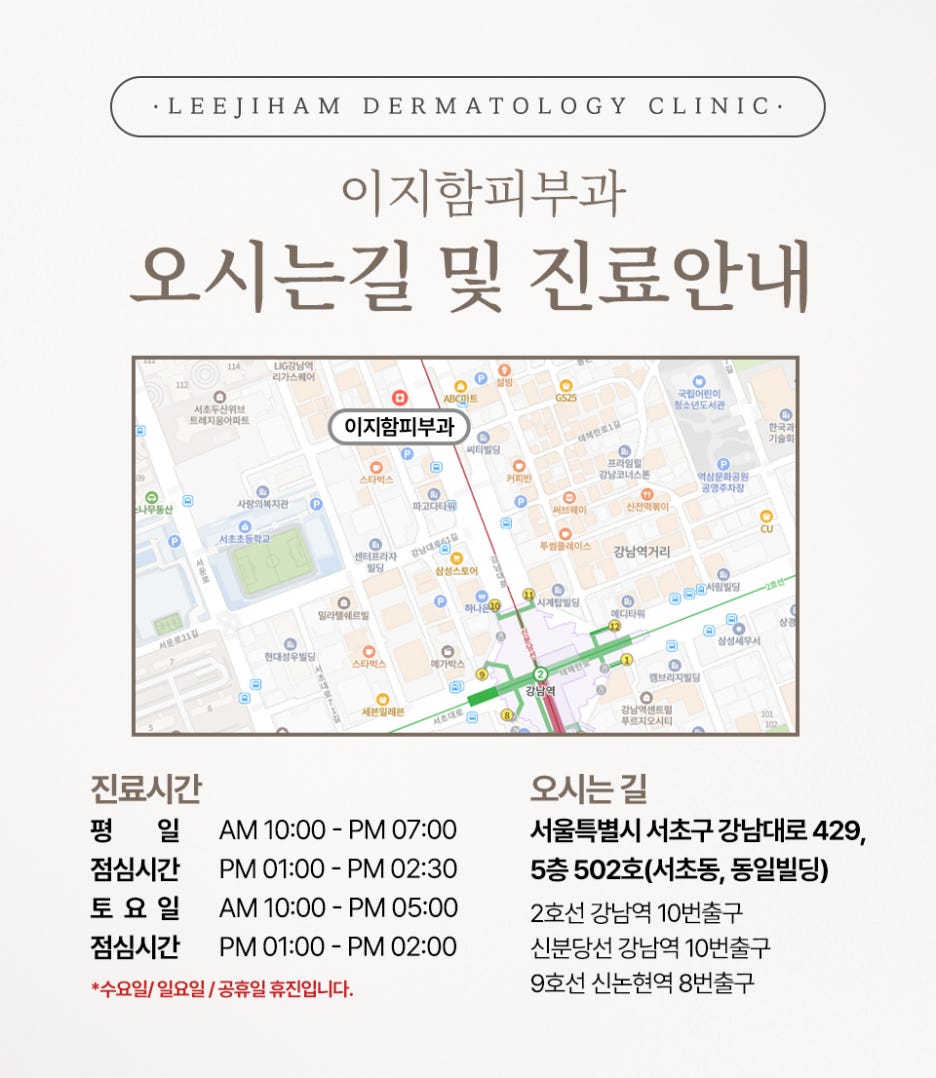
📍 Location
429 Gangnam-daero, Seocho-gu, Seoul
5th floor, Room 502 (Seocho-dong Dongil Building)
Near Gangnam Station and Sinnonhyeon Station.
📞 Phone 02-567-5900
🕙 Consultation hours
Monday, Tuesday, Thursday, Friday 10:00–19:00
Saturday 10:00–17:00
Weekday lunch break 13:00–14:30
Closed on Wednesdays, Sundays, and public holidays.










Previous image
Next image









Previous image
Next image