For you,
whose heart is shaken
by the smallest changes
Today, I would like to discuss what many people considering lifting are most curious about: which skin types are recommended for Ultherapy and Thermage by a dermatologist.
In the consultation room, I often meet people who quietly look at themselves in the mirror and cautiously say, “I don’t think I look the way I used to.”
Whenever that happens, I am reminded that dermatology care is not simply about procedures, but a process of helping refine each person’s daily life, one individual at a time.
I have also listened, up close in the consultation room, to the feelings of those who find their reflection a little unfamiliar.
A face that suddenly feels unfamiliar in the mirror,
I understand that feeling
As you enter your late 30s,
there may come a day
when the side profile
in a photograph
feels unfamiliar.
You may have felt conflicted
while looking at the shadows
around your mouth that makeup
could not fully conceal,
and at your slightly lowered cheeks.
After working late into the night
or tossing and turning in your sleep,
your skin tone may have looked
dull as well,
which may have made you feel even worse.
I also hear many sighs in the consultation room from people who have been visiting dermatology clinics for years but feel that the results only last for a short time.
When you search on your own,
there may be so much information
that you end up feeling
even more overwhelmed.
I hope that by reading this post to the end,
you will be able to assess for yourself
which approach may suit your skin.

Ultrasound and radiofrequency,
the same type of lifting,
but different paths
Ultherapy generally refers to lifting that uses ultrasound energy, while Thermage is lifting that uses radiofrequency energy.
If you compare the collagen inside the skin to the pillars supporting a house, aging can be thought of as those pillars gradually becoming looser.
Ultrasound delivers heat to deeper layers as if placing individual dots, while radiofrequency spreads heat evenly as if warming a broad surface.
For easy understanding, one is similar to pulling up collapsed pillars, while the other is closer to strengthening and filling in an entire wall.
That is why one works more toward lifting areas with a sagging texture, while the other works more toward improving overall firmness.
Therefore, when determining which patients are recommended for Ultherapy or Thermage by a dermatologist, the first things we examine are the pattern of sagging and loss of firmness.


Introducing the lifting devices
available at our clinic
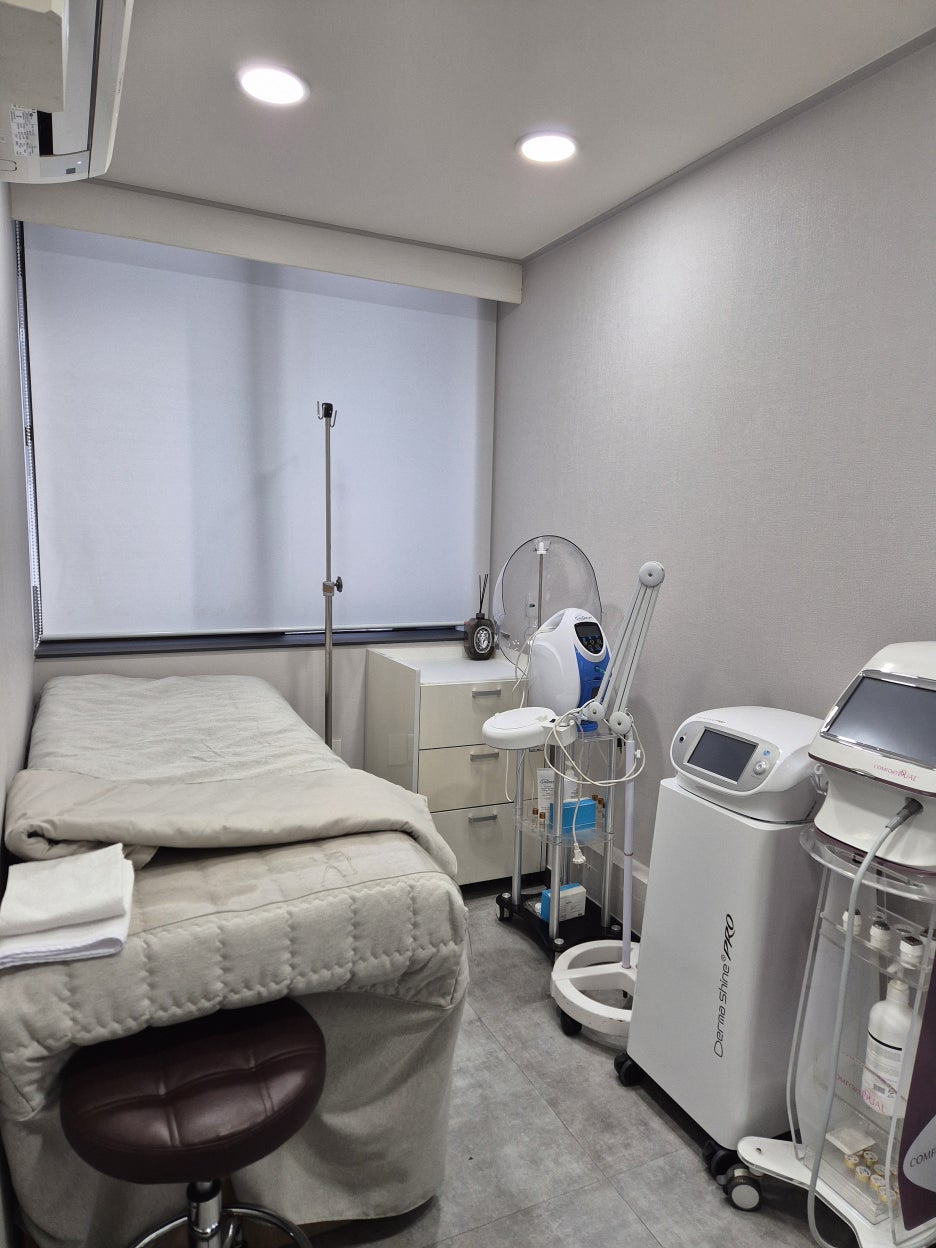
The ultrasound lifting devices we use include Doublo Gold, V-RO, Shurink, and Ultherapy.
The heat reaches deep layers and may help gently lift sagging skin.
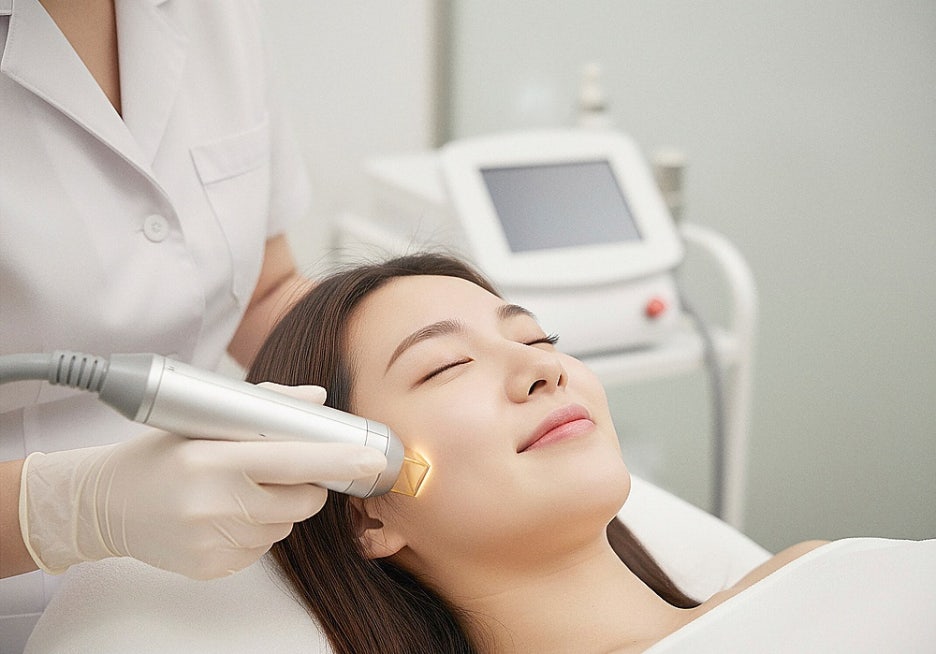
Thermage, a radiofrequency lifting treatment, works by tightening the skin overall and stimulating collagen regeneration.
During the procedure, you may feel a tingling sensation around the bones or a warm sensation. If needed, we apply numbing cream to reduce discomfort.
Rather than one device being better than another, the appropriate option depends on what your skin needs at the present time.
This difference in how each device works is also why the patients recommended for Ultherapy or Thermage by a dermatologist vary from person to person.
Which option is closer to my skin?
Let’s take a look together
If the cheeks or jawline have become noticeably saggy and the shadows around the mouth have deepened, we first tend to consider ultrasound lifting.
On the other hand, if there is not significant sagging but the skin generally feels less firm and rougher in texture, radiofrequency lifting is often more suitable.
Around menopause, when declining female hormones can make the skin thinner and reduce its firmness, we may also consider both treatments together.
If there are additional localized concerns, such as neck lines or the nasolabial fold area, we may consider combining treatments.
Some people begin preventive care in their late 20s, but if there is little sagging, moisture-focused care may be more appropriate.
However, even people of the same age can have different skin thicknesses and degrees of sagging. Ultimately, the patients recommended for Ultherapy or Thermage by a dermatologist can only be determined after directly examining the skin.

Answers to the questions
I hear most often in the consultation room
Q. When can I start noticing the effects?
A. Some changes may be visible immediately after the procedure, but as collagen gradually builds, the results usually become more defined over the course of several weeks to several months.
Q. Can I return to my daily activities right after the procedure?
A. In most cases, you can wash your face and apply makeup on the same day. Temporary redness or swelling generally subsides within a few days.
Q. Is it okay to receive both treatments together?
A. Depending on your skin condition, combining them may be helpful, but the order and interval are adjusted through a consultation.
Q. What should I pay attention to after the procedure?
A. For a while, paying a little more attention to sun protection and moisturizing can help maintain the results well.

Previous image
Next image
We will be a place
you can trust for a long time
Every person’s skin is different,
so there cannot be just one right answer.
Rather than pursuing a dramatic change in a single treatment, I value care that helps you maintain a comfortable-looking face whenever you look in the mirror, for a long time.
If you were curious about which patients are recommended for Ultherapy or Thermage by a dermatologist, I hope today’s post has provided the first clue.
Through honest consultations and proven procedures, we will become the name that comes to mind first whenever you have a skin concern.
─────────────────
이지함피부과 Information
─────────────────
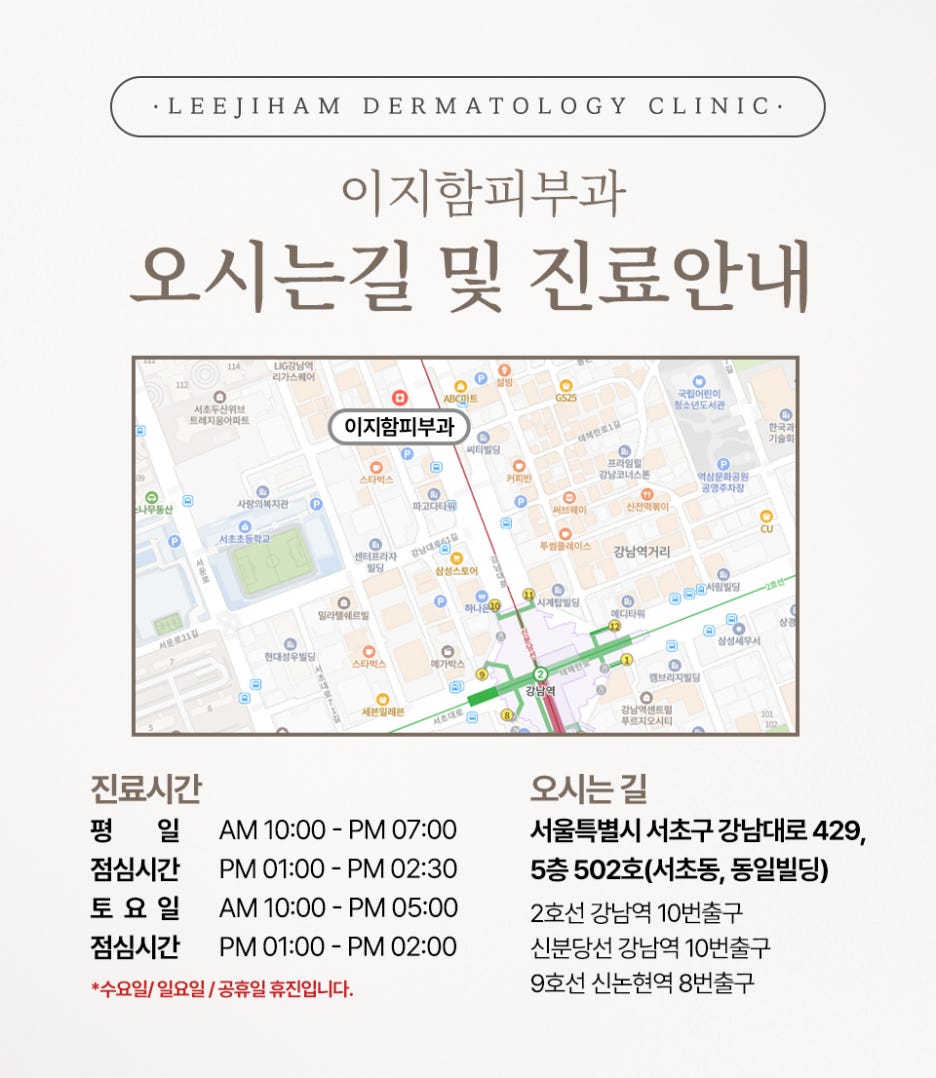
📍 Location: Room 502, 5th Floor, 429 Gangnam-daero, Seocho-gu, Seoul (Seocho-dong, Dongil Building)
🚇 Located near Gangnam Station and Sinnonhyeon Station.
☎ Phone: 02-567-5900
🕙 Consultation hours
· Monday, Tuesday, Thursday, Friday: 10:00–19:00
· Saturday: 10:00–17:00
· Lunch break: Weekdays, 13:00–14:30
· Closed: Wednesday, Sunday, and public holidays











Previous image
Next image









Previous image
Next image