For those who have sighed
in front of the mirror
over skin concerns
When you casually look in the mirror while shaving and notice another red breakout around your chin, the day can suddenly feel heavier for no particular reason.
As the seasons change, more men have been visiting the clinic saying that their skin has become noticeably more sensitive.
I prepared this article today for men who have been searching for a dermatology clinic for adult acne in men in Shinnonhyeon. As a doctor in my late 30s sitting in the consultation room, I often see men in the midst of their professional lives feeling weighed down by the breakouts they see in the mirror.
When acne that seemed to have disappeared after school days returns in adulthood, you may feel embarrassed to tell anyone and unsure of what to do.
By the end of this article, I will calmly organize the information so that you can get a sense of what type of skin condition you have and which treatment approach may be appropriate.
Troubles you cannot talk about,
You are never the only one experiencing them
There is something men often
say in the consultation room.
They say that they have been visiting
different dermatology clinics
for several years,
spending money but feeling that
their skin only improves briefly
each time.
Some also say that although
only one pimple has appeared,
they are afraid that going to a hospital
will mean having to undergo
extensive treatment.
There are also men who say that
their breakouts worsen every time
they shave, and that they keep
touching them because they are afraid
that pus-filled acne will become
inflamed and leave scars.
Feeling this way is
not excessive or unusual.
Skin troubles are not simply
about appearance. They are also
connected to confidence and
the way we face other people,
so I understand the weight
of these concerns very well.
Adult acne that returns,
Why does it happen?
Adult acne generally refers to acne
that continues or newly develops
after puberty, usually at age 25 or older.
Men tend to produce more sebum
than women, so it is not uncommon
for breakouts to continue steadily
even after reaching adulthood.
While adolescent acne tends to
center on the forehead and cheeks,
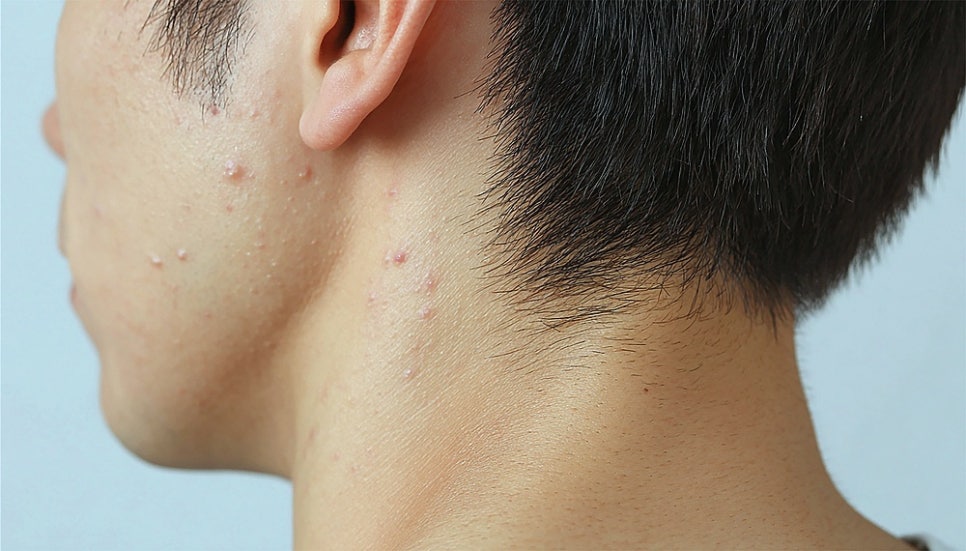
adult male acne commonly spreads
to the chin, around the mouth,
and along the neck.
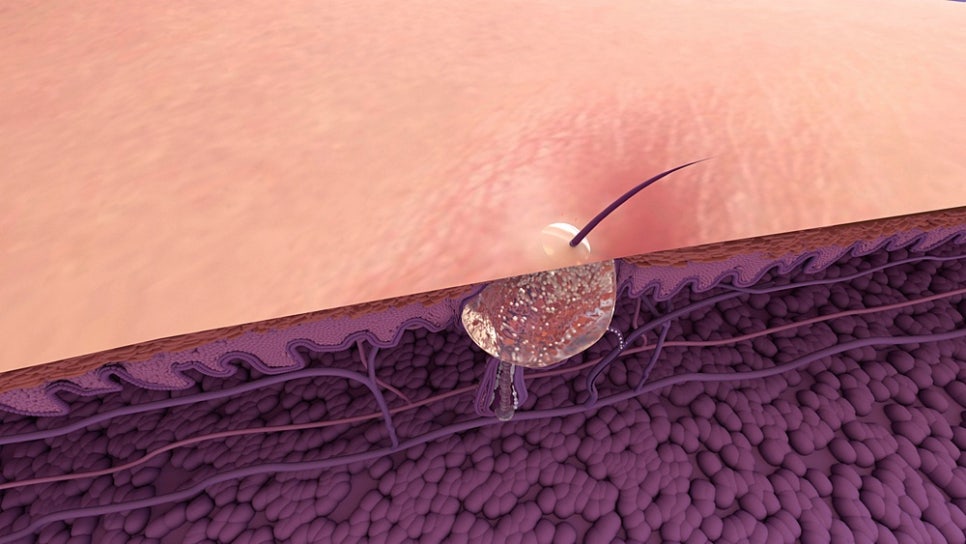
When sebum builds up in the pores
and bacteria multiply, inflammation
can build up like a blocked drain,
settling into red, firm nodules.
If you are considering a dermatology clinic
for adult acne in men in Shinnonhyeon,
the first step is to examine
what type of acne you have.
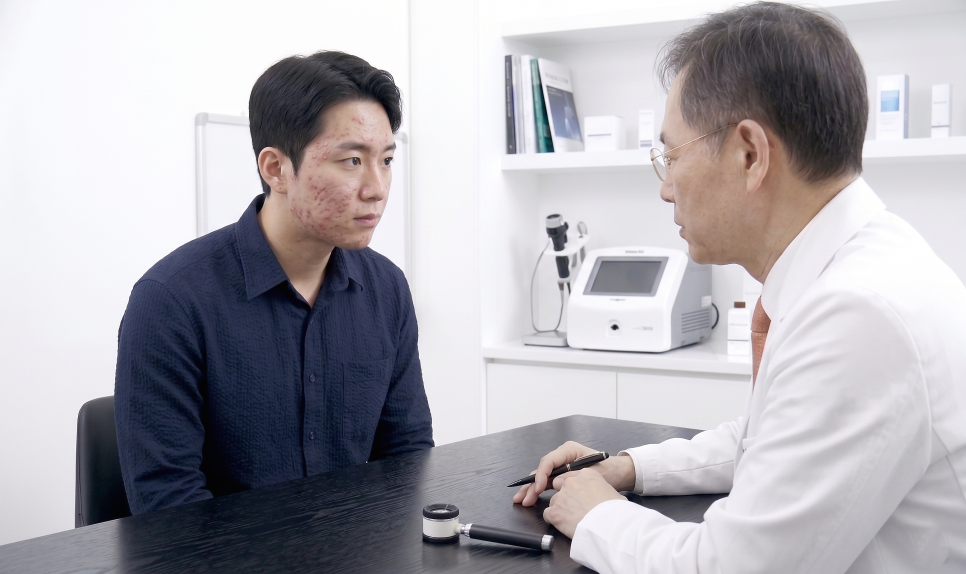
Which type is closest to my skin? Four types
Adult male acne can broadly
be divided into four types.
The first is the excess-sebum type.
The T-zone of the forehead, nose,
and chin looks oily and shiny,
with recurring small, grain-like breakouts.
The second is the comedonal type.
Blackheads and whiteheads block
the pores, making the skin texture
look rough.
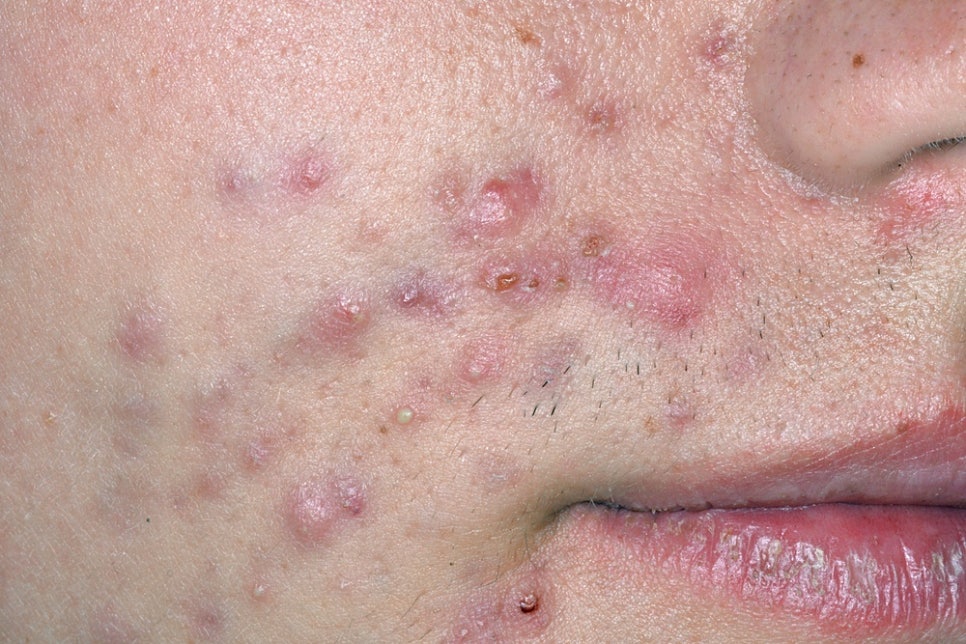
The third is the pustular type.
The lesions become red, filled with pus,
and firmly swollen, accompanied by pain.
If squeezed incorrectly, they can easily
leave scars.
The fourth is the type accompanied
by scarring.
Long-standing acne leaves indentations
or marks, creating uneven contours
in the skin.
At a dermatology clinic for adult acne
in men in Shinnonhyeon, these four types
are considered together to determine
the treatment approach.
The process of refining the skin texture according to its type
The treatment approach differs
depending on the type.
When sebum production is high
and pustular acne is prominent,
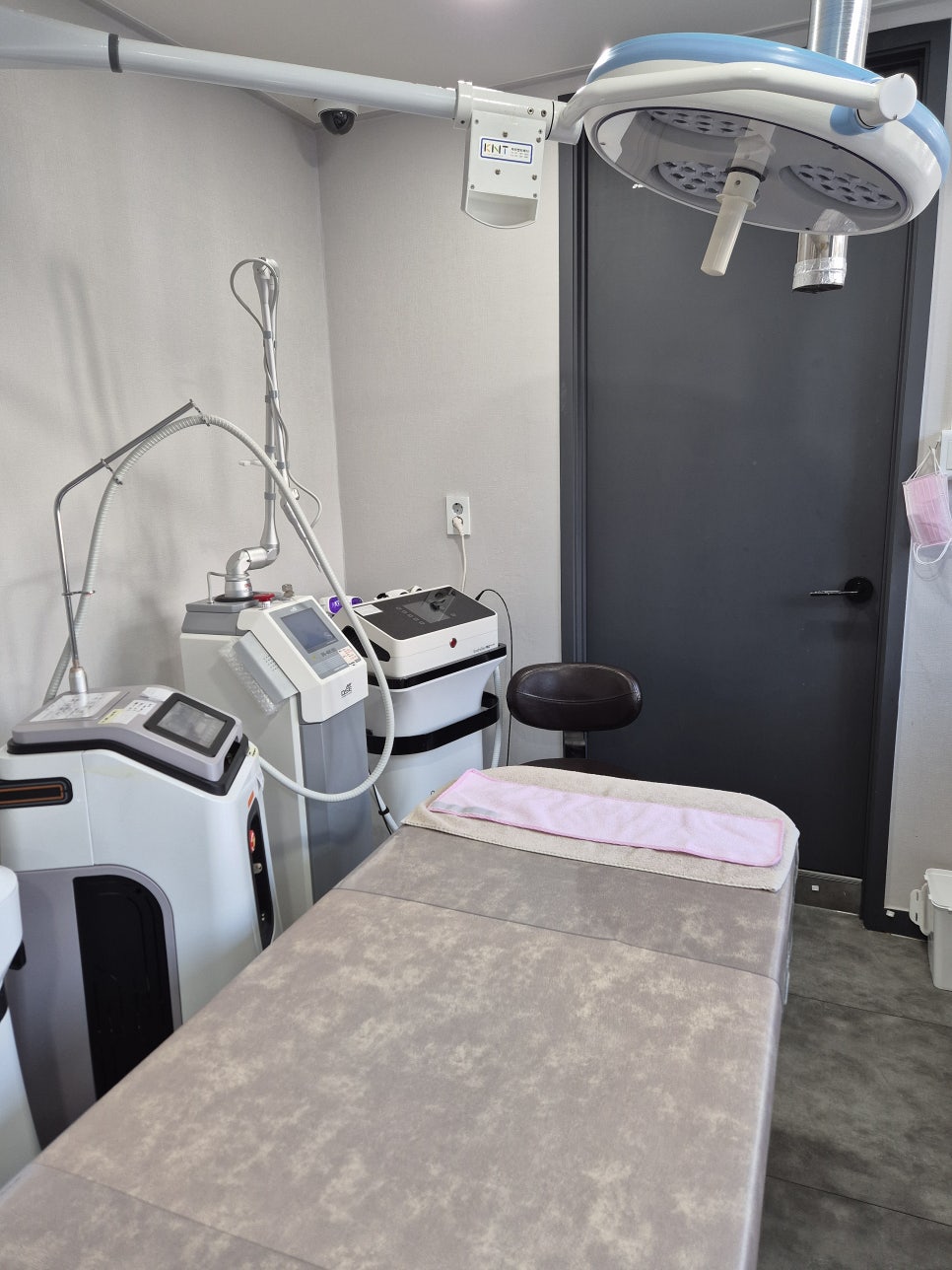
Artlaser may be considered.
It works on the sebaceous glands
to regulate oil production and refine
the pores. It can be compared to
slightly turning down a faucet
that is running too strongly.
When there are many comedones,
skin scaling and PDT scaling are used
to gently clear away blocked dead skin
cells and sebum.
If red marks and flushing remain,
IPL is used to gradually calm
and refine the skin texture.
For depressed scars, CLO scar restoration,
which combines chemical, laser,
and surgical methods, may also
be considered.
When looking for a dermatology clinic
for adult acne in men in Shinnonhyeon,
we recommend checking whether
the approach is a combination tailored
to your skin rather than relying
on just one device.
Questions the clinic director is often asked
Q1. Can male acne also be treated?
A. Men produce a lot of sebum,
so acne can sometimes become deeply rooted.
However, if treatment tailored to the type
is continued consistently, positive changes
may be possible.
For those with high sebum production,
Artlaser is often helpful.
Q2. Can I shave or wear makeup
while receiving treatment?
A. It is better to avoid irritation
on the day of the procedure,
and it is generally possible
from the following day.
We recommend shaving gently
using a method that causes less irritation.
Q3. I am taking acne medication.
Can I still undergo a procedure?
A. Most common acne medications
are generally fine, but some procedures
may be restricted if you are taking
an isotretinoin-based medication.
Please be sure to tell us which medication
you are currently taking.
Q4. Can my scars improve as well?
A. It is generally advisable to calm
active acne first and then continue
with scar treatment.
Depending on the condition of your skin,
it may be possible to treat both at the same time.
The approach is determined after
directly examining your skin.
We will accompany you on the path
back to a more comfortable-looking face
Acne is not a skin problem
that disappears overnight,
but when you understand your skin
and choose an approach that suits it,
it can certainly change.
Rather than pursuing excessive change,
we will examine each person’s skin
with a comfortable-looking face
and honest care in mind.
If you have been looking for
a dermatology clinic for adult acne
in men in Shinnonhyeon,
please keep the four types discussed today
in mind and quietly examine
the condition of your own skin.
I will close this article hoping
that the time you spend sighing
in front of the mirror becomes
a little lighter.
Previous image
Next image
━━━━━━━━━━━━━━━
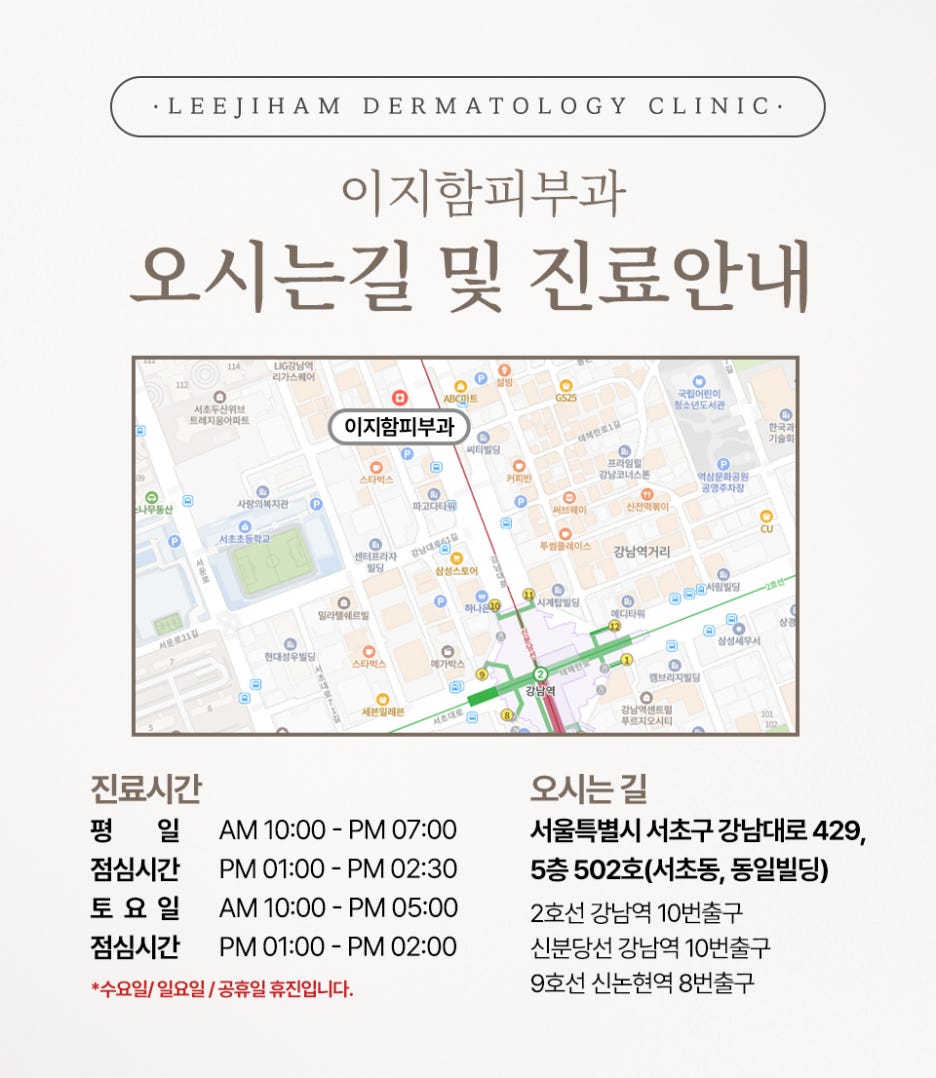
📍 Location
5th floor, Suite 502,
429 Gangnam-daero, Seocho-gu,
Seoul (Seocho-dong, Dongil Building)
Near Gangnam Station and Shinnonhyeon Station
📞 Phone
02-567-5900
🕐 Clinic hours
· Monday, Tuesday, Thursday, Friday 10:00–19:00
· Saturday 10:00–17:00
· Weekday lunch break 13:00–14:30
· Closed Wednesdays, Sundays, and public holidays