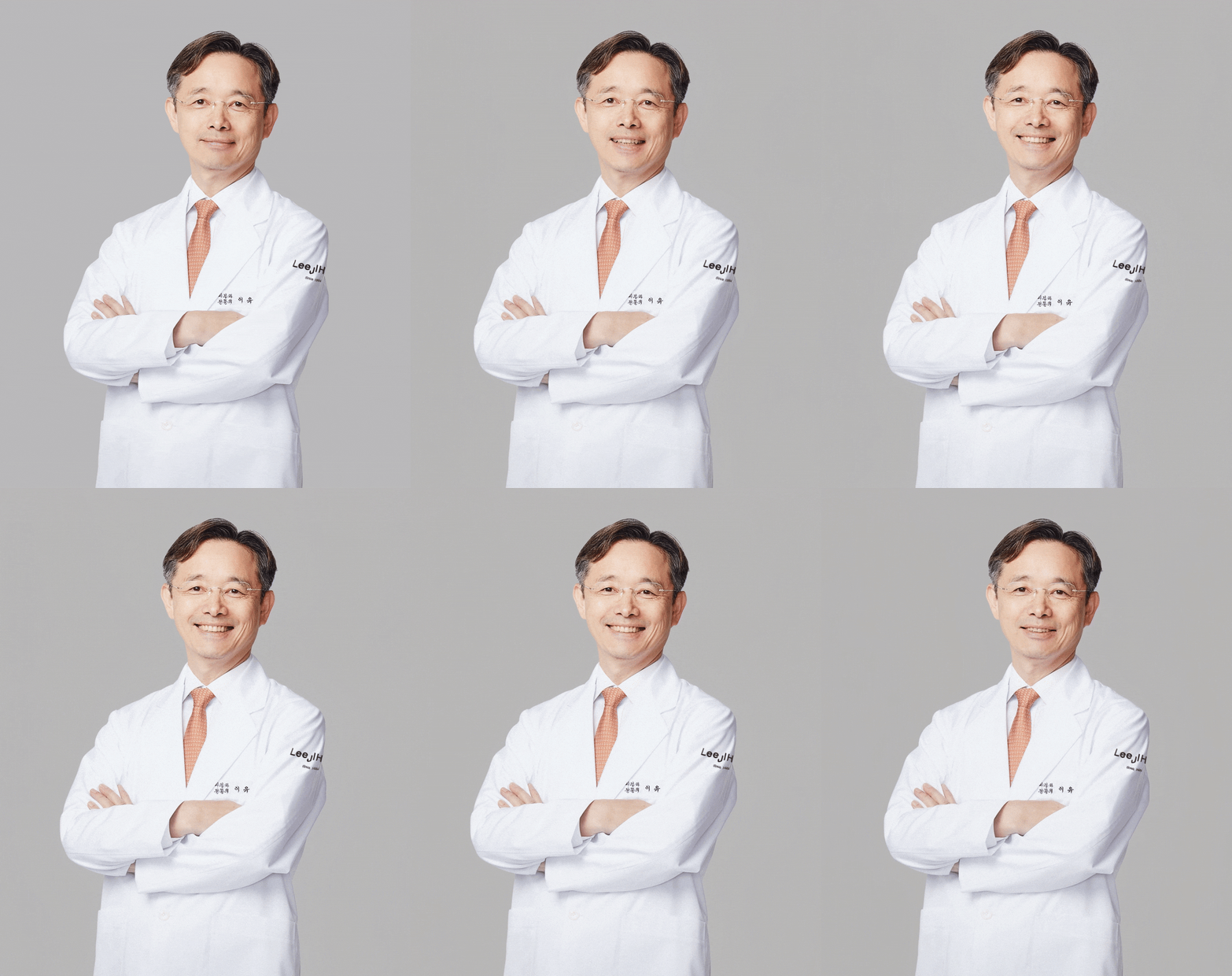
Every time you look in the mirror,
the mark that bothers you
if you thought it would fade
if you just waited
Have you ever felt weighed down by the red or dark marks left behind every time you look in the mirror, even though your acne has completely settled?
Many people I meet in the consultation room sigh and say, "The acne is gone, but the marks are still there," or, "I was told they would fade over time, so I waited for a long time, but nothing has changed."
I also often hear that trying to cover them with makeup only works temporarily, and that their skin tone keeps looking dull in photos, which is upsetting.
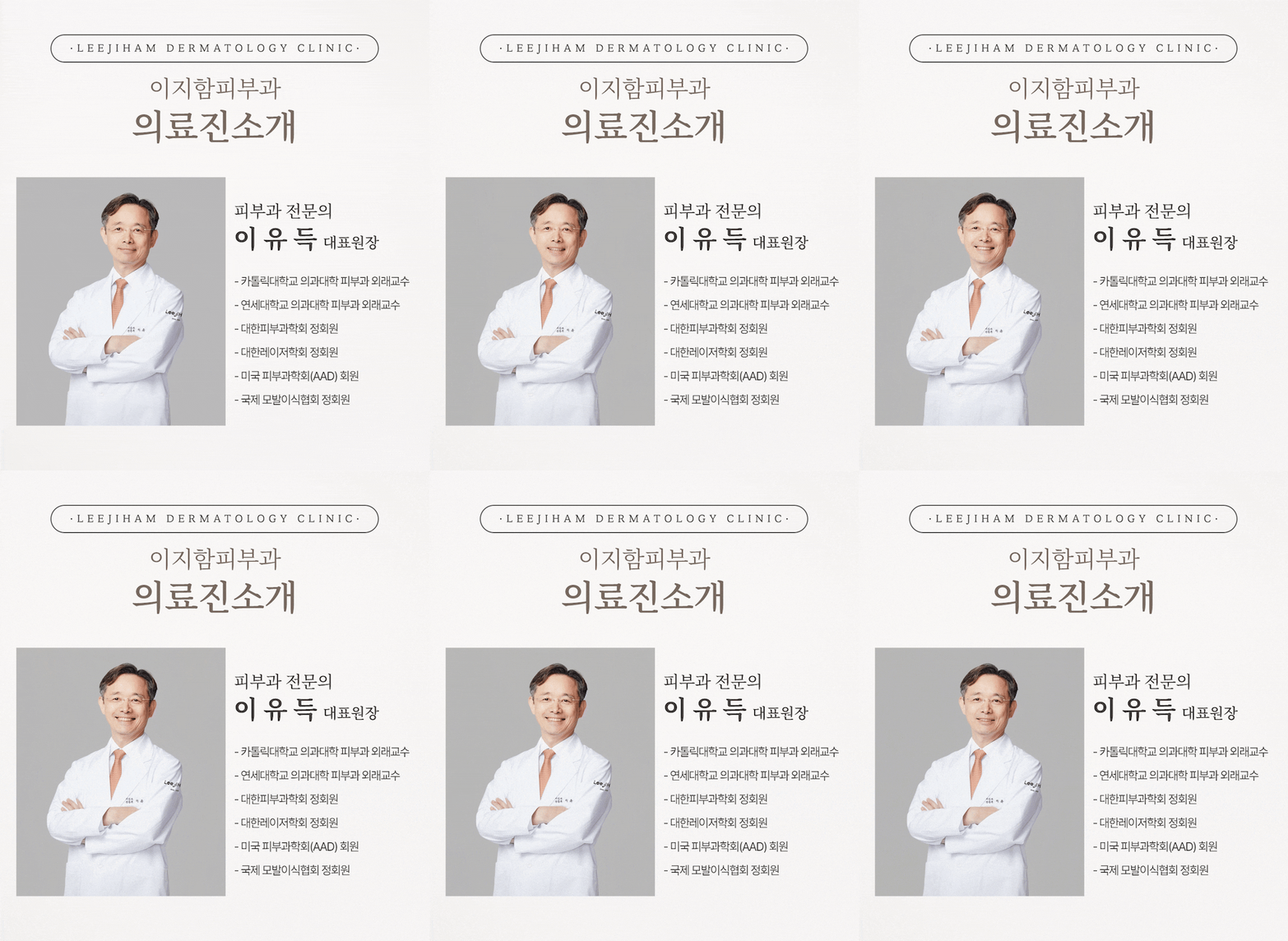
As a dermatologist who meets patients every day, I deeply understand that this frustration is not merely a cosmetic concern, but is closely connected to their confidence from day to day.
Today, I would like to calmly explain what is misunderstood and what is factual about Gangnam acne mark and hyperpigmentation treatment, which may have felt vague until now.
By the time you finish reading, you will have a clearer idea of what type of marks you have and how it may be helpful to approach them.
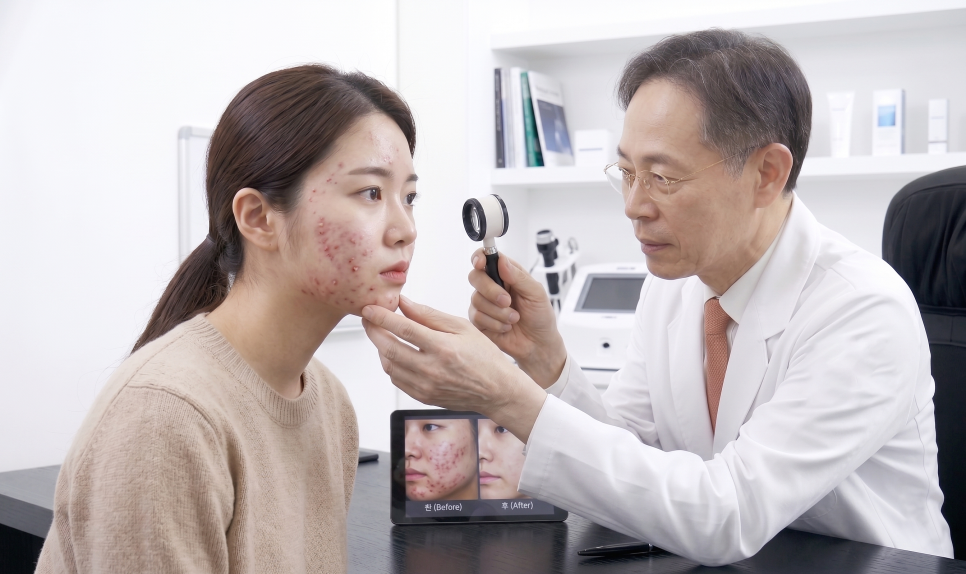
The acne has healed,
so why do the marks remain?
The marks left where acne has disappeared
are, in fact, traces formed
during the skin’s process of
recovering from an injury.
The deeper or longer-lasting
the inflammation was,
the more likely it is that redness
or dark discoloration will remain
even after recovery.
If the area was squeezed by hand
or otherwise irritated,
the marks may remain
even more noticeably.
I also often meet people who come in feeling exhausted,
saying, "I have been visiting a dermatology clinic for five years, but it seems to improve only briefly each time."
If you approach all marks
in the same way without
distinguishing their characteristics,
you may feel that they are
not fading easily.
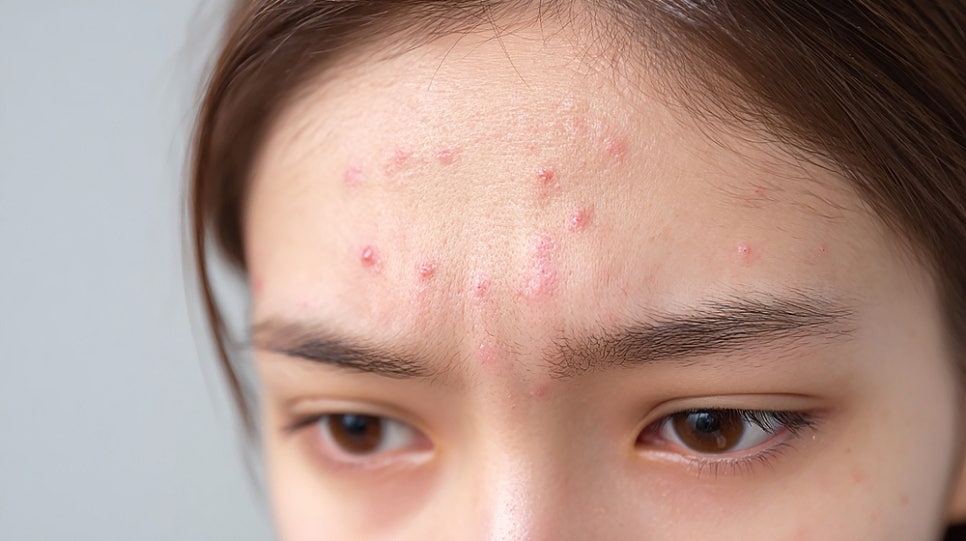
How are red marks different
from brown marks?
Gangnam acne mark and hyperpigmentation treatment
can broadly be divided into two categories.
One type is a red mark left behind
when blood vessels dilate
after inflammation,
while the other is a brown mark
that forms when melanin pigment
settles in the area.
By analogy, red marks are
more like an “ember” that is
still healing, while brown marks
are more like “soot” that has
settled in the area.
Embers may die down
as time passes,
but soot may remain
for a long time if left alone.
Because they develop through
different mechanisms,
we consider the direction of care
for each type separately
from the very beginning.
Will they really fade over time?
The question I hear most often is,
"Won’t they disappear over time
if I just leave them alone?"
Red marks may fade relatively slowly
as the skin stabilizes.
However, brown hyperpigmentation
may actually become darker
with frequent exposure to UV rays.
Especially during seasons
when UV rays are stronger,
pigment may settle more deeply
while you wait without a clear plan.
That is why, with Gangnam acne mark and hyperpigmentation treatment,
it is important not to miss the appropriate timing
and to consider the characteristics of the marks as well.
A treatment approach suited
to the characteristics of the marks
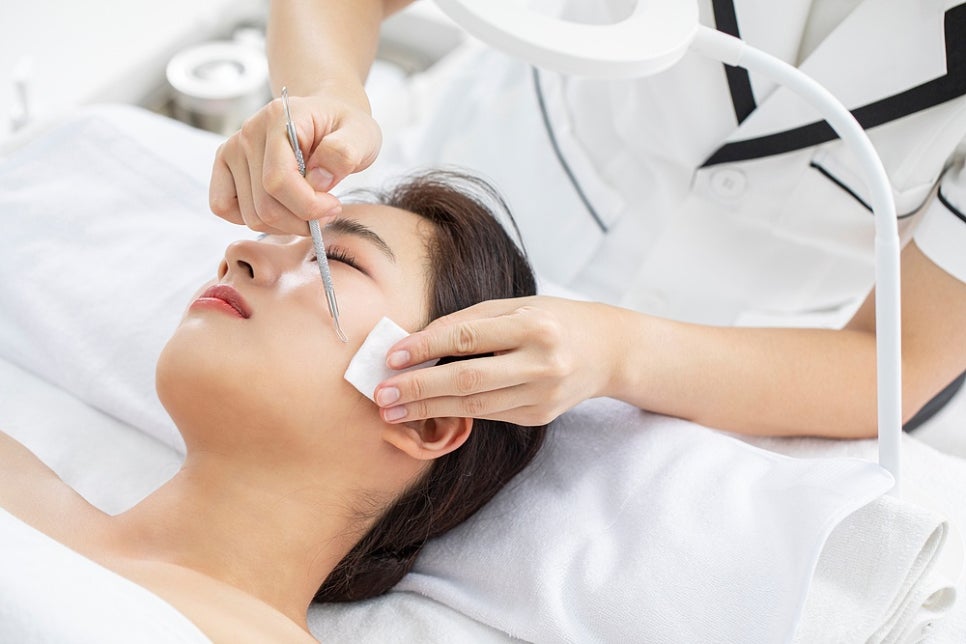
At Leejiham, we first examine the type of mark
and then determine the treatment direction.
For red marks, we use IPL,
which acts selectively on dilated
blood vessels; for brown pigment,
we use dual toning to address
deeply settled pigment.
If old dead skin cells and sebum
are also a concern,
we may add skin scaling
or PDT scaling.
You may experience warmth
or a prickling sensation during treatment,
so numbing cream may be applied
when necessary.
Rather than finishing after a single treatment,
we gradually refine the skin’s condition
over multiple sessions,
while also providing guidance on daily care,
such as UV protection.
In this way,
Gangnam acne mark and hyperpigmentation treatment
is not a process completed with one device;
it involves varying the combination
according to the condition of the skin.

Frequently asked questions
in the consultation room,
answered directly
Q1.
Will the marks disappear immediately
after one treatment?
A.
The recovery speed varies
depending on how deeply
and how long ago the marks formed.
They generally fade gradually
over multiple sessions,
and red marks tend to respond
somewhat faster than brown marks.
Q2.
Can I receive treatment in summer?
A.
It is possible, but because this is a season
with greater UV exposure,
pigment can be easily stimulated.
Adjusting the treatment intensity
and being thorough with UV protection
may be helpful.
Q3.
Can I treat the marks at the same time
if I still have acne breakouts?
A.
If there are many active acne lesions,
it is generally more stable to calm
the acne first and then address the marks.
Depending on the condition,
we may proceed with both together,
so the approach is determined
after examining the skin directly.
Q4.
When can I start wearing makeup
after treatment?
A.
It is better to avoid makeup
on the day of treatment,
as the skin may be sensitive.
From the following day,
you may apply makeup lightly
using products that cause little irritation,
while also taking care of moisturization
and UV protection.

For care you can trust over the long term
Every person’s skin is different,
and the circumstances behind
each person’s marks are different as well.
That is why, rather than emphasizing
dramatic changes,
I strive to provide care that begins
by calmly identifying the diagnosis
that best suits the skin at that moment.
Natural results without excess,
long-term trust, and honest care
are the principles that Leejiham
continues to pursue.
You do not have to keep the marks
on your mind while waiting
without a clear plan.
If you have been letting time pass
while considering Gangnam acne mark and hyperpigmentation treatment,
starting by examining the characteristics
of the marks together
may be a comfortable first step.
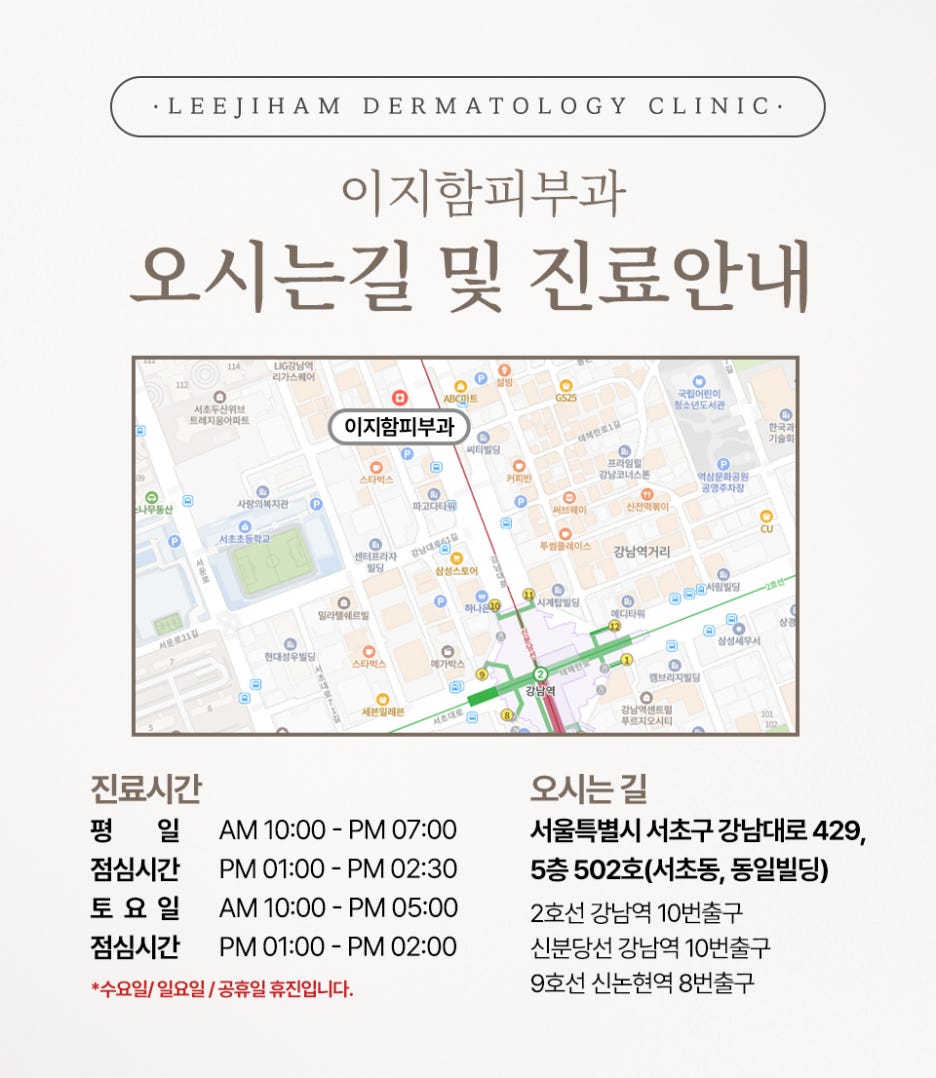
📍 Location
5th Floor, Suite 502
429 Gangnam-daero, Seocho-gu, Seoul
(Dongil Building, Seocho-dong)
Near Gangnam Station and Sinnonhyeon Station
📞 Phone
02-567-5900
🕙 Hours
· Monday, Tuesday, Thursday, Friday 10:00–19:00
· Saturday 10:00–17:00
· Weekday lunch break 13:00–14:30
· Closed Wednesday, Sunday, and public holidays









Previous image
Next image









Previous image
Next image