Under the summer sunlight,
if you have noticed
your facial contours
looking noticeably looser,
When the season for short sleeves arrives, the amount of time spent standing in front of the mirror somehow gets longer.
You may have looked at the shadows around your mouth that stand out especially under bright light and your slightly sagging cheek line, wondering, “Am I the only one aging this way?”
After observing skin for many years, I have always kept one thing in mind: rather than making excessive changes, it is more important to preserve the naturally comfortable appearance of the face.
Today, I would like to explain the topic of Gangnam lifting, which many people are curious about before summer, just as we discuss it in the consultation room. By the time you finish reading, your vague concerns about which method might suit your skin and when to have it done should become much clearer.
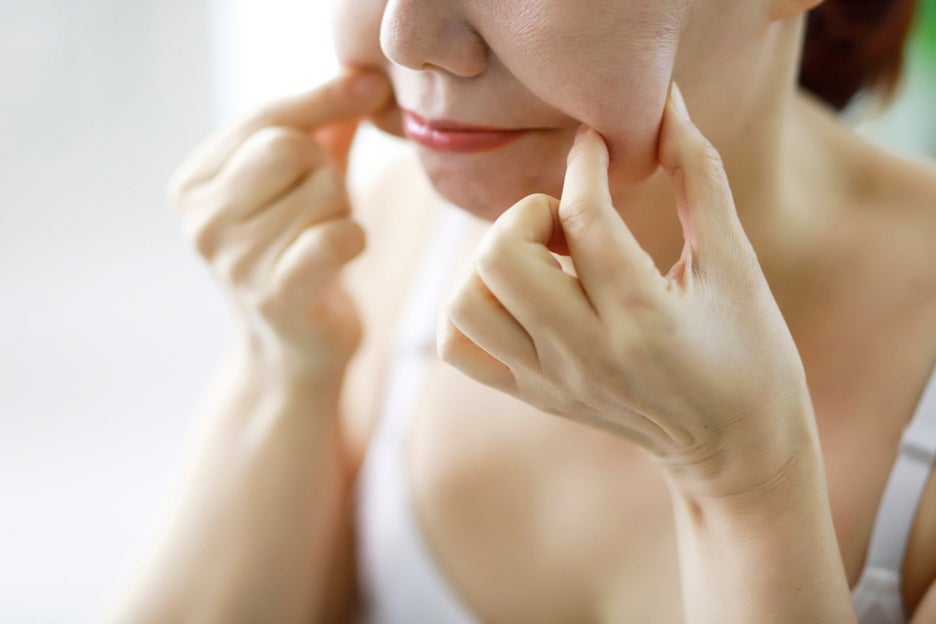
Sagging
is a sign that
the support structures beneath
the skin have become loose.
As we age, the
collagen and elastic fibers
that support the skin
gradually decrease.
The cheeks slide downward,
the nasolabial shadows around
the mouth become deeper,
and the jawline becomes less defined.
This is also why the expression
in the mirror can look somewhat
tired and droopy.
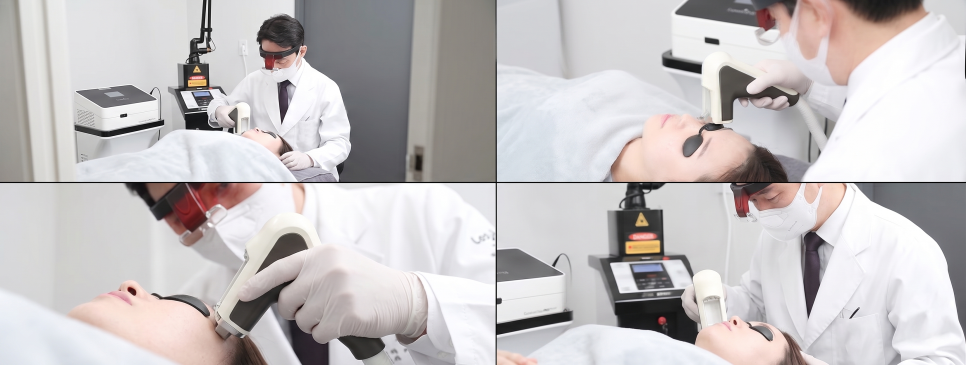
Lifting treatments work by
pulling these loosened structures
back up from within.
Without using a scalpel,
heat energy such as ultrasound
or radiofrequency is delivered
to the deeper layers of the skin,
stimulating the production of
new collagen.
It may be easier to understand
if you think of it as rebuilding
the collapsed support columns
so they can hold up the ceiling again.

Ultrasound and radiofrequency
use different paths
When looking into Gangnam lifting,
the first major choice you encounter
is between ultrasound and radiofrequency.
Representative ultrasound lifting
treatments include Ultherapy,
Doublo Gold, V-RO,
and Shurink.
Like using a magnifying glass
to focus sunlight on a single point,
this method concentrates energy
on one point in the deeper layers
to lift sagging areas.
It is therefore well suited to people
with noticeable sagging around the contours
or those who want to define the jawline
more clearly.
Thermage,
a radiofrequency lifting treatment,
works differently.
Rather than focusing on one point,
it spreads heat evenly across the skin,
gently tightening the loosened texture.
It can be helpful for people
with reduced elasticity and enlarged pores,
or those who want firmer-looking skin overall.
Ultimately, it is not that one option
is better than the other.
The choice depends on whether
the concern is facial sagging
or reduced elasticity.
If summer is making you hesitate,
here is why now may actually be a good time
Many people worry that they should
postpone treatment during summer.
Unlike pigmentation treatments,
Gangnam lifting is not particularly
sensitive to ultraviolet exposure.
This is because it does not target
the melanin in the epidermis;
instead, it stimulates collagen
in the deeper layers of the skin.
However, for about a week after treatment,
it is better to avoid saunas and strong sunlight
and to apply sunscreen carefully.
Since collagen takes time to build up,
starting in summer and allowing the results
to settle in by autumn can also be a good fit.

Onda and skin boosters,
when used together, can improve skin texture
If your skin is thin and fine lines
are a concern, you may consider adding
Onda Lifting, which uses microwaves.
You can lift sagging contours with
Gangnam lifting and replenish inner moisture
and improve skin texture with skin boosters
such as Juvelook or Rejuran,
which may create a more dimensional change.
However, the right combination
depends on skin thickness and the degree
of sagging.
Since no single device is the right answer
for everyone, the first step is to examine
which areas of your face need attention.
The questions we hear most often
in the consultation room,
answered by the director
Q. Is lifting treatment very painful?
It varies by area, but around the bones
there may be a prickling sensation,
while radiofrequency can feel warm
and slightly stinging.
For most people, it is tolerable,
and numbing cream can be applied
if needed to reduce discomfort.
Q. When will I start seeing results?
You may feel a slight tightening
immediately after treatment,
but as collagen builds up,
more noticeable changes generally appear
between one and three months.
Because results vary from person to person,
we recommend waiting and observing
for two to three months.
Q. Can I return to my daily activities
right after treatment?
In most cases, you can wash your face
and apply makeup from the same day.
Redness or mild swelling
may be visible for a day or two,
but it gradually subsides.
Q. I am in my 20s. Is it okay to have
treatment already?
If you are in your late 20s
and do not have significant sagging,
many people begin gently as a preventive measure.
However, if dryness is more concerning
than sagging, a skin booster may be more suitable,
so it is better to assess your skin condition first.
Results generally last
from about six months to one year,
with differences depending on lifestyle
and ongoing care.
Not excessive, but clearly noticeable
I believe the goal of lifting
is not a face that obviously looks treated,
but a natural appearance that makes you think,
“Your face looks more relaxed these days,”
when you look in the mirror.
If you are considering Gangnam lifting,
rather than focusing on the names
of popular devices, it would be good
to carefully consider what your skin
needs right now.
A change you can trust for a long time
is more valuable than a single treatment.
As summer approaches, I hope you can
face the mirror with a lighter heart.
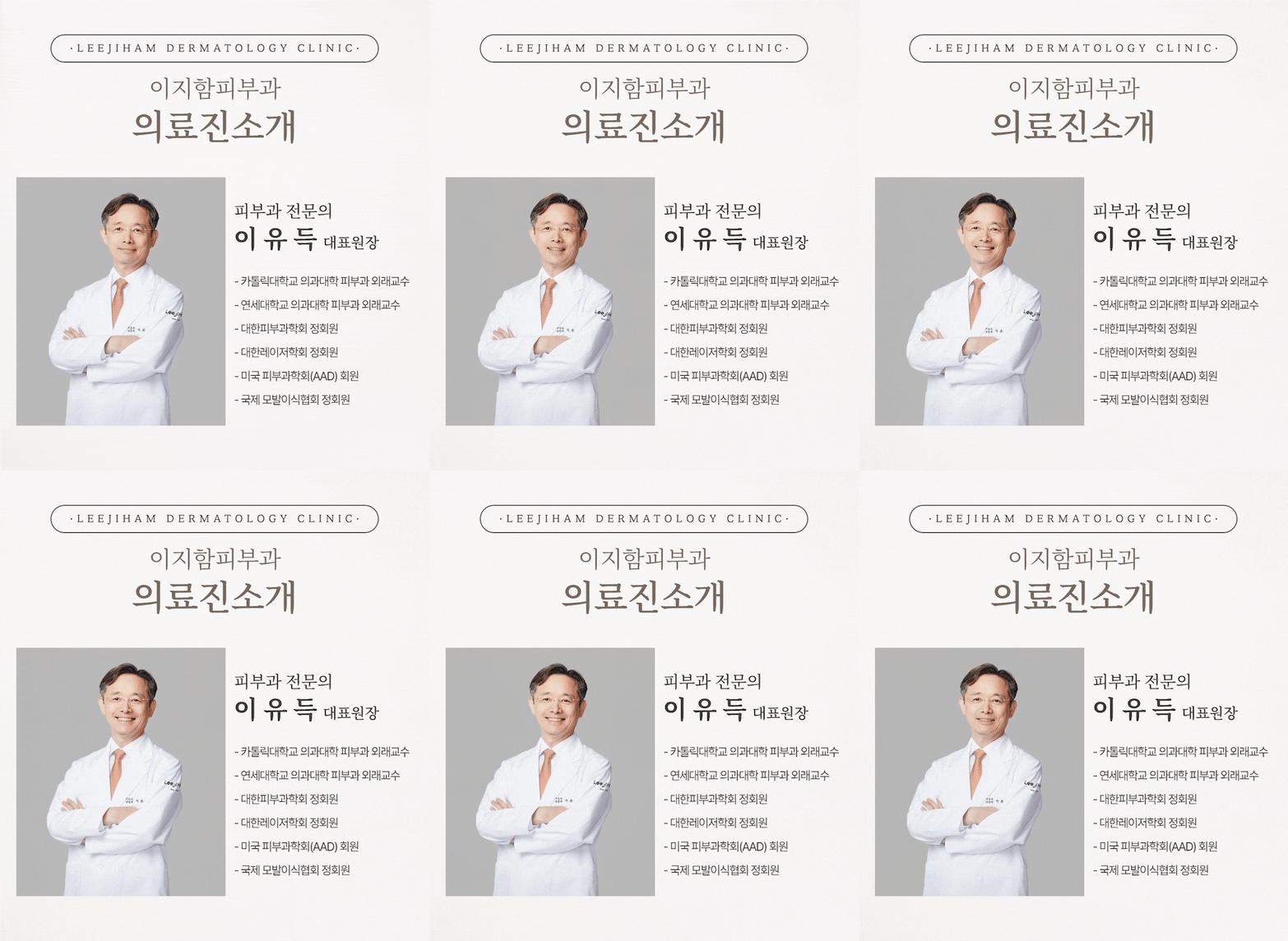
🏥 이지함피부과
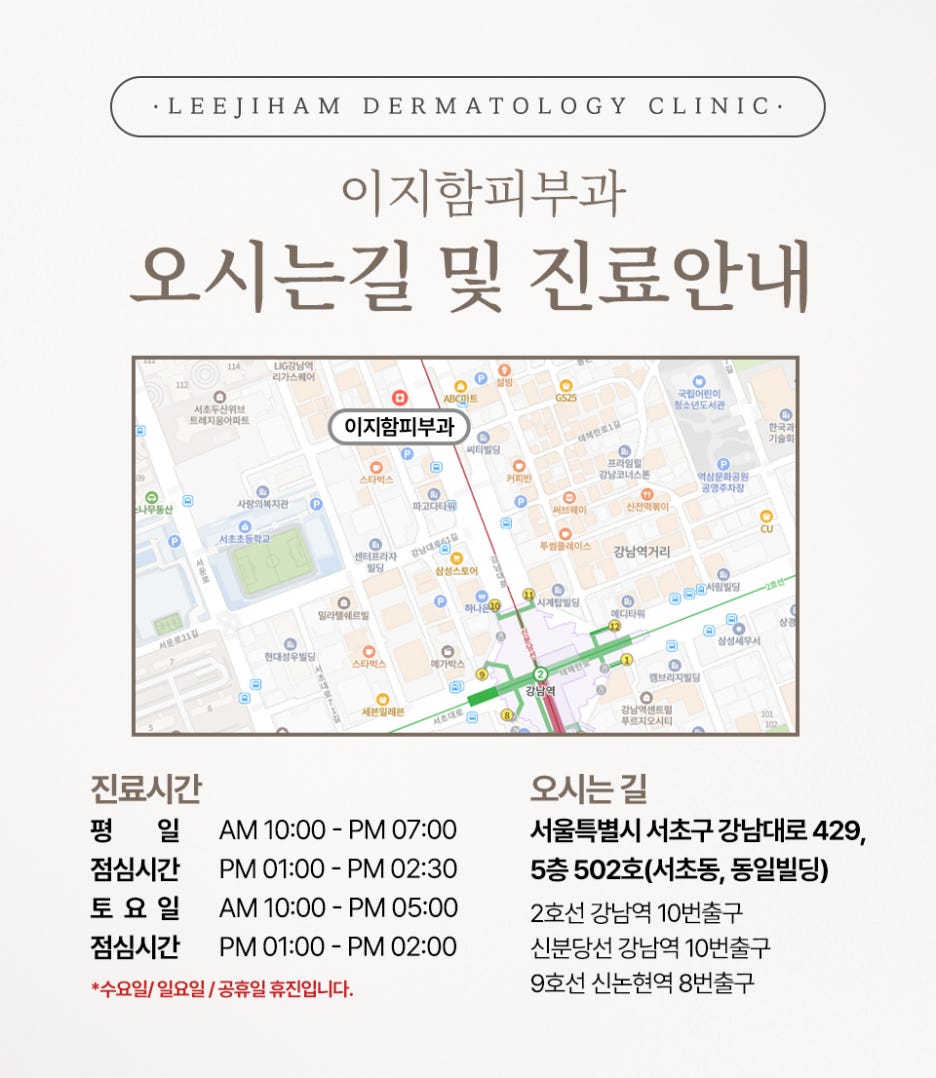
Located in Dongil Building in Seochodong,
between Gangnam Station and Sinnonhyeon Station.
📍 5th floor, Suite 502, 429 Gangnam-daero, Seocho-gu, Seoul (Seochodong, Dongil Building)
📞 02-567-5900
🕙 Clinic hours
· Monday, Tuesday, Thursday, Friday ㅣ 10:00–19:00
· Saturday ㅣ 10:00–17:00
· Lunch break ㅣ Weekdays 13:00–14:30
· Closed ㅣ Wednesday, Sunday, and public holidays










Previous image
Next image









Previous image
Next image