Those especially noticeable
brown spots
in photos—
do they look familiar?
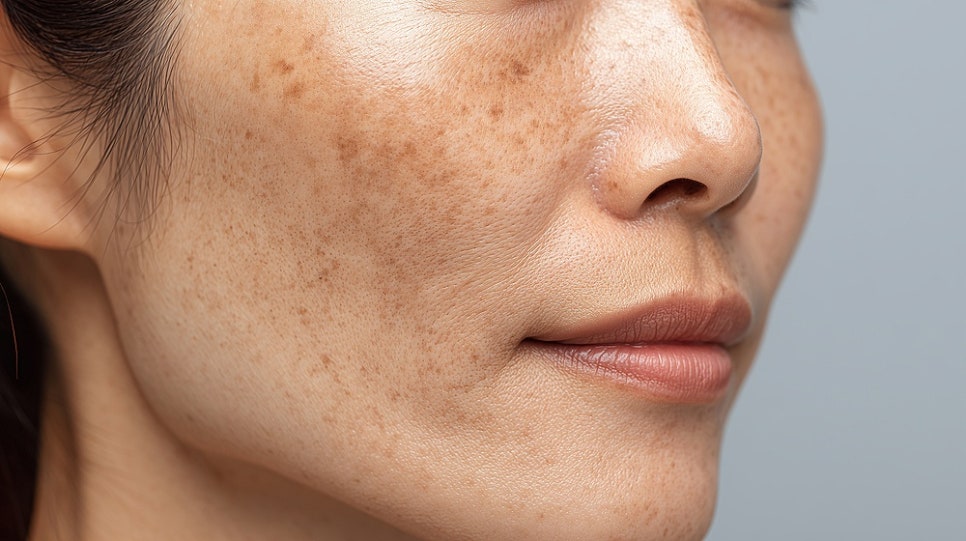
Recently, we have often seen patients in the consultation room who are concerned about brown spots appearing in various areas of the face or marks left behind by acne, due to increased exposure to UV rays and stress.
If you have felt upset about blemishes that stand out whenever you take a photo or reddish marks that are difficult to cover even with makeup, the pigmentation laser treatment we will discuss today may help ease those concerns, even if only a little.
Many people have spent years worrying as they moved from one cosmetic product or procedure to another. Once the exact cause is identified, however, the direction of care often becomes clearer than expected.
Because every person’s skin is different, it is especially important to identify the cause through an accurate diagnosis first.
Today, we will carefully discuss the topics we frequently talk about in the consultation room, from the causes of hyperpigmentation to treatment methods.
Marks etched into the skin,
what exactly are they?
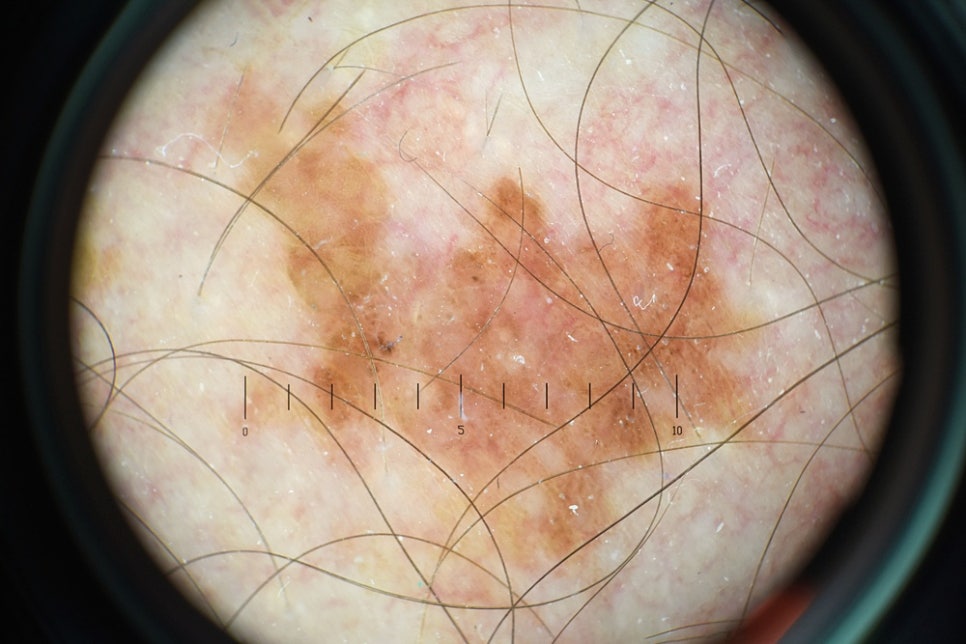
Hyperpigmentation refers to the condition in which melanin pigment becomes excessively
accumulated in specific areas of the skin
due to UV exposure,
inflammation, or hormonal changes.
Melasma, freckles, and the brown marks
left behind where acne has healed
are all forms of hyperpigmentation.
Pigment found only in the epidermis
is relatively shallow and easier to improve,
but when it has settled into the dermis,
consistent care is needed.
In such cases, pigmentation laser treatment
selectively applies specific wavelengths of light
only to the pigment, helping it gradually
become lighter while reducing damage
to the surrounding skin.
Many people come to us with similar concerns
Among the people we see in the consultation room,
many have spent several years moving from one cosmetic product
to another and from one procedure to another.
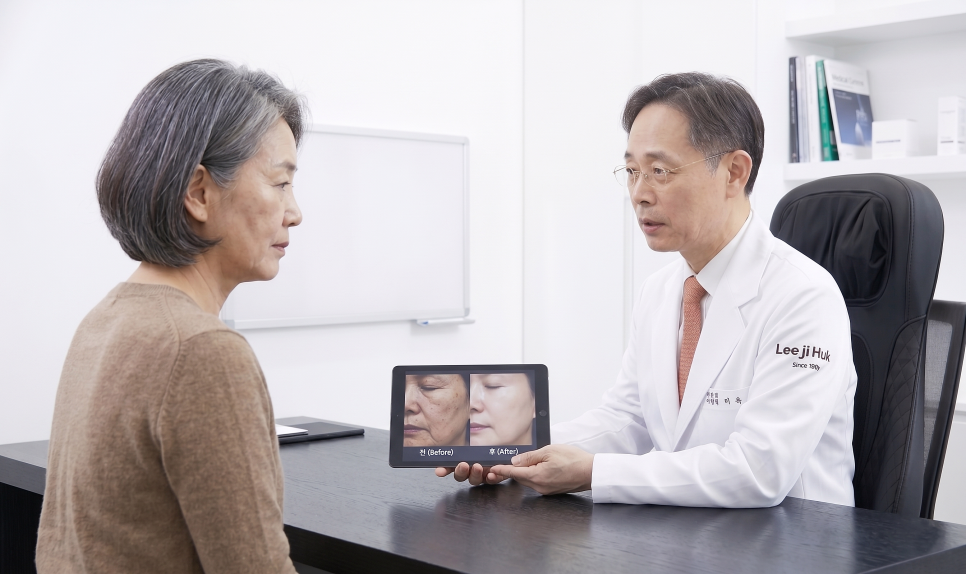
One woman in her 40s told us
that the darkening blemishes she saw
every morning in the mirror
had made her makeup routine longer.
She said that after trying various functional cosmetics
without seeing much change, she searched online
and came across the term “pigmentation laser.”
Some people even look through reviews saying
that their condition did not improve after treatment,
then come to the consultation room feeling confused
and wondering whether they can really get better.
People who have managed their skin on their own
for a long time often tell us that they feel much more at ease
after the diagnostic process accurately identifies the cause.
Because the type and depth of pigment
vary from person to person,
the approach may differ even for similar blemishes.
Treatment methods can be divided as follows
Pigmentation laser treatment can largely
be divided into IPL, laser toning,
and picosecond laser treatment.
IPL uses light across a broad range of wavelengths,
with the advantage that it can improve
not only pigmentation but also facial redness.
Laser toning delivers a specific wavelength
intensively to deeper pigmentation,
so it is mainly used for pigment located
in the dermis, such as melasma.
Picosecond lasers break pigment into very small particles
using short pulses, making them effective
for pigment relatively close to the epidermis,
such as blemishes or age spots.
During treatment, you may feel a sensation
like a rubber band snapping against the skin
or some stinging. If needed, we apply
numbing cream in advance to reduce discomfort.
Acne scars also need to be considered
Along with pigmentation, many people
struggle with scars left behind
where acne has healed.
Because acne scars often leave the skin texture
uneven when the inflammation was deep,
pigmentation treatment alone has limitations
in terms of the changes it can produce.
In such cases, we combine methods according to the condition,
including CLO흉터복원술, which uses chemical treatment,
laser treatment, and, when necessary, surgical treatment,
as well as 콰드로스타, which is used for changes
in acne marks and facial redness.
Using several treatment methods together
can address different types of scars at the same time,
which is often helpful when scars are spread across
multiple areas.
Because the shape and depth of scars differ
from person to person, it is safer to proceed in stages
and monitor the progress rather than perform
multiple procedures all at once.
Frequently asked questions in the consultation room,
answered directly
Q1. How many pigmentation treatments
are needed before results appear?
A. It varies depending on the type and depth
of the pigmentation, but we generally recommend
several sessions at intervals of 2–4 weeks.
For pigmentation that frequently recurs,
such as melasma, consistent care
is especially important.
Q2. The pigmentation looks darker
after treatment. Is that okay?
A. Yes. This is a temporary reaction
that can make it look as though
the pigment has risen to the surface.
It naturally becomes lighter along with exfoliation
after about 1–2 weeks, so there is no need
to worry too much.
Q3. Can I receive this treatment in summer?
A. It is possible, but because this is a period
of increased UV exposure, there is a risk
that the pigmentation may darken again.
Treatment intensity is adjusted on the condition
that you practice thorough sun protection.
Q4. Can acne scar treatment
and pigmentation treatment be done together?
A. Depending on the condition of your skin,
it may be possible to combine them.
However, it is safer to determine the order
and interval after a diagnosis,
so we will create a plan through consultation.
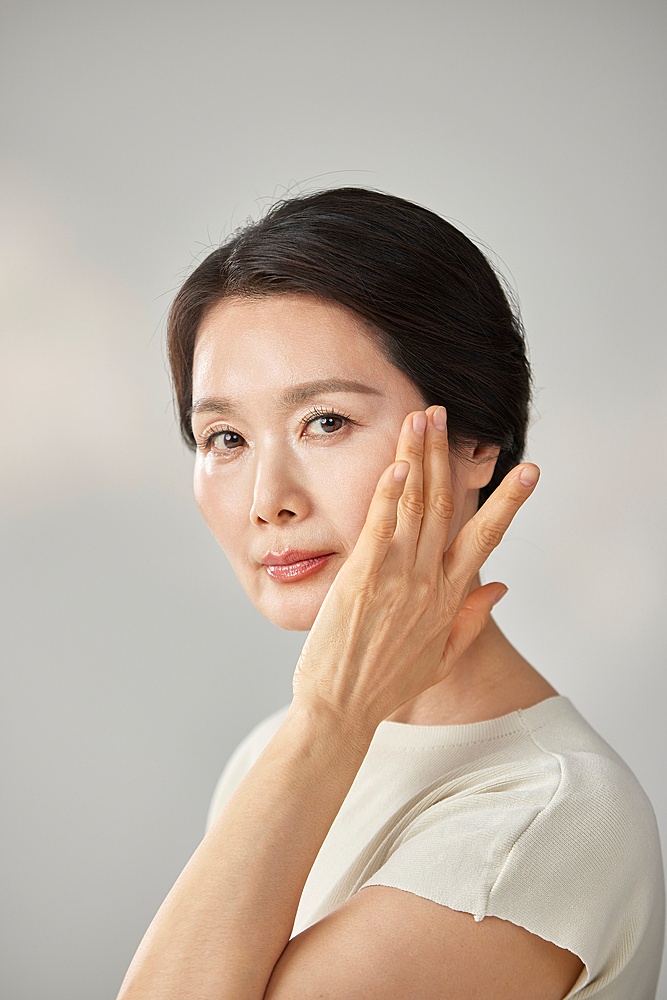
We will be with you as you work toward a more comfortable-looking face
Whether it is blemishes or acne scars,
if the concern has remained in the back of your mind
for a long time, it is important to carefully assess
the condition of your skin step by step
rather than expect it to improve overnight.
After treatment, sun protection is
particularly important. Even if temporary
redness or flaking occurs, it usually settles
within a few days, so there is generally
no need to be too alarmed.
이지함피부과 follows the philosophy
of creating a comfortable-looking face
rather than pursuing excessive changes.
Through honest consultations and proven procedures,
we will carefully discuss a pigmentation laser treatment plan
suited to each person’s skin.
Please feel free to ask any questions
during your consultation.
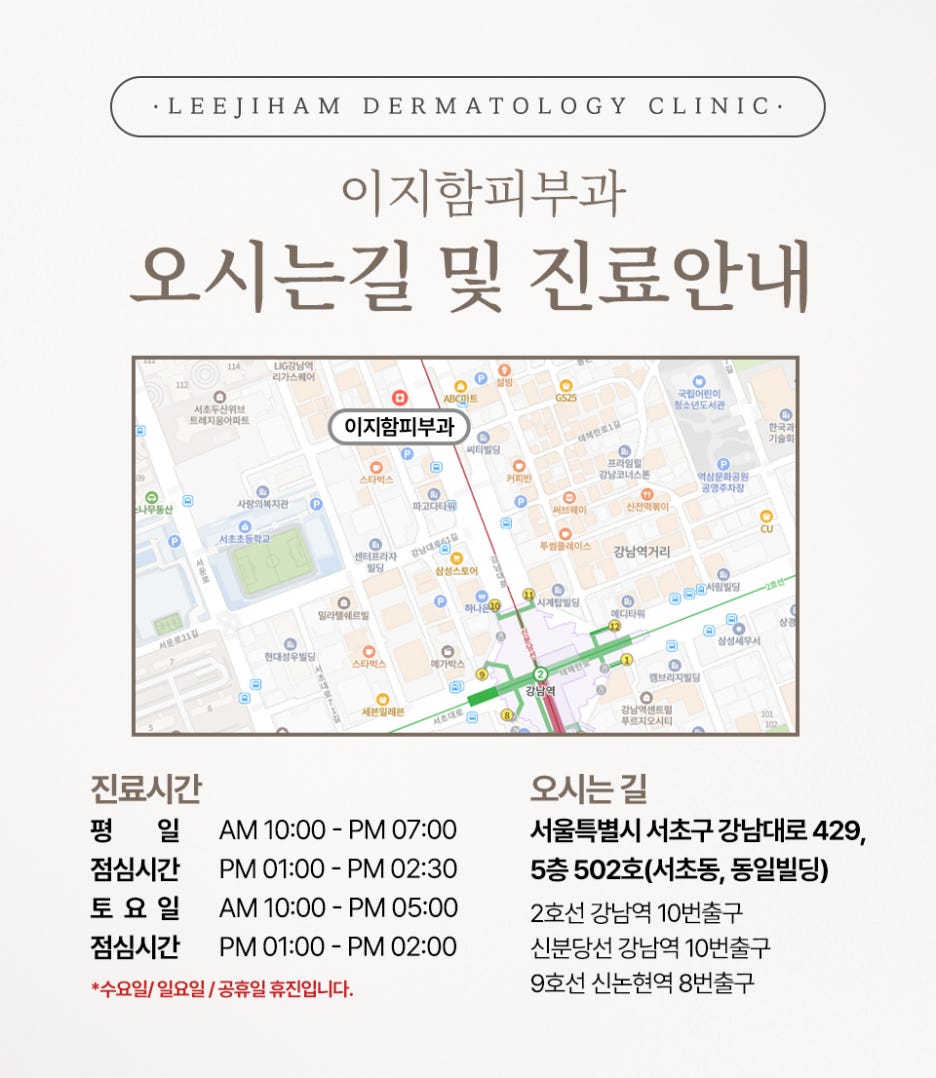
📍 Directions
이지함피부과 is located between Gangnam Station
and Sinnonhyeon Station, at Room 502 on the 5th floor
of Dongil Building, 429 Gangnam-daero,
Seocho-gu, Seoul.
It is also conveniently accessible on foot
along Gangnam-daero.
☎ Main telephone: 02-567-5900
🕐 Clinic hours
· Monday, Tuesday, Thursday, Friday: 10:00–19:00
· Saturday: 10:00–17:00
· Lunch break (weekdays): 13:00–14:30
· Closed: Wednesday, Sunday, and public holidays