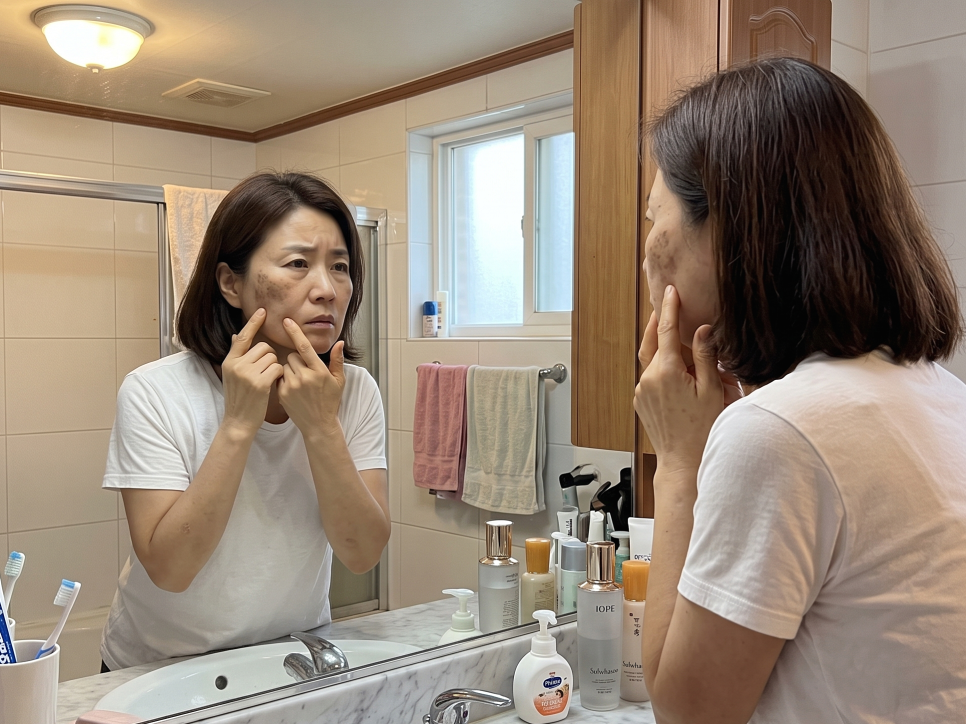
Similar-looking brown marks,
why do they require different care?
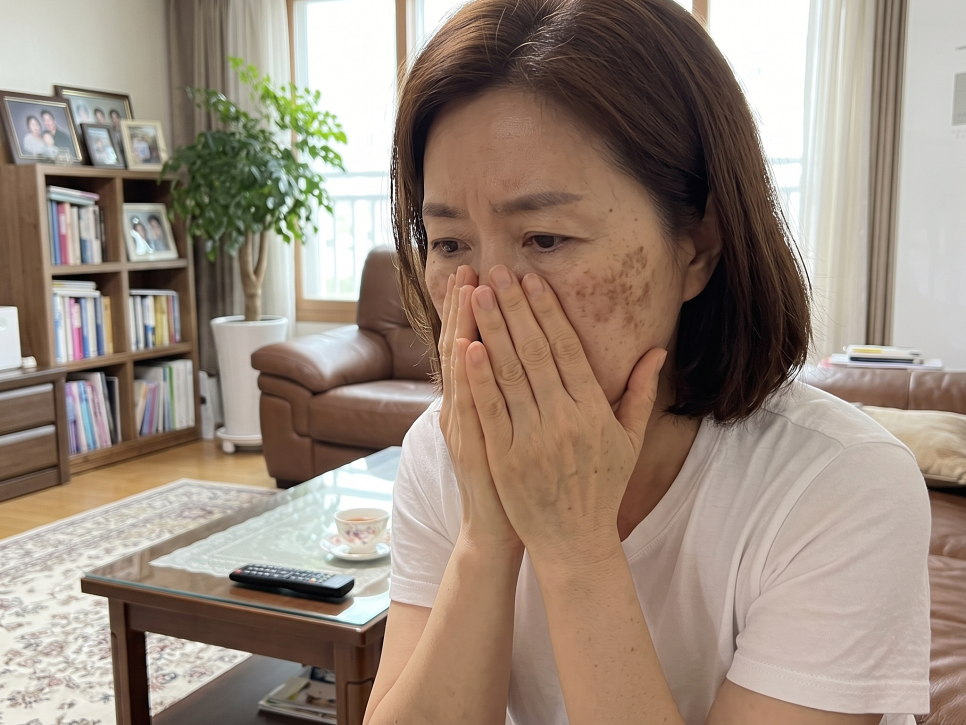
You may have felt self-conscious about the brown marks spreading across both cheeks every time you looked in the mirror, and perhaps tried covering them with makeup or applying various brightening products.
However, some marks seem to fade before reappearing when the seasons change, while others have had clearly defined borders from the beginning and do not disappear easily.
Today, I would like to go over one by one the differences between melasma and lentigines—one of the questions I hear most often in the consultation room.
Although the two may look similar at first glance, they differ in where they develop and in their characteristics. By the time you finish reading this, you may have a better sense of which type your facial marks resemble.
Faintly spreading across both cheeks
The nature of melasma
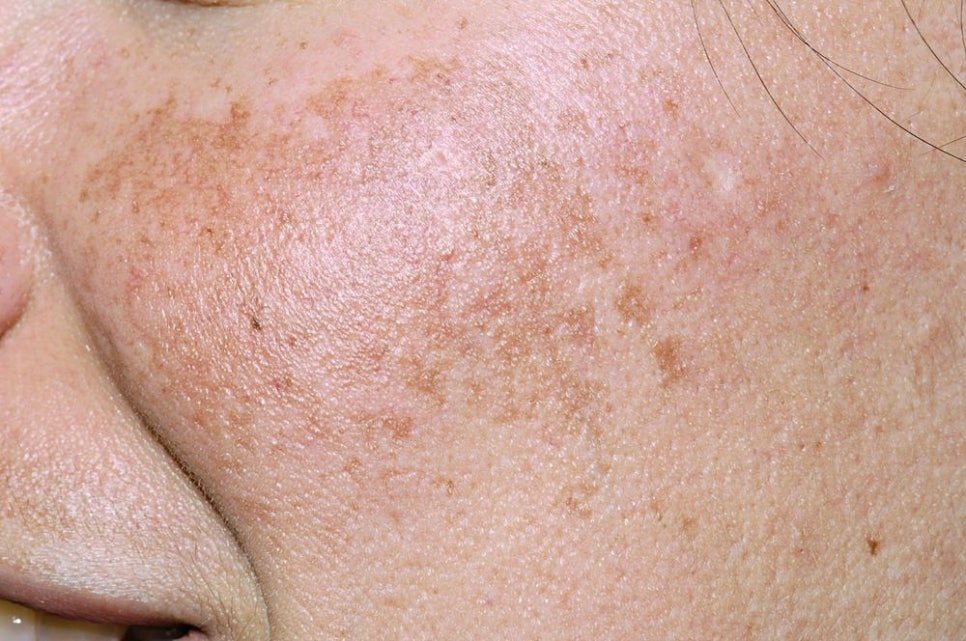
Melasma refers to brown pigmentation that spreads broadly and symmetrically across the cheeks, forehead, and around the mouth.
It is characterized by indistinct borders and a hazy, cloud-like appearance.
Melanin pigment often settles not only in the epidermis but also deep in the dermis.
That is why, like a stain with deep roots, it does not disappear easily simply by treating the surface.
It often becomes darker in connection with changes in female hormones, prolonged exposure to ultraviolet rays, and stress.
Many people find that it fades and darkens repeatedly depending on the season and their condition.
In particular, many people feel distressed when it becomes darker after childbirth or with age.
A spot with a clearly defined border:
What kind of mark is a lentigo?
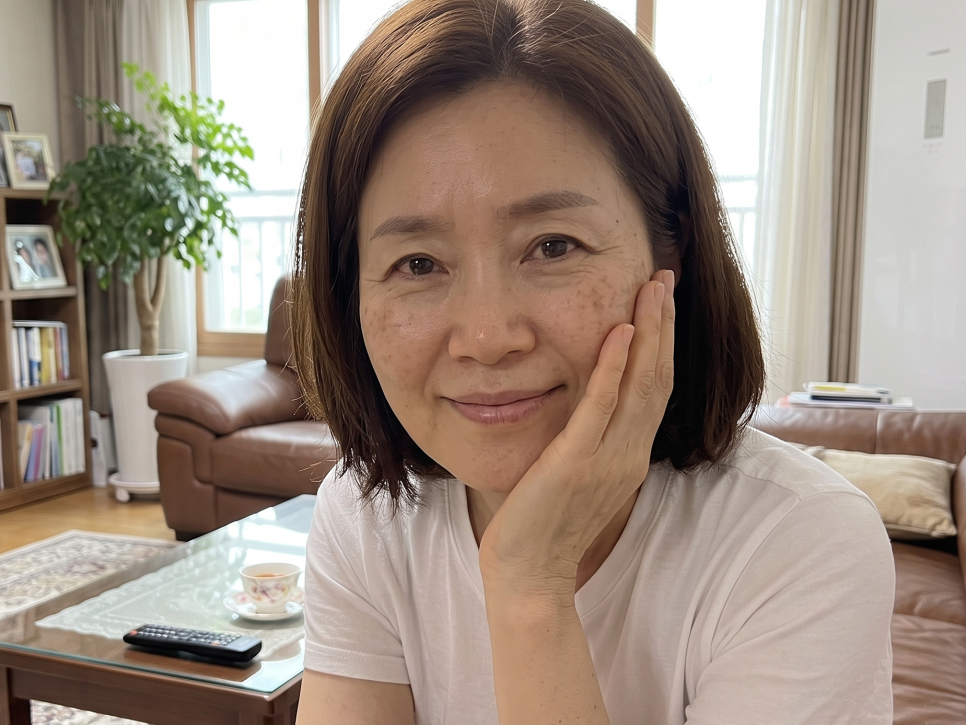
A lentigo is a clearly defined brown spot caused by an increase in melanocytes in one area.
Rather than spreading broadly like melasma, it appears as a distinct, small spot about the size of a bean.
The pigment is mainly concentrated in the epidermis and at the dermal-epidermal junction, so it is relatively shallow.
It commonly develops gradually as the effects of prolonged ultraviolet exposure accumulate.
Many people confuse it with an age spot, but if the surface is raised and thicker, it is somewhat different.
It may help to think of a lentigo as generally flat, with its color being the main noticeable feature.
It tends to develop on areas frequently exposed to sunlight, such as the backs of the hands or the outer parts of the face.
The first criterion: Does it spread, or is it clearly defined?
The first criterion for distinguishing melasma from lentigines is the border and shape of the pigmentation.
Melasma has indistinct borders and spreads across a broad area, as though it is diffusing.
Lentigines, on the other hand, have clearly defined borders and a distinct location, like individual spots.
Put simply, melasma is like a watercolor painting where the paint has bled, while a lentigo is like a stamp making one distinct mark.
Looking in the mirror to see whether the outline is blurry or clear can provide a useful clue by itself.
The second and third criteria: Depth and recurrence
The second criterion is the depth at which the pigment is located.
Melasma can extend into the dermis, making it relatively difficult to manage.
Lentigines often remain in comparatively shallow layers.
The third criterion is how they respond to irritation and whether they recur.
Melasma may actually become darker when exposed to strong irritation, and it often recurs.
Lentigines are less sensitive to irritation, and once they become lighter, they tend to remain stable comparatively well.
So even when two marks are the same brown color, it is important to view them as separate conditions.
When you examine the borders, depth, and recurrence in this way, the differences between melasma and lentigines become much clearer.
A consultation tailored to the nature of each mark
Once you understand the differences between melasma and lentigines, you will understand why the approach to care differs as well.
For melasma, we consistently combine low-fluence, gentle laser toning with brightening care.
Rather than treating it aggressively all at once, the approach is to gradually brighten the area over multiple sessions, gently calming its texture.
For lentigines, pico lasers or IPL are used to target the distinct spots by focusing on the pigmentation.
During the procedure, you may feel a stinging sensation similar to a light snap from a rubber band, and numbing cream can be applied if necessary.
Immediately after the procedure, the pigmentation may temporarily appear darker. In most cases, it gradually fades along with exfoliation within one to two weeks as part of the normal process.
Results and reactions vary from person to person, so the pace is adjusted after examining the condition of your skin.
Above all, you should continue protecting your skin from ultraviolet rays so that the improved complexion lasts longer.
A comfortable, natural-looking face rather than excessive change
Have the differences between melasma and lentigines become a little clearer after reviewing them together?
Even when brown marks look alike, their nature can differ, and so can the treatment approach.
That is why it is important to understand the nature of your marks first, rather than immediately seeking the strongest possible procedure.
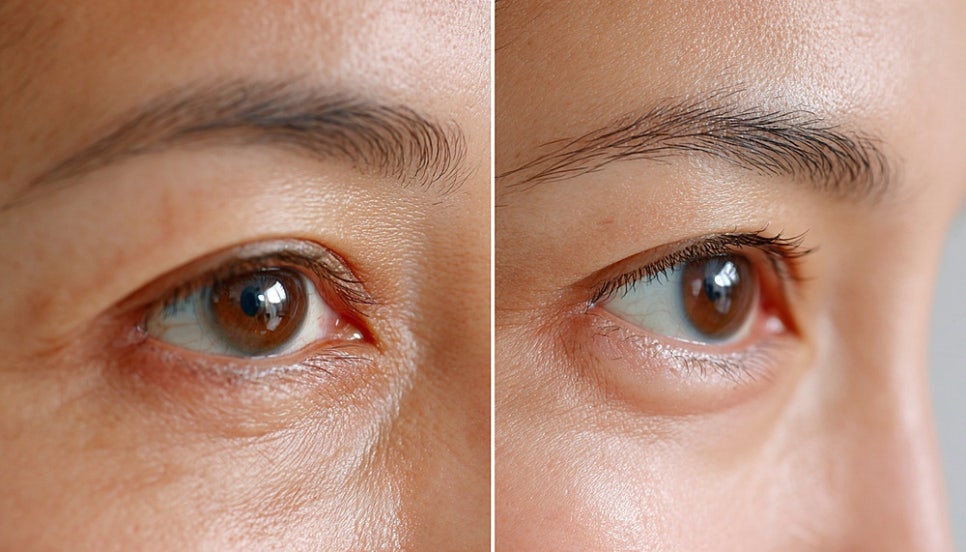
We value preserving a comfortable, natural-looking face over pursuing excessive change.
With honest consultations and proven procedures, we will be a reliable partner you can trust for a long time.
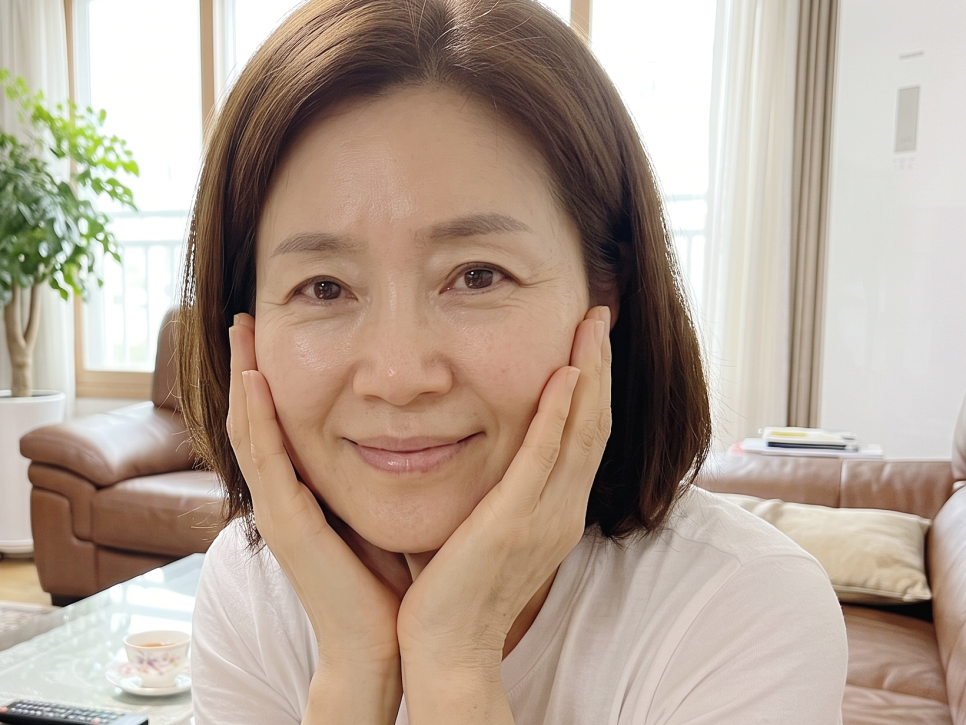
Everyone’s skin is different, so please do not rush. We hope you can gradually restore your skin’s natural texture.
Questions answered directly by the director
Q1. Can melasma and lentigines be distinguished by appearance alone?
A. Yes, you can obtain some clues to a certain extent.
If the borders are hazy like fog and the pigmentation spreads symmetrically across both cheeks, it is more likely to be melasma. If it is a distinct spot with clearly defined borders, about the size of a bean, it is more likely to be a lentigo.
However, the two often occur together, so an accurate distinction is best made after directly examining the skin.
Q2. Why does melasma keep coming back?
A. Melasma often develops through a combination of changes in female hormones, prolonged exposure to ultraviolet rays, and stress.
When these factors continue, the pigmentation may darken again even after it has faded.
That is why protecting your skin from ultraviolet rays and maintaining consistent care are just as important as procedures. We recommend taking a long-term approach rather than becoming impatient.
Q3. How do lentigines develop?
A. Lentigines form as melanocytes increase in one area, creating a clearly defined spot.
Accumulated ultraviolet exposure over many years is the primary background factor, so many people develop more spots gradually as they age.
Consistent sun protection can help slow the rate at which new spots develop.
Q4. Why is it helpful to know the difference between the two marks?
A. Treating marks with different characteristics in the same way may lead to disappointing results.
If melasma is treated with intensive procedures all at once, it may actually become darker, while lentigines may respond more clearly to procedures suited to their characteristics.
Therefore, first determining which type your marks resemble is the first step toward saving time and emotional energy.
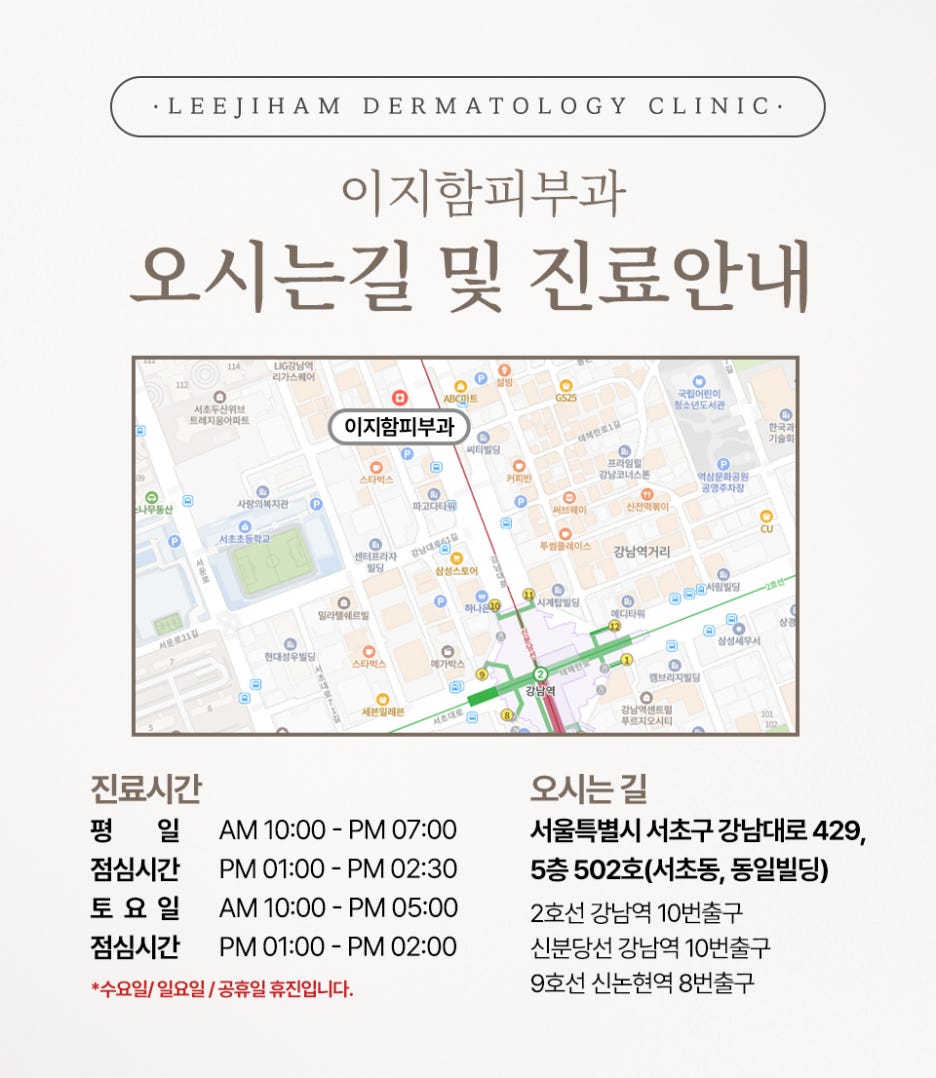
Leejiham Dermatology Gangnam Branch Information
📍 Location
5th floor, Suite 502
429 Gangnam-daero,
Seocho-gu, Seoul (Seocho-dong, Dongil Building)
Near Gangnam Station and Sinnonhyeon Station
☎ Phone
02-567-5900
🕒 Hours
· Monday, Tuesday, Thursday, Friday: 10:00–19:00
· Saturday: 10:00–17:00
· Lunch break: Weekdays 13:00–14:30
· Closed: Wednesdays, Sundays, and public holidays
We are located between Gangnam Station and Sinnonhyeon Station, within walking distance of a nearby exit.
We are always prepared to welcome you in a comfortable setting.