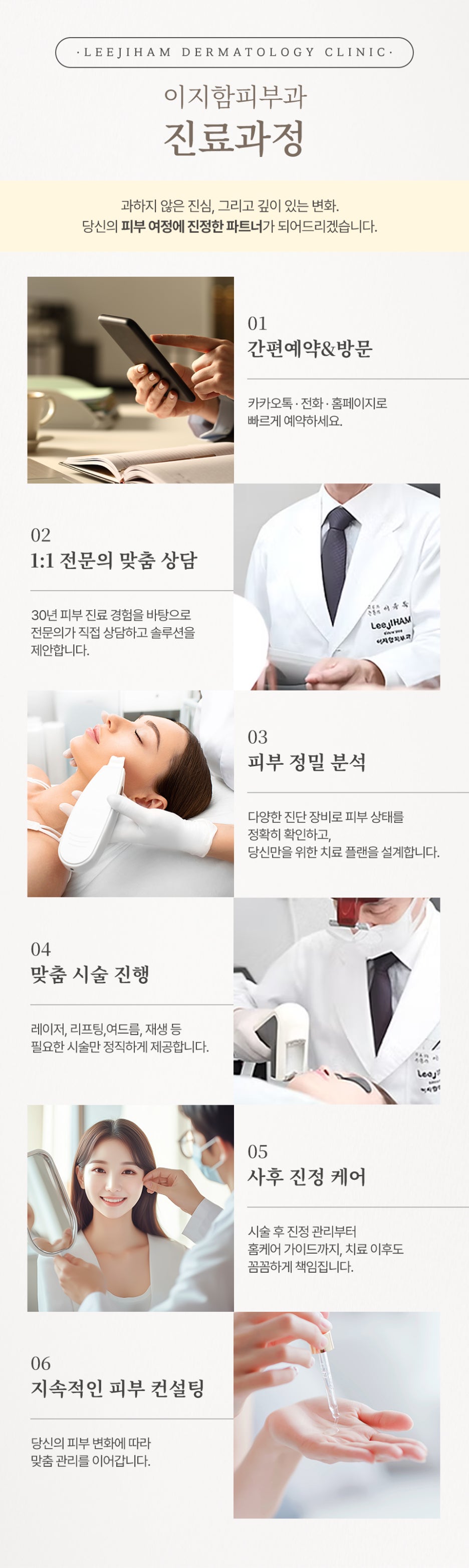
Five years of visiting dermatology clinics,
and yet why does it always
feel like I’m back where I started?
I hear comments like this very often in the consultation room.
“I’ve been going from one clinic to another for five years, but it feels like I’m only spending money and seeing improvement briefly each time.” Every time they look in the mirror, the shadow-like marks spreading across their cheekbones catch their attention. They try covering them with makeup, but by the afternoon, the discoloration shows through again.
So even after looking into laser treatment for melasma and dark spots, they hesitate, thinking, “What if I’m just spending money again?”
That hesitation is not laziness. It is a reasonable caution shaped by the disappointment of having hoped for results several times before.
Today, I would like to calmly go over three things you should consider carefully before getting started.
The marks on your face—
You need to identify them accurately by name first
Melasma develops when ultraviolet exposure, hormonal changes,
and stress overlap,
causing excess melanin production.
It is a condition in which the pigment
has settled deep into the dermal layer.
By contrast, freckles and dark spots often remain
in the epidermal layer,
giving them clearly defined,
dot-like borders.
To put it simply, dark spots are like
dust resting on a sheet of paper,
while melasma is like ink
that has soaked into the paper.
Dust can be brushed away,
but ink that has soaked in
needs to be gradually lightened.
The first thing you should consider
is this:
Have you accurately determined through a diagnosis
which layer the pigment
on your face is located in?
Why does it look better on some days
and unchanged on others, even though it is the same pigment?
The second thing you should consider
is what type of light is being used.
IPL uses light across a broad range of wavelengths
all at once,
addressing pigment, blood vessels,
and redness together.
Laser toning selects a specific wavelength
and acts more intensively
on pigment located deeper in the skin.
Using lighting as an analogy, IPL is like a fluorescent light
that brightens an entire room,
while toning is closer to a desk lamp
focused on one spot.
If epidermal dark spots are your main concern,
IPL may be suitable. For melasma that extends into the dermis,
a combination of toning
and brightening care
may be more appropriate.
If laser treatment for melasma and dark spots
has felt effective only temporarily,
you should also consider the possibility
that the treatment light did not match your pigment.


I do not promise to finish everything in one session
The third thing you should consider
is the number of sessions and the treatment plan.
Although it varies depending on the type and depth of the pigment,
it usually follows a gradual lightening process
over multiple sessions spaced
two to four weeks apart.
Trying to erase everything at once with high intensity
can instead cause the pigment
to reappear.
That is why, rather than one intense treatment,
I tend to recommend
multiple treatments at an appropriate intensity.
Because melasma is affected by hormones
and ultraviolet exposure,
it can recur, and ongoing care
is necessary.
Laser treatment for melasma and dark spots is not a one-time
event. It is closer to a process
of managing your overall skin condition
over time.
I will also explain in advance
the stinging sensation and several days of feeling unfamiliar
I will also be candid about
what the treatment feels like.
IPL can feel like a light snap
from a rubber band,
while toning may cause
a stinging sensation.
Pain varies significantly from person to person,
so if necessary, numbing cream
can be used to reduce discomfort.
Immediately after treatment, you may go through a period
when the pigment appears
darker rather than lighter.
This is part of the process in which the pigment
is pushed toward the surface,
and it often fades along with exfoliation
over one to two weeks.
If you do not know about this phase,
you may be startled and think
that the condition has worsened,
so it is better to be aware of it in advance.
This is also why you should consistently
use sun protection
after receiving laser treatment for melasma and dark spots.

Rather than simply removing pigment,
the goal is to prevent it from becoming dark again
The most powerful tool in pigment care
is not sophisticated equipment,
but sunscreen.
Even if treatment has lightened the pigment,
exposure to sunlight without protection
can cause it to return.
For about one week after treatment,
avoid saunas, steam rooms,
and strenuous exercise,
and do not forcibly remove flakes.
You can receive treatment in summer,
but during seasons with strong ultraviolet exposure,
the intensity should be adjusted
and extra attention should be paid to sun protection.
Planning treatment between autumn and spring
can give you a little more flexibility.
We always prioritize preserving
a comfortable, natural-looking face
over dramatic changes.

The time you spent hesitating was never wasted
Because you have had several disappointing experiences,
you are taking the time today
to examine everything carefully.
That thoughtfulness can actually become
a valuable asset for your skin.
Understanding the depth of your pigment,
choosing an approach suited to it,
and creating a treatment and care plan together—
when these three elements work together,
laser treatment for melasma and dark spots
can finally begin to fulfill its role.
Every person’s skin is different,
so results also vary from person to person.
Being honest in our explanations
and helping you maintain a comfortable,
natural-looking face over the long term
rather than pursuing excessive change—
this is the approach to care
that 이지함피부과 wants to uphold.


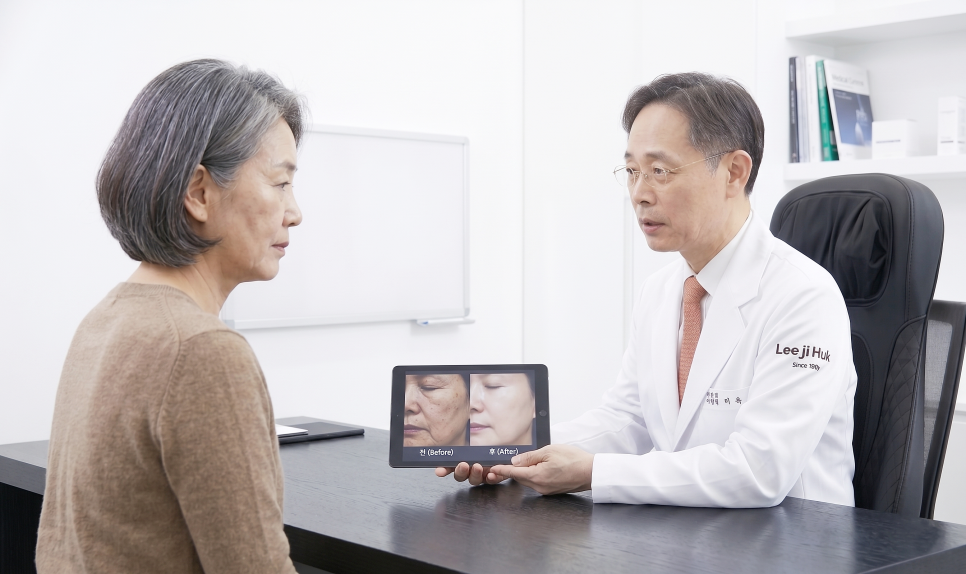
The director answers your questions directly
Q1. Why does melasma develop?
A. Ultraviolet exposure is the biggest cause. When hormonal changes, stress,
and lack of sleep are added,
the cells that produce melanin
become more sensitive.
Many people notice that their melasma becomes noticeably darker
during periods of fluctuating hormones,
such as pregnancy or menopause.
Q2. Are the treatment methods different
for melasma and freckles?
A. Yes, they are different.
Because freckles are pigment in the epidermal layer,
they tend to lighten relatively easily.
Melasma extends into the dermal layer,
so it is generally better to combine toning
with brightening care.
Q3. Would it be enough to use brightening cosmetics diligently?
A. Brightening care helps suppress
the process through which melanin is produced.
Its role differs from that of treatments targeting
pigment that has already settled in the skin,
so combining both approaches may lead
to a better overall course.
Q4. How can a dermatology consultation help?
A. It is difficult to determine the layer
of pigment by looking at it alone,
and each person has different skin characteristics
and factors that contribute to recurrence.
In the consultation room, we can assess the depth of the pigment,
adjust the intensity and intervals,
and respond together if a reaction occurs
after treatment.
Q5. Can I receive treatment during pregnancy?
A. During pregnancy, hormonal changes
can easily darken pigmentation,
and the response can be difficult to predict,
so we do not recommend treatment.
It is better to begin after childbirth
and breastfeeding have ended.

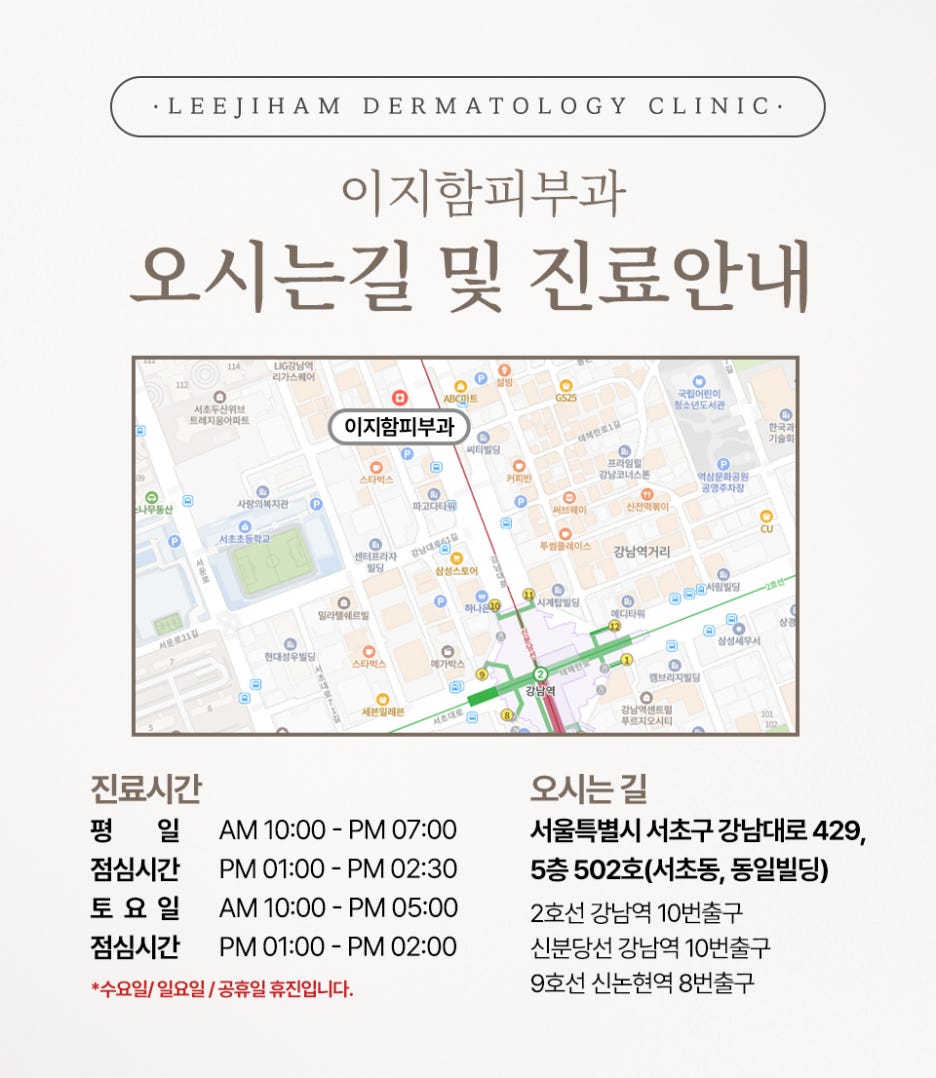
📍 Directions
429 Gangnam-daero, Seocho-gu, Seoul,
5th floor, Suite 502
(Seocho-dong, Dongil Building)
Near Gangnam Station and Sinnonhyeon Station
📞 Contact number
02-567-5900
🕐 Clinic hours
· Monday, Tuesday, Thursday, Friday: 10:00–19:00
· Saturday: 10:00–17:00
· Lunch break: Weekdays 13:00–14:30
· Closed: Wednesday, Sunday, and public holidays
The clinic is closed on Wednesdays, Sundays,
and public holidays.
Please note that consultations pause briefly
during the weekday lunch break
when planning your visit.