Every time you look in the mirror,
a faint brown mark
spreading across your cheekbones
You may have felt weighed down by those marks that show through again every afternoon, even after covering them with makeup.
My name is Yideuk Lee, and I care for patients’ skin at 이지함피부과 Gangnam Branch.
Today, I have prepared a story I especially want to share with those who have struggled with melasma for a long time—particularly those who have given up, thinking, “This will probably stay the same no matter what I do.”
Using the story of someone I met in the consultation room recently, I would like to calmly explain how to approach treatment options for persistent melasma.
Every afternoon,
the marks would reappear
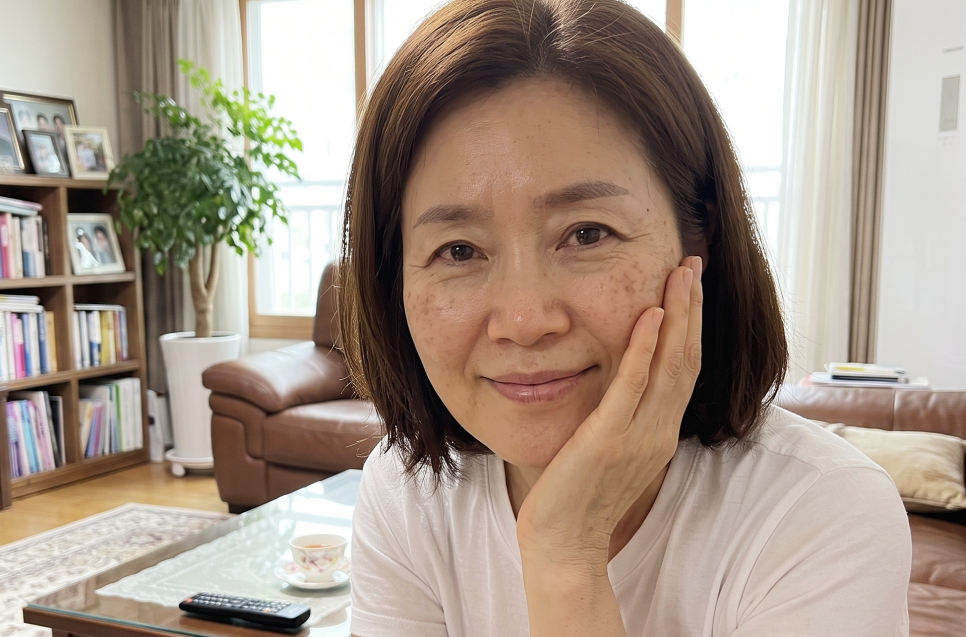
After turning forty,
this person said they had visited one clinic after another
for nearly five years
because of the melasma that had appeared over their cheekbones.
They had tried various functional cosmetics
and consistently applied brightening ampoules,
but the results were only temporary.
“Even if I visit a clinic, it fades for a while
and quickly comes back,
so now I wonder if I should just
live like this.”
Their exhaustion
was evident in their voice
as they said those words.
It is understandable to feel resigned
when you have spent considerable time and money
but always seem to end up back where you started.
In their words that they had tried
everything said to be effective,
from pore strips to ampoules,
there seemed to be a long-suppressed hope:
“I wish things would be a little different this time.”

There is a reason it is particularly persistent
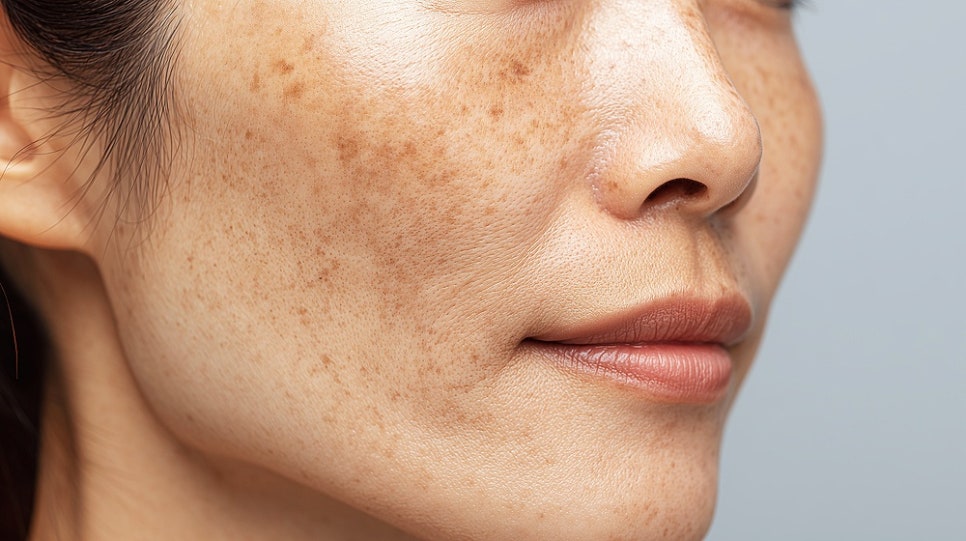
Melasma is a brown discoloration
that develops when melanin pigment
becomes excessively deposited in the skin.
However, even melasma can vary
in how deeply it is situated.
Freckles and spots are generally
located close to the skin’s surface,
so they may fade relatively easily,
but long-standing melasma often
has roots extending beneath the epidermis
into the dermal layer.
It usually spreads symmetrically
across areas exposed to sunlight for long periods,
such as the cheekbones, cheeks, and forehead,
and it is also characteristic for it to
become darker or lighter repeatedly
depending on the season or your condition.
It is similar to cutting grass only at the surface:
the roots remain and it grows back.
When hormonal changes,
long-term ultraviolet exposure,
and stress are added to this,
the pigmentation becomes even more stubborn.
The deeper and more easily recurring
the melasma is,
the more differently treatment options
for persistent melasma need to be planned
from the beginning.


The idea that it will stay the same is only half true
The thought that “it will stay the same anyway”
is half correct and half a misunderstanding.
If only the surface is treated,
the deeper pigmentation remains,
so it is true that it can quickly return.
However, when the approach is changed
to treatment options for persistent melasma
that target the roots,
the situation can be different.
Rather than trying to erase everything at once,
for stubborn melasma it is often better
to gradually lighten the pigmentation
while managing it so that it does not darken again.
The reason it improved and then repeatedly returned
was that the approach was not suitable,
not that their skin was unusually poor.
So there is absolutely no reason
to blame yourself for the time that has passed.
How deep pigmentation is treated
For pigmentation located deep in the dermis,
procedures such as laser toning (dual toning)
may be used.
The principle is to deliver light at specific wavelengths
in multiple sessions, gradually breaking the pigmentation
into smaller particles.
When there is widespread pigmentation or redness as well,
IPL may be used,
and after the marks have lightened,
brightening care can be added
to even out the overall tone.
Combining several approaches
according to the condition of the skin
is the basic framework
for treating persistent melasma.
The procedure may feel like
a light snap from a rubber band
or a stinging sensation,
so numbing cream can be applied if needed.
Immediately afterward, the pigmentation
may briefly appear darker,
but this is a natural part of the process.
Rather than relying heavily on a single procedure,
using different methods according to the depth
and extent of the pigmentation places less strain
on the skin and helps smooth and even out its texture.
When you let go of some impatience
I shared the same thoughts
with this person slowly and carefully.
Rather than expecting it to disappear all at once,
we discussed establishing a plan
to gradually manage the pigmentation
every few weeks and thoroughly block ultraviolet rays.
Even pigmentation that has worked hard to fade
can return if sun protection is neglected,
so this care is just as important
as the procedures themselves.
Of course, everyone’s skin is different,
so there are individual differences
in the speed and degree of improvement.
Still, I remember their expression for a long time—
their resignation that “it will probably stay this way forever”
had changed into the hope that “perhaps it can gradually improve.”


Even long-standing marks have their own pattern
I want to tell you that there is no need
to let long-standing melasma lead you
to give up emotionally as well.
What matters is examining
how deeply your skin pigmentation is located
and consistently continuing
the treatment options for persistent melasma
that suit it.
The moment you let go of the misunderstanding
that “it will stay the same anyway,”
the time and emotional energy
you felt you had wasted may feel
a little less wasteful.
I hope this post can become
a small starting point for you today.

Questions often discussed in the consultation room
Q1. Why does persistent melasma
keep coming back?
Melasma is located deep in the dermal layer,
and hormonal changes, ultraviolet exposure,
and stress continue to stimulate the pigmentation.
Therefore, rather than ending with a single procedure,
it is better to continue care together
to help prevent recurrence.
Q2. Is it difficult to manage
with cosmetics or at-home care?
Brightening cosmetics may help
make the surface tone look brighter,
but it is difficult for them to reach
deeper pigmentation.
The skin tends to become more evenly refined
when surface care is combined
with procedures that address the pigmentation itself.
Q3. Are the procedures very painful?
A light snapping sensation,
like a rubber band,
or a stinging feeling may occur.
If you are sensitive to pain,
please let us know in advance.
Q4. What is different about receiving help
from a dermatology clinic?
The greatest difference is that the depth
and type of pigmentation can be examined first,
after which an appropriate approach
can be selected.
The intensity and intervals can be adjusted
according to your condition,
allowing you to continue care steadily
without overburdening the skin.
Q5. Can I continue treatment
during the summer?
It is possible, but ultraviolet rays are stronger
in summer, making it easier for pigmentation
to become darker again.
During this period, we recommend adjusting
the intensity and being more thorough than usual
with sun protection.
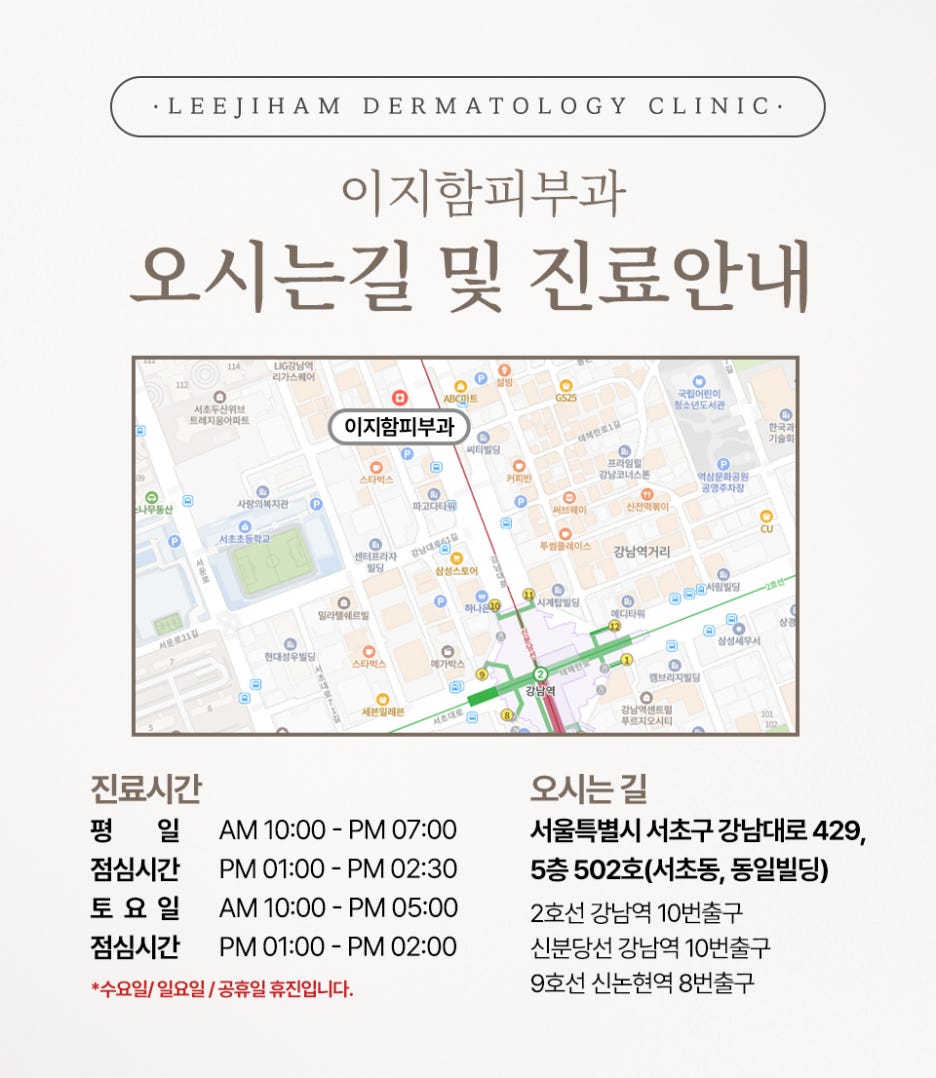
📍 Location | Room 502, 5th Floor, 429 Gangnam-daero, Seocho-gu, Seoul (same building)
· Near Gangnam Station and Sinnonhyeon Station
☎ Phone | 02-567-5900
🕐 Consultation hours
· Monday, Tuesday, Thursday, Friday 10:00–19:00
· Saturday 10:00–17:00
· Lunch break (weekdays) 13:00–14:30
· Closed Wednesdays, Sundays, and public holidays
On weekdays, there is a brief lunch break,
and the clinic is closed on Wednesdays,
Sundays, and public holidays.