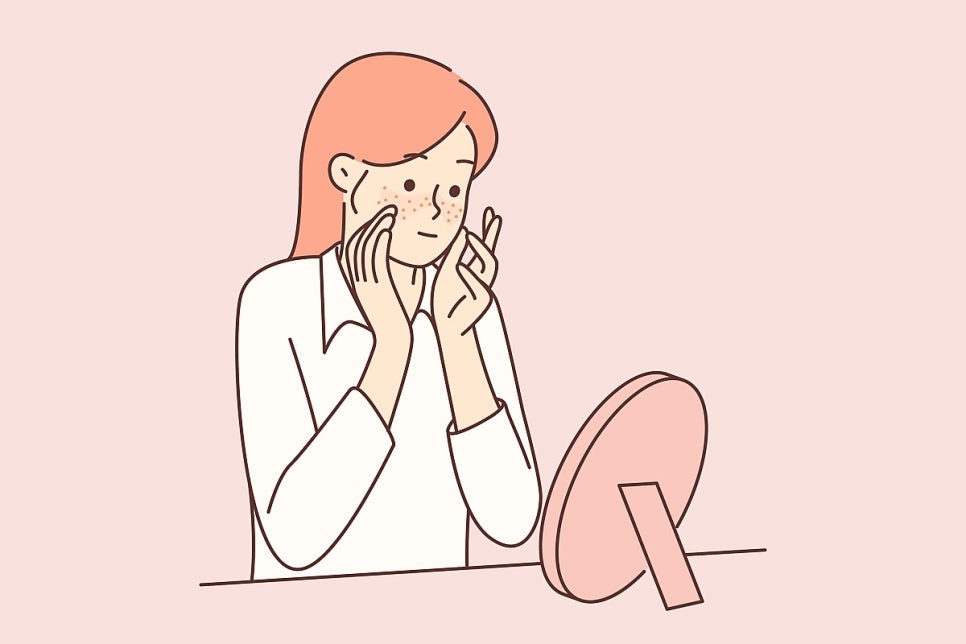
You may have experienced this at least once.
A faint brown mark
spreading above your cheekbone
may have caught your eye first.
Even after covering it with makeup, it seems to slowly reappear by the afternoon. And although you clearly underwent treatment, you may have felt frustrated when it seemed to quietly return to its original state after a few months.
Today, I would like to gently explain the question most frequently asked in the consultation room by those looking into laser toning for melasma in Nonhyeon: “Why does it come back even after treatment?”
After reading to the end, you may be able to picture for yourself how to reduce recurrence.
Melasma,
What kind of pigmentation
is it?
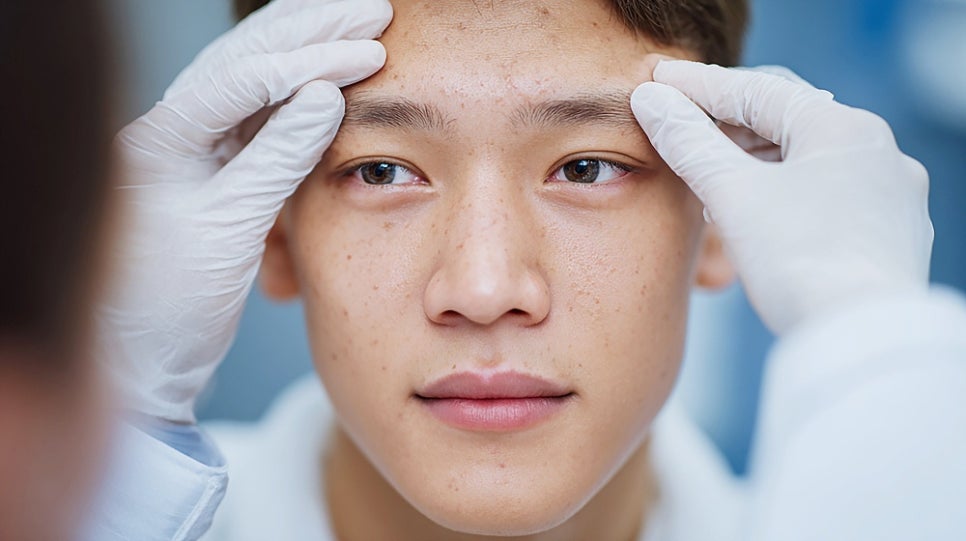
Melasma develops when
melanin, a brown pigment,
builds up in the skin.
Unlike freckles, which remain
shallow and limited to the epidermis,
melasma often penetrates into
the deeper layer known as the dermis.
It may be easier to understand
if you picture ink spilled
onto a sheet of paper.
A stain lightly sitting on the surface
can be quickly erased,
but ink that has seeped into the paper
remains faintly visible no matter
how much you rub it.
Melasma commonly appears
symmetrically on the cheekbones
and forehead,
with blurred, spreading edges.
The story of someone I met in the consultation room
Not long ago, a woman
in her mid-forties sat down
and told me this:
She had been visiting different clinics
and receiving treatments for five years,
but they only helped temporarily,
and after a while everything
returned to how it had been.
She said she was now exhausted
because it felt as though she had
only spent money and ended up
back where she started.
I was deeply concerned to hear that.
In fact, I hear stories like this
quite often.
And there is a reasonable explanation
behind that frustration.
Her words—that she kept avoiding
her own reflection—stayed with me
for a long time.
The real reason it comes back after treatment
The melanocytes that produce melasma
are particularly sensitive to three stimuli.
Changes in female hormones, ultraviolet rays,
and stress.
Toning is a process that gradually
lightens and reduces pigment
that has already formed,
but the situation is different
if the switch that produces pigment
is still turned on.
It is similar to scooping water
out of a bathtub while the faucet
continues to run.
Therefore, if melasma reappears
even after several sessions of
laser toning in Nonhyeon,
it often is not a sign that the treatment
was performed incorrectly. Rather,
it may indicate that the factors
causing pigment production
are still present.

How toning helps alongside your care
Laser toning uses light at a specific wavelength,
delivered repeatedly at low intensity,
to gradually disperse pigment
located deep within the skin.
Rather than applying strong energy
all at once, it slowly brightens the skin
while observing its texture and response,
with the aim of reducing irritation.
Adding brightening care to manage
overall skin tone can complement
the treatment well.
During the procedure, you may feel
a stinging sensation or something
like a light snap from a rubber band.
For several days afterward, the pigment
may even appear darker.
This is often a normal process
as the pigment rises toward the surface,
so there is no need to be overly alarmed.
When looking into laser toning
for melasma in Nonhyeon, anticipating
this reaction in advance may help
you feel more at ease.
However, please remember that
the speed and degree of the response
vary from person to person.
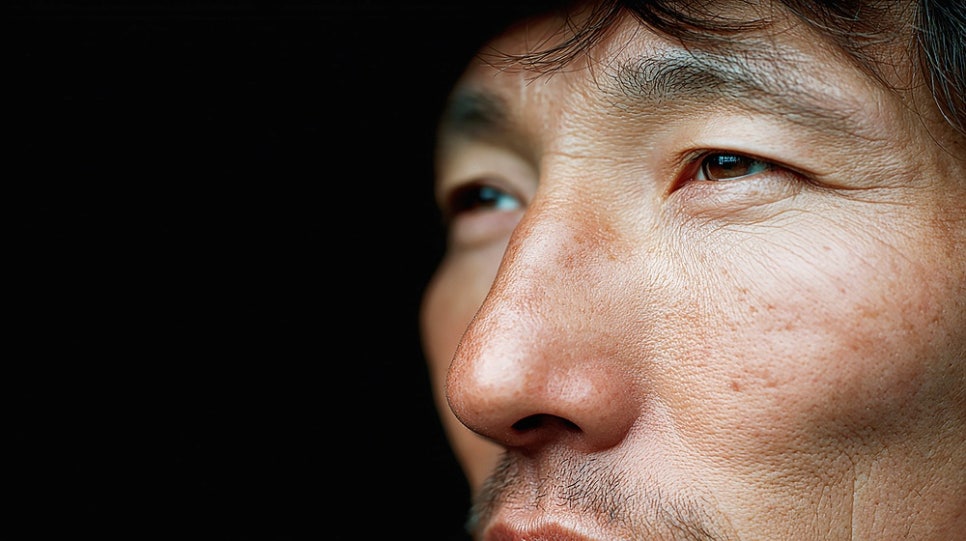
What I told her
I told her that the habits maintained
after treatment are more important
than the procedure itself.
I suggested using sun protection every day,
continuing brightening care alongside it,
and paying attention to changes
in her overall physical condition as well.
If you are considering laser toning
for melasma in Nonhyeon, rather than
trying to finish everything with one treatment,
I recommend viewing it as a long-term
approach focused on preventing
the pigment from becoming darker again.
이지함피부과 is located on Gangnam-daero
near Sinnonhyeon Station,
close to Nonhyeon Station.
Rather than pursuing excessive changes,
we always place natural-looking results,
honest consultations, and proven procedures
first.
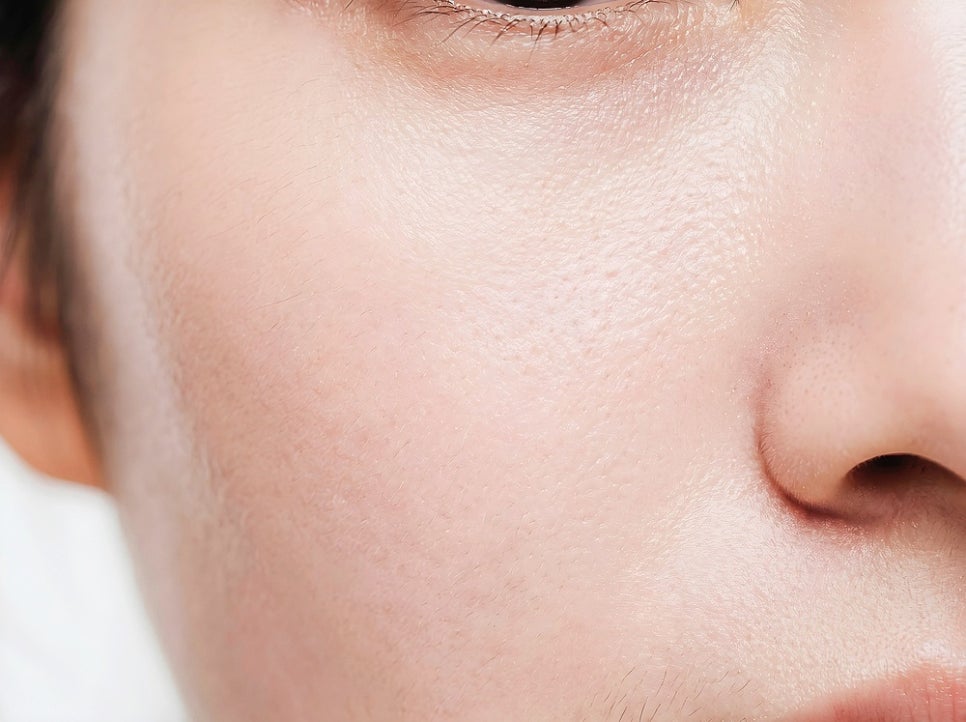
How to live well with melasma over time
The fact that melasma reappears
does not automatically mean
that treatment has failed.
Because it is a type of pigmentation
that frequently recurs,
rather than trying to eliminate it completely,
a much more realistic goal is to manage it
gently and maintain it at a lighter level
over the long term.
Laser toning for melasma in Nonhyeon
can also be thought of as a tool
that plays its part within
this long-term approach to care.
I hope today’s discussion has helped
relieve at least some of the frustration
you may have felt until now.
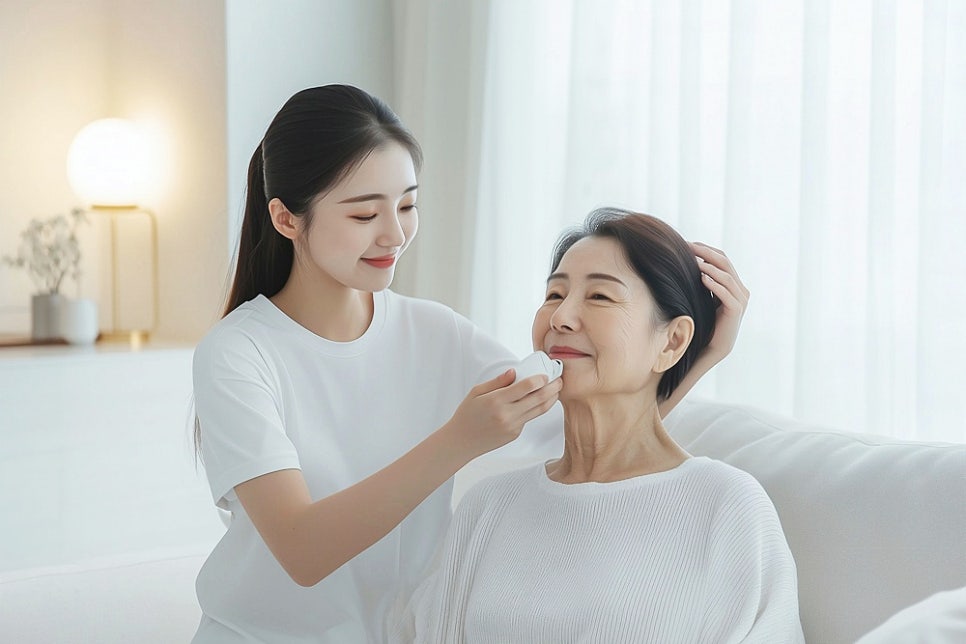
Questions answered directly by the director
Q1. Does melasma disappear completely
after toning?
A. Many people see it become lighter,
but it is difficult to guarantee
that it will disappear entirely.
Because it is a type of pigmentation
with a tendency to recur,
you may feel more at ease
if you view it as ongoing care
to maintain a lighter appearance.
Responses vary from person to person.
Q2. It looked darker immediately
after the procedure. Did something go wrong?
A. In many cases, this is a normal response
in which the pigment rises to the surface
and temporarily appears darker.
It usually becomes lighter along with
skin flakes over one to two weeks.
However, if you notice any changes
that concern you, be sure to mention them
during your consultation.

Q3. Is it okay to receive treatment
during the summer?
A. It is possible, but because ultraviolet rays
are stronger during this season,
pigmentation can return more easily.
We generally use lower treatment intensity,
place greater emphasis on sun protection,
and find the period from autumn to spring
somewhat more comfortable for treatment.
Q4. Does it hurt a lot?
A. You may feel a stinging sensation
or something like a rubber band snapping
against the skin.
The level of discomfort varies from person
to person, and numbing cream can be used
if necessary.
I will not tell you that it is painless.
Q5. Is it necessary to combine it
with brightening care?
A. Since it also helps address the factors
involved in pigment production,
many people may benefit from combining
it with toning.
However, the combination may vary
depending on your skin’s condition.
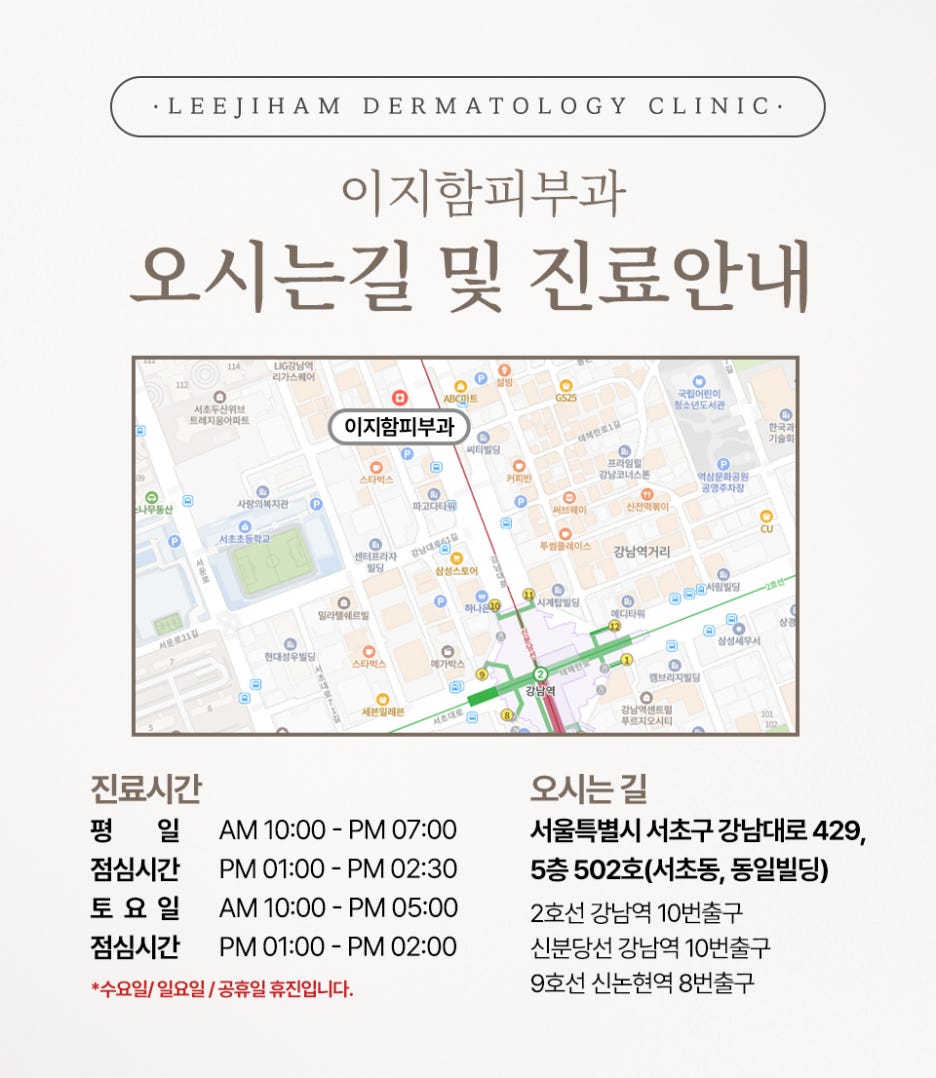
Directions and consultation information
🏥 이지함피부과
📍 5th floor, Suite 502,
429 Gangnam-daero, Seocho-gu,
Seoul
(Dongil Building, Seocho-dong)
Located along Gangnam-daero,
near Sinnonhyeon Station and Gangnam Station.
☎ 02-567-5900
🕙 Consultation hours
· Monday, Tuesday, Thursday, Friday 10:00–19:00
· Saturday 10:00–17:00
· Weekday lunch break 13:00–14:30
· Closed: Wednesday, Sunday, and public holidays