Shin Nonhyeon Thermage, and
the 2 criteria that distinguish
radiofrequency from ultrasound
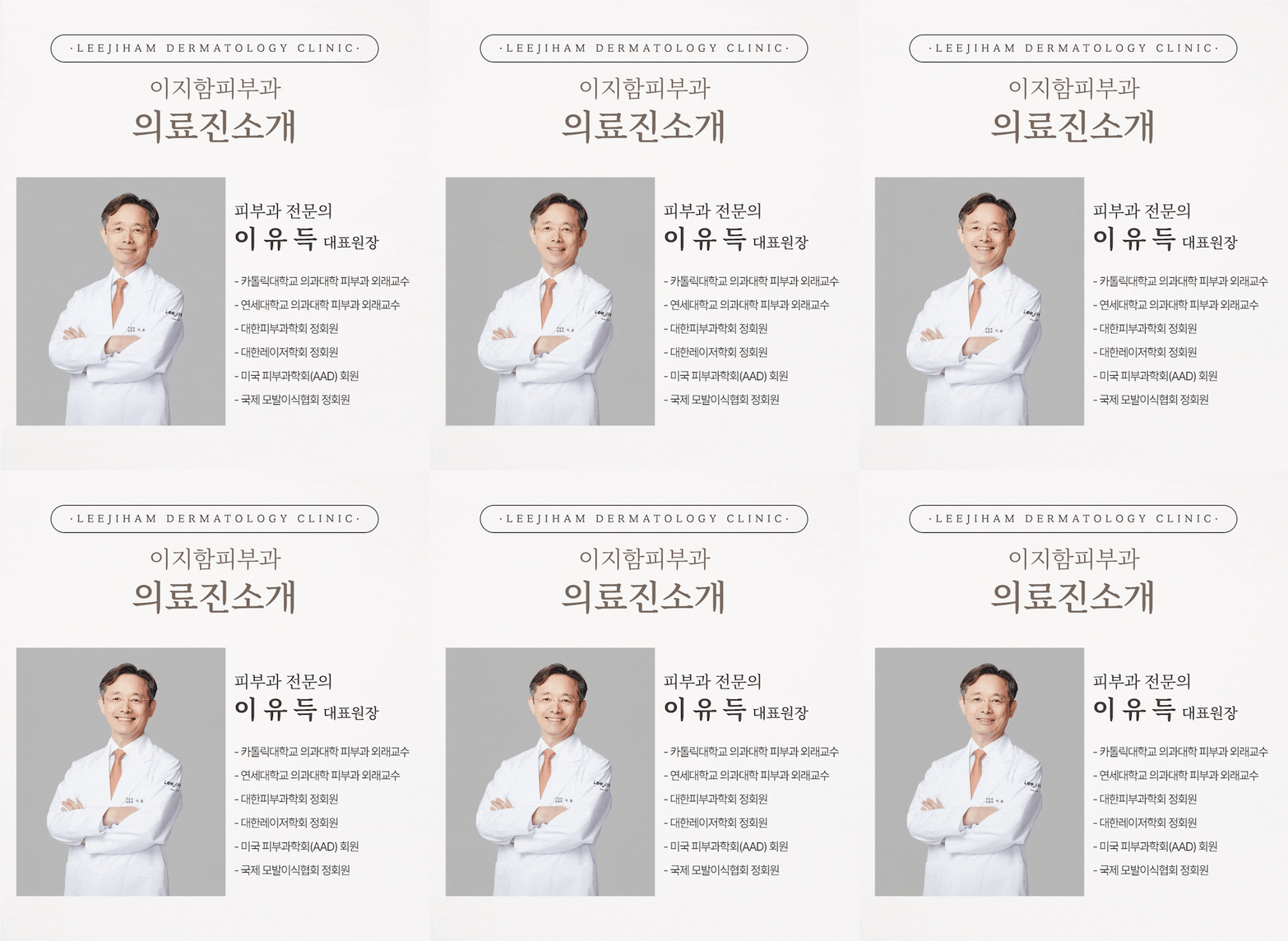
As Dr. Lee Yudeuk of 이지함피부과, I will organize the questions I often encounter before Shin Nonhyeon Thermage around two key points: which layer the treatment works on and what it is intended to achieve.
Once you know a few basics, you can assess for yourself which approach may suit your skin.
When looking into lifting treatments, many people hesitate between the two options of ultrasound and radiofrequency.
Not long ago, a patient who had just turned 40 visited us, saying that although she had not particularly gained weight, her jawline had become less defined and the creases that formed when she smiled no longer smoothed out as they used to.
Although the two treatments may sound similar, they target different areas and have different purposes.
- Ultrasound and radiofrequency,
where do they work and what do they target?
Even within the single term
“lifting,”
there are approaches with different characteristics.
They are broadly divided into ultrasound-based and
radiofrequency-based methods,
and there are two criteria that distinguish them.
If you choose based only on the shared term
“lifting,”
it is easy to end up with an option that does not match your concerns,
so it is helpful to understand this difference first.
① Treatment layer —
Ultrasound reaches the deeper
fascial layer of the skin,
while radiofrequency delivers heat
to the more superficial dermal layer.
② Targeted change —
Ultrasound lifts sagging tissue,
while radiofrequency tightens the dermis
and firms the skin.
| Category | Ultrasound lifting | Radiofrequency lifting |
|---|
| Representative devices | Doublo Gold · Shurink · V-RO | Thermage |
| Treatment area | Deep fascial layer (SMAS) | Dermal layer |
| Main role | Lifts sagging tissue | Tightens and firms the skin |
| Concerns it suits well | Sagging or looseness along the contours | Thin skin · fine lines · reduced elasticity |
| Sensation | Tingling around the bone | Warmth · prickling |

As you can see in the table, radiofrequency,
represented by Shin Nonhyeon Thermage,
focuses on firming the dermis.
Therefore, ultrasound lifting may be more suitable for those with noticeable sagging,
while radiofrequency may be a better fit for those who want to refine thin skin with reduced elasticity and smooth its surface.
It is also not uncommon to design a treatment plan that combines both approaches.

- How does radiofrequency
tighten the skin?
The radiofrequency (RF) underlying Shin Nonhyeon Thermage
delivers thermal energy to the dermal layer
rather than to the skin’s surface.
When the dermis receives stimulation at a consistent temperature,
loose collagen fibers contract,
followed by a remodeling process in which new collagen gradually fills in over the following weeks.
As collagen settles back into place in the dermis,
fine lines become less noticeable and the skin’s surface is smoothed and refined.

In other words, an immediate feeling of tightness
and gradual tightening that develops over time
occur together. However, it generally takes
several weeks to two or three months
for the changes to become noticeable.
The treatment time varies depending on the area and extent,
but is generally around 30 to 40 minutes.
Because a cooling device protects the epidermis
while only raising the temperature inside the dermis,
the recovery burden on the outer skin is relatively low.

- Which lifting treatment
is right for me?
Radiofrequency lifting is generally well suited to people in their 30s and 40s who are beginning to experience a loss of elasticity,
have no severe sagging,
and want to refine the skin’s surface and tightness.
People in their 20s or 30s without noticeable sagging may also choose to begin lightly as a preventive measure,
while ultrasound lifting may be more suitable when sagging is pronounced.
Rather than insisting on Shin Nonhyeon Thermage alone,
if you are concerned about dryness or rough skin texture along with reduced elasticity,
another option is to combine it at staggered intervals with skin boosters such as Juvelook or Rejuran,
addressing hydration and skin renewal together.
Treatment intervals are generally set at once every six months to one year,
but are adjusted according to the rate of skin aging and lifestyle habits.
The sequence and spacing are determined by observing the skin’s recovery rhythm.

- Things to know before treatment
There are several points to consider in advance
for satisfactory results.
Knowing the following information can help you observe the recovery process without being caught off guard after treatment.
① Warmth and prickling —
Warmth and prickling sensations may occur during treatment,
and depending on the area, you may feel some soreness.
If needed, numbing cream can be applied in advance.
② Multiple sessions —
Rather than completing the process in a single session,
it is often more natural to divide it into several sessions depending on the condition of the skin.
③ Temporary reactions —
Redness, a slight rise in skin temperature,
or mild swelling may appear immediately after treatment,
but these generally subside within a few days.

④ Individual differences —
The extent and duration of the changes vary from person to person,
so it is better to allow time and observe the progress rather than become impatient.
⑤ Returning to daily activities and aftercare —
In most cases, washing the face and applying light makeup are possible from the same day.
For about a week, avoid saunas, heated bathhouses,
and strenuous exercise,
and pay attention to sun protection to support recovery.
⑥ What to tell us before treatment —
Please inform us in advance about any medications you are taking,
previous treatments,
or skin problems,
so that a suitable plan can be made without difficulty.
Moderate changes last longer
이지함피부과’s approach to lifting
has remained consistent.
Rather than pursuing a dramatic transformation,
we aim for a comfortable appearance that preserves your original impression while seeming to turn back the clock slightly.
If you are preparing for Shin Nonhyeon Thermage,
rather than focusing first on the number of shots in fashion or the price list,
the process should begin with an accurate assessment of your skin thickness and elasticity,
followed by a treatment plan suited to your needs.
We believe that when honest diagnosis meets proven treatment,
the results can last without placing undue strain on the skin.
More than which device you choose,
the process of accurately understanding your skin and designing a plan accordingly determines the quality of the change.