Hello.
This is Dia Dental, here to help protect your everyday healthy smile at Magok Station.
After staying quiet for a while,
there is a tooth that suddenly starts throbbing one day and makes its presence known.
Its name may sound romantic,
but when you actually experience it, there is nothing romantic about it at all: the wisdom tooth.
Last time, we looked at the problems that can occur if wisdom teeth are left untreated.
If you missed it, you may want to review that first below.
So today, let’s move on to the next topic.
“Are all wisdom teeth the same?”
No. Wisdom teeth vary widely in shape, direction, and how far they emerge.
This time, we’ll introduce the different types of wisdom teeth.
From the ones that come in straight to the completely stubborn ones,
wisdom teeth also have a variety of “personalities”(?).
Now, let’s take a look at the different types of wisdom teeth.
What are the characteristics of each type of wisdom tooth?
- The properly erupted “normal wisdom tooth”
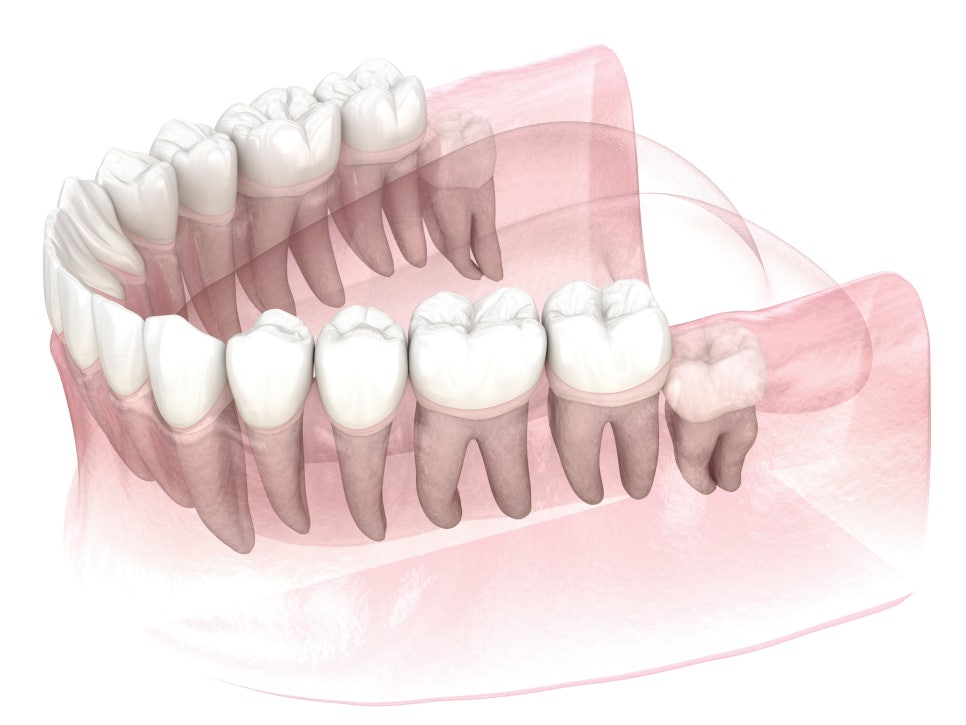
Magok-dong dental clinic_Normal wisdom tooth
Not all wisdom teeth come in crookedly.
Sometimes, by good fortune, they erupt straight upward,
leave enough space from the adjacent tooth, and settle in without pain.
In such cases, extraction may not always be necessary.
In fact, if an existing molar is lost,
a wisdom tooth may help compensate for chewing function.
However, such cases are not common.
Therefore, it is important to continue checking the wisdom tooth’s position through regular checkups
and observe whether there are any changes in inflammation, cavities, or the space around nearby teeth.
- The partially erupted “semi-impacted wisdom tooth”
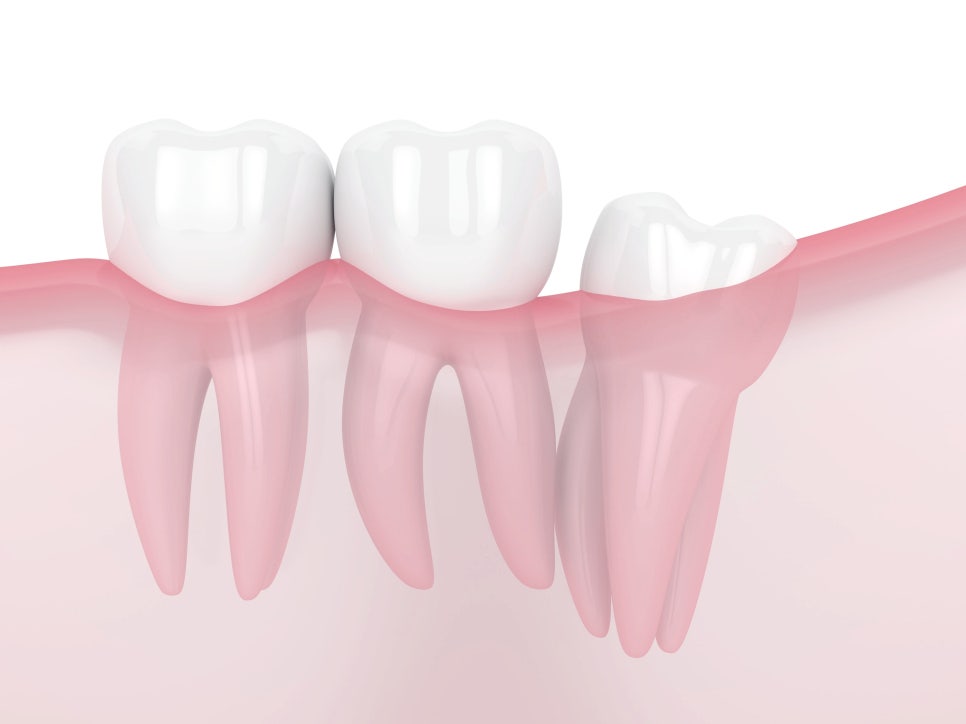
Magok-dong dental clinic_Semi-impacted wisdom tooth
When a wisdom tooth is only halfway out of the gum,
we call it a semi-impacted wisdom tooth.
The reason this state is risky
is that it creates a gap between the gum and the wisdom tooth.
Food debris often gets trapped in that gap,
and because a toothbrush cannot reach it well, an environment where bacteria can multiply is created.
As a result, bad breath, swollen gums, pain, cavities...
a chain reaction of problems begins.
In addition, being halfway out also means it is still “trying to come up.”
If inflammation repeats during the process of breaking through the gum, extraction can become more complicated.
Therefore, for a semi-impacted wisdom tooth, rather than thinking, “It hasn’t fully come in yet, so let’s leave it,”
you should consider early removal with the mindset of, “Now is the right time!”
- The completely hidden “fully impacted wisdom tooth”
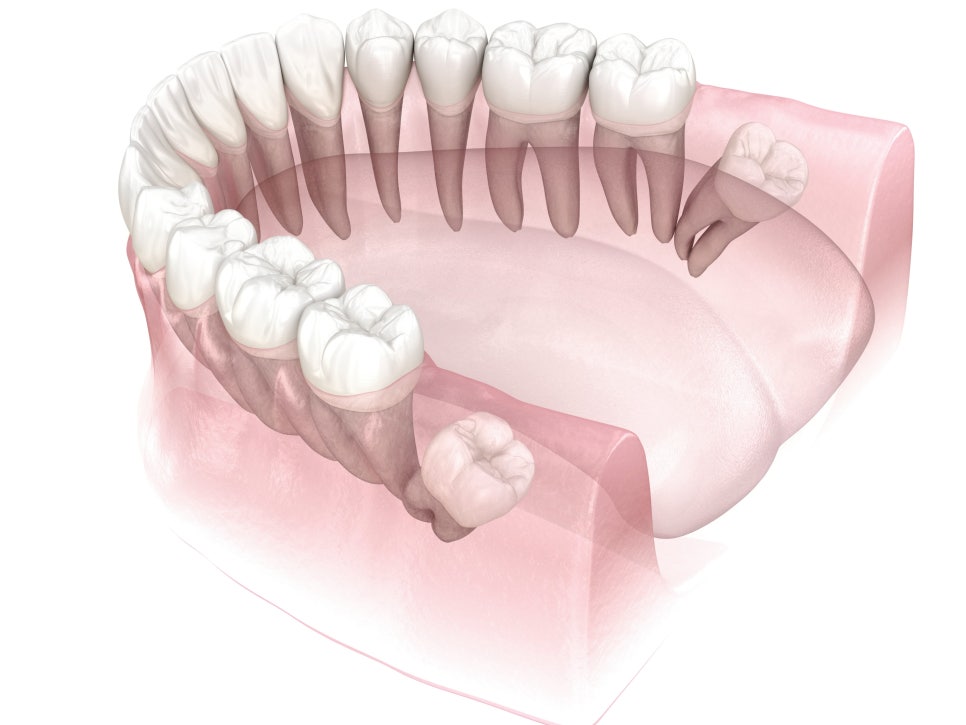
Magok-dong dental clinic_Fully impacted wisdom tooth
This time, it is a wisdom tooth that does not show itself at all.
A fully impacted wisdom tooth is hidden deep within the gum and jawbone,
so it is not visible from the outside and can make you think, “Maybe it’s not there~” and let your guard down.
But just because it is not visible does not mean there is no problem.
In this state, the likelihood of a cyst forming increases.
This so-called “dentigerous cyst” gradually grows, weakens the jawbone,
and can press on nearby nerves, causing numbness and even pain.
In severe cases, it can progress to a point where a jawbone fracture or surgical treatment is needed,
so a fully impacted wisdom tooth must be checked regularly with X-rays to confirm its position and condition.
- The sideways-lying “horizontal wisdom tooth”
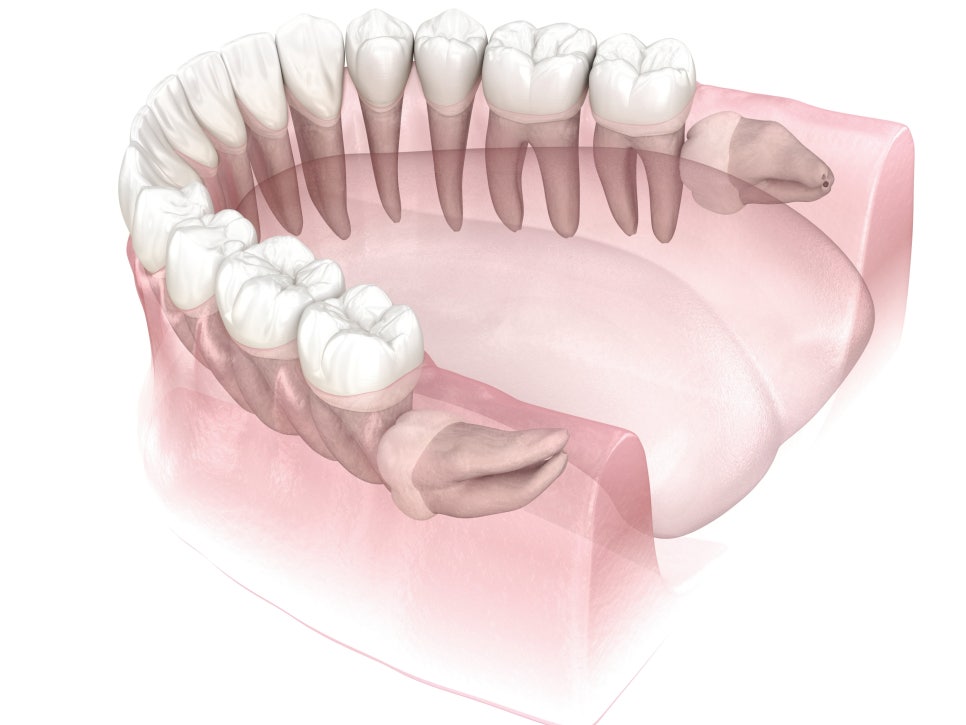
Magok-dong dental clinic_Horizontal wisdom tooth
The real troublemaker of wisdom teeth.
The horizontal wisdom tooth is the main culprit that disrupts the dental arch, lying stretched out sideways inside the mouth.
Because a wisdom tooth lying horizontally cannot erupt normally,
it continuously presses on the gum or adjacent teeth.
As a result, it presses on the root of the neighboring tooth and causes pain,
and can lead to misalignment of the teeth (the front teeth being pushed forward, or the entire dental arch becoming skewed).
Food debris can get trapped, causing inflammation and cavities, and in severe cases, even the surrounding teeth may be lost.
It is also relatively difficult to extract.
Because surgical procedures such as gum incision, tooth sectioning, and bone removal are often involved,
it is important to have the procedure performed by medical staff with sufficient experience.
Then, how are wisdom tooth types distinguished?

Dia Dental_Accurate diagnostic examination
You cannot tell the type of a wisdom tooth just by looking at it from the outside.
Through a panoramic X-ray taken at the dental clinic,
a comprehensive assessment of the position, angle, degree of impaction, and relationship with adjacent teeth is needed for an accurate diagnosis.
At Dia Dental, after the examination,
we explain whether simple extraction or surgical extraction is appropriate depending on the wisdom tooth’s condition,
and help you receive treatment with minimal discomfort.
Today, we took a detailed look at the various types of wisdom teeth.
To summarize, wisdom teeth are divided as follows depending on their eruption position, direction, and degree of impaction in the gum:
- Normal wisdom tooth
Comes in straight, but caution is needed if it is difficult to manage
- Semi-impacted wisdom tooth
Only partly erupted from the gum, with a risk of inflammation and bad breath
- Fully impacted wisdom tooth
Not visible on the outside, but may cause cysts or nerve damage inside
- Horizontal wisdom tooth
The main culprit that pushes the dental arch and damages adjacent teeth; extraction is also more difficult
As you can see, all wisdom teeth may look the same, but their actual circumstances vary greatly.
And those differences can completely change the direction of treatment.
A wisdom tooth is not simply an “annoying tooth”; if not managed in time,
it can become the seed of a problem that affects not only one tooth, but the entire dental arch, gums, and even the jawbone.

Magok-dong dental clinic_Dia Dental
At Dia Dental, we base treatment on a thorough examination before the procedure,
and provide the best treatment direction by comprehensively assessing the wisdom tooth’s type, position, and the condition of the surrounding tissues.
Next time, we’ll cover, “How is wisdom tooth extraction performed?”
We’ll neatly organize the step-by-step process, recovery period, and the things you may be wondering about!
[ This post was written in accordance with the Medical Service Act for the purpose of providing accurate information about dental surgery and procedures. Since infection and side effects may occur after surgery, the procedure should be decided after sufficient consultation with skilled medical staff. ]
[Magok Station Dia Dental Wisdom Tooth Series]
-
Wisdom tooth position and timing of eruption
-
Problems caused by leaving wisdom teeth untreated
-
Types of wisdom teeth
-
Wisdom tooth extraction process
-
Care after wisdom tooth extraction
-
Pain after wisdom tooth extraction
-
Dry socket after wisdom tooth extraction
-
Bleeding control after wisdom tooth extraction
-
Eating after wisdom tooth extraction
-
Wisdom tooth extraction cost