Hello,
We are Seoul Dia Dental Clinic in Magaok-dong,
which promises honest and careful treatment.
�
We are starting a life-stage oral care series that makes oral health easy to understand,
from children to seniors.
�
Today’s first story is
[Oral Care for Infants and Toddlers (0–3 Years)].
�
As you raise a child,
you keep encountering moments of “firsts.”
�
First roll over.
First steps.
First words.
And then one day,
a tiny white dot appears above the gums.
�
“Oh? A tooth is already coming in?”
It’s a small and adorable change.
You end up taking a photo right away.
�
But this one tiny tooth
changes the environment inside your child’s mouth completely.
�
From this point on,
your child’s oral health journey begins.
And during this period, there is one thing people hear most often.
�
“Isn’t it okay since they’re still so young?”
“Baby teeth fall out anyway, right?”
�
It sounds right.
But in fact,
care during this stage
becomes the starting line for lifelong dental health.
�
Now then,
let’s slowly go over how to care for infants’ and toddlers’ oral health from 0 to 3 years old,
the first step toward lifelong oral health.
�
It’s not difficult to explain.
As you read, you’ll immediately think, “Oh, so that’s why.” ^^
When the first tooth comes in, the mouth environment changes
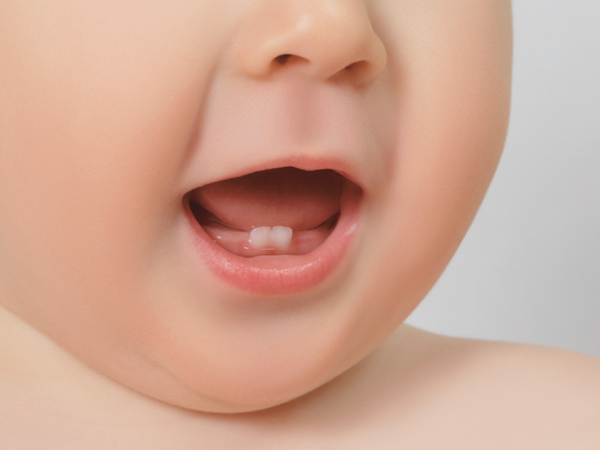 Magaok-dong Dental Clinic_The first baby tooth that usually erupts around 6 months
Usually around 6 months after birth,
one lower tooth quietly begins to emerge.
�
It’s about the size of a grain of rice.
It’s cute.
You take a photo right away. ^^
�
But this tiny tooth
completely changes the mouth environment.
�
Why?
Because until then, there were only smooth gums,
so there was almost nowhere for food to get stuck.
�
But once a tooth appears?
It creates a place where things can get caught.
�
It’s easy to imagine.
A vacant playground
doesn’t collect much dust.
But place one chair there,
and dust starts gathering around it.
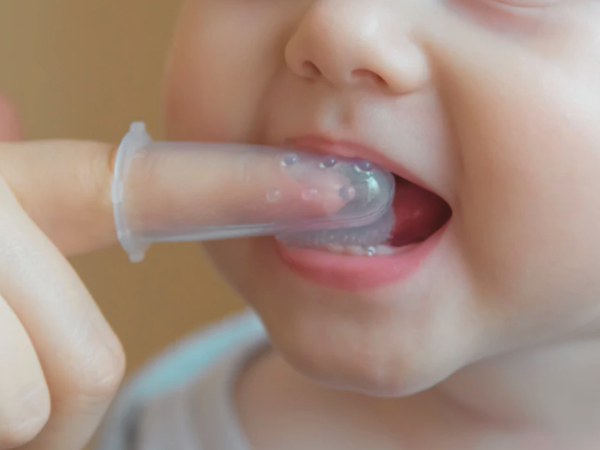 Magaok-dong Dental Clinic_Finger toothbrush for infants
That is why,
from this stage onward,
it is important to build the habit of gently cleaning the mouth.
�
After feeding, lightly wipe once with gauze or a soft infant toothbrush worn on the finger.
�
It’s not some grand care routine.
But this small habit
becomes the first step in preventing cavities.
�
Remember this.
When teeth come in, start cleaning them.
At this stage, that is enough.
Why do cavities develop when a baby falls asleep with a bottle?
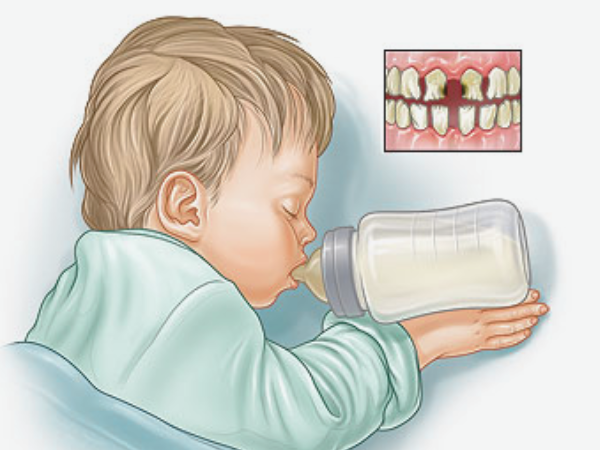 Magaok-dong Dental Clinic_Bottle caries
This is a pretty common question.
�
“Is it because formula is sweet?”
�
No.
It’s not because it’s sweet, but because it stays too long.
�
Think about it.
During the day, saliva keeps flowing
and helps rinse the mouth.
It’s like an automatic cleaning system.
�
But when sleep comes?
Since saliva secretion decreases,
the cleaning function obviously becomes far less effective...
�
To compare it with something,
it’s like a flowing stream stopping
and becoming a puddle of still water.
�
If food remains there?
From the bacteria’s point of view,
it’s an “open 24-hour free buffet.”
�
So cavities tend to form first around the front teeth.
This is called bottle caries.
�
To prevent bottle caries,
avoid letting the baby fall asleep with a bottle,
and lightly wipe the mouth after nighttime feeding.
That is the key. ^^
Why do cavities in infants and toddlers progress quickly?
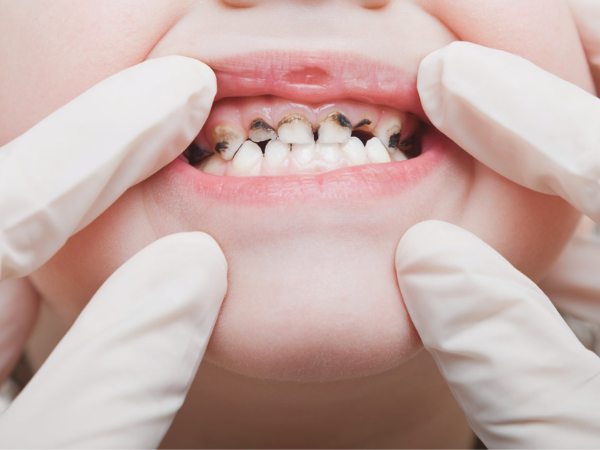 Magaok-dong Dental Clinic_Cavities in baby teeth
Baby teeth are not just teeth that are used for a short time.
�
They play a role in chewing food,
affect speech and language development,
and help preserve the space for permanent teeth to erupt.
They are very important.
�
But children’s teeth have a thinner protective layer (enamel) than adult teeth.
�
Paper cup vs. mug
�
Think about it.
A paper cup gets crushed easily,
while a mug is sturdy.
�
Children’s teeth are closer to the paper cup side.
So when cavities develop,
they can progress deeper faster than expected.
�
On the outside, it may look like a tiny spot.
But inside, the cavity may already be
well underway.
Fluoride helps prevent cavities in baby teeth.
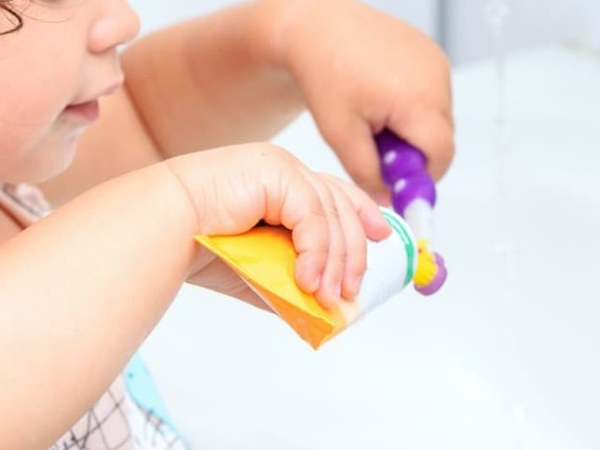 Magaok-dong Dental Clinic_Using low-fluoride toothpaste for children
Fluoride strengthens teeth
and increases resistance to cavities.
�
Let’s think of it simply.
When you put a screen protector on a smartphone display,
it becomes more resistant to scratches, right?
�
Fluoride acts like a cavity-prevention screen protector
that you apply to the teeth.
�
Oral bacteria feed on sugar
and produce acid to attack the teeth.
�
But if fluoride has already strengthened the teeth?
They won’t weaken easily even under acid attack.
�
That makes sense, right?
�
And at this stage,
because babies can swallow toothpaste,
it is recommended to use low-fluoride toothpaste for infants.
�
A rice-grain-sized amount is enough.
It’s fine if it doesn’t foam much,
and you don’t need to worry even if the child cannot rinse.
�
What matters is
not squeezing out a lot,
but thinking of it as applying a thin protective layer to the tooth surface.
�
The amount of toothpaste used at this stage is very small,
so swallowing it will not be at a level that causes health problems.
�
So the key is one thing.
Use the right amount.
If you remember just that,
you’ve already started protecting your child’s teeth well.
Oral habits in childhood shape a lifetime
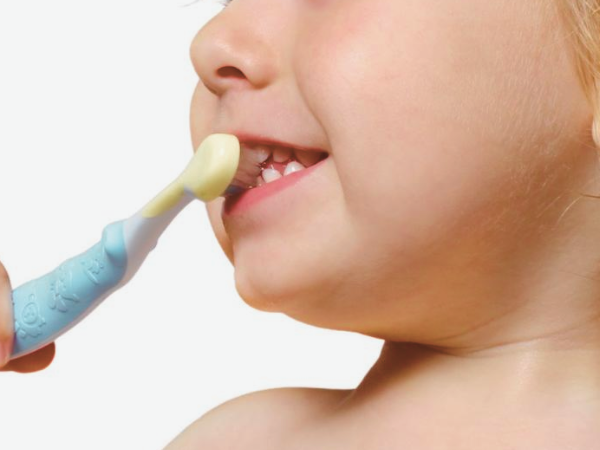 Magaok-dong Dental Clinic_Getting familiar with the toothbrush
Oral care for infants and toddlers
is not just about teeth.
�
-
Getting used to having the inside of the mouth touched
-
Reducing resistance to brushing
-
Reducing fear of the dental environment
�
If the first experience is comfortable,
the next one will be comfortable too.
�
If the first one is scary...
then the next one will be scary too.
That is why this stage matters.
To summarize today’s content:
- Prevent milk or formula from remaining in the mouth for too long after nighttime feeding
- Baby teeth are thin, so cavities progress quickly
- Fluoride acts as a protective film for teeth
- Experiences during this stage determine lifelong oral habits
�
Oral care for children
is not a grand or complicated task.
�
Just clean a little,
rinse a little,
and pay a little more attention.
�
These small habits come together
and create a healthy smile.
 Magaok-dong Seoul Dia Dental Clinic
The Seoul Dia Dental Clinic life-stage oral care series
continues with the next story.
�
[ Oral Care for Children in the Primary Tooth Stage (4–7 Years)]
�
As you read,
each story will help create more moments of “Oh, so that’s why.”
We’ll explain the next one in an easy way too.
�
That’s it for the infant and toddler oral care section.
�
Cheering on parents everywhere,
Seoul Dia Dental Clinic will step back here.
�
[ This post was written in accordance with the Medical Service Act for the purpose of providing accurate information about dental surgery and procedures. Infection and side effects may occur after surgery, so you should decide on surgery (procedure) after sufficient consultation with a skilled medical professional. ]
[ Seoul Dia Dental Clinic Life-Stage Oral Care Series]
-
Infants and toddlers (0–3 years)
-
Children in the primary tooth stage (4–7 years)
-
School-age children & adolescents (8–18 years)
-
Early adulthood (20s–30s)
-
Early middle age (30s–40s)
-
Middle age (50s–60s)
-
Senior years (70s and older)
�