Hello.
We are Seoul DIA Dental, working to preserve natural teeth near Magok Station.
Before we begin, please open your mouth wide and say “ah.”
If your jaw joint feels strange or you even hear a “click” from your jaw, temporomandibular joint disorder could soon become relevant to you.
You may then wonder:
"I’ve never injured my jaw, so
why has my temporomandibular joint become unhealthy...?"
In fact, a considerable number of cases of temporomandibular joint disorder are not caused by trauma.
Much more often, very small habits that we unconsciously repeat every day damage the temporomandibular joint over a long period of time.
Today, Seoul DIA Dental will go through the main causes of temporomandibular joint disorder and the available treatment methods one by one.
Main Culprit 1. Teeth Grinding (Bruxism)

Magok Station Dental Clinic_Teeth Grinding
Teeth grinding is the act of forcefully grinding or rubbing the upper and lower teeth together while asleep.
Since it happens during sleep, most people are unaware that they do it.
Many people say, “I don’t grind my teeth,” then ask their partner and are surprised to find out that they do. Haha.
The reason teeth grinding is a problem is the enormous force involved.
The average chewing force while awake is around 70–80 kg, but the force exerted while grinding during sleep can reach as much as 250 kg in some cases.
This tremendous force is applied to the temporomandibular joints and surrounding muscles every night.
Tooth wear, enlarged jaw muscles, and damage to the temporomandibular joint disc—all of these can result from prolonged teeth grinding.
Self-Check for Teeth Grinding
-
Your jaw feels stiff or painful when you wake up in the morning
-
Your teeth are wearing down particularly quickly
-
You do not feel refreshed even after sleeping
-
You often feel a heavy sensation around your temples
-
Your partner says you make grinding sounds while asleep
Main Culprit 2. Teeth Clenching

Magok Station Dental Clinic_Teeth Clenching
Because teeth clenching does not make a sound like teeth grinding, both the person doing it and those around them are often unaware of it.
That does not make it less dangerous, however.
In fact, it may be more harmful because it quietly applies tremendous force to the jaw without making a sound.
Teeth clenching is usually connected to stress.
When concentrating, feeling tense, or experiencing stress, people unconsciously tense their jaws.
It is especially common among people who work at a computer for long periods or whose work is highly demanding.
[ Self-Check for Teeth Clenching ]
-
Your jaw tenses when you are stressed
-
You feel that you clench your teeth tightly when concentrating
-
The masseter muscles (the muscles around the cheeks) feel hard to the touch
-
Your jaw feels tired at the end of the day
-
Your headaches become worse in the afternoon
Why Do Teeth Grinding and Clenching Damage the Temporomandibular Joint?
There is a disc inside the temporomandibular joint.
It serves as a cushion between the bones.
However, when excessive force is repeatedly applied through teeth grinding and clenching, the disc gradually becomes compressed and begins to move out of position.
At first, there may only be a clicking sound, but pain can gradually develop, eventually progressing to a condition in which it becomes difficult to open the mouth properly.
The same applies to the muscles.
When the masseter and temporalis muscles are continuously overloaded, they can become enlarged and tense, leading to headaches, jaw pain, and stiffness in the neck and shoulders.
These Can Also Be Causes
Although teeth grinding and clenching are the main causes, the following situations can also trigger temporomandibular joint disorder.
- Poor Posture

Magok Station Dental Clinic_Resting Your Chin on Your Hand
The habit of resting your chin on your hand and holding your neck forward—when repeated over a long period, these habits apply unbalanced force to the temporomandibular joint.
- Chewing Only on One Side

Magok Station Dental Clinic_Overloading One Temporomandibular Joint
If one tooth is uncomfortable and you chew only on the opposite side, the load becomes concentrated on one temporomandibular joint.
- Malocclusion
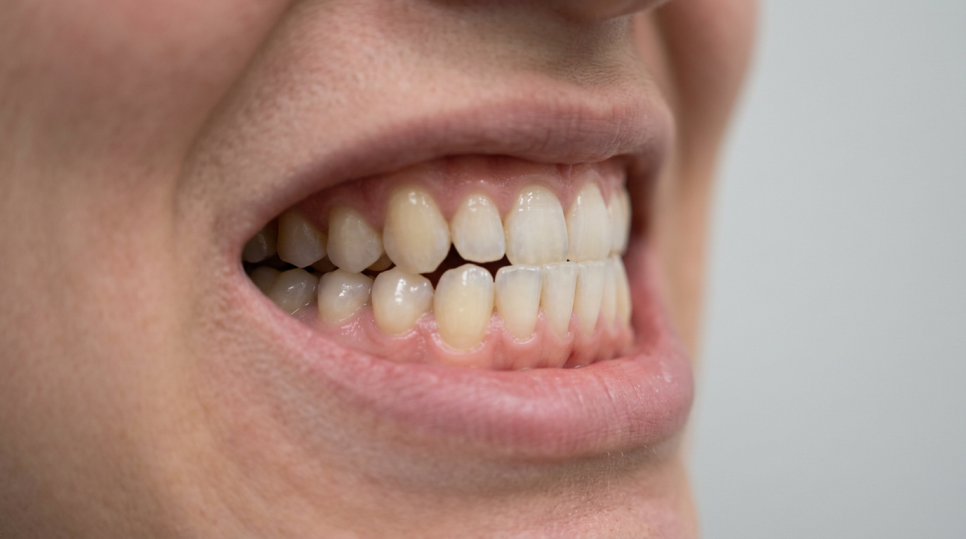
Magok Station Dental Clinic_Crossbite
When the upper and lower teeth do not come together properly, unbalanced force continues to be applied to the temporomandibular joint.
- Stress
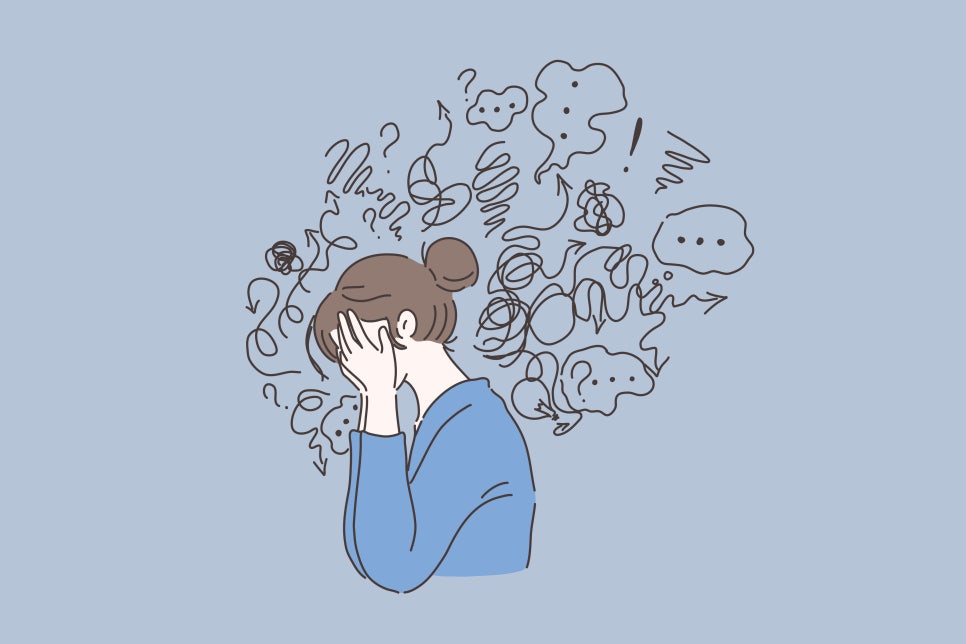
Magok Station Dental Clinic_Stress
Stress triggers teeth clenching and causes muscle tension, making it an important factor that can worsen temporomandibular joint disorder.
Splints,
A Practical Solution for Teeth Grinding and Clenching
It would be great if teeth grinding and clenching could be resolved simply by telling yourself, “I shouldn’t do this consciously,” but...!
Since these behaviors usually occur unconsciously, they are very difficult to correct through willpower alone.
An effective treatment method in these situations is a splint.
A splint is an oral appliance custom-made to fit the shape of your individual teeth. It is mainly worn while sleeping.
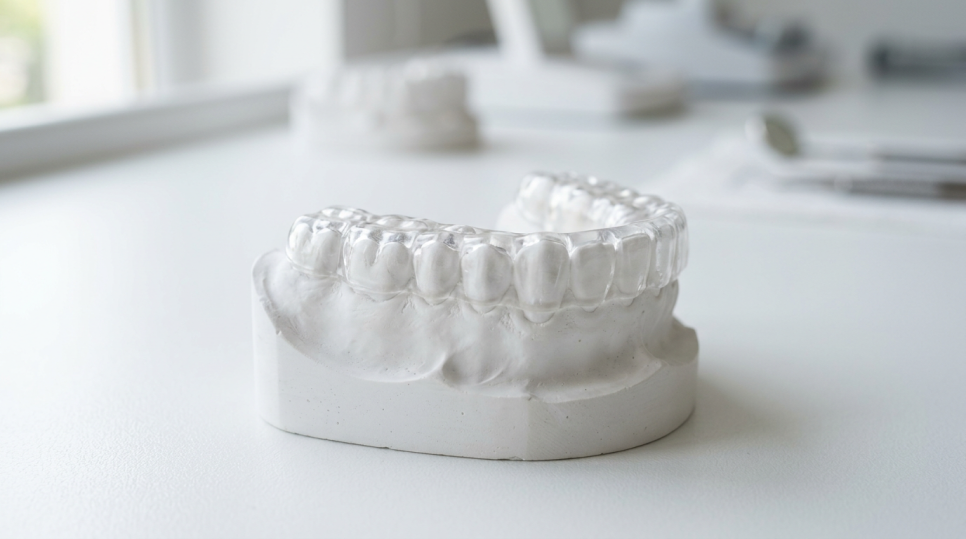
Magok Station Dental Clinic_Splint
[ Why Splints Are Effective ]
When you wear a splint, the upper and lower teeth do not come into direct contact.
When you grind your teeth, the appliance absorbs the impact that would otherwise be applied to the teeth and temporomandibular joints.
It also guides the lower jaw into its most comfortable position, helping to relax tension in the temporomandibular joints and surrounding muscles.
[ Situations in Which a Splint May Help ]
-
Your jaw feels stiff every morning or you have headaches
-
You have been diagnosed with teeth grinding
-
Your teeth are wearing down quickly
-
Clicking sounds and pain in the temporomandibular joint recur
-
Your jaw muscles are chronically tense
[ How a Splint Is Made ]
-
Taking a dental impression
-
Custom fabrication (usually takes 1–2 weeks)
-
Occlusal adjustment after fitting
-
Periodic examination and adjustment
Because it is precisely made to fit the individual shape of your teeth and the condition of your temporomandibular joints, it offers much better effectiveness and comfort when worn.
Splints Are Particularly Recommended for These People
A splint is not a treatment itself; it is intended for protection and management.
Although it does not completely eliminate teeth grinding and clenching, it helps prevent further damage to the temporomandibular joints and teeth while relieving muscle tension and easing symptoms.
It is particularly recommended for the following people.

Magok Station Dental Clinic_Headache
-
People who experience jaw pain or recurring headaches every morning
-
People whose teeth are visibly wearing down
-
People with clicking sounds and pain in the temporomandibular joints
-
People under significant stress who have a teeth-clenching habit
-
People who want to use it alongside masseter Botox treatment
The longer teeth grinding and clenching are left unattended, the more damage accumulates in both the temporomandibular joints and the teeth.
If your symptoms are currently mild, now is the best time to act.
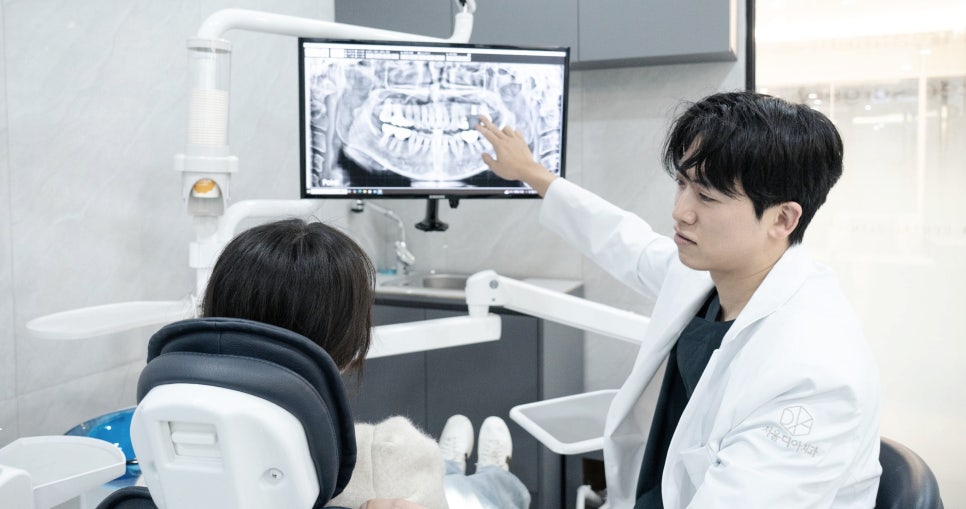
Seoul DIA Dental near Magok Station
At Seoul DIA Dental, we first check for teeth grinding and clenching along with the condition of your temporomandibular joints, then provide accurate guidance on whether a splint is needed.
We offer convenient consultations through Naver TalkTalk and reservations.
Feel free to have it checked without any pressure. ^^
Today’s explanation may have felt a little long~
But it contains a lot of important information, so if you scrolled straight to the bottom (Did you feel called out? Haha.), we recommend scrolling back up and taking another look!
In the next installment, we will explain in detail, as always, “What happens if temporomandibular joint disorder is left untreated?”
[ This post was written for the purpose of providing accurate information about dental surgeries and procedures in accordance with the Medical Service Act. Infection and side effects may occur after surgery, so you should decide whether to undergo surgery (or a procedure) after consulting sufficiently with a skilled medical professional. ]
[ Magok Station Dental Clinic_Temporomandibular Joint Disorder Series ]
“Why Is My Jaw Like This? From Causes to Treatment”
-
“My jaw makes a clicking sound.” What is temporomandibular joint disorder?
-
These Symptoms Can Also Indicate a Temporomandibular Joint Problem—The Relationship with Headaches and Shoulder Pain
-
Why Does Temporomandibular Joint Disorder Develop? The “Main Culprits” Are Teeth Grinding and Clenching
-
What Happens If Temporomandibular Joint Disorder Is Left Untreated?
-
What Is the Masseter Muscle? How the Chewing Muscle Affects the Jaw
-
What Is the Temporalis Muscle? The Hidden Connection Between Headaches and Jaw Pain
-
Masseter + Temporalis Botox: Who Can Benefit from It