피부양성종양 정확한 진단이 필요한 이유
Hello.
This is Mutoel Plastic Surgery.
When you hear the word “tumor,”
most people tend to think of malignant tumors
such as cancer.
However, there is a big difference between benign and malignant.
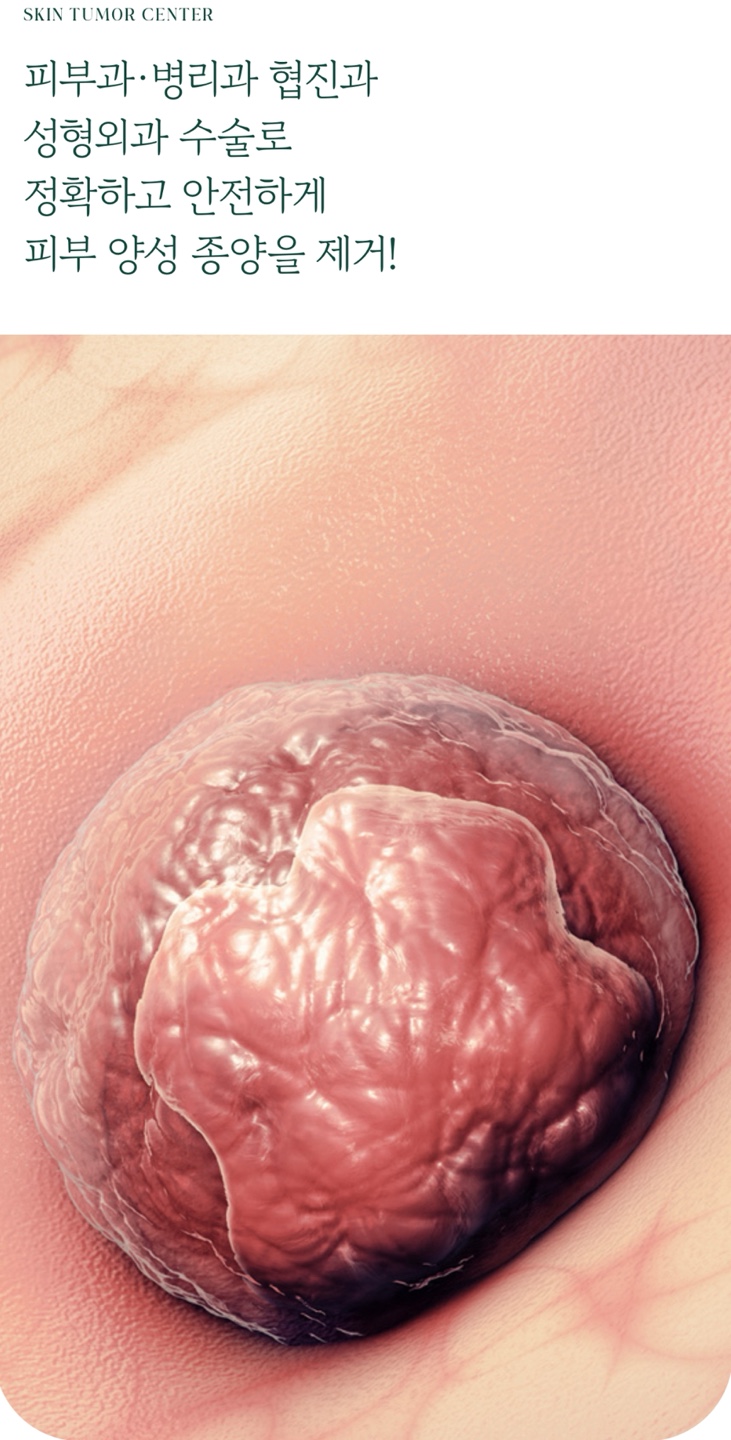
A benign skin tumor, as the name suggests,
is an abnormal proliferation of tissue that occurs
in the skin or its appendages,
but it does not metastasize or threaten life,
and because it often grows slowly and has clear borders,
it is classified as a condition
with a completely different nature from malignancy (cancer).
That said, because it can cause aesthetic concerns,
a cosmetic procedure may be performed,
or, if it causes inconvenience in daily life, and very rarely,
because there is a possibility that it may become malignant,
it is best to have it removed in advance when necessary.
Representative types
Lipomas are one of the common benign skin tumors.
They are located under the skin and feel soft,
like a movable lump,
and are usually almost painless, but they can grow larger.
A sebaceous cyst is a cystic tumor
that develops when a sebaceous gland becomes blocked.
It is usually small and round, but if infected,
it can become red and fill with pus inside.
To remove it completely, the cyst wall must also be excised
to prevent recurrence and allow treatment.
Warts are also infectious tumors caused by HPV,
a human papillomavirus.
They can occur anywhere on the skin and have an irregular shape.
Similarly, the most common “mole” we see in daily life
is also a pigmented lesion caused by a local accumulation
of melanocytes.
In addition, hemangiomas, which form as blood vessels in the skin
proliferate excessively,
are red or purple in color, and adult hemangiomas
may require laser treatment or removal surgery.
How benign skin tumors are examined
For simple tumors, a visual examination is performed,
and the size, color, border, and surface condition of the lesion
are carefully observed to make an approximate diagnosis
based on characteristic findings.
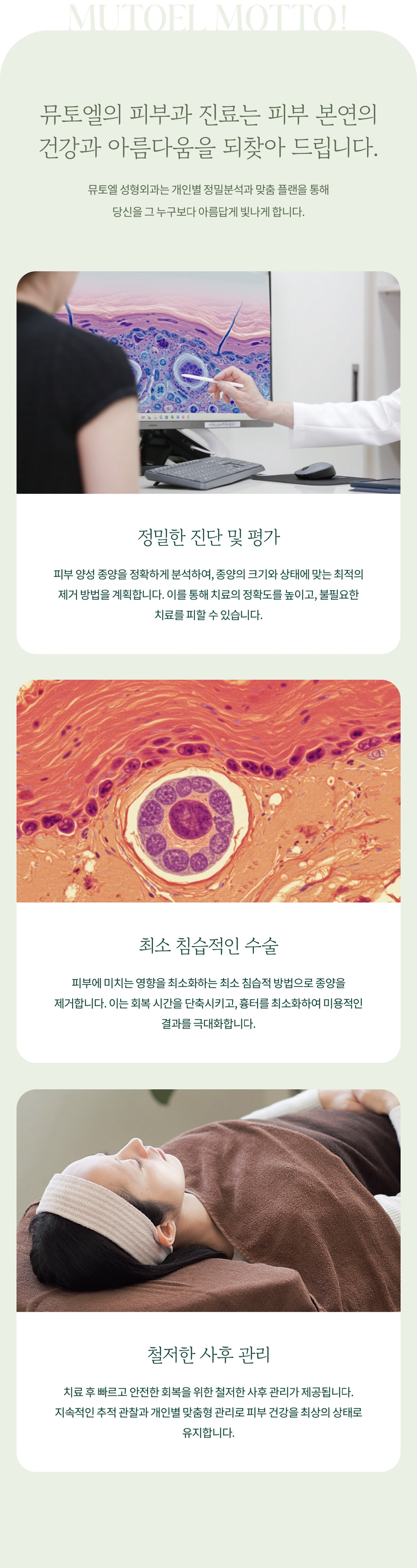
However, to precisely confirm the exact depth,
location, and characteristics of the tumor,
it must be examined more precisely using ultrasound
or a dermatoscope.
After that, if malignancy is suspected or an exact pathological name
needs to be confirmed, some tissue is collected for a biopsy,
and the tissue is directly observed under a microscope
for examination.

What causes them?
The exact causes of these tumors are still not clearly known.
However, in the skin, it has been found that there are genetic traits
that often lead to specific tissue proliferation,
mainly due to family history or hereditary factors,
so if a parent has similar symptoms
or if you yourself have them,
there is an opinion that similar symptoms may also appear in the child.
Among external causes, the exact reason is not known precisely,
but there have been reports that tumors often develop
due to factors such as sunlight (ultraviolet rays).
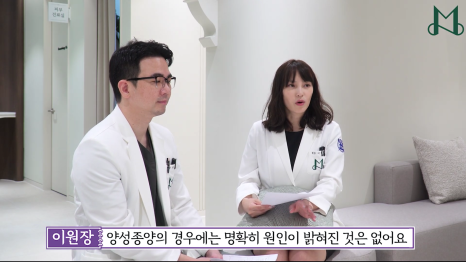

When a benign skin tumor should be removed
First, the distinction between benign and malignant must be made.
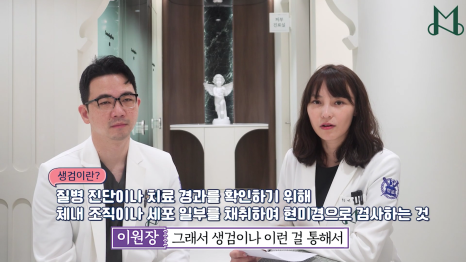
Therefore, a biopsy is used to diagnose the disease
and check the treatment course by collecting part of the body's tissue
or cells and examining them under a microscope.
If treatment is needed (malignant), it must be removed.
In addition, if it continues to grow larger,
if frequent inflammation/pain is accompanied,
or if there are signs suspicious for malignant transformation
such as changes in skin color, bleeding, or crust formation,
we strongly recommend removal.
However, even if the above situations do not apply,
if you are highly dissatisfied aesthetically
or if it keeps getting caught on clothing or shaving and causes
inconvenience in daily life,
we also recommend removal.


How do you distinguish malignancy?
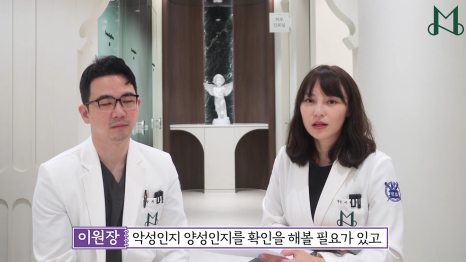
The most accurate method is examination by a pathologist.
However, if, before you come in, you have checked and the mole is too large,
has unclear borders, or is excessively dark in color,
we strongly recommend visiting Mutoel for a diagnosis.
To conclude...
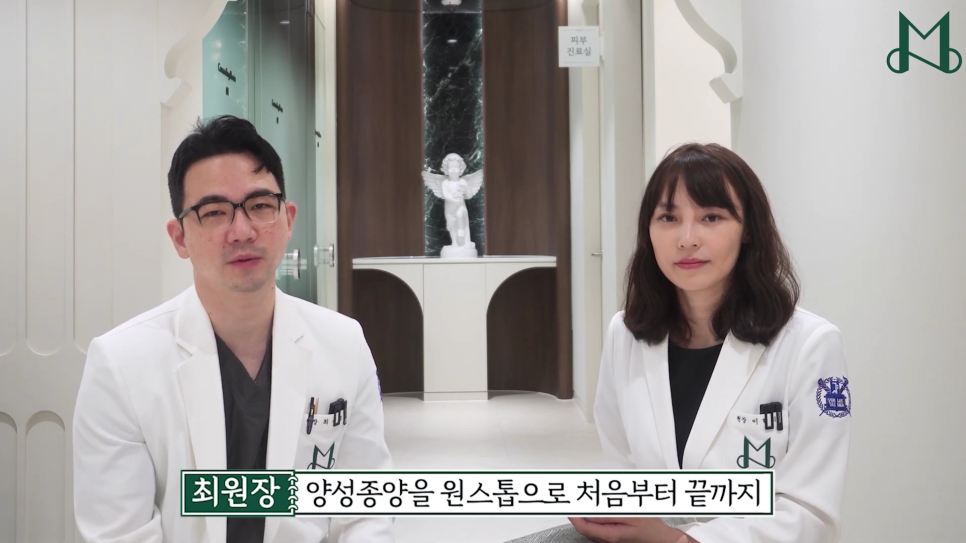
In the end, the most important part of removing a benign skin tumor
is an accurate diagnosis.
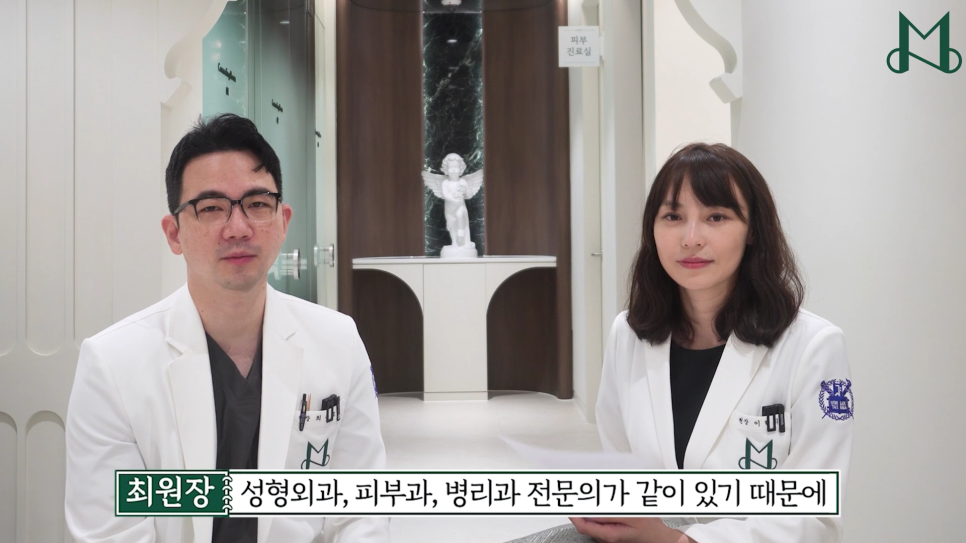
Because this is not handled in just one field, specialist collaboration is most important,
including pathology, which has a deep understanding of tissue,
dermatology, which can assess the overall condition of the skin,
and plastic surgery specialists, who can sensitively respond to scarring or incisions
during tissue examination or treatment.
For such multidimensional conditions,
it can be very cumbersome and difficult to proceed with surgery,
diagnosis, and pathological testing.
At Mutoel Plastic Surgery,
three specialists in dermatology/pathology/plastic surgery
all provide direct care.
For those who feel it is too troublesome to go to a university hospital,
but still have lingering concerns that have not been resolved,
please visit us. If you have any questions, we will kindly answer them.
Lastly, there is something I would like to emphasize.
Do not simply think of a tumor as just a lump or mole and leave it alone;
after receiving an accurate diagnosis,
it is most important to receive appropriate treatment if necessary.
That is all for today’s post,
and we will come back with a better post next time.
This has been Mutoel Plastic Surgery.
Thank you.