Hello,
I’m Kim Tae-young, the chief director of Bareun Young Dental Clinic at Yaksu Station.
Our teeth are tissues that do not regenerate.
So once a tooth is extracted, it cannot be reversed, which is why it is very important to preserve the natural tooth as much as possible and delay the timing of implants in order to manage oral health long term.
In general, if we start with minimally invasive treatment (a smaller treatment range), examples include:
Cavity treatment (simple resin, inlay, or crown)
Crown treatment after root canal treatment
Periodontal surgery in cases caused by periodontitis
These are just rough examples, and treatment is not always carried out in that exact order. Depending on the symptoms, the diagnosis and treatment plan may vary^^
Even after conservative treatment for the tooth,
there are cases where extraction is necessary due to periodontitis, tooth cracks, or inflammation at the tooth root.
In such cases, there is unfortunately no alternative other than an implant.
When talking with patients, I often get asked:
Doctor, after extraction, when can I get an implant?
The answer is that it depends on the condition of the surrounding bone and the degree of inflammation.
The implant may be placed immediately at the time of extraction,
or after giving enough recovery time following extraction,
or, if needed, by performing alveolar bone grafting at the same time as extraction to maintain the surrounding volume and placing the implant after recovery.
Here, another question may come up.
In the past, I had a tooth extracted for the same reason,
but at one clinic they performed surgery right away,
and at another clinic they said to wait a few months.
Some people even waited almost a year before finally getting the implant.
That is correct.
Even if the reason for extraction is the same,
the timing of implant placement can be determined by the internal condition of the area.
Isn’t it better to wait a little after extraction before placing the implant??
For most dentists, including myself,
we try to perform implant surgery immediately if possible while extracting the tooth.
The reasons are:
the treatment period,
the inconvenience of receiving anesthesia multiple times,
and, most importantly,
there is no difference in the outcome between waiting and placing the implant later versus placing it immediately after extraction.
Of course, if it cannot be done right away, then waiting is necessary.
A case where immediate implant surgery after extraction is not possible is when the inflammation around the tooth is severe; in such cases, surgery is performed after allowing the gums and internal bone time to heal.
So how long should one wait?
If alveolar bone grafting is needed at the same time as extraction,
placing the graft material does not immediately turn it into solid bone.
Bone is a living tissue that needs time.
In general, the following healing periods are recommended:
Mandible (lower jaw): about 3 months
Maxilla (upper jaw): about 4 months
This can vary depending on the extent of the area and the condition of the bone quality, but these are the standards I use.
During this period, the graft material blends with the natural bone and matures into solid alveolar bone. Only after this process has been sufficiently completed can the implant be stably fixed.
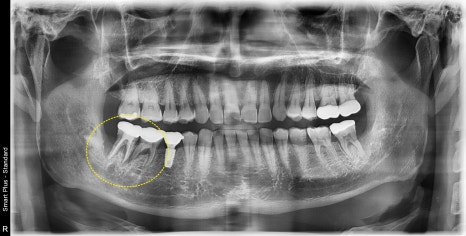
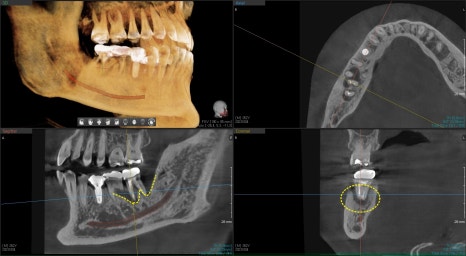
For example,
from the diagnosis shown in the photos,
implant surgery could have been performed immediately at the time of extraction,
but if the treatment timing is missed,
over time the surrounding bone may dissolve further due to inflammation,
and after extraction, alveolar bone grafting may be needed,
followed by surgery after recovery.
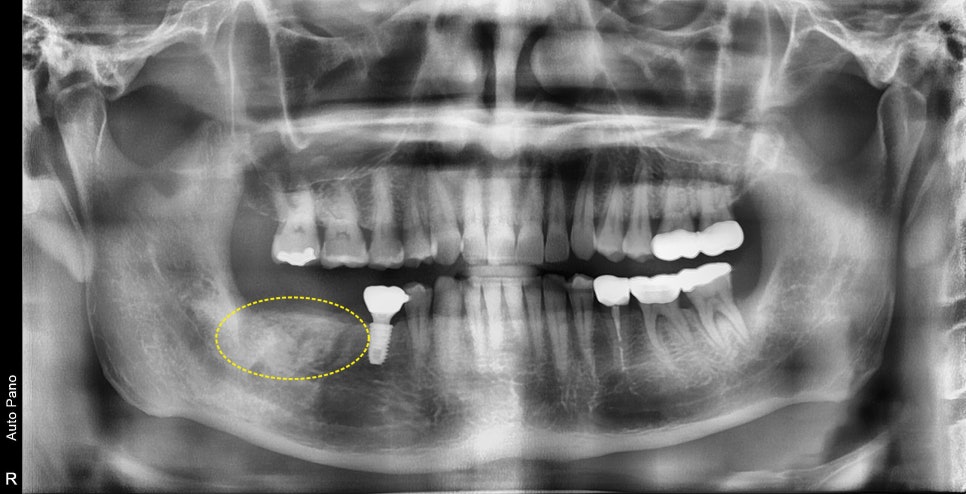
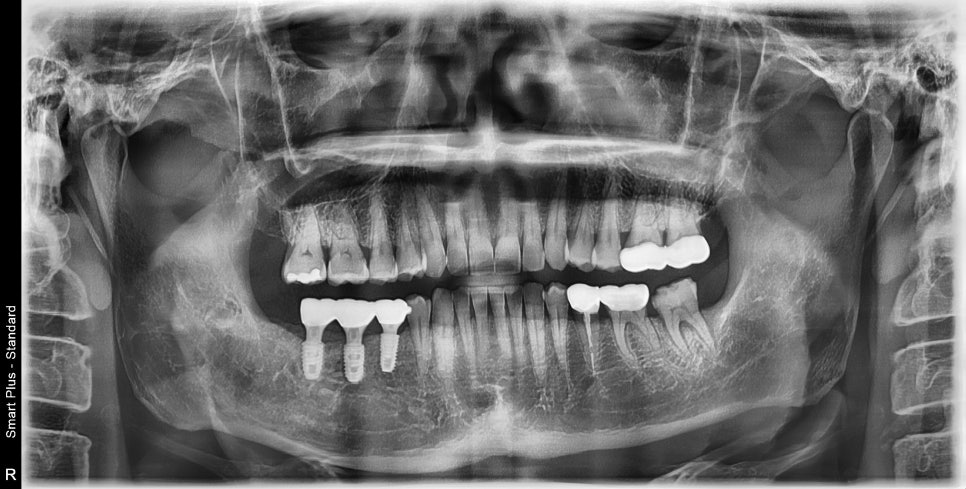
The area marked with a yellow circle shows the healed state after alveolar bone grafting.
Of course, the treatment is eventually completed well,
but if the timing is missed, the treatment period can be doubled.
Extraction and preservation procedure
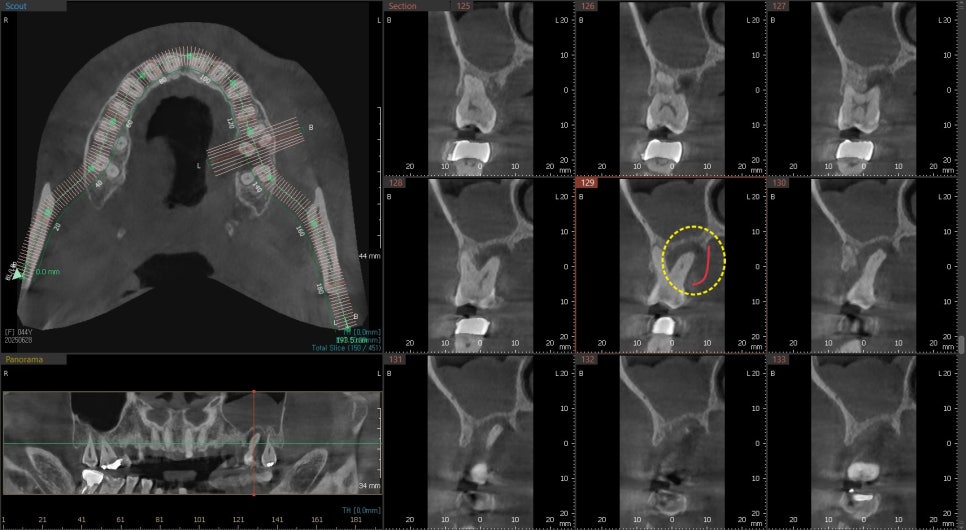
This is a case where extraction was necessary due to inflammation around the root.
After taking a 3D CT,
the bone around the largest root has been resorbed due to inflammation.
The area marked with the red line should have been filled with bone,
but the dark appearance shows that the bone has been resorbed by inflammation.
In such cases, immediate implant surgery at the time of extraction is possible,
but because it is difficult to predict how much the bone will recover later,
performing alveolar bone grafting around the extraction site to maintain volume is called extraction and preservation.
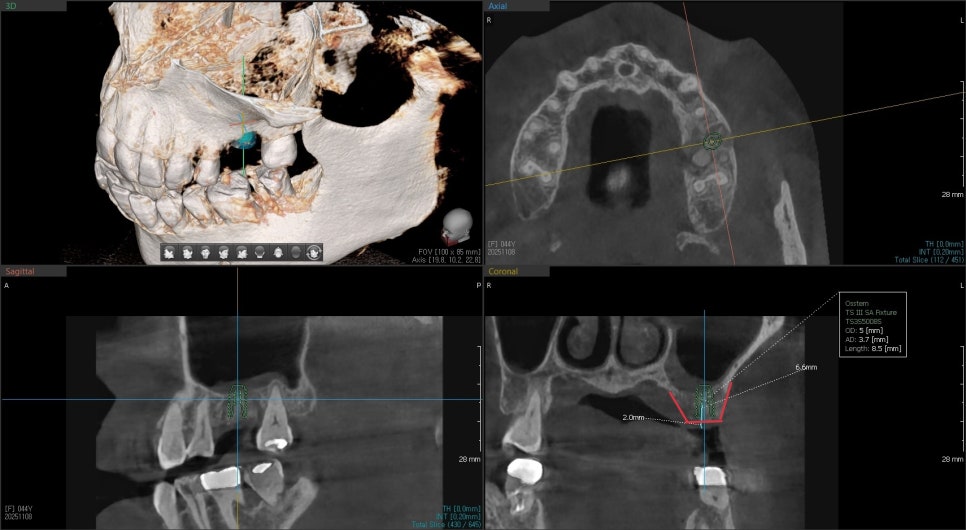
About 4 months later, after confirming that the surrounding bone had recovered as shown by the red line, implant surgery was performed.
In cases where the surrounding wall bone has dissolved like this, waiting for the healing period after alveolar bone grafting makes the prognosis more predictable.
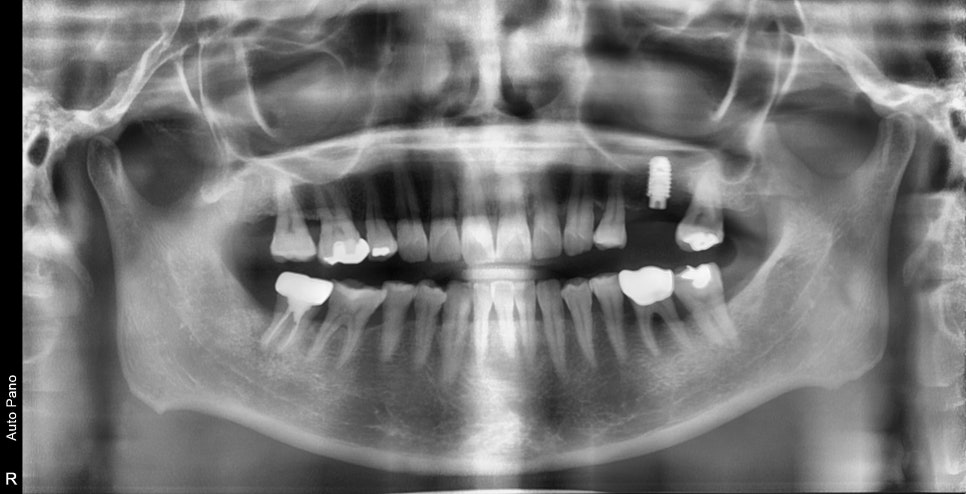
In cases where extraction is necessary like this,
implant surgery is needed,
but the method for determining the timing of surgery can vary greatly depending on the condition of that area,
so I recommend getting a diagnosis along with 3D CT imaging.
Above all, preserving the natural tooth before extraction is important, so regular dental checkups are extremely important.
Thank you^^