Cheongdam-dong dental clinic: Don't take repeated gum bleeding lightly.
Hello.
This is 옥스치과.
Have you ever noticed your gums bleeding while brushing your teeth, or found that they look more swollen and red than usual?
It is easy to think at first that it is due to fatigue or that it will naturally improve after a few days.
However, if swelling and bleeding of the gums recur, they may not be merely temporary symptoms but could be signs that inflammation has developed in the gums.
Today, Cheongdam-dong Dental Clinic will explain why gum inflammation treatment may be needed, as well as the treatment process and everyday care methods.
What causes gum inflammation?
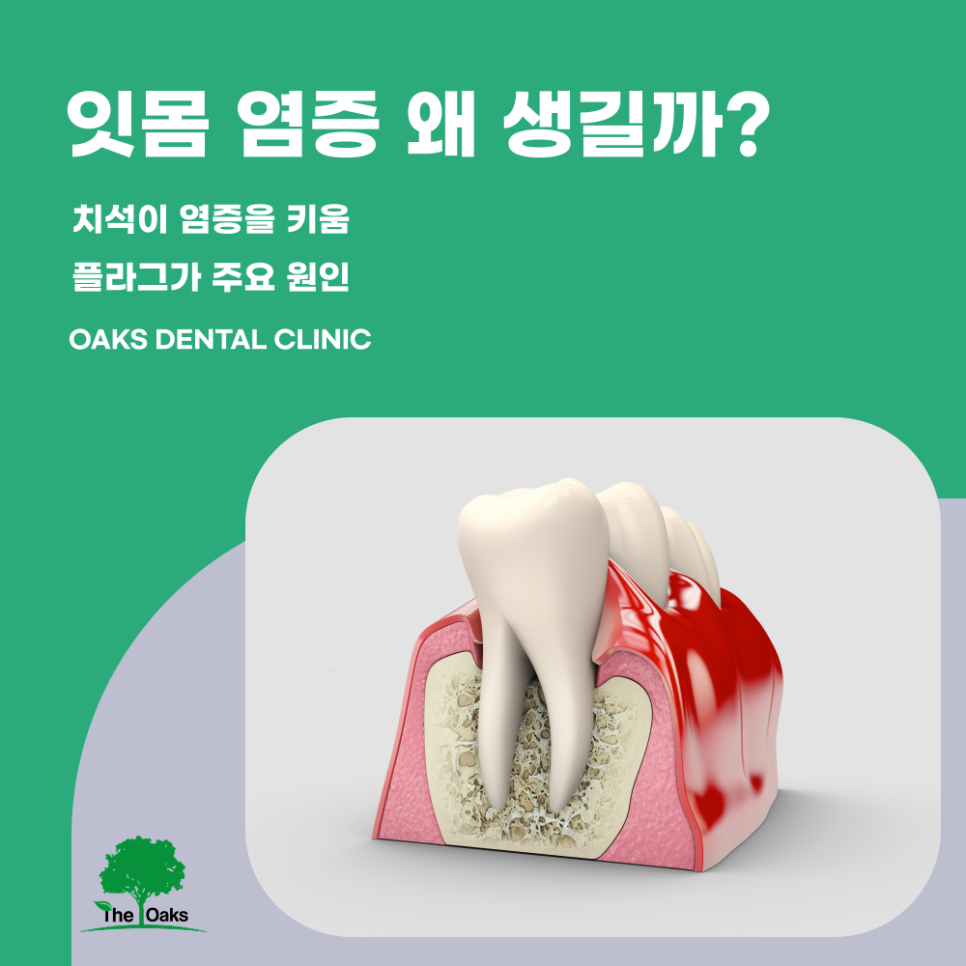
The most common causes of gum inflammation are plaque and tartar that build up around the teeth.
After a meal, food debris and bacteria can remain on the surface of the teeth, forming plaque, a sticky bacterial film.
If this is repeatedly not removed properly, the plaque gradually hardens and turns into tartar.
Tartar is difficult to remove with ordinary brushing alone, and because bacteria can easily accumulate on its surface, it can continuously irritate the gums.
In the early stages, symptoms may include red gums and bleeding when brushing.
However, if the inflammation is left untreated for a long time, the space between the teeth and gums may deepen, and the inflammation may progress further into the gums.
In severe cases, the alveolar bone may become damaged, potentially leading to loose teeth.
Check for these signs if your gums are swollen and bleeding
The symptoms of gum inflammation can vary from person to person.
The most common symptom is bleeding from the gums while brushing.
The gums may look redder or more swollen than usual, and the gums between the teeth may appear rounded and puffy.
You may also notice that your breath has become worse than before or feel discomfort when pressing on your gums.
As the inflammation progresses, the gums may recede, making the teeth look longer, or you may feel as though gaps have formed between the teeth.
In severe cases, pus may come from the gums, the teeth may become loose, or discomfort may occur when chewing food.
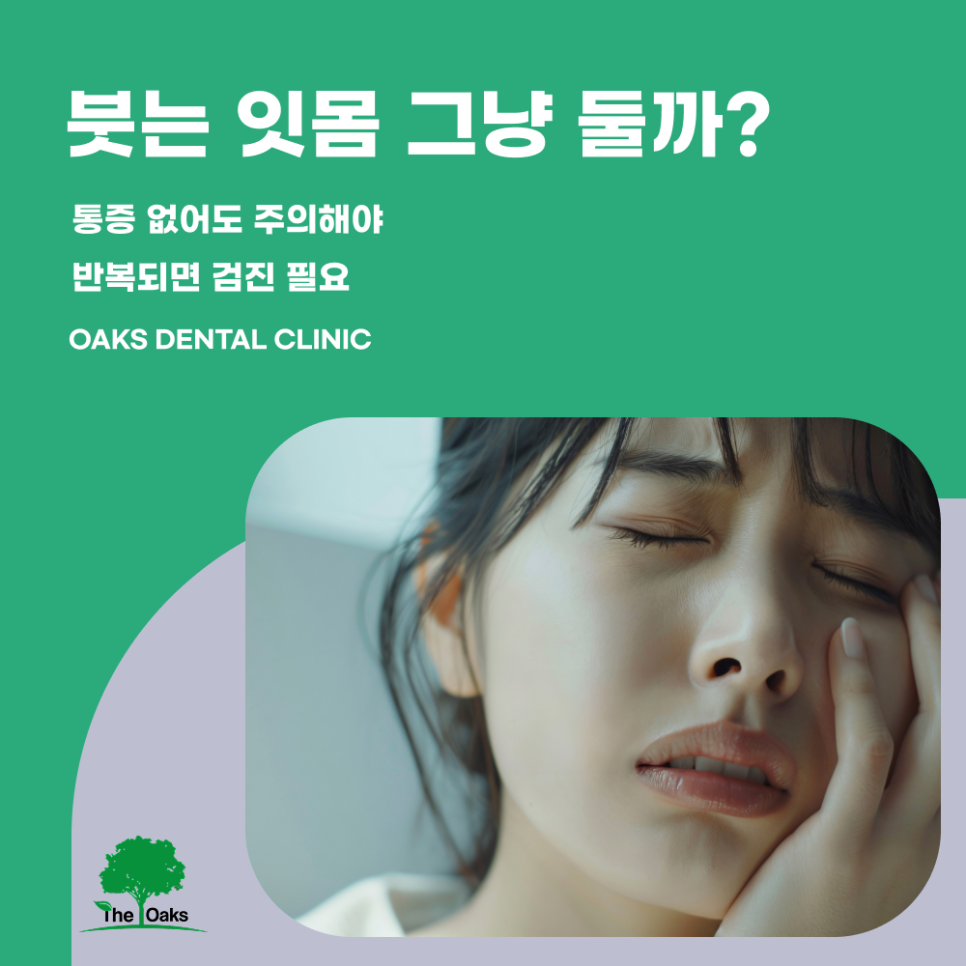
An important point is that the absence of pain does not necessarily mean that your gums are healthy.
Because changes in the gums and alveolar bone may progress before gum disease causes severe pain, recurring bleeding or swelling should not be taken lightly.
How is gum inflammation treatment performed?
Gum inflammation treatment does not always follow the same method.
First, the dental clinic checks the condition of the gums through an oral examination and, when necessary, takes radiographs to assess the condition of the alveolar bone around the teeth.
The space between the teeth and gums is also examined to evaluate how far the inflammation has progressed.
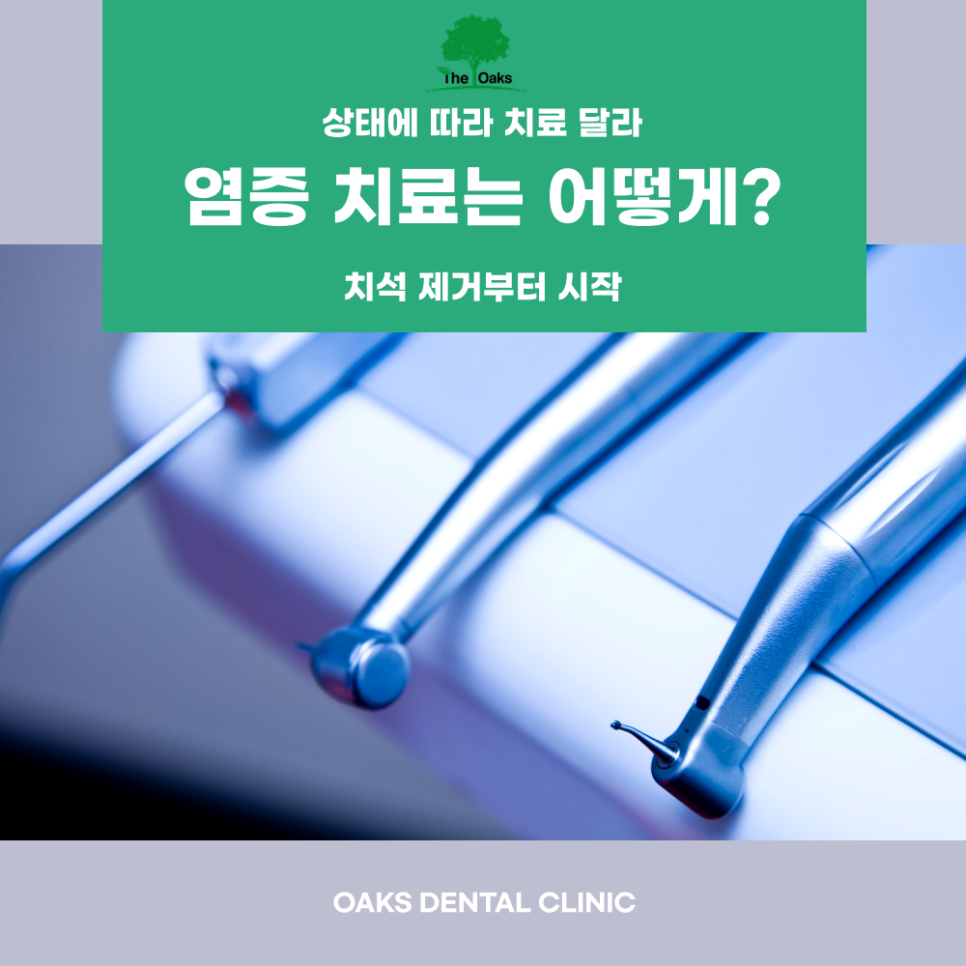
If the inflammation is relatively mild and tartar buildup on the tooth surfaces is the primary cause, scaling to remove tartar and plaque may be considered.
However, if tartar has formed deep below the gumline or periodontal disease has progressed, periodontal treatment to remove tartar and inflamed tissue below the gums may be necessary.
The scope and method of treatment may vary depending on the degree of gum inflammation, the depth of the periodontal pockets, and the condition of the alveolar bone.
Therefore, rather than deciding on a treatment method simply because the gums are swollen, it is important to first accurately diagnose the current condition.
Why care is needed even after treatment
Receiving gum inflammation treatment does not mean that all care is complete.
Gum disease can recur after treatment if oral hygiene is not properly maintained.
In particular, the boundary where the teeth and gums meet is an area where food debris and plaque can easily accumulate.
When brushing, it is important to carefully clean not only the tooth surfaces but also the area along the gumline.
Because the spaces between the teeth may be difficult to clean sufficiently with a toothbrush alone, using dental floss or an interdental brush as well can be helpful.
It is also advisable to continue checking the condition of your gums through regular dental examinations and to receive scaling when necessary.
If you smoke, considering quitting may also be helpful, as smoking can negatively affect gum health.
Lifestyle habits for healthy gums
Gum health begins with small everyday habits.
After meals, it is advisable to brush your teeth properly and develop the habit of cleaning carefully between the teeth as well.
Using a toothbrush too forcefully can also irritate the gums, so it is important to brush with an appropriate amount of pressure.
Also, if food frequently becomes trapped between your teeth or bleeding repeatedly occurs in a specific area, it is advisable to check whether there is another problem between the teeth and gums rather than assuming that it is simply an issue with your brushing technique.
Finding and managing cavities and gum disease early through regular examinations may help prevent the scope of treatment from becoming more extensive.
In closing...
Gum inflammation treatment is not simply about reducing gum swelling or bleeding; it is an important process for maintaining the health of the gums and alveolar bone that support the teeth.
Swollen gums or bleeding while brushing can occur commonly, but if these symptoms recur, it is worth checking whether they may be signs of gingivitis or periodontal disease.
Identifying the cause early and receiving appropriate treatment may help manage the progression of inflammation and keep your natural teeth healthy for a long time.
If your gums have recently been swelling frequently or bleeding repeatedly, or if you are also experiencing bad breath or loose teeth, do not take these symptoms lightly. Have the current condition of your gums accurately checked at Cheongdam-dong Dental Clinic.