Hello, this is Dr. Jo Hyun-woo of 입체성형외과.
When consulting about cheekbone surgery, there are many people who say, “I don’t like the cheekbones that stick out when I smile.”
For people with prominent cheekbones, the cheekbones naturally become more noticeable when they smile.
There are some people whose cheekbones look fine when their face is at rest but become more pronounced only when they smile, and there are also people who have already had cheekbone surgery but still worry because their cheekbones protrude again when they smile.
So today, let’s look at how to address cheekbones that stick out when smiling.
Why do cheekbones show when you smile?
First, when looking at people whose cheekbones become more prominent when they smile, in most cases there is a lot of “fat” in the 45-degree cheekbone area.
As you can see from cases where the face is fine when expressionless but the cheekbones stand out as soon as the person smiles, cheekbones becoming prominent when smiling is not only a bone issue.
The cheekbones that rise when you smile are mostly the result of “muscle and fat” lifting upward.
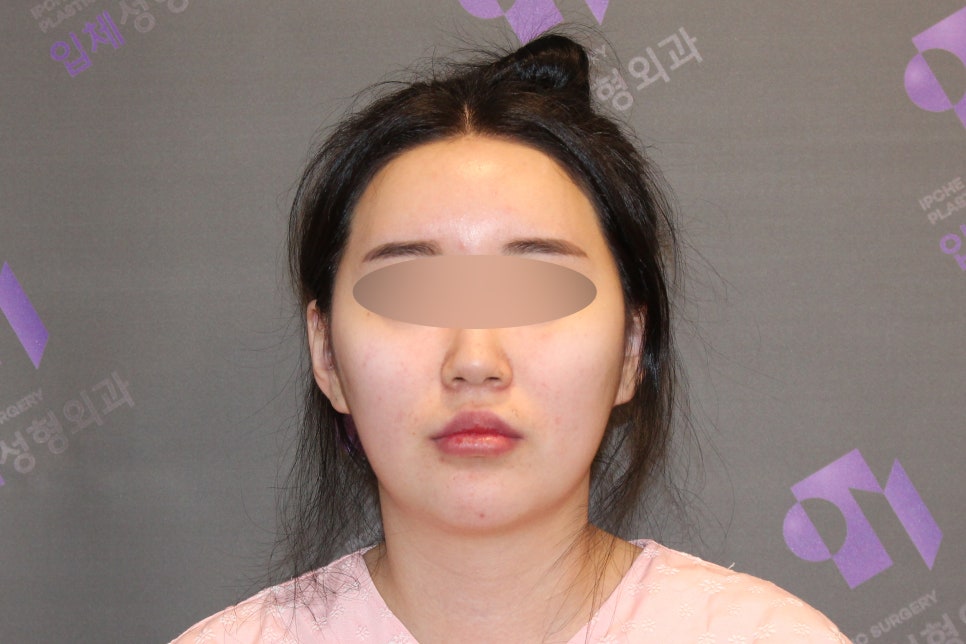
If you look at the patient photo, the side cheekbone and the 45-degree cheekbone are both prominent.
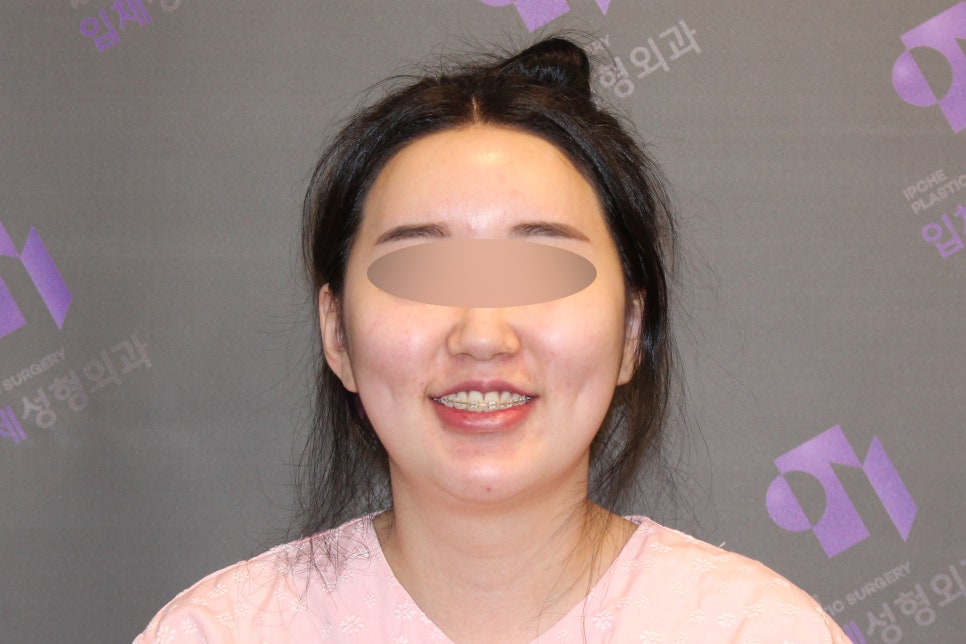
In such cases, when smiling, the muscle and fat rise together over the prominent cheekbone, making the cheekbones stand out even more. I think people who say their cheekbones bother them when they smile will likely have a cheekbone shape similar to the patient shown here.
Why do cheekbones still rise after cheekbone surgery?
The reason cheekbones still rise when smiling even after cheekbone surgery will be very easy to understand just by looking at the CT images.
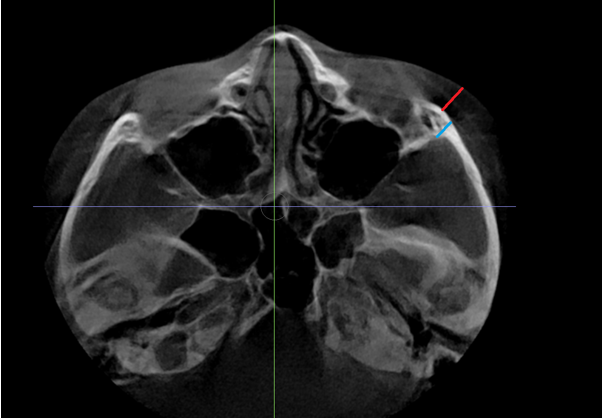
The photo you see is this patient’s CT scan. The part marked in blue is the 45-degree cheekbone, and the part marked in red is the fat, muscle, and soft tissue. As you can see, the patient’s soft tissue is much thicker than the bone.
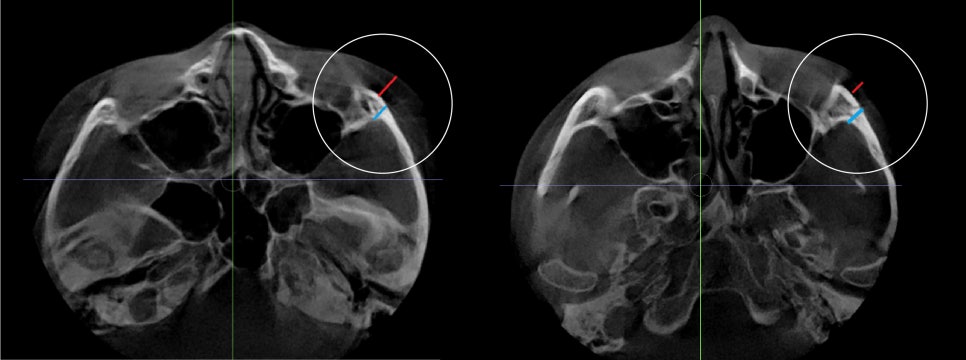
The patient on the left is the one in the photo above, and the patient on the right is a patient whose soft tissue is not very developed. If you compare them side by side, you can clearly see that the degree of soft tissue development is different.
For people like the patient on the right, an uneven facial shape can be a concern, but smiling does not make a major difference from a resting expression.
What cheekbone surgery reduces is the volume of the “bone.” Because the protruding cheekbone is moved inward, the uneven facial line is smoothed out, and since the bone volume is reduced, the cheekbone volume naturally decreases.
However, the area that rises when smiling is not bone but fat and muscle, so if the soft tissue is developed, even after cheekbone surgery, the smile may not feel very different from before the surgery, making it impossible to be 100% satisfied.
Then how can cheekbones that show when smiling
be addressed?
If the soft tissue in the cheekbone area is substantial, liposuction of the fat in the 45-degree area should be performed together with cheekbone surgery so that the cheekbones do not appear prominent when smiling.
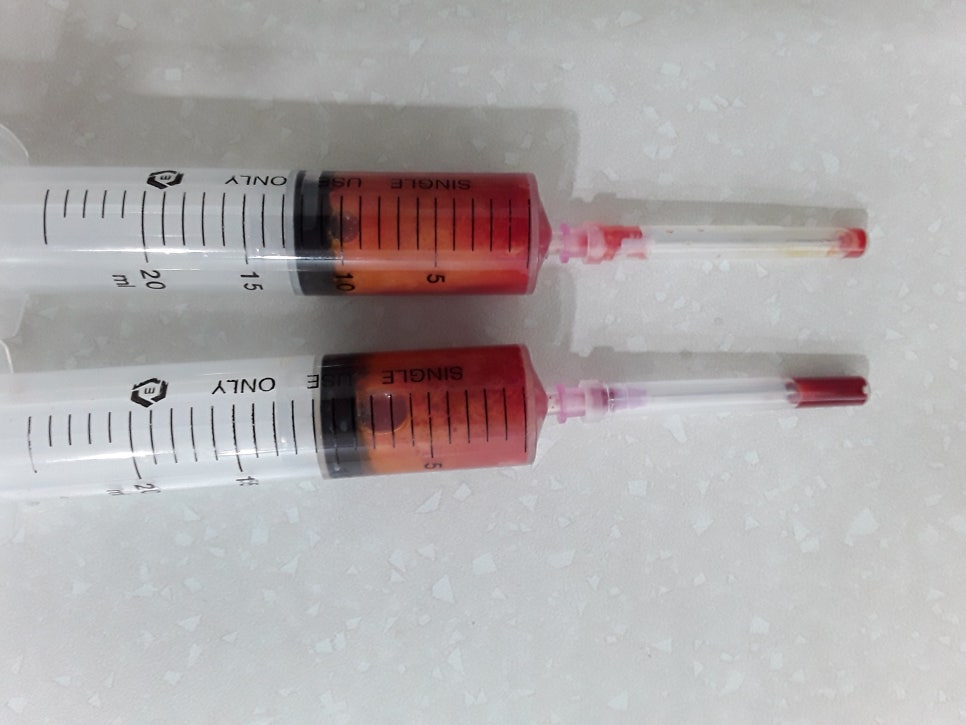
When 45-degree cheekbone fat liposuction is performed during cheekbone surgery, the amount of fat removed is about what you see here.
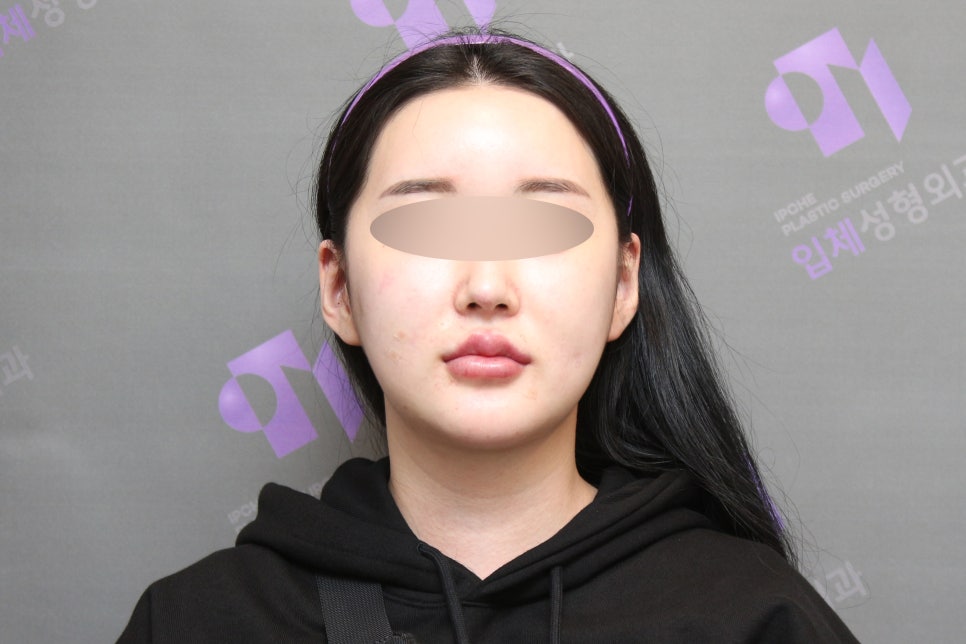
The patient shown earlier also had developed fat in the 45-degree cheekbone area along with the cheekbones, so liposuction was performed at the time of cheekbone surgery. If you look at the post-op photo, the protruding side cheekbone has gone inward, and the uneven facial line has been refined.
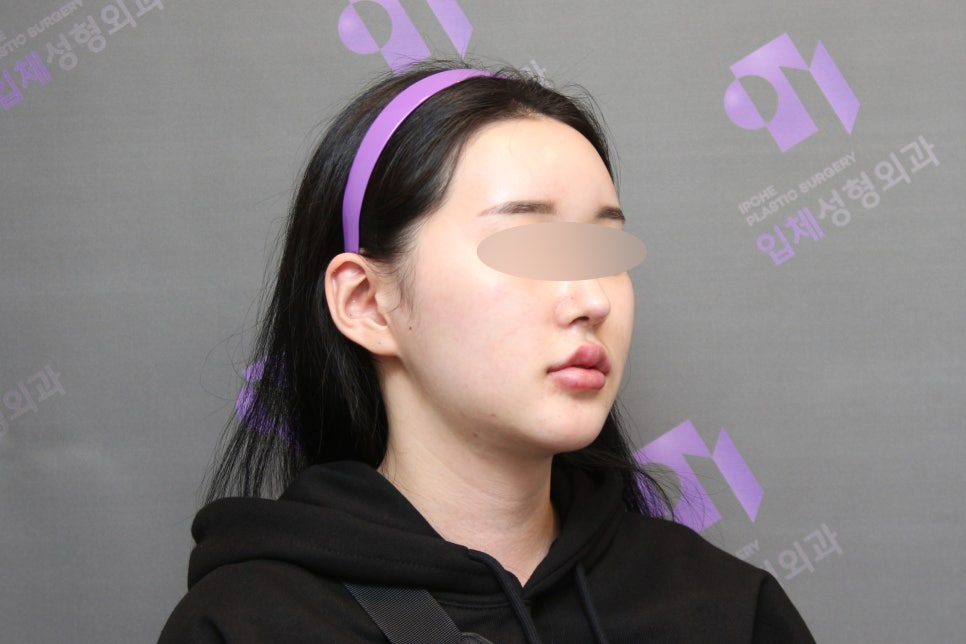
You can also see that the 45-degree cheekbone, which causes problems when smiling, has been smoothly refined.
In fact, for people who only notice their cheekbones when smiling, the issue can sometimes be resolved by reducing the proportion of soft tissue with liposuction alone, without cheekbone surgery. Depending on the patient, fat-dissolving injections such as contour injections may also be effective.
If the problem is soft tissue, the bones should not be reduced. And if both the bones and soft tissue are the issue, reducing only the bones will not solve it either. Because facial contour is not only a bone issue, you need an accurate diagnosis after a CT scan and treatment of the soft tissue together with the bones to achieve a satisfying result.
Finally, if you are currently considering cheekbone surgery, you should also carefully learn about the possible side effects. Recently, many people have been worried because they hear that cheekbone surgery inevitably comes with side effects, so I wanted to add that point. On the other hand, there are also surprisingly many people who want surgery without looking into it carefully..
For example, in the case of sagging cheeks after cheekbone surgery, the likelihood of sagging can be predicted by looking at the patient’s skin tissue condition during the consultation.
In such cases, the patient should be informed first, and surgery should be performed with measures such as lifting procedures. If the clinic does not explain this, patients have no way of knowing and may suffer after surgery.
Therefore, since it is best for patients to know this themselves before the consultation, I have organized this in detail in a video.
If needed, please watch the video below. ^^
Thank you.