Hello, this is Director Jo Hyun-woo of IPJTA Plastic Surgery.
Today, I’d like to talk about jaw reduction surgery.
Jaw reduction surgery is broadly divided into jaw surgery using an intraoral incision and jaw surgery using a post-auricular incision.
Rather than saying that one method is definitively better, there are differences in surgical methods and surgical results, so it is best to choose the surgical method that suits you in each case and proceed accordingly.
That said, in my case, I prefer the intraoral incision over post-auricular jaw surgery.
In the case of patients who visit for revision jaw surgery, many have not seen the frontal effect after the initial surgery.
Post-auricular jaw surgery is performed by making a skin incision of about 3 cm behind the ear and approaching the jaw area through that incision.
Because the incision site is exposed externally, a fine scar may remain, and compared with jaw surgery using an intraoral incision, the effect tends to be smaller.
In my view, the disadvantages of post-auricular jaw surgery are that corticoplasty is extremely difficult,
and because the bone is cut with a straight saw, it is very difficult to cut the bone in a long curved line.
In addition, because masseter muscle reduction surgery is also difficult, there will of course be a side effect, but the frontal effect is very poor.
Of course, a surgeon experienced in post-auricular jaw surgery may have surgical methods that overcome these shortcomings, but it can be said to be very demanding.
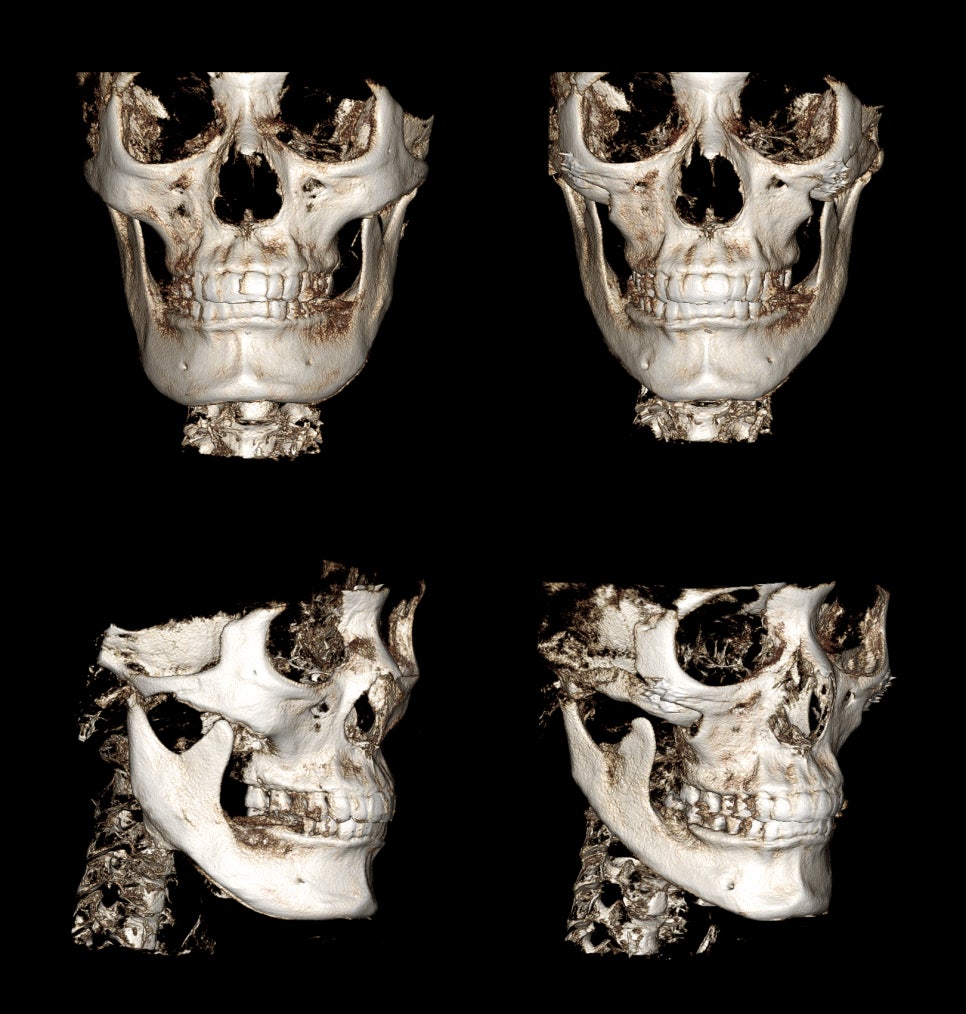
I will show you a CT image as an example.
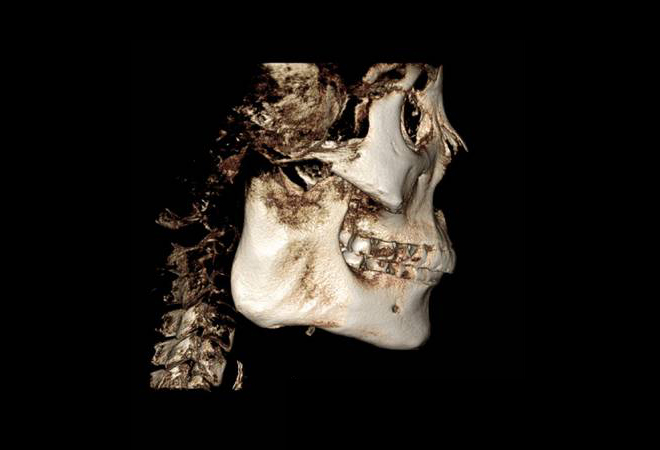
This is the CT image of a patient with especially severe side jaw angles.
For a patient with the jaw bone shown in the image above,
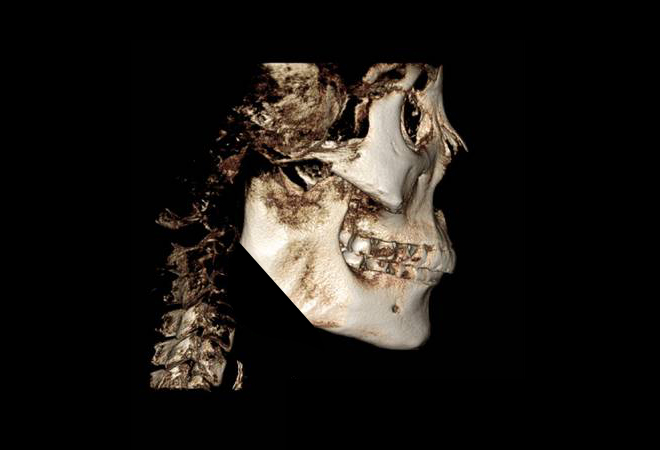
if post-auricular jaw surgery is performed like this,
because the bone cannot be cut in a long line like a long curved resection, it may be effective for patients whose jaw angle alone is severe, but there is a high risk of creating a secondary angle, and the frontal effect becomes poorer.
However, because there is no intraoral incision, eating after surgery is easier, the overall swelling of the jaw is less, and recovery is faster, which are advantages.
It is also a procedure performed under sedation anesthesia. In addition, the operation time is relatively short at about 30 minutes.
If I show you an actual case,
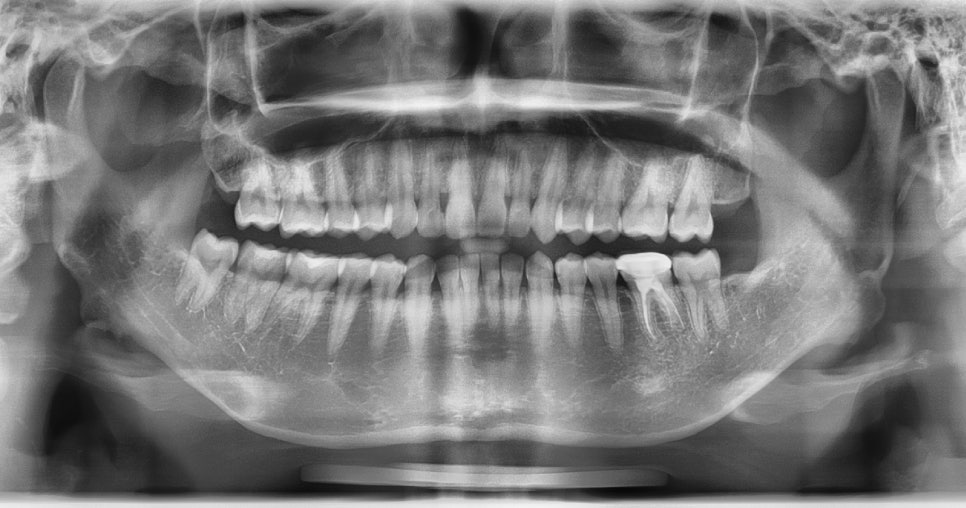
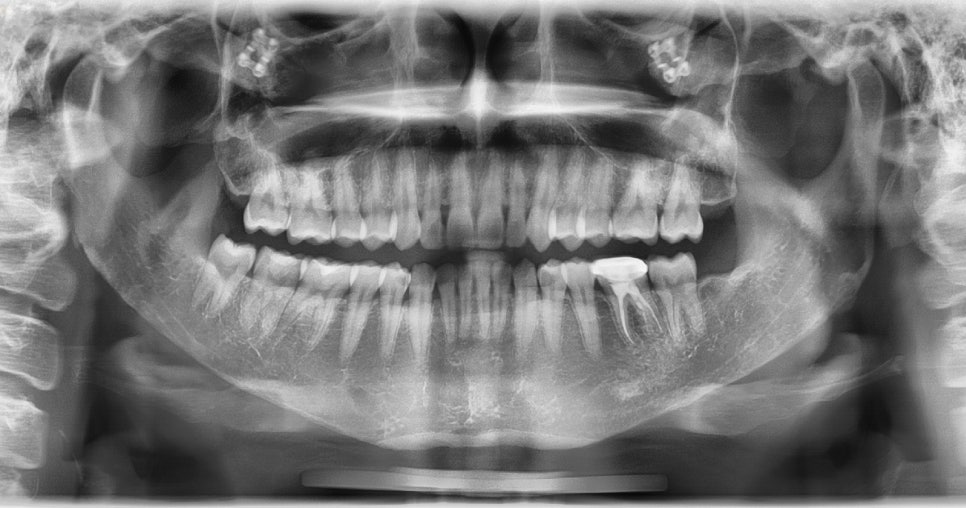
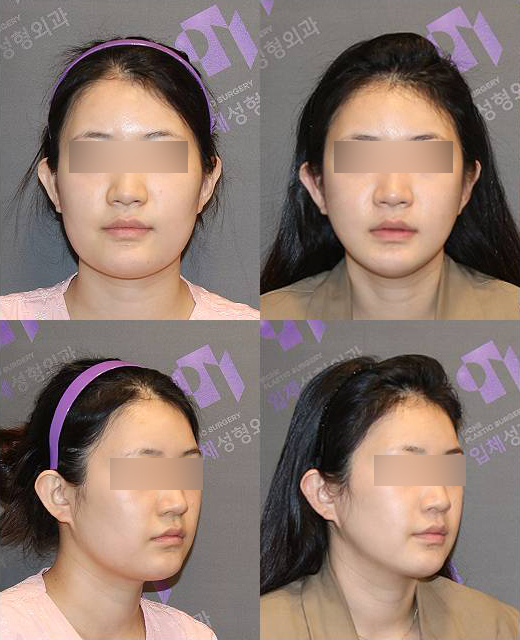
(left) Before revision surgery (right) After revision surgery
This patient had post-auricular jaw surgery 6 years ago, but came in because the face still looked large and broad.
If you look at the photo before revision surgery, you can see that the lower face is wide on both sides and the lower jaw has volume.
(left) Before surgery (right) After surgery
Long-curved jaw surgery removes even the parts that were problematic above, so when viewed from the front, the width of the face is reduced and a slimmer line can be created.
Because the bone is cut all the way from below the ear to the chin in one pass, it can produce a natural line and also resolve asymmetry of the lower jaw.
(left) Before surgery (right) After surgery
Of course, the post-auricular jaw surgery method itself is not inherently a problem.
To achieve the satisfying result you want, sufficient consultation with an experienced board-certified plastic surgeon is necessary,
and only by proceeding with the surgery that is appropriate for you can revision surgery be prevented and a satisfactory result obtained.
Next, one of the surgeries many people undergo is jaw surgery using an intraoral incision.
Intraoral-incision jaw surgery (long curved resection) is performed at many plastic surgery clinics because it is safe and has strong frontal and side effects after surgery.
The surgery is performed by making an incision of about 3 cm in the mucosa between the lower gums and the lips through an intraoral incision.
After moving aside the masseter muscle that surrounds the outside of the jawbone and dissecting the periosteum, the jawbone is easily exposed, so the surgery can be performed while avoiding important nerves and blood vessels.
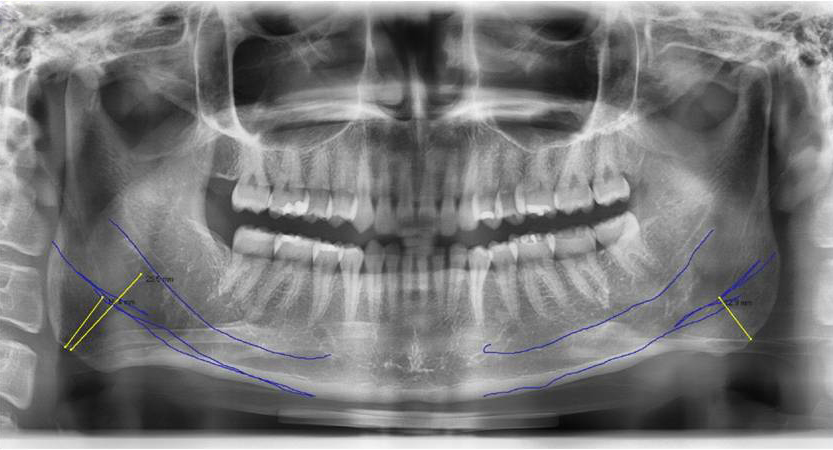
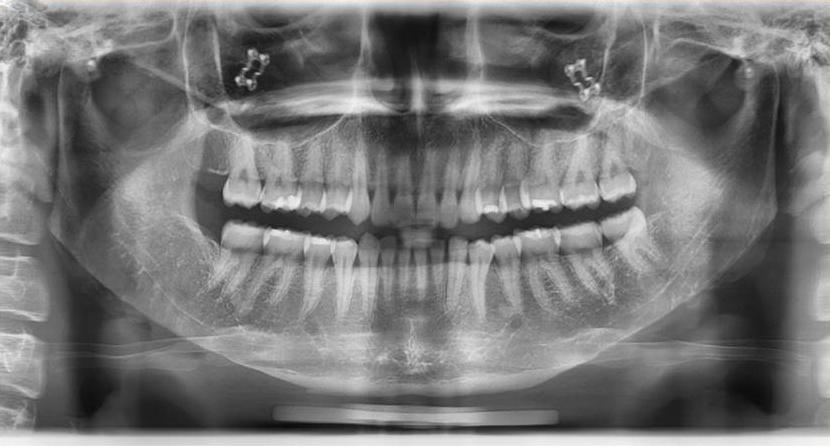
(left) Before surgery (right) After surgery
In the case of intraoral-incision jaw surgery, the field of view is wide and the surgery is performed while clearly seeing the jawbone. Because the jaw angle is removed in a long curve, it is safe and less likely to create a secondary angle.
For bone resection, results vary depending on the individual, but compared with post-auricular jaw surgery, more satisfying effects can be expected.
Long-curved jaw surgery is performed under general anesthesia, and the operation time is about one hour.
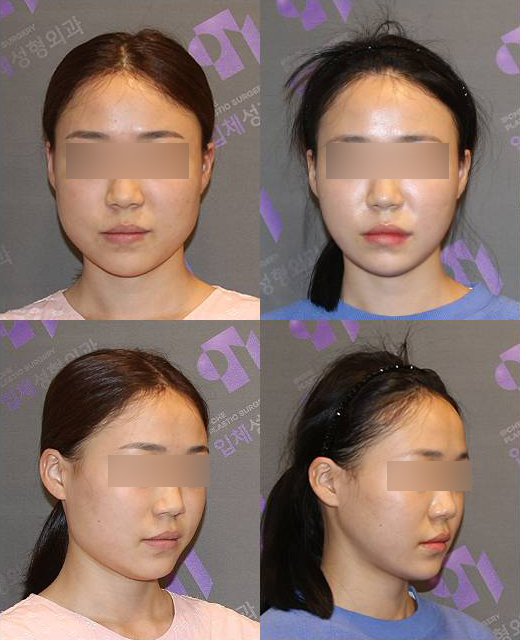
Long-curved jaw reduction surgery (left) Before surgery (right) After surgery
Everyone wants to see a frontal effect after jaw surgery.
If jaw surgery is accompanied by delicate corticoplasty through an intraoral incision, a sufficient frontal effect can be achieved.
Of course, it is hard to say that corticoplasty is necessary for everyone, but in my experience, in many cases, resolving this part leads to a slimmer result.
The most important thing is to undergo the surgery that is most suitable for you through a close consultation with the surgeon in charge.
Thank you.