Hello. I am Director Jo Hyun-woo of ID Plastic Surgery.
These days, some patients often describe their face as a peanut-shaped face and ask what methods can improve it.
What kind of face is called a peanut-shaped face? If I show you a photo:
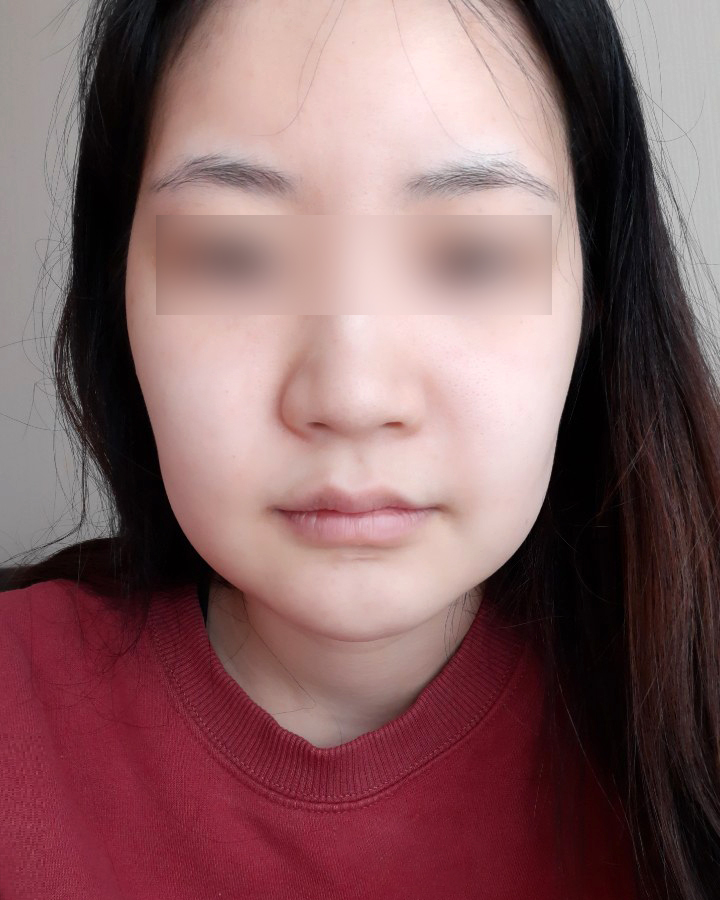
As in this photo, a face with prominent cheekbones, hollow temples, and sunken cheeks,
and with the lower jaw area appearing convex and protruding from the front is generally called a peanut-shaped face.
A peanut-shaped face can make the face look longer than it actually is, and it can also make someone look older.
In such cases, it can be somewhat difficult to solve with just one surgery or with contouring surgery alone.
That is because the face is a complex structure made up not only of bone, but also of soft tissues such as fat and muscle.
So let’s go through how this can be addressed step by step.
- Prominent cheekbones can be improved with cheekbone reduction surgery.
If only the side cheekbones are突出, surgery through a scalp incision such as 230-degree three-dimensional cheekbone reduction can address it.
Or, if you feel that the 45-degree cheekbones are very prominent, 3D cheekbone reduction may help.
I’ll show you about two real cases.
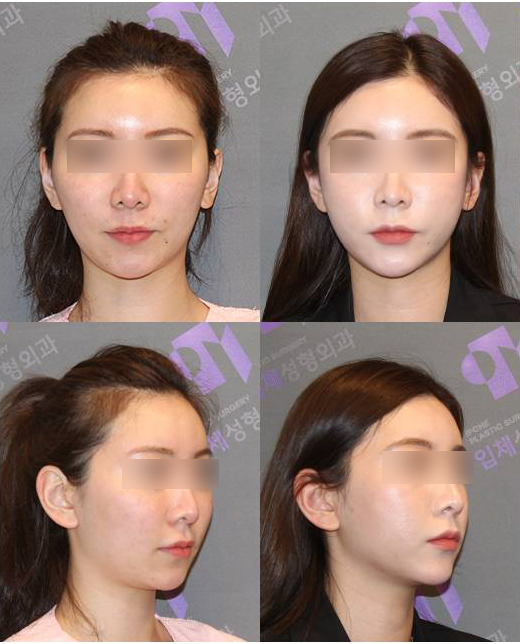
230-degree three-dimensional cheekbone reduction (left) before surgery (right) after surgery
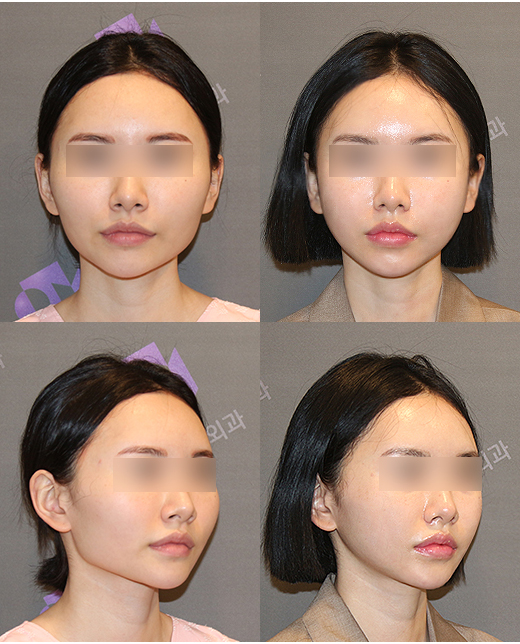
3D cheekbone reduction, square jaw reduction (left) before surgery (right) after surgery
- Hollow temples and sunken cheeks
These areas are difficult to correct 100% with cheekbone surgery alone.
I have written an article in my column about correcting sunken cheeks, so I think it would be helpful to refer to it.
Hollow temples and sunken cheeks can be dramatically improved through fat grafting.
Fat grafting is a procedure in which fat is collected from areas such as the thighs or abdomen and then transplanted.
Usually, if the procedure is performed twice, including a second round with frozen fat, about 80% of the desired volume can be retained.
In this way, fat grafting can also greatly reduce the uneven appearance.
Let me show you a patient case.
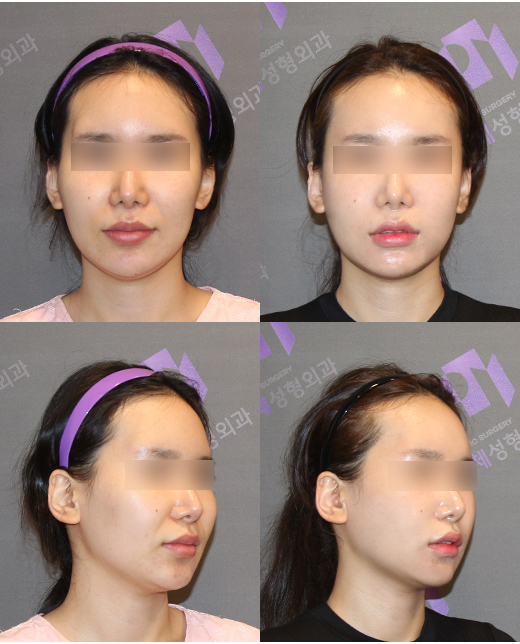
230-degree three-dimensional cheekbone reduction, facial fat grafting (left) before surgery (right) after surgery
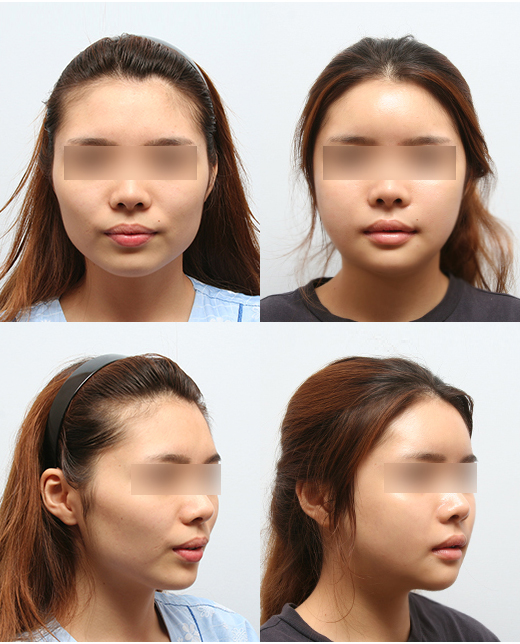
3D cheekbone reduction, square jaw reduction, sunken-cheek fat grafting (left) before surgery (right) after surgery
- Fullness below the cheeks
If the area below the cheeks is convex, as if someone bit into a candy, or if there is a lot of fat, improvement can be achieved through buccal fat removal and facial liposuction.
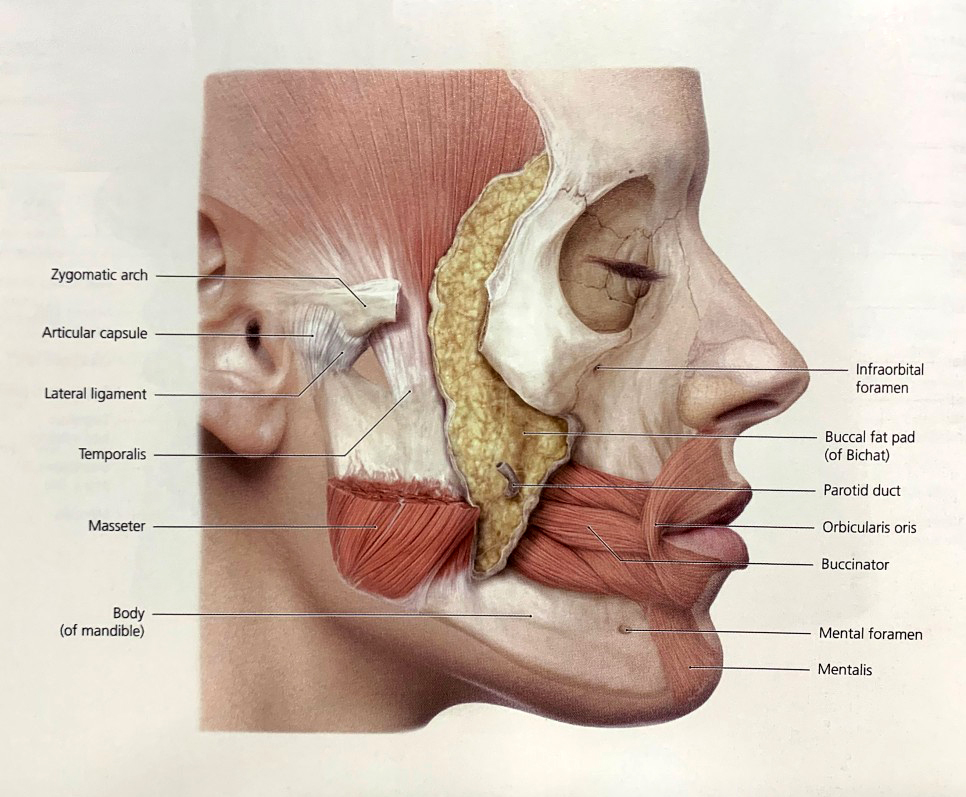
Buccal fat removal is a method in which an incision of about 0.5 cm is made inside the mouth to partially remove the deep fat pads.
Through this method, the deep cheek fat can be removed, and if there is still a lot of subcutaneous fat, it can be improved with facial liposuction.
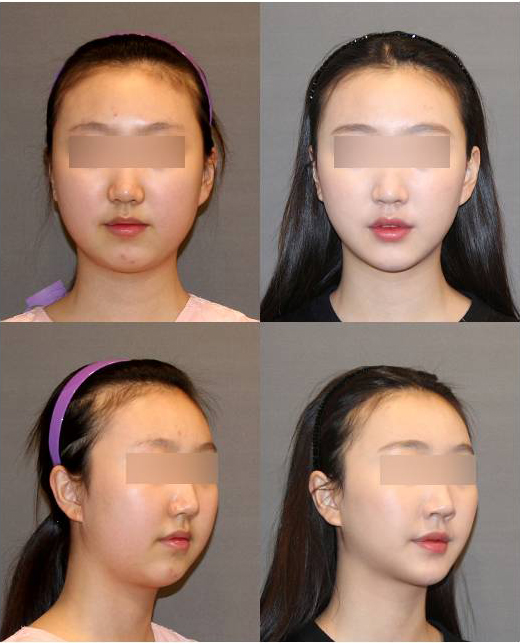
Chin T-osteotomy, facial liposuction, buccal fat removal (left) before surgery (right) after surgery
- Development of the square jaw bone and masseter muscle
If the actual square jaw bone protrudes outward, or if the masseter muscle is large, combining square jaw surgery and masseter muscle removal can be very helpful.
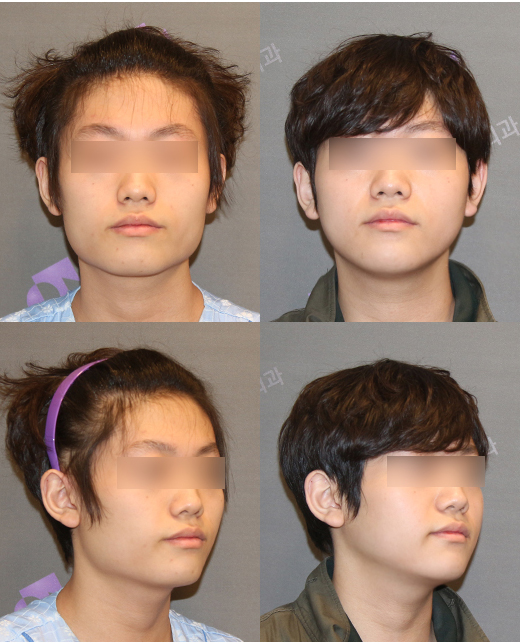
Square jaw reduction, masseter muscle removal (left) before surgery (right) after surgery
As shown above, square jaw surgery and masseter muscle removal can improve the protruding appearance of the lower jaw.
If the square jaw is not large and only the muscle is prominent, Botox can also be quite effective.
In this way, a peanut-shaped face can be changed into a softer facial line through various combined procedures.
Since this is not a situation that can be solved with just one surgery, you can get good results by making a decision about which procedure you need through a thorough consultation. I have included links to various procedures, so taking a close look at them will also be very helpful in understanding the surgeries.
Thank you.