Hello. I am Dr. Jo Hyun-woo of 입체성형외과.
Today, I would like to provide accurate information about square jaw surgery.
To avoid side effects from square jaw surgery, I will explain what should be considered, and how to set the surgical direction so that the face does not end up looking unnatural as a result of side effects.
Among all patients considering plastic surgery, including square jaw surgery, what they most strongly want is probably a “dramatic effect.”
A dramatic effect refers to a big change after surgery. In particular, contour surgery involves shaving bone, so patients tend to want and expect even greater results.
At this point, a big change in square jaw surgery means “a large amount of bone cutting.”
The more bone is removed, the more the face width decreases. Physically, that is of course natural.
That is why, to create a dramatic effect with square jaw surgery, a large amount of bone cutting is needed.
As long as the nerve line is not affected, increasing the amount of bone removal is not difficult.
But is removing as much as possible always better?
There are things to be careful about when increasing the amount of bone removed.
When the square jaw is reduced to the maximum, the face becomes narrower and the overall face becomes smaller.
In that case, satisfaction may be high immediately after surgery because of the dramatic change.
However, although a smooth and sharp facial line can be created, overall the face shape is likely to look unnatural.
I think most patients would not want that kind of result.
Of course, during consultations there are patients who want this kind of flat, unnatural face shape, and who want a dramatic change regardless of post-surgery sagging skin.
In such cases, if the patient truly wants it, it is not easy to change their mind from a doctor’s perspective.
However, the important thing is that once bone has been over-resected, restoration is almost impossible.
Then is it better to reduce the amount of bone removed?
Reducing the amount of resection means, in other words, that the absolute amount of bone removed decreases, which also means that the degree of change after surgery becomes smaller.
If the patient only wants to refine a bumpy facial shape, that is not a problem.
But if they want a very sharp facial line or a major change in face size, the result may fall short of the patient’s expectations.
However, the result will be more natural, and the less bone is removed, the lower the likelihood of problems with the remaining soft tissue, namely sagging skin.
Put another way, the more bone is removed in square jaw surgery, the greater the chance of an unnatural facial line and, at the same time, the greater the chance that sagging skin will become an issue. Ultimately, as long as the nerve line is not affected, the amount of bone removed, that is, the degree of change, can be determined according to the direction of improvement the patient wants.
That said, what I want to emphasize is that the size of the change and the degree of beauty are not proportional, and that in order to safely avoid side effects from square jaw surgery, the degree of change may not meet the patient’s expectations.
Then is there an appropriate standard?
Because every patient’s facial bones are different, it cannot be said definitively that removing more bone or less bone is always better.
There is no single correct answer, but in my personal opinion, it is better to leave enough bone to support the remaining soft tissue even after time has passed following surgery, and to remove bone in a way that produces a natural result.
A natural result here does not mean the surgical outcome is inferior.
I will explain with actual patient photos.
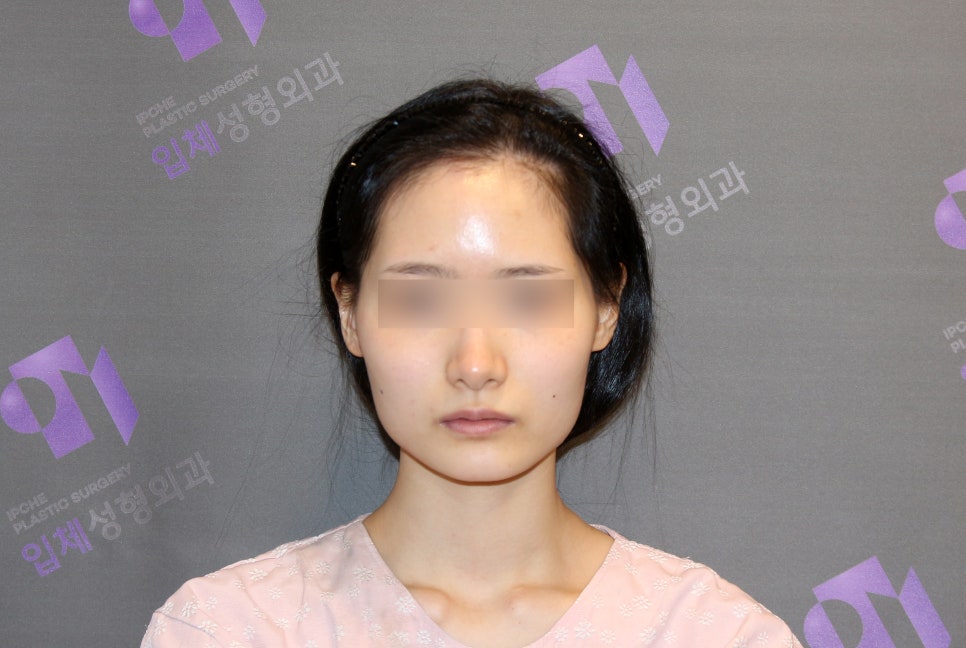 The photo you see is of a patient who underwent three types of facial contouring surgery: cheekbone, square jaw, and chin surgery.
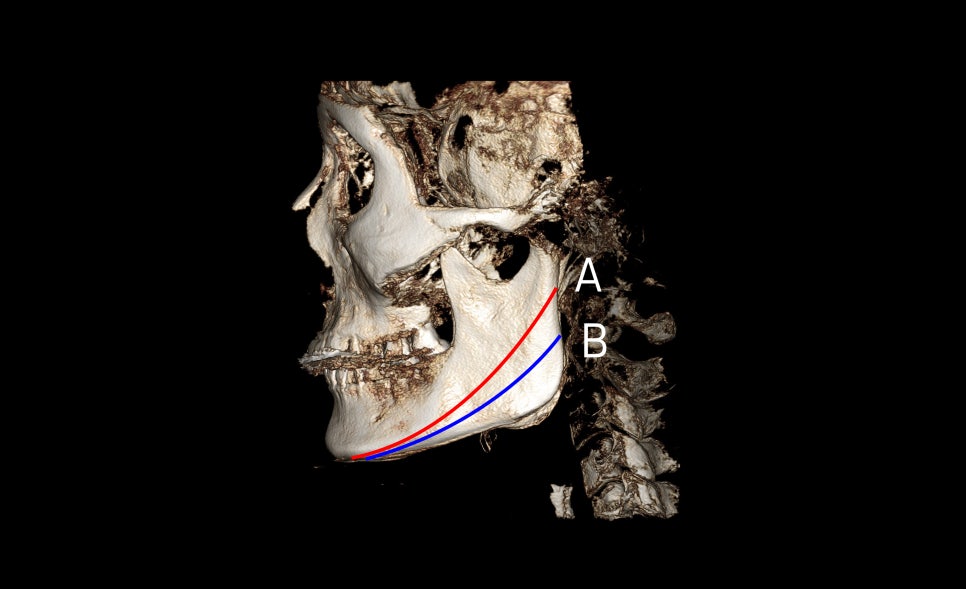 Looking at the preoperative CT, the patient has a very large mandibular angle. When the mandibular angle is this large and the square jaw is prominent, both approaches can be considered: maximizing the amount of bone cutting or leaving a little bone behind.
If the osteotomy line is set high, as in A, to maximize the amount of resection, the face width becomes narrower and the change after surgery becomes greater.
However, the mandibular angle may become less noticeable, increasing the likelihood that it will look like a so-called “dog jaw.”
If the osteotomy line is set a little lower than the maximum, as in B, a portion that can still appear as the mandibular angle remains, and the large mandibular angle before surgery can be changed into a softer mandibular angle. At this time, because the amount of bone removed decreases, the likelihood of square jaw surgery side effects, such as issues with remaining soft tissue, also naturally decreases.
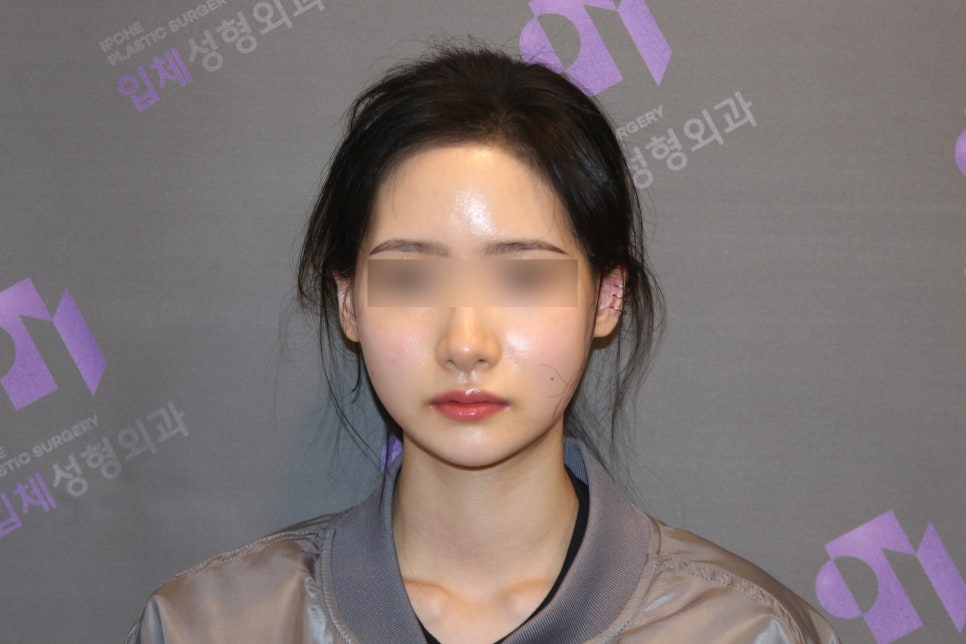 This photo was taken when the patient visited for a 3-month follow-up check after surgery.
Even though the surgery was performed in a way that did not maximize bone removal and instead left an appropriate amount behind, you can see that it is clearly improved compared to before surgery.
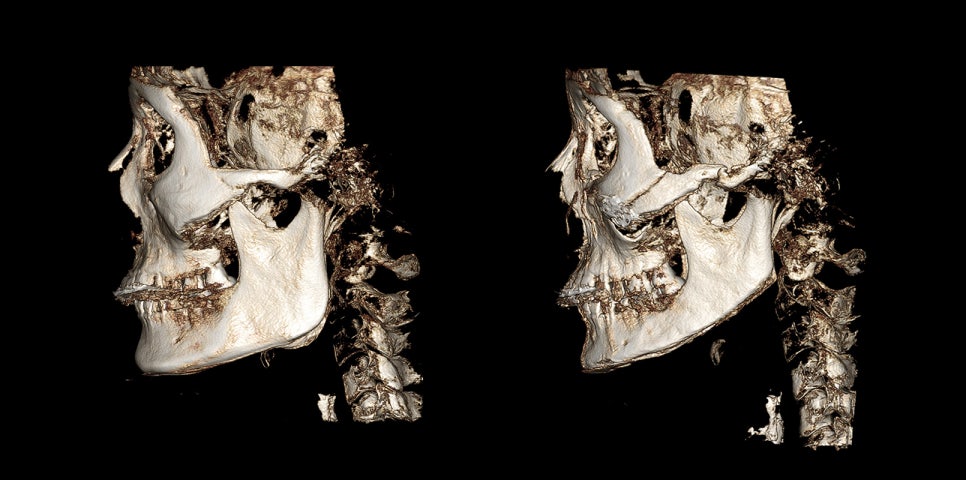 If you compare the CT images, you can see that the mandibular angle remains after surgery because the osteotomy line was set slightly lower than the maximum. To show you the actual appearance:
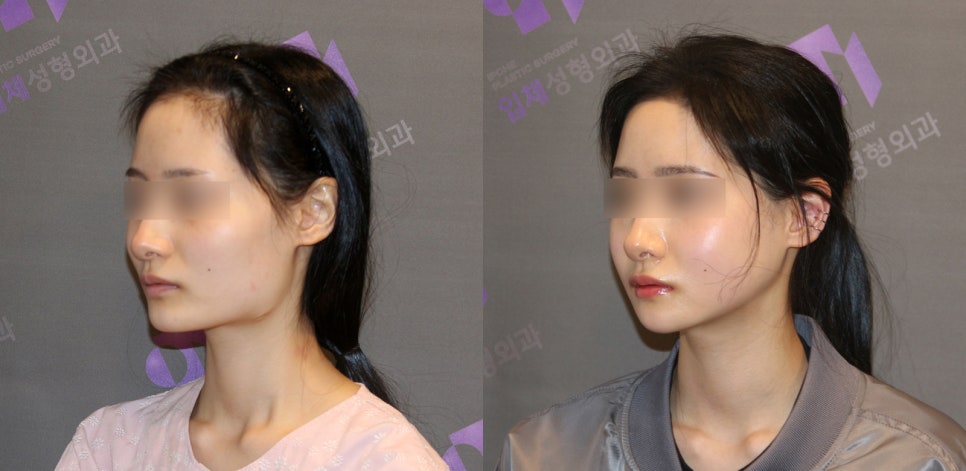 This is a side view after surgery. You can see that the mandibular angle beneath the ear has been left softly in place, creating a natural line without looking awkward.
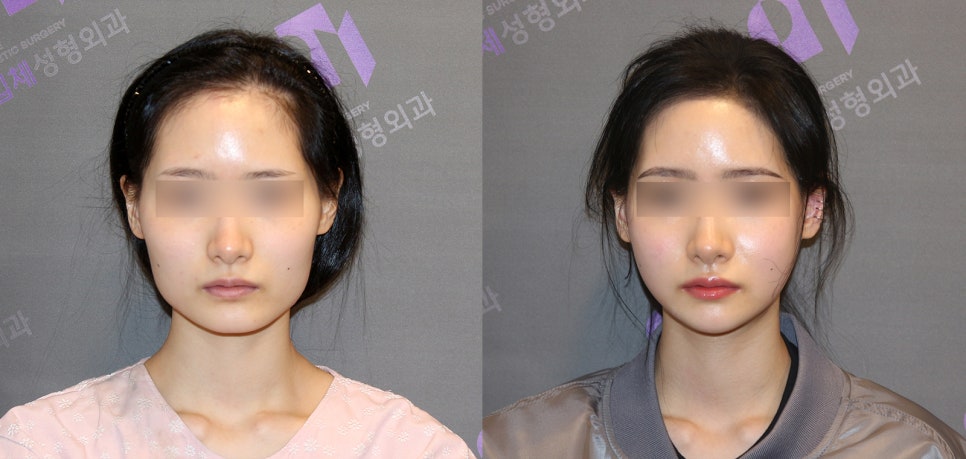 If you compare them side by side, you can see that the lower face line has become smoother after square jaw surgery, the face width has decreased, and the face has changed into a well-balanced and attractive shape.
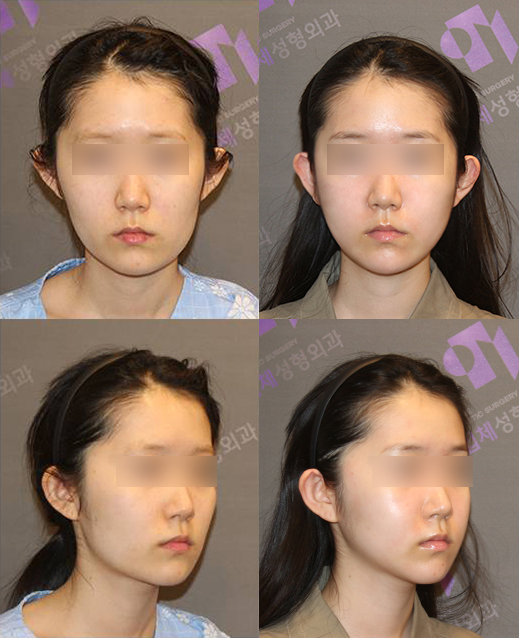 3D cheekbone reduction surgery, square jaw reduction surgery, cortical osteotomy
Because everyone’s 기준 for looking at results is different, some people may want a greater effect than what is shown.
However, I believe it is important to correct the patient’s expectations before surgery so that the patient can make the right decision.
Ultimately, plastic surgery is still performed by people, so there are definite technical limitations.
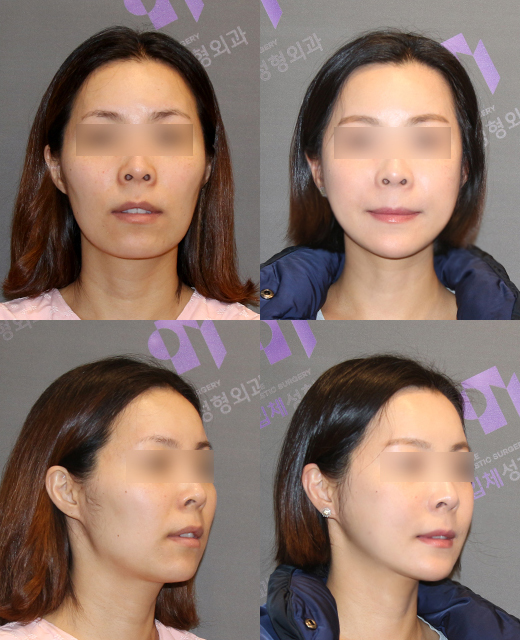 3D cheekbone reduction surgery, square jaw reduction surgery, chin surgery, masseter muscle reduction surgery
Therefore, during consultation, a specialist must clearly and accurately explain what can and cannot be done for the patient.
The same applies to the patient. The final decision on whether to have the surgery or not is made by the patient.
If you undergo facial contouring surgery with the unconditional belief that your “face will become smaller,” satisfaction may fall short of expectations, and if you become too greedy, you may end up deeply regretting it.
If you are currently considering square jaw surgery, please set aside the vague thought that you will “look better” for a moment, and through a careful consultation with the surgeon, look at objectively whether this surgery can truly solve your complex.
I also hope you will think once more about whether you can truly feel greater satisfaction from this surgery compared with the cost, recovery period, and other opportunity costs, and then make the right decision.
Thank you.