Hello. I’m Dr. Jo Hyun-woo of 3D Plastic Surgery.
When people think of ‘cheekbone surgery,’ the first side effect that comes to mind is ‘cheek sagging.’
I have repeatedly talked about cheek sagging in several columns, but this time I would like to go into the extent of dissection in a little more detail.
Let me start by explaining the word ‘dissection.’
Dissection is the surgical process of defining the operative area during surgery.
The same applies to eye surgery and nose surgery, where this dissection process is also necessary.
In the case of nose surgery, an incision is made and the area where the implant will be inserted and the area where the nasal tip cartilage will be placed are dissected.
But why do people not say that if dissection is done widely during nose or breast surgery, the nose or breasts will sag?
The answer lies in whether the surgery reduces volume or increases volume.
In nose surgery or breast surgery, an implant is inserted after dissection, increasing the volume within the dissected area.
Therefore, there is no room for the skin to sag.
However, contouring surgery is a surgery that reduces volume.
If dissection is performed and the cheekbones are reduced, there will clearly be more empty space than before.
The more reduction is done, the more the space will increase, right? Let me show you with a simple example using a balloon.

If air escapes from a balloon that is fully inflated, the outer surface of the balloon will naturally become wrinkled, right?
Likewise, in contouring surgery, when the cheekbones are reduced, there will inevitably be leftover tissue, and as a result, the excess tissue may appear as sagging from the outside.
Of course, depending on the case, people with a lot of cheek fat or people whose skin stretches easily after losing weight may feel more sagging, and in such cases, thread lifting or laser lifting procedures may be needed after surgery.
To prevent this kind of cheek sagging, a process is needed to reduce the chance of the tissue drooping, and that is the process of narrowing the dissection area.
I will explain the extent of dissection using the examples of 3D cheekbone surgery with an intraoral incision and 230-degree cheekbone surgery with a scalp incision.
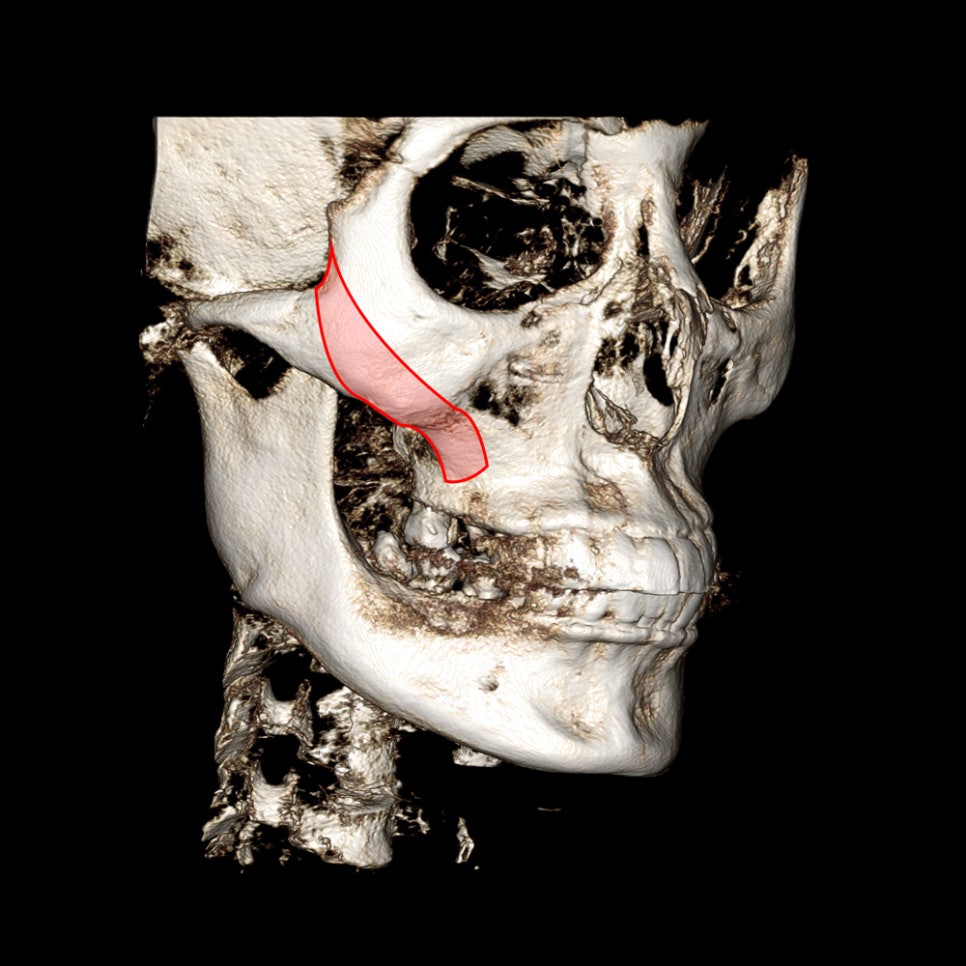
The red area in the illustration is the minimum extent of dissection needed for 3D cheekbone surgery.
Because the surgery requires dissection through an intraoral incision to reach the 45-degree area, and because the 45-degree portion of the cheekbone must be removed, even the minimum dissection range becomes the red area shown here.
Of course, a wider dissection makes the surgery easier and simpler, but since the dissection range should be reduced to lessen cheek sagging, it is better to dissect only as much as necessary.
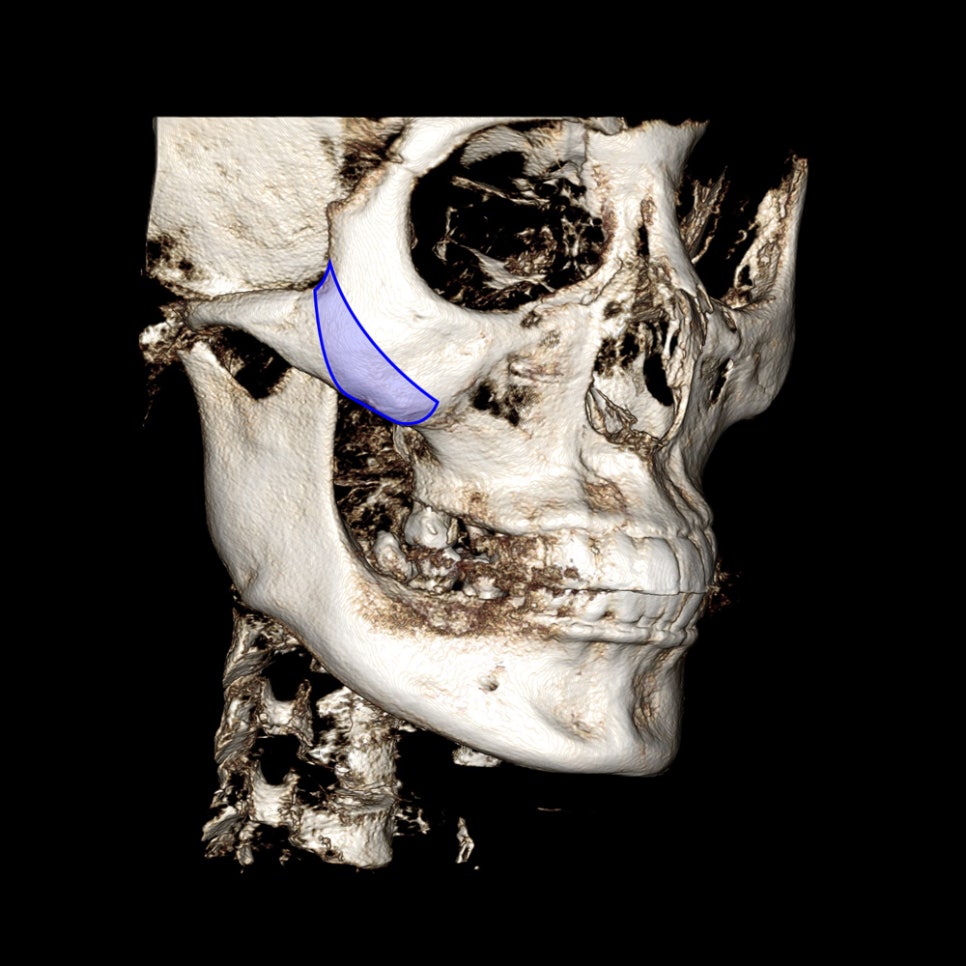
This blue area is the dissection range for 230-degree cheekbone surgery, which is performed through a scalp incision.
Because it is not an intraoral incision, the dissection range is limited to only the areas where partial osteotomy and shaving of the bone are needed.
Many people ask about this.
"Doesn’t surgery with a scalp incision have a wider dissection range and therefore cause more skin sagging?"
However, while this can vary depending on the surgical method and the surgeon, in my case the dissection range for 230-degree cheekbone surgery is much smaller.
Of course, a wider dissection allows more shaving, but since surgery is about gaining one thing and losing another, rather than widening the dissection to shave more, I perform the surgery in a way that keeps dissection to a minimum in order to reduce skin sagging.
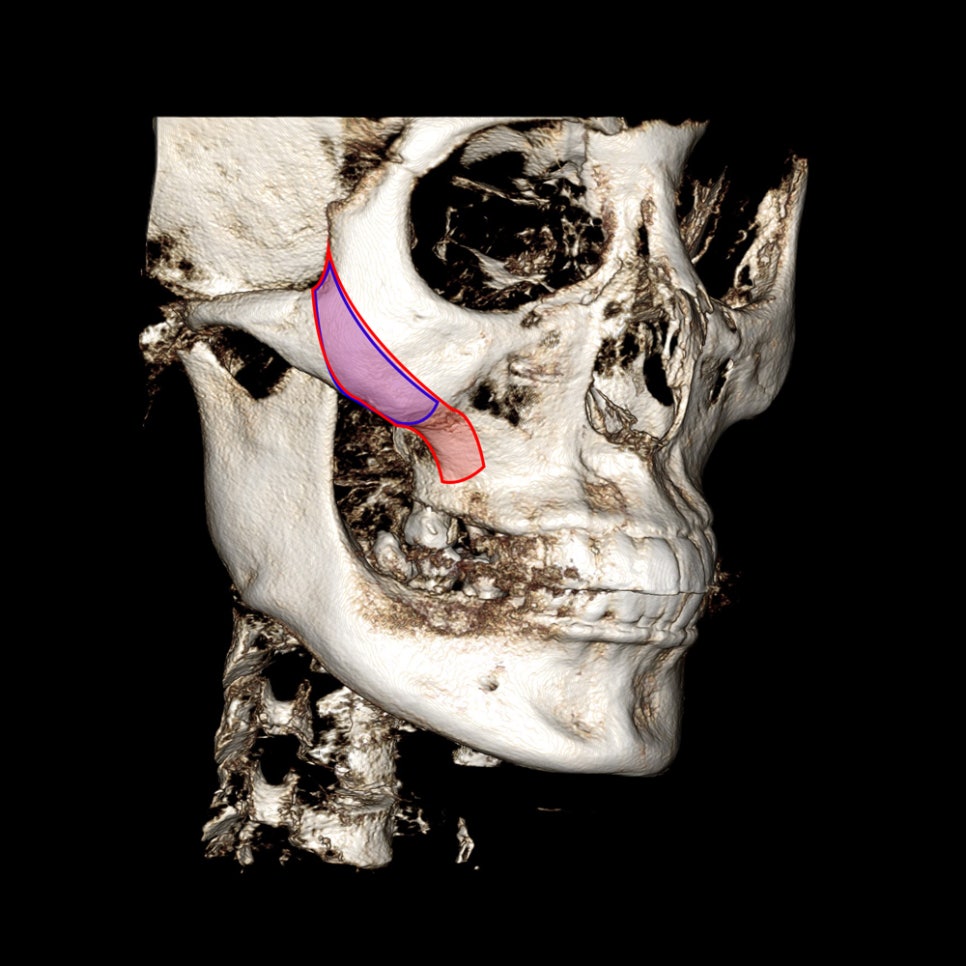
I marked the difference in dissection range for easy comparison at a glance.
The red portion is the dissection range for 3D cheekbone surgery, so the difference should be easy to see.
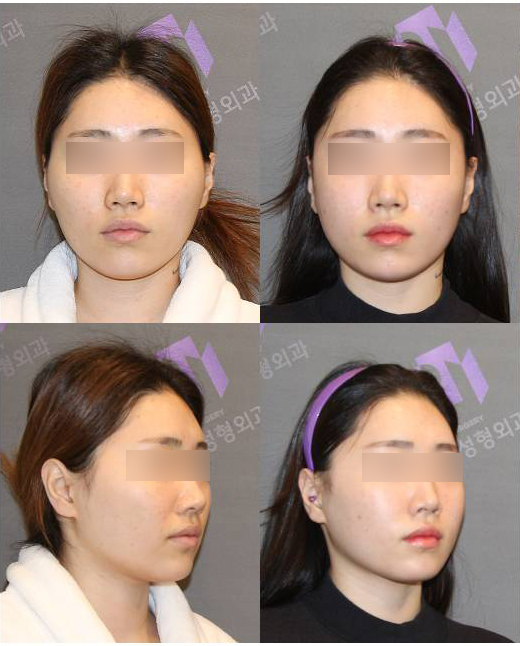
1 year after cheekbone surgery
Cheek sagging occurs when the cut cheekbones are not properly fixed, or when the bone is cut or dissected more than necessary.
In such cases, it may not be noticeable immediately after surgery, but as early as 6 months later, the cheek sagging can become much more visible.
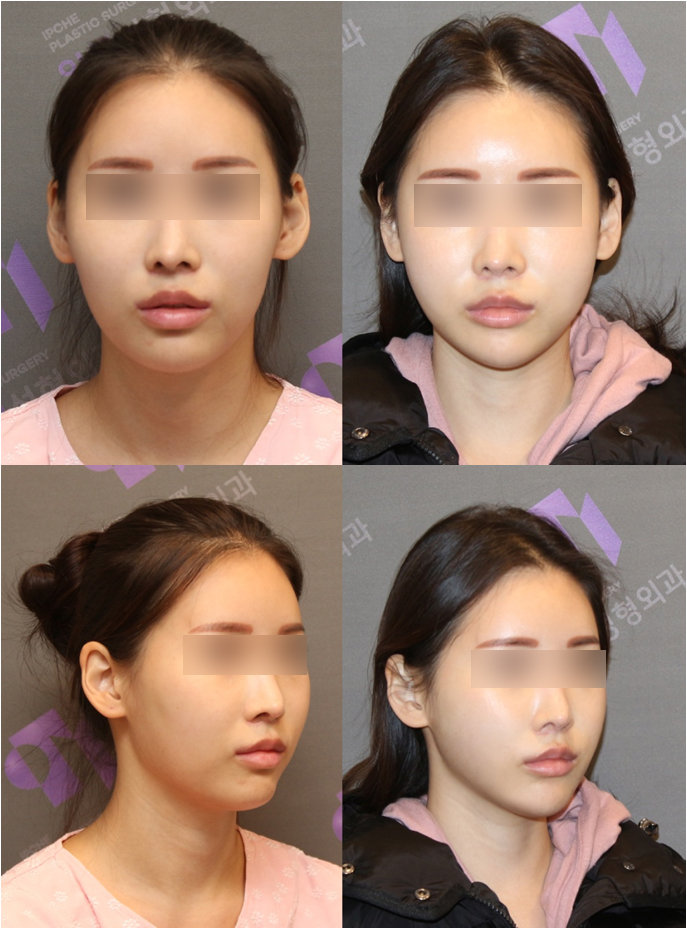
2 years after 230-degree cheekbone surgery and square jaw surgery
Therefore, cheekbone surgery is a procedure in which the operation must be performed accurately above all else in order to minimize cheek sagging.
If you receive surgery from an experienced and skilled specialist, and keep in mind that the degree of sagging can vary depending on the surgical method when you go in for a consultation, you may be able to expect better results.
Thank you.