Hello. I am Dr. Jo Hyun-woo of Ipcheok Plastic Surgery Clinic.
Today, I’d like to explain side cheekbone surgery.
Side cheekbone reduction surgery is an operation that uses the cheekbone’s natural tendency to curve, making an osteotomy of the side cheekbone and pushing it inward.
By pushing the side cheekbone inward, the cheekbones that protruded to both sides when viewed from the front become less prominent, and the facial line falls more smoothly.
A major advantage is that it is a simple procedure performed under sedation anesthesia rather than general anesthesia, resulting in less swelling and a faster recovery period.
In most patients who need cheekbone reduction surgery, the side cheekbone and the 45-degree cheekbone are developed together.
That is why people who want revision side cheekbone surgery are often seen saying things like, “It still seems like the cheekbones remain even after surgery,” or “The effect is minimal.”
In cases of cheekbone revision surgery, there are cases in which something went wrong surgically, such as asymmetry or nonunion, but more than 50% of revision patients had surgery that went well without any problems, yet underwent revision because their satisfaction with the results was low.
Let me show you a real case.
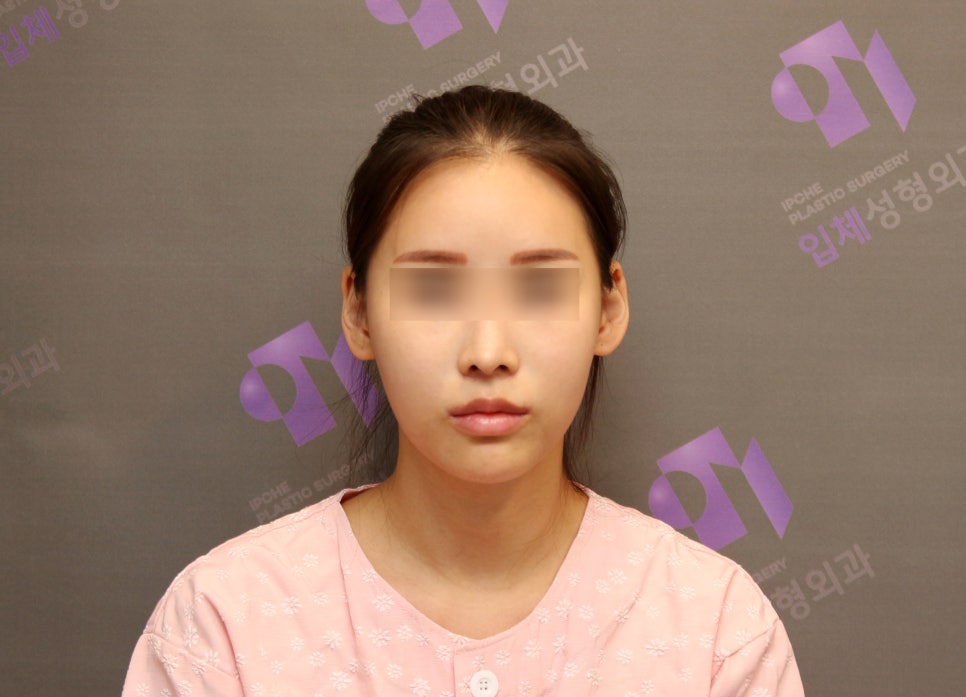
This patient visited us for revision surgery because the effect was minimal after receiving side cheekbone reduction surgery at another hospital five years ago.
There was no problem when viewed from the front, but
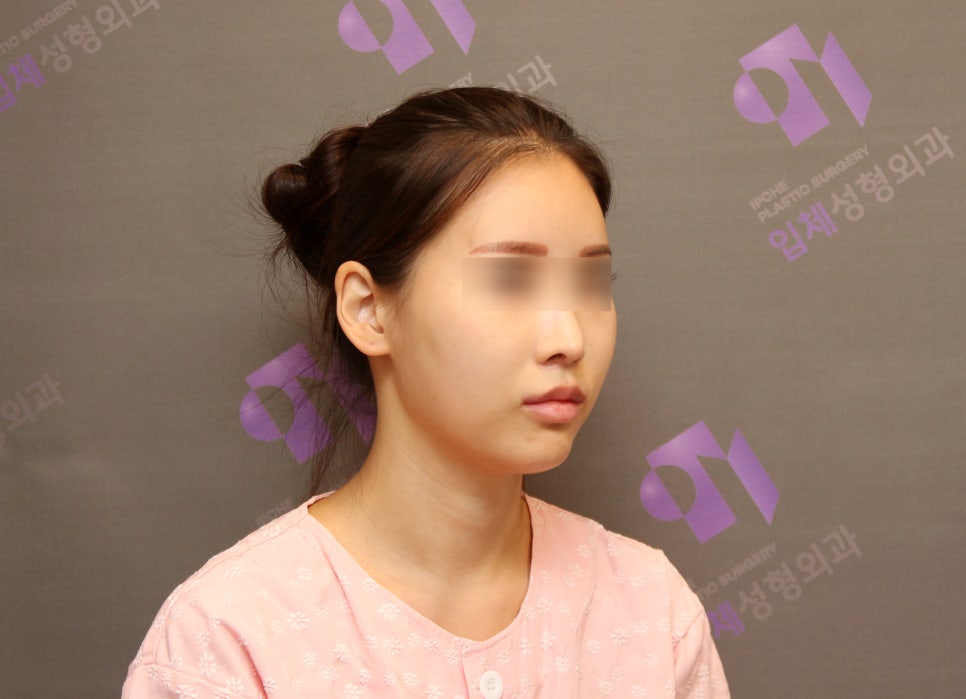
when viewed from the side like this, the 45-degree cheekbone below the outer corner of the eye remains unresolved and stands out prominently.
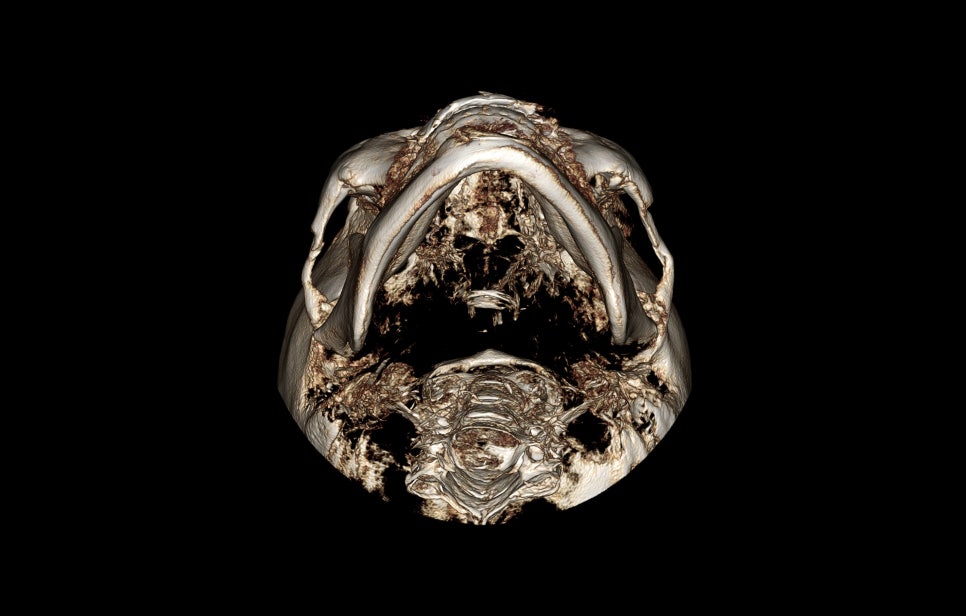
This is the patient’s CT scan. The cut side cheekbone bone had firmly and naturally fused, so there was no surgical problem.
However, it is clear at a glance that the 45-degree cheekbone area is thick.
At that time, the patient said that recovery time was also an issue and that general anesthesia would be difficult, so the revision surgery was performed not as a standard cheekbone reduction procedure but by smoothly shaving only the 45-degree cheekbone.
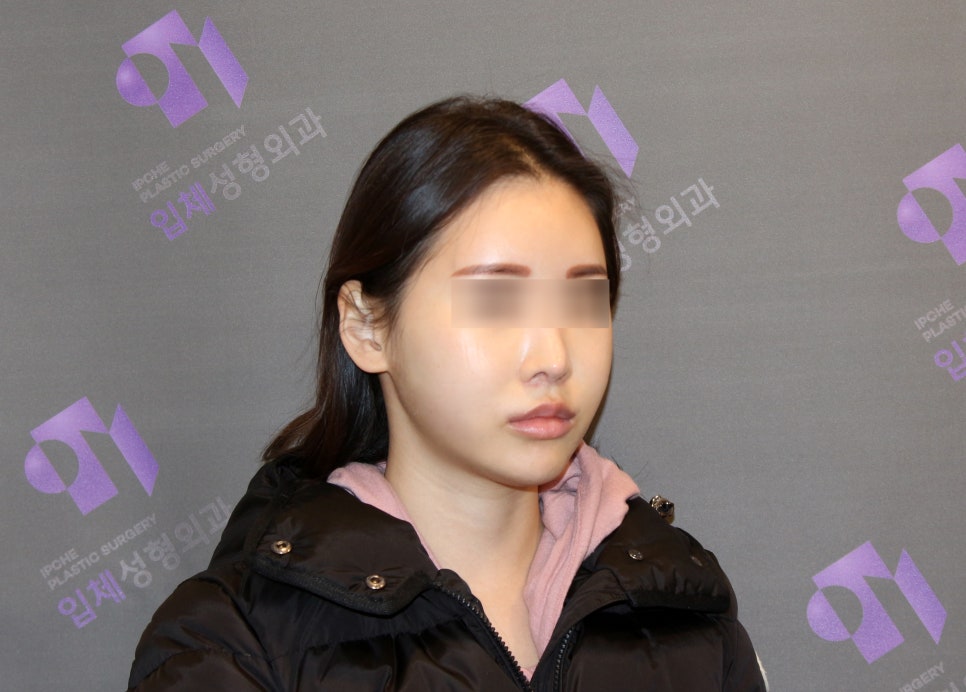
This is a photo taken three months after 45-degree cheekbone shaving.
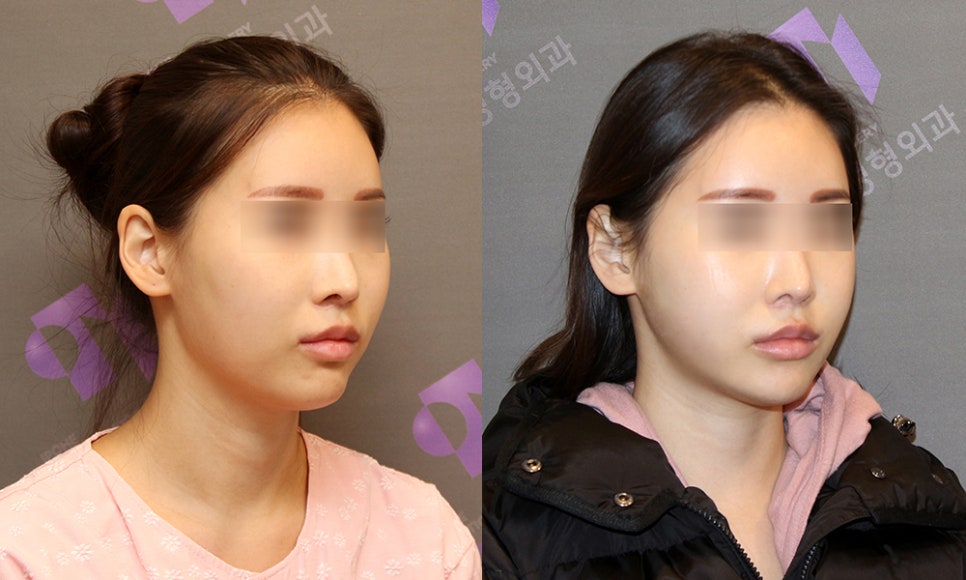
If you compare the before-and-after revision photos side by side, you can see that the 45-degree cheekbone issue was well resolved with shaving alone.
The strong-looking impression became much softer as the 45-degree cheekbone receded.
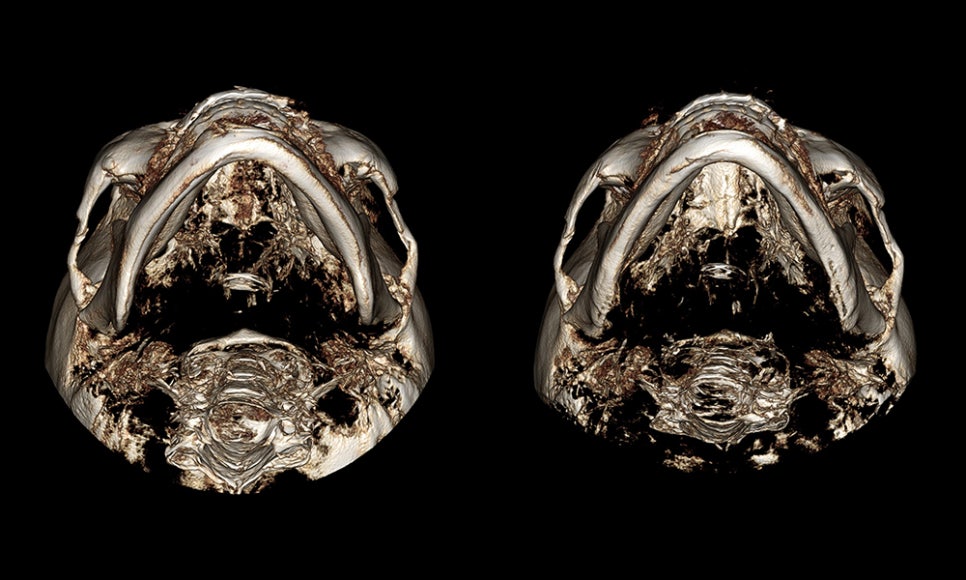
This is the CT image after shaving.
The 45-degree cheekbone that remained after side cheekbone surgery was smoothly shaved, greatly reducing the volume.
The 230-degree cheekbone reduction surgery that we perform at our hospital was also designed to address these issues with side cheekbone surgery.
It is a cheekbone reduction procedure that adds a 45-degree cheekbone shaving process to the push-in method of side cheekbone surgery.
It preserves the advantages of side cheekbone surgery while also making it possible to address the 45-degree cheekbone.
In my case, I perform all cheekbone surgeries, including 230-degree cheekbone surgery, 3D cheekbone surgery, and cheekbone revision surgery.
For those with a 45-degree cheekbone, I recommend 230-degree cheekbone reduction surgery, and for those whose 45-degree cheekbone is more prominently developed, I recommend 3D cheekbone reduction surgery.
However, please do not be overly swayed by promotional terms such as “quick” or “easy,” and be sure to receive an accurate diagnosis.
The difference between 230-degree cheekbone surgery and 3D cheekbone surgery was explained in a previous column.
If needed, I think it would be helpful to refer to the column below.
Thank you.