Hello, I’m Dr. Jo Hyun-woo from Lip Plastic Surgery Clinic.
Today, I’d like to talk about the step-off deformity after zygoma surgery that patients often mention.
The 3D zygoma surgery we know is a procedure that partially removes the 45-degree zygomatic area, osteotomizes the posterior arch, and rotates it inward to push it back.
- Malar repositioning with two complete osteotomies
body : sliding set back
post. arch : bone Z-plasty
- Rigid fixation with plates and screws
This is how it is described.
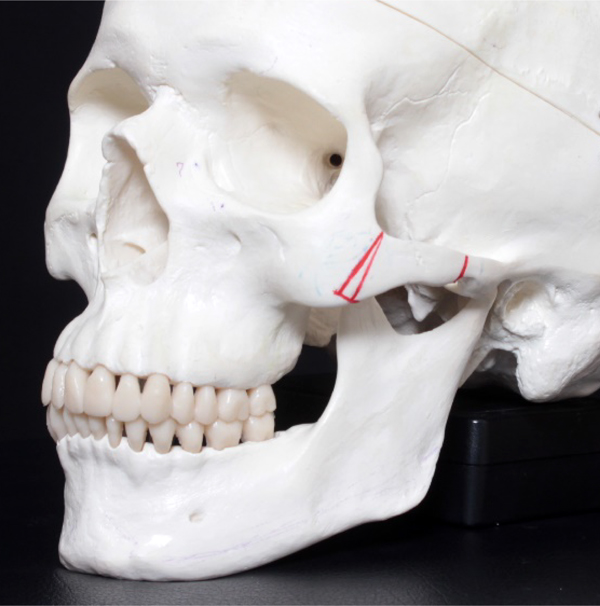
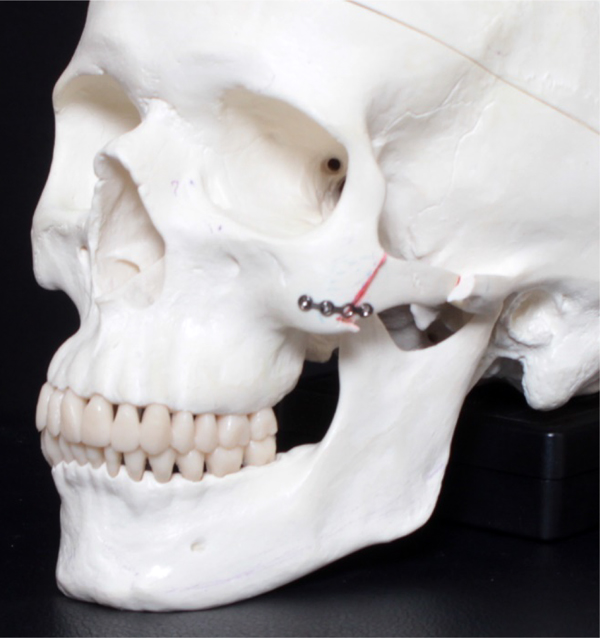
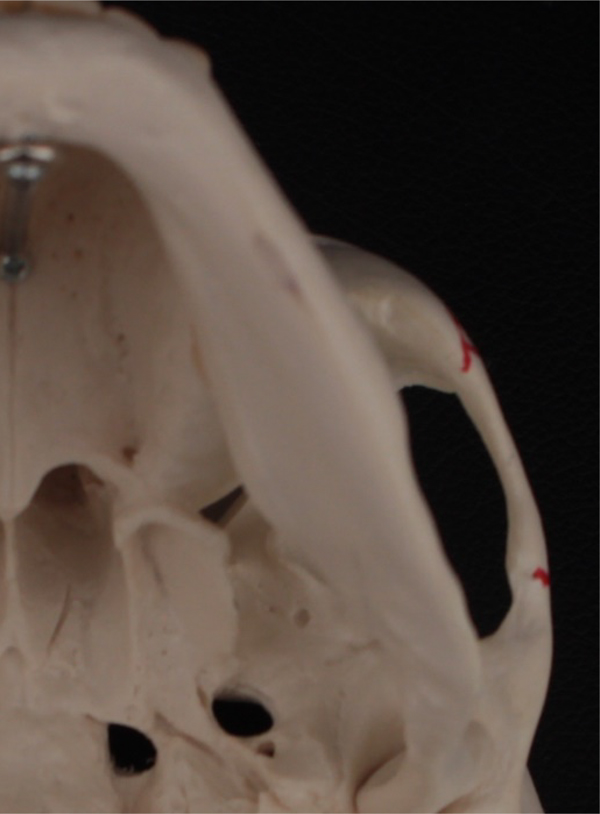
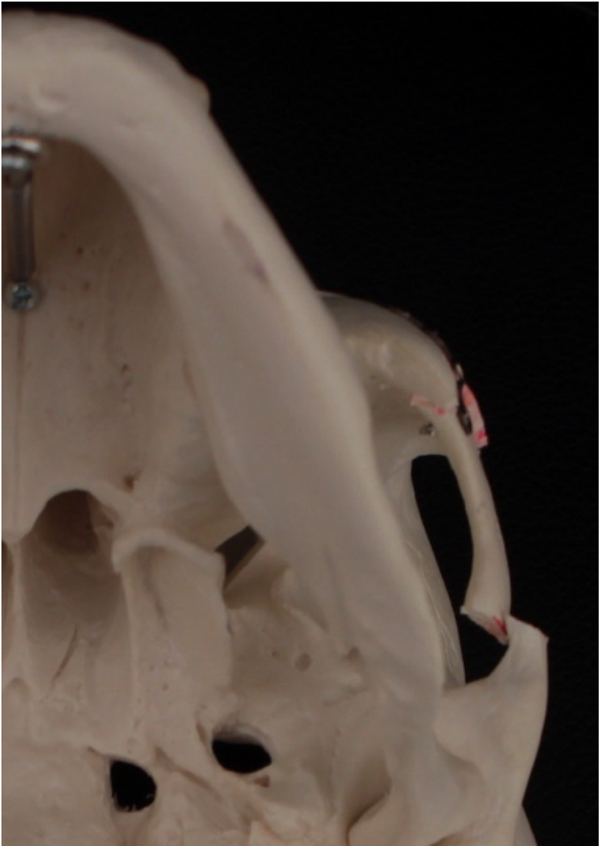
As you can see in the skull model above, the zygomatic bone is rotated inward.
Recently, the 45-degree zygomatic bone area is removed and pushed back, then fixed using a bent fixation pin of about 2 to 4 mm.
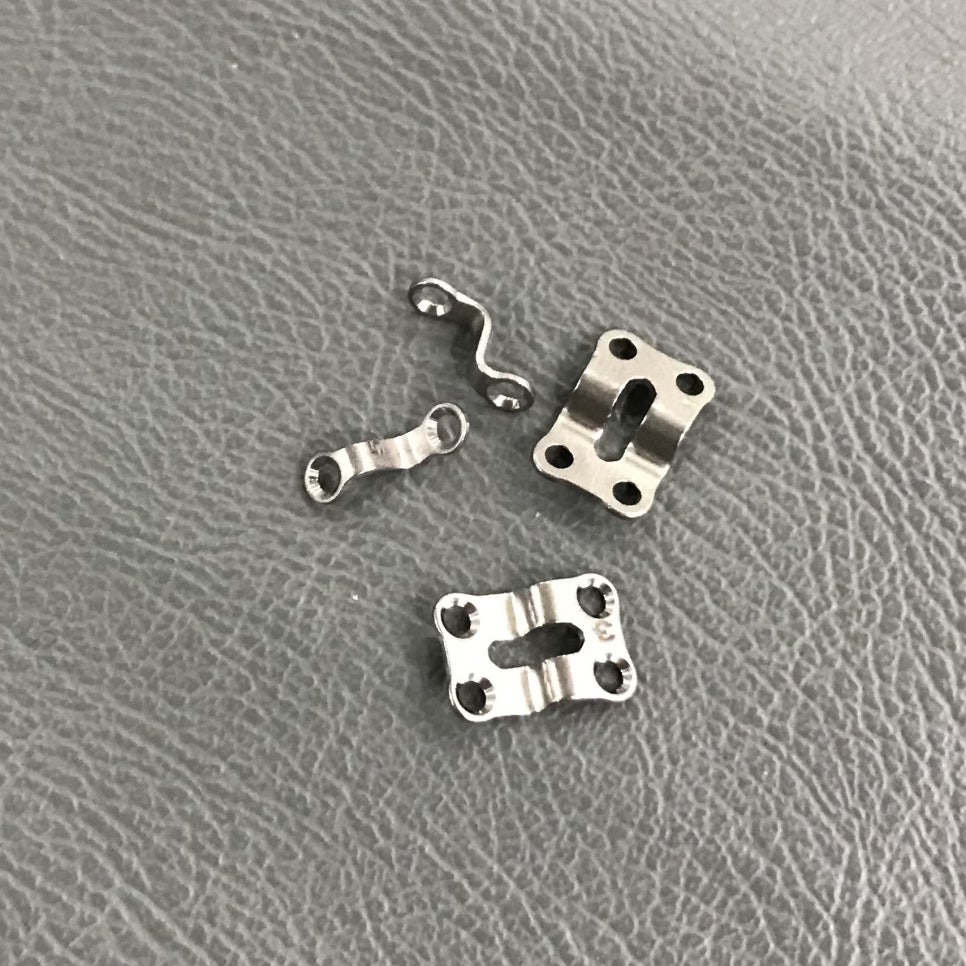
In fact, during 3D zygoma surgery, the 45-degree area was not pushed back but fixed by bending it inward as if it were rotating into place, but for more effective reduction of the 45-degree zygomatic bone, a bent fixation pin is used. This is where the step-off deformity appears.
If you look at the figure below,
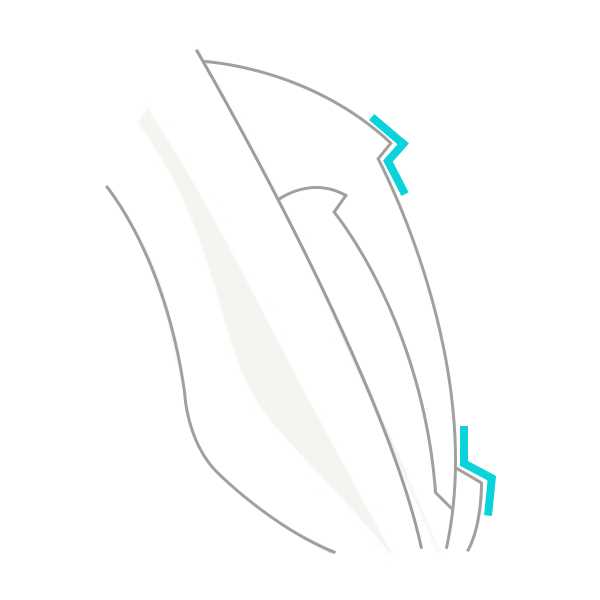
The bone goes in while being bent like this,
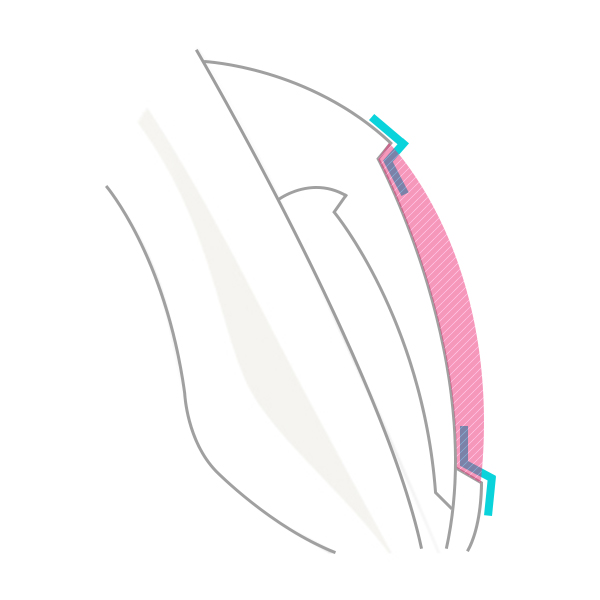
and the volume of the shaded area decreases like this.
In most people, when the bone is moved in this way, the bent-in 45-degree area does not show externally at all because of the muscle and fat around the 45-degree region. However, for people with little facial fat and thin skin, the area that has been moved in becomes visible on the outside, and patients seem to refer to this as a 'step-off deformity.'

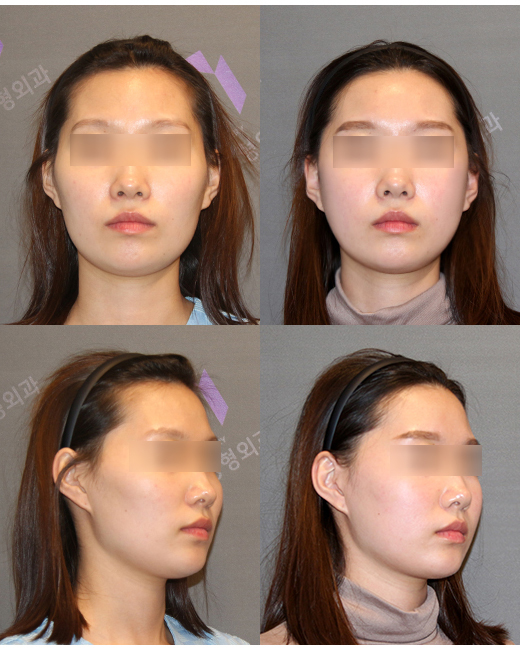
As shown in this photo, the area from the temple to the zygoma and down to the area with hollow cheeks looks as if it has been pressed down with an iron, creating a sunken appearance.
In fact, the surgery may have been performed accurately and the zygoma has indeed been moved in, but in actual appearance it looks awkward and shadowed.
In such cases, revision surgery can be done to reposition and fix the 45-degree zygomatic bone flat again, which will make the step-off deformity disappear.
For those who want a simpler solution, fat grafting alone can also be enough for correction.
However, the important thing, in my opinion, is to avoid needing such revision surgery in the first place.
During preoperative consultation, if a patient is likely to develop a step-off deformity, reducing the amount of 45-degree zygomatic setback or shaving the angled area after fixation can prevent the deformity from appearing.
If we have such a patient at our clinic, we also recommend the 230-degree zygoma reduction procedure.
The 230-degree zygoma surgery reduces the side zygoma by the same amount as 3D zygoma surgery, but because it does not push in the 45-degree zygoma and instead performs shaving, this kind of step-off deformity cannot occur. In other words, it can maintain a more natural zygomatic contour.
230-degree three-dimensional zygoma reduction
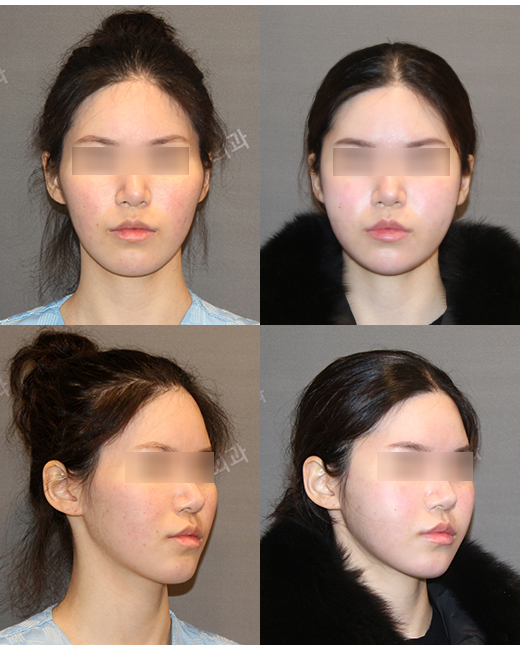
230-degree three-dimensional zygoma reduction
Many patients think that reducing the zygomatic bone as much as possible is best.
However, if excessive reduction of the zygomatic bone causes a step-off deformity on the face, that can become a bigger problem.
Therefore, when consulting, planning the surgery according to your own face and choosing the appropriate surgical method seems to me to be the first way to prevent another revision surgery.
The step-off deformity that appears after zygoma reduction surgery is not because the surgery was done incorrectly, but because the patient’s soft tissue was not properly assessed in advance. So if the preoperative surgical plan is well made, this kind of problem should never occur.
Also, for such patients, the 230-degree three-dimensional zygoma surgery can be a good alternative, so please do not worry too much and consider getting a consultation; you should be able to get a good result.
Thank you.