Hello, this is Dr. Jo Hyun-woo of 입체성형외과.
Today, I’d like to talk about paranasal augmentation, one of the surgeries that can be performed together with facial contouring surgery.
Paranasal augmentation is the medical term for a procedure called paranasal augmentation.
It means lifting the depressed area beside the nose, but who needs this surgery?
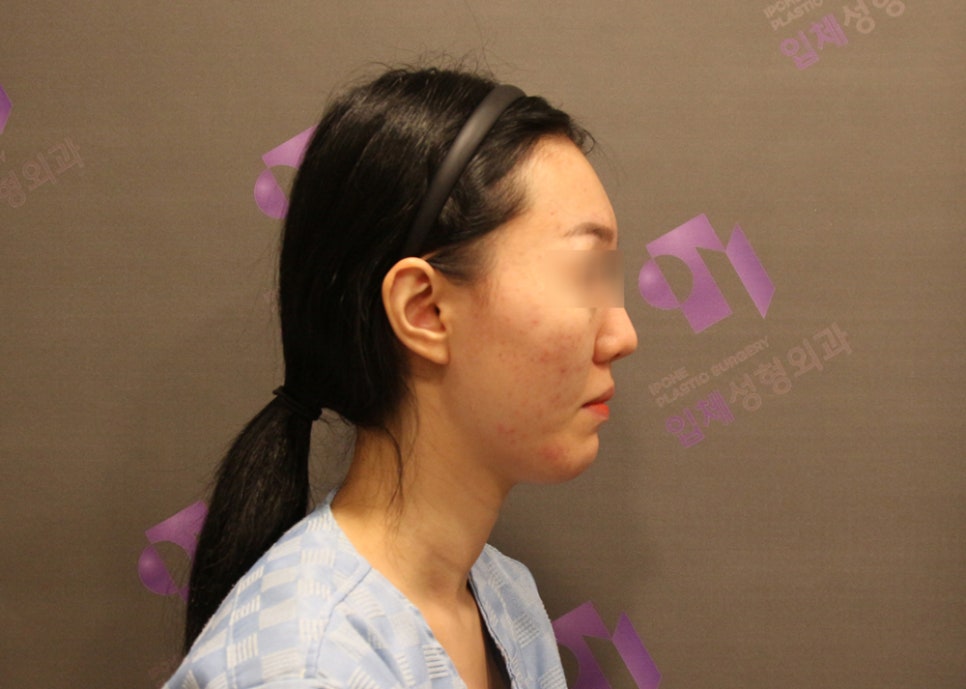
If the midface is generally sunken, correction through double-jaw surgery would be the most ideal option.
However, for a long time, instead of double-jaw surgery, there have been procedures that add volume to the face through paranasal augmentation, commonly called a “mini double-jaw” surgery, and front cheek fat grafting.
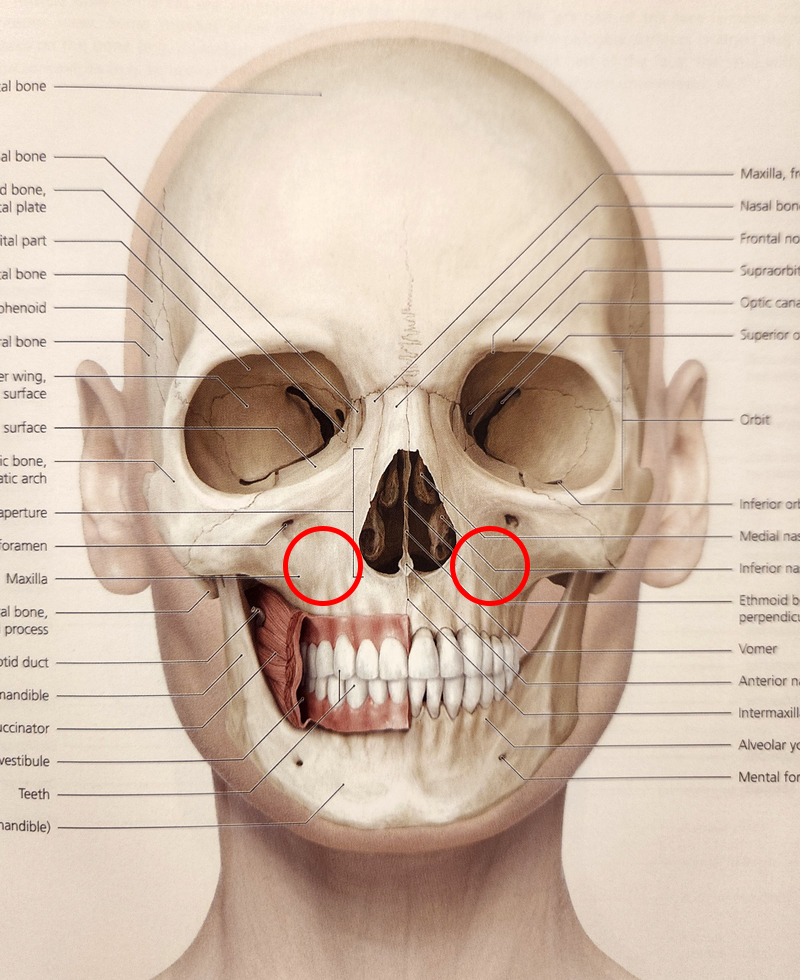
By adding volume to the area marked in red, you can see an effect similar to advancing the upper jaw.
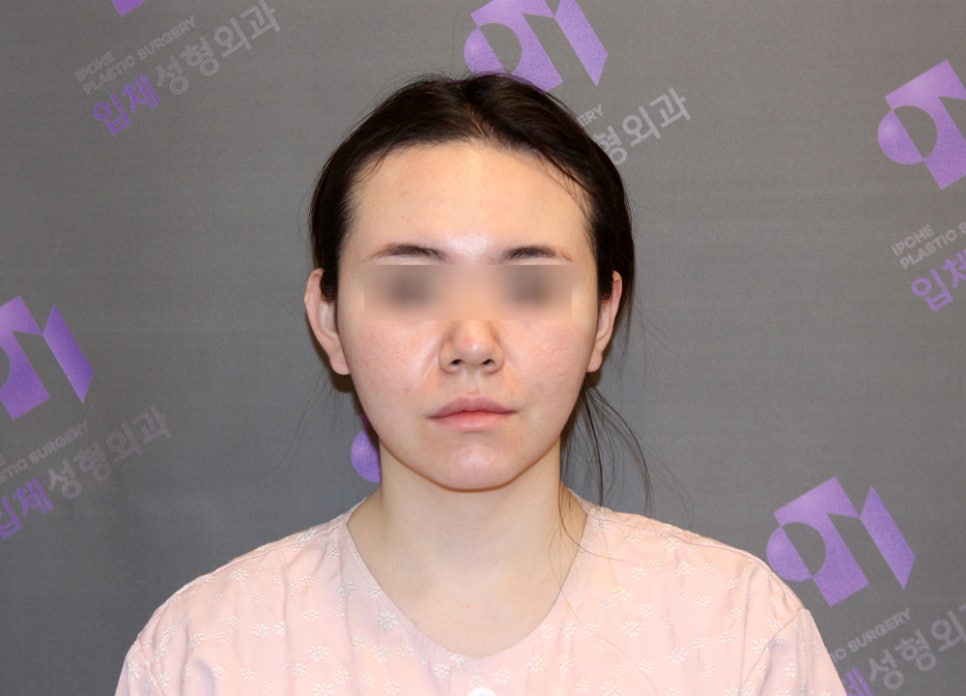

When the nasolabial area is significantly sunken, the nasolabial folds may appear more prominent.
In such cases, combining lifting to smooth the nasolabial folds with paranasal augmentation may be helpful.


For people whose mouth appears protruded, combining paranasal augmentation with chin surgery can simply address this instead of protruding-mouth surgery.
So, what kinds of paranasal augmentation procedures are available for people who are good candidates for this surgery?
Improvement is possible with simple procedures such as filler injections or fat grafting.
However, these may not be permanent, and it may also be difficult to achieve precise volume correction.
Therefore, the simplest surgical option is insertion of a paranasal implant.
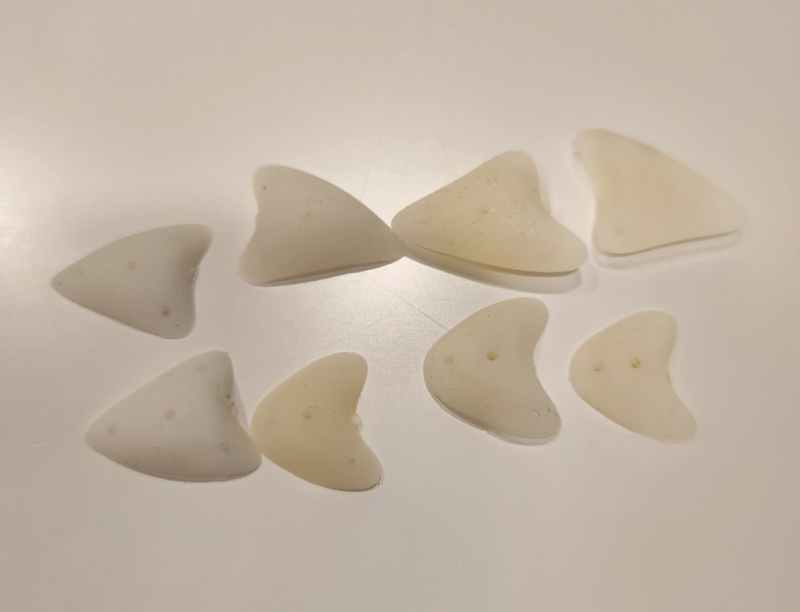
Implants of various shapes are inserted beside the nasal bone, depending on the patient’s bone structure and degree of depression.
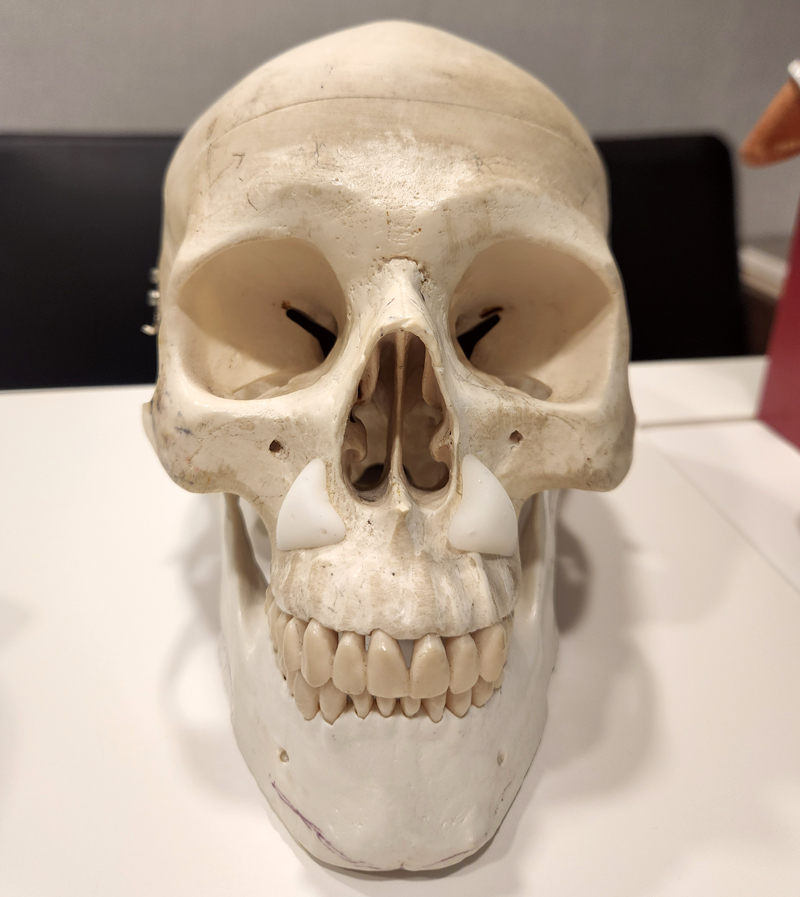
Only when the implant is inserted in the correct location can precise volume improvement be achieved.
In my case, I fix the implant using screws. Different surgeons may use different methods, but I recommend fixation because I believe it helps prevent the side effect of implant displacement.
I think more than 90% of paranasal augmentation procedures are performed using silicone implants.
Because the surgery is simple and takes about 20 minutes, recovery tends to be relatively quick.
So what are the drawbacks?
I mentioned bone erosion earlier, and if an implant remains on the bone for a long time, bone erosion can occur.
Another drawback related to this is that if the bone near the tooth roots erodes, it may cause tooth pain.
However, since there is less muscle compression than in the chin area, this seems to be extremely rare.
Also, some people occasionally feel a foreign-body sensation from the implant, and in such cases, removal is recommended.

Next, another surgical option besides a paranasal implant is bone grafting.
When performing square jaw surgery, bone from the square jaw area can be harvested in a shape that increases the volume of the paranasal area, then carefully shaped for paranasal augmentation.
The grafted bone is fixed precisely using screws, and because your own bone is used, the foreign-body sensation is reduced and the risk of inflammation may also be lowered.
The drawback of this kind of bone grafting is bone resorption.
If a completely separated piece of bone is grafted, bone resorption may occur from the surrounding tissue.
It is not possible to predict exactly how much bone will be resorbed, but once it settles in place, blood flow returns and the graft goes through the process of integrating. Based on the progress of many patients, it seems that about 10–20% resorption occurs.
So far, we have looked at paranasal augmentation, also called paranasal augmentation.
It is a procedure that can be performed together with facial contouring surgery, and in some cases, it may make the effect of facial contouring surgery even greater.
Each procedure has its own advantages and disadvantages, so if you think carefully and make a decision, you may be able to achieve good results.
Thank you.