Hello, this is Director Cho Hyun-woo of 입체성형외과.
Among those looking into alar reduction surgery, the biggest concerns are 1) alar reduction scars and 2) unnatural results.
Alar Reduction: Medial Incision and Lateral Incision
Alar reduction surgery is a procedure that rounds and brings inward the widely spread alar shape and reduces wide nostrils.
Some alar reduction surgeries require a certain degree of scar consideration, while others leave scars that are barely visible.
First, the surgery can be broadly classified into two types:
There is lateral-incision alar reduction, which makes an incision on the outer side of the alar, and medial-incision alar reduction, which makes an incision on the lower inner part of the nose.
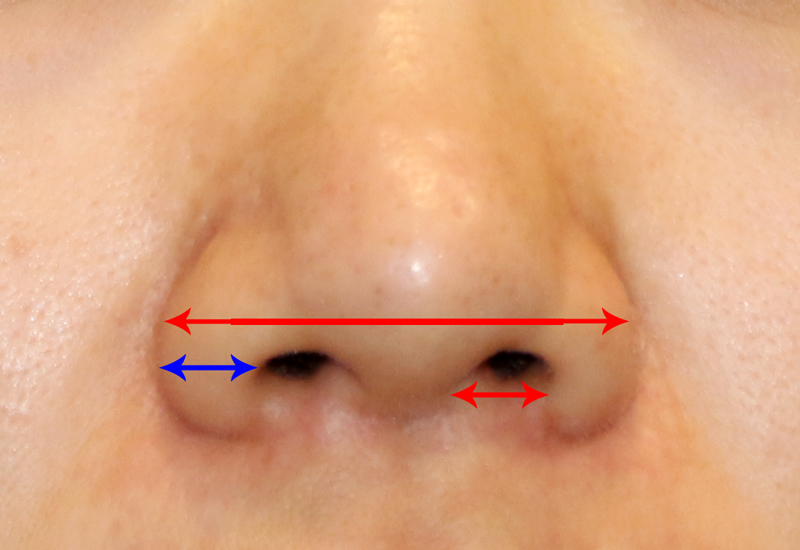
Blue (lateral incision) Red (medial incision)
Lateral incision is a procedure that reduces the length or bulging of the outer alar side, while medial incision is a procedure that reduces the width of the nostrils and the alar.
To put it simply:
When you need to reduce the horizontal width of the nose and narrow the nostrils, medial incision is used.
When the outer wall of the nose is protruding prominently or drooping downward, lateral incision is used to improve it.
At this time, the width of the nose can also be reduced with a lateral incision. However, there is no need to perform surgery externally when it would expose the scar.
The lateral-incision method is relatively simple, but because the incision runs from the bottom of the nose along the outer wall, the alar reduction scar is bound to be visible from the outside.
There are clearly cases where lateral incision is needed, but in most cases, medial incision is performed because it creates less scarring and more natural results.
With medial incision, a fine incision is made on the inner side below the nose, so the scar is almost invisible unless viewed from below.
If the skin is very thick or you are prone to prominent scarring, there may be a slight mark, but in most cases, it is not noticeable.
To explain the procedure:
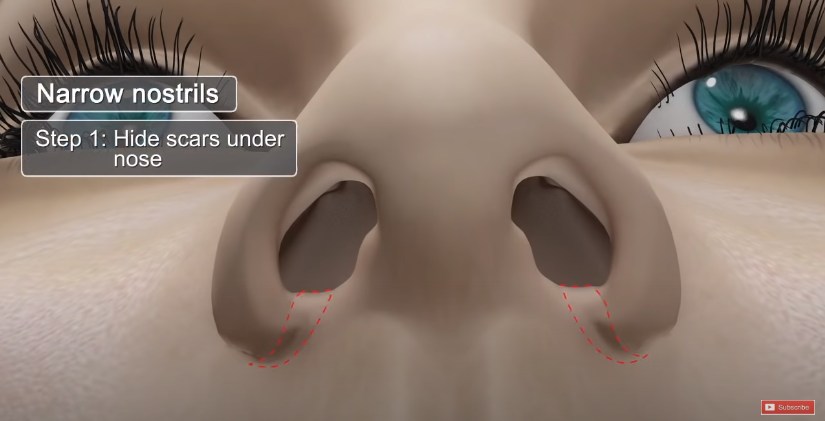
Medial-incision alar reduction surgery method 1
For medial-incision alar reduction, the area to be incised below the nostril is first designed in a crescent shape.
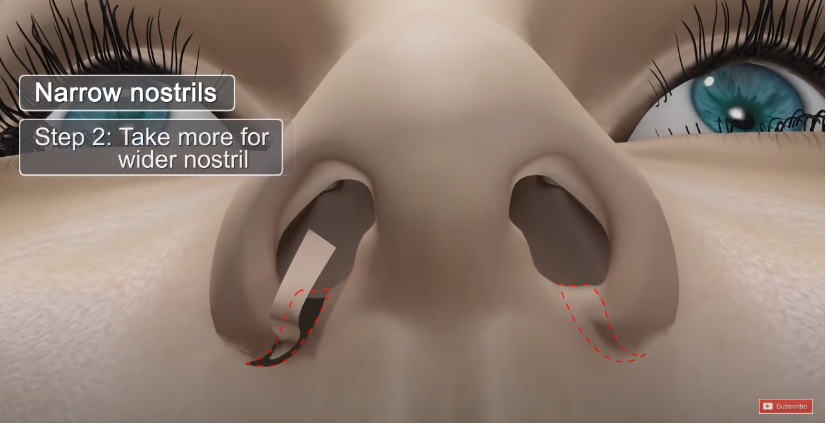
Medial-incision alar reduction surgery method 2
After excising the designed area,
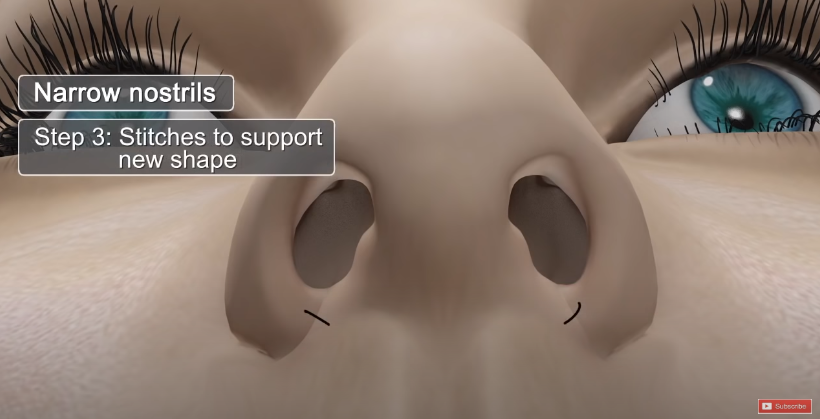
Medial-incision alar reduction surgery method 3
it is sutured.
As you can see from the figures above, it is a very simple procedure, so the surgery time is short, around 20 minutes.
I will show you before-and-after photos of medial-incision alar reduction together.
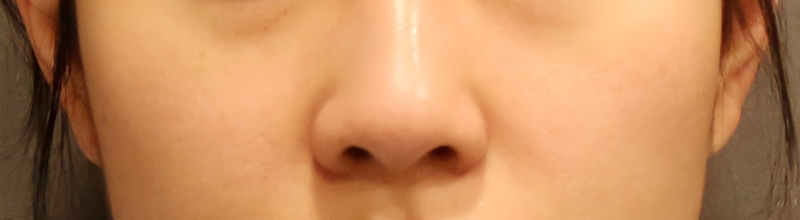
Before medial-incision alar reduction surgery
This is a photo taken before surgery.
From the front, the horizontal width of the nose is wide, and the nostrils are spread outward to both sides.
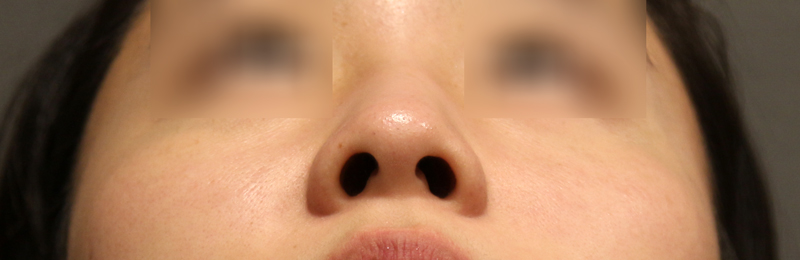
Before medial-incision alar reduction surgery
The outer wall is not particularly thick.
A nose with this shape can have the width of the alar and nostrils sufficiently reduced with a medial incision.
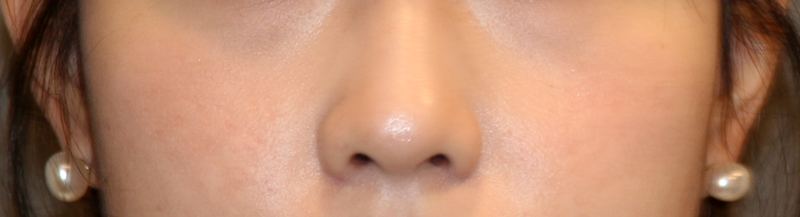
3 months after medial-incision alar reduction surgery
This is a photo taken 3 months after medial-incision alar reduction surgery.
The horizontal width of the nose has been reduced, and the shape of the nostrils has naturally narrowed inward from a spread-out shape.
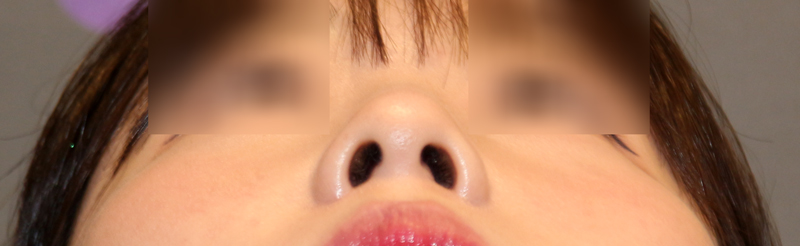
3 months after medial-incision alar reduction surgery
From below, there is no red scar and the surgical mark is hardly visible.
If alar reduction surgery goes wrong, the lower part of the nostril can become pointed in an inverted teardrop shape.
To check whether the surgery turned out naturally, when you lift your head, see whether the area below the nostrils forms a round curve without becoming pointed.
Before and after medial-incision alar reduction surgery
When compared side by side, you can see that the spread-out alar and nostrils have been neatly brought inward without asymmetry problems.
Because the incision is made microscopically on the inside, there is almost no scar, and the curve of the outer wall can remain round.
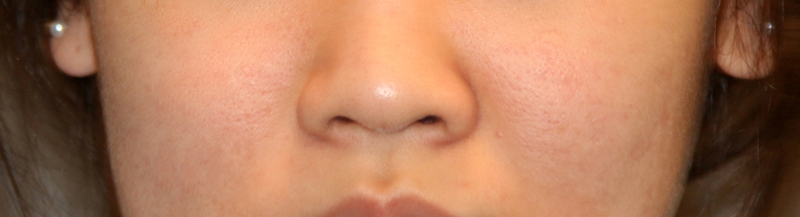
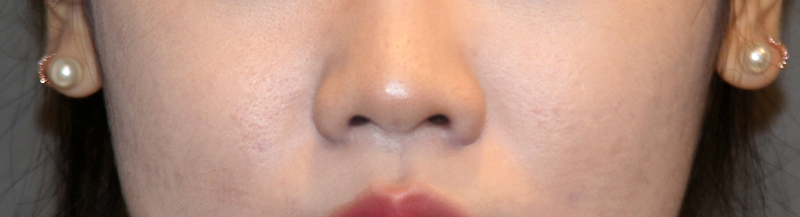
Before and after medial-incision alar reduction surgery
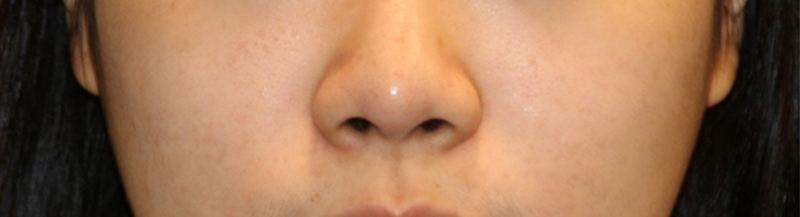
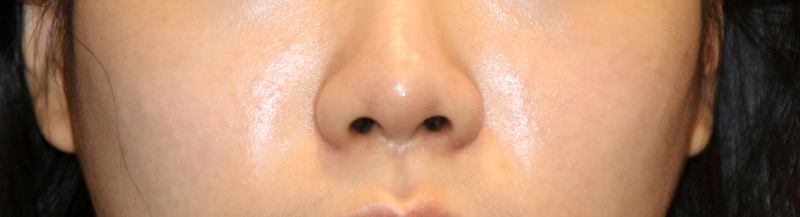
Before and after medial-incision alar reduction surgery
Because alar reduction surgery can make a big difference in appearance with just 1–2 mm, it can be said to be successful only when it does not look obvious after surgery.
If it is even slightly excessive, it can lead to what is commonly referred to as a 'pinched nose' as a side effect.
Therefore, alar reduction surgery can deliver satisfying results in improving the concern of wide alar.
Rather than excessive surgery, it is preferable to focus on 1) minimal scarring and 2) natural results that do not look surgically altered.
Today, we looked into medial-incision alar reduction.
Thank you.