Hello, this is Dr. Jo Hyun-woo from 3D Plastic Surgery.
Today, I’d like to talk about a question patients often ask when undergoing 230-degree three-dimensional zygoma reduction surgery or endoscopic forehead lift surgery:
"Do I need to shave my head if I have a scalp incision?" "Will hair grow back?"
I recently had an in-depth conversation with a doctor who specializes in hair transplantation, and I’d like to share that with you.
First of all, when performing 230-degree three-dimensional zygoma reduction surgery or a forehead lift, the hair is not shaved.
The hair is carefully braided in the direction it grows, and the incision is made in the area without hair.
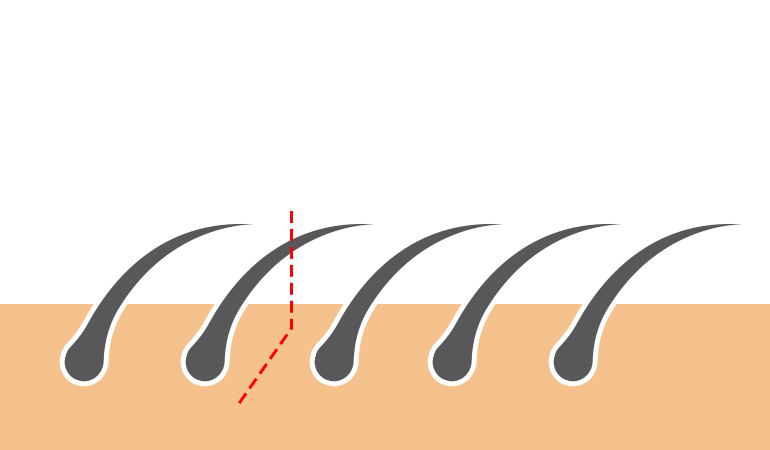
The direction in which hair grows differs depending on the area of the scalp.
Therefore, the direction used for 230-degree three-dimensional zygoma reduction surgery and the direction used for a forehead lift are different.
As shown in the illustration above, the incision is made by first entering slightly vertically, then cutting diagonally along the direction of the hair. This is done very carefully to reduce damage to the hair. However, even if the incision is made as carefully as possible, there are situations in which at least one hair may inevitably be damaged.
Also, no matter how well the hair is preserved, in areas with scars the skin becomes hard, so the hair does not have the strength to grow out.
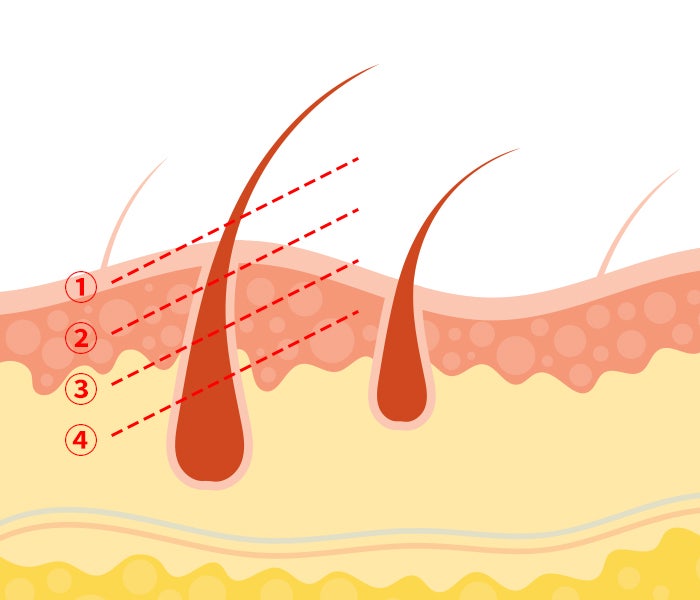
There are four cases in which hair is unavoidably cut.
If hair is cut in case 1, it will almost 100% grow back.
As it goes from cases 2 to 4, the probability of hair growing back decreases. According to reports, case 2 has about a 70% chance, case 3 about 40–50%, and case 4 less than 30% chance of hair growing back.
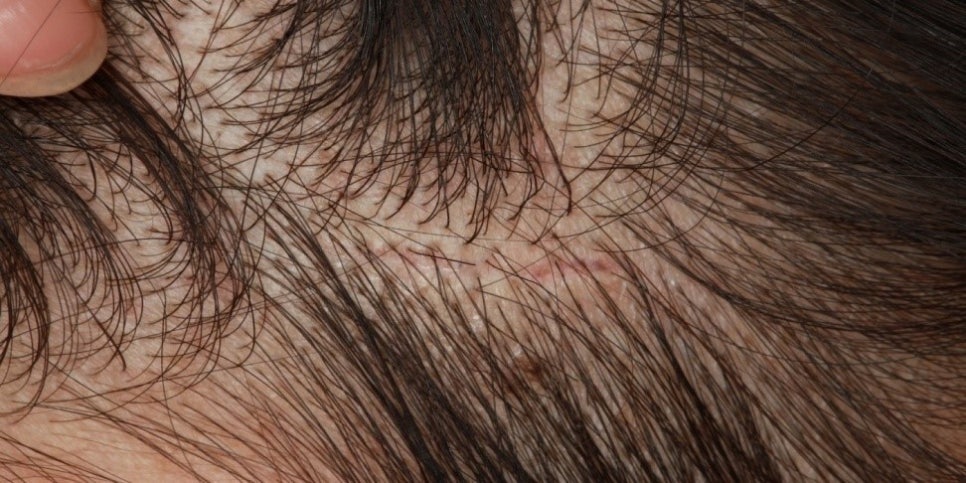
This is what the incision site looked like three weeks after surgery.
The red area is the incision site, and you can see that it has healed well without shaving the hair at all.
Sometimes, about a month after surgery, some patients experience hair loss around the incision site.
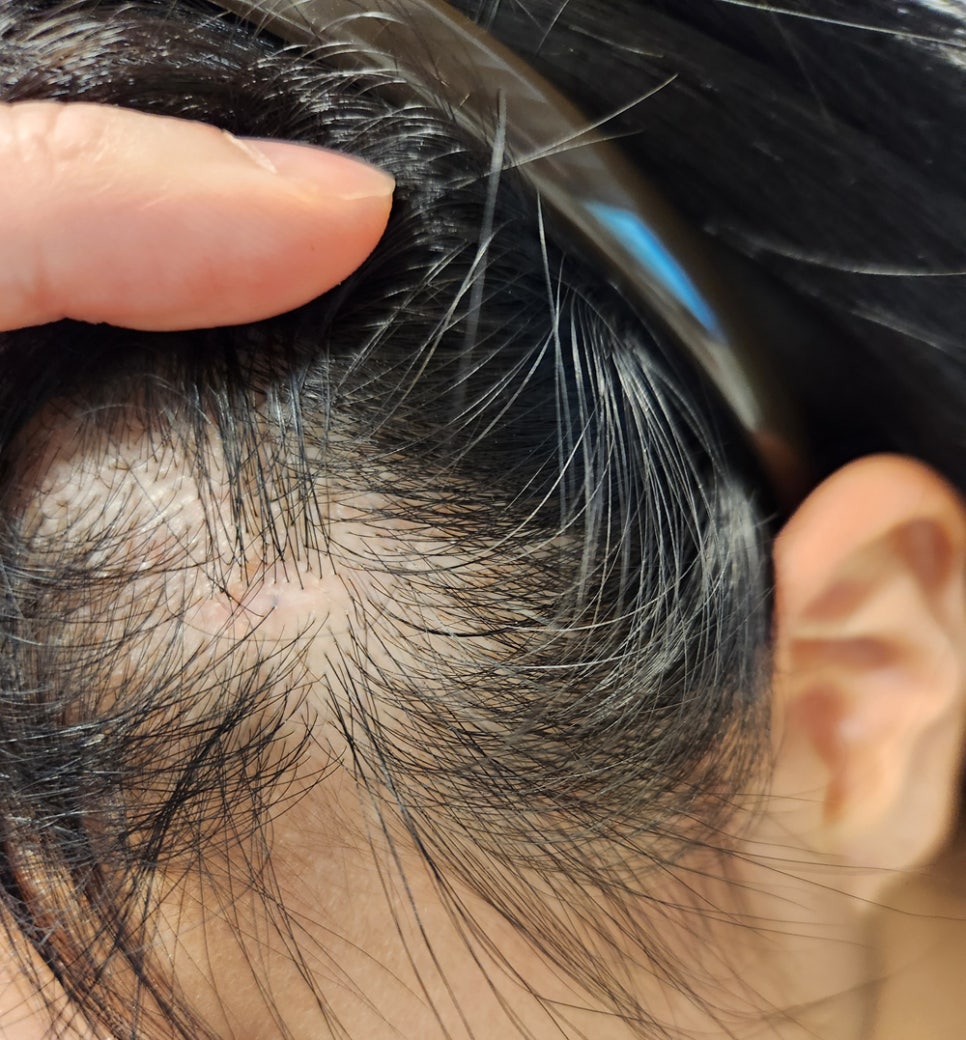
In these cases, the patient is experiencing accompanying hair loss.
Just as hair can fall out when you are under stress, hair can also fall out when it is stressed.
However, because the hair follicles are still alive, hair usually starts to grow again about two months later, so there is no need to worry too much.
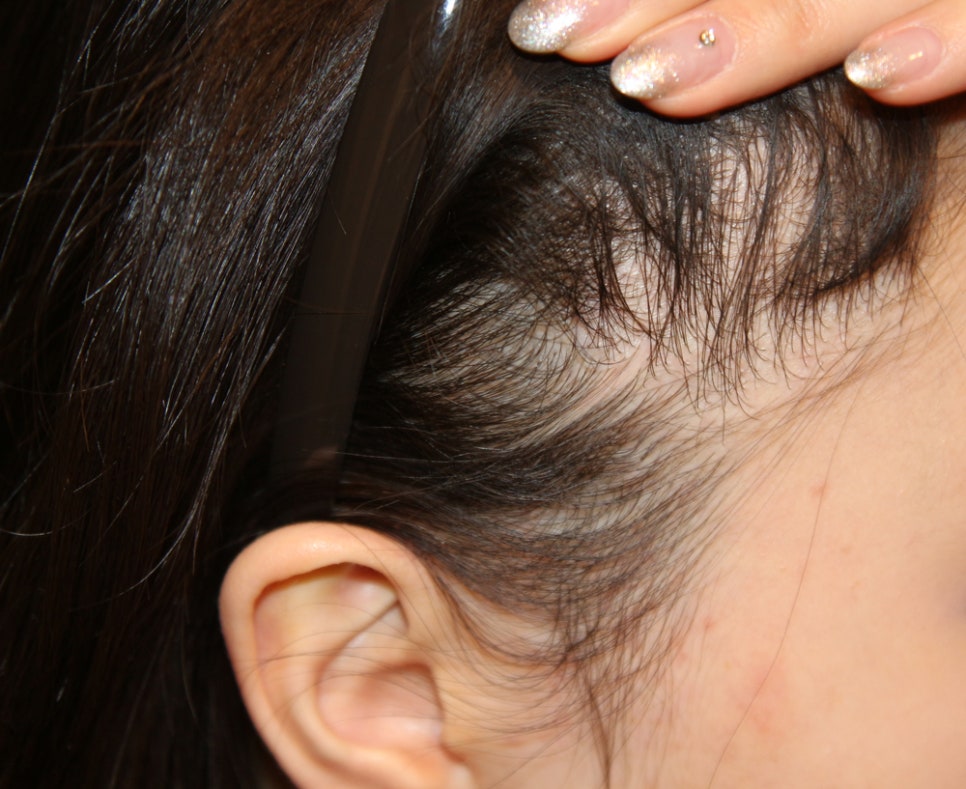
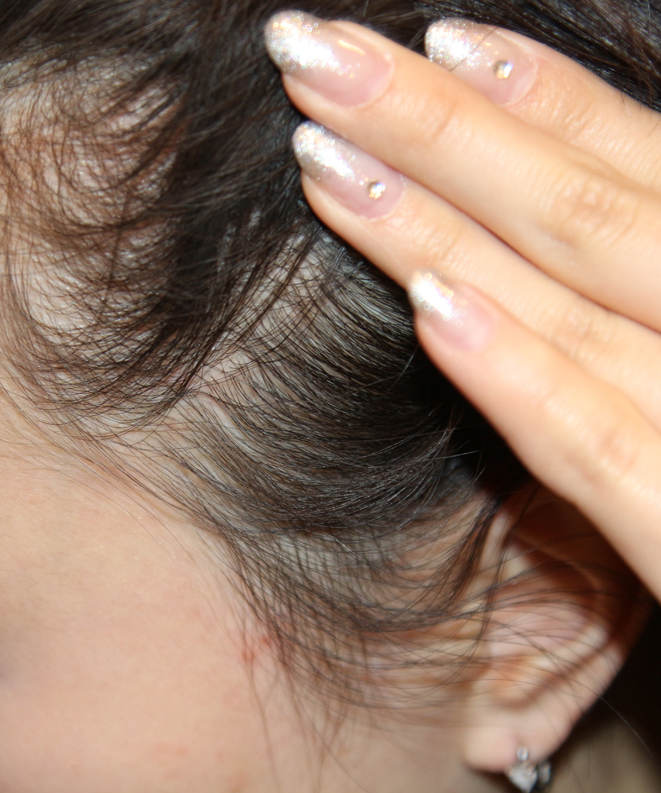
About six months after surgery, the wound heals well enough that only the incision line remains.
If you look at the photos above, only a scar at the incision site remains, and it becomes a wound that is hardly noticeable unless you look very closely.
Finally, another question people ask is, "If a medical stapler is used, won’t the hair fall out?"
In fact, there are papers suggesting that medical staplers may reduce scarring, and they are not related to hair loss, so there is no need to worry too much.
Today, I explained what happens to hair after a scalp incision.
Since this was reviewed by a plastic surgeon who specializes in hair transplantation, I think it may help you predict how a scalp wound will heal in the future if you read it once. The conclusion for today is that the hair is not shaved, and when the incision is made carefully, hair grows back except along the scar line.
Thank you.