Hello, this is Director Cho Hyun-woo of Ipche Structural Plastic Surgery.
As I’ve mentioned in several columns, the trend in facial contour surgery these days is a small, slim chin.
However, many patients have a chin that is too small compared to average and need forward advancement of the chin area.
Today, I’ll talk about which surgery is effective for improving a recessed chin.
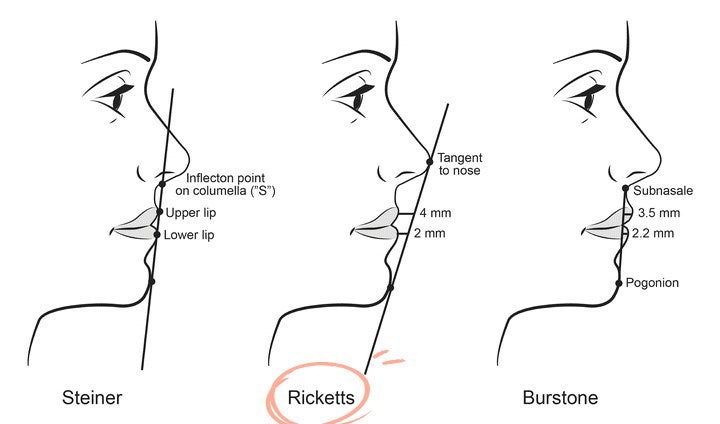
The ideal side profile line is based on a line called the Ricketts line, as shown in the image above.
When the line from the tip of the nose is extended to the chin line, it is about 4 mm at the upper lip and about 2 mm at the lower lip.
In fact, this does not seem to be the ideal side profile currently desired in South Korea.

Looking at the side profile of Jennie, who is said to have the face shape desired by today’s young MZ generation, it does not match the classic ideal proportions at all.
A smaller and shorter chin seems to be the trend these days.
However, if the chin is even smaller than this or set further back, forward advancement of the chin may be needed.
There are broadly three methods for advancing the chin.
- Bone-based advancement surgery 2) Implant-based advancement surgery 3) Fat grafting or filler-based advancement
These are the three methods, and I will explain the advantages and disadvantages of each.
Bone-based advancement surgery
Bone-based chin advancement surgery is generally different from the T-osteotomy procedure that many people know, and it is better to perform it in a way that does not reduce the chin volume.
If a T-osteotomy is performed, the chin volume becomes smaller because of the removed bone, and even if the chin is advanced, the small, underdeveloped impression of the chin cannot be eliminated.
Of course, opinions differ from surgeon to surgeon, but in my case, for a small, underdeveloped chin, I perform chin advancement surgery without bone resection rather than a T-osteotomy.
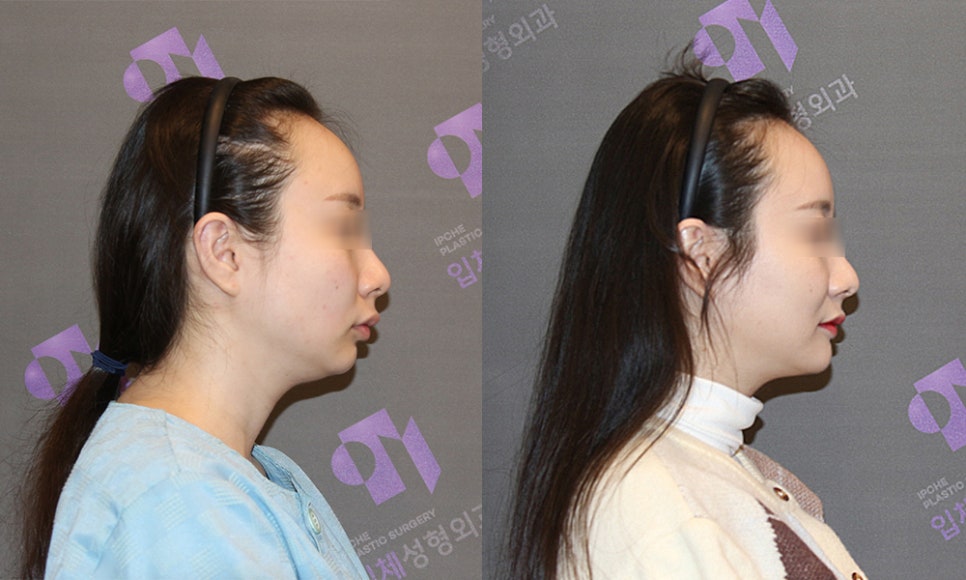
Small, underdeveloped chin: bone-based chin advancement surgery
When surgery is performed this way, because the patient’s own bone is used, there is almost no foreign-body sensation and fewer other side effects.
However, there are limits to bone-based advancement, which I’ll explain next.
Implant-based advancement surgery
An implant can be used to bring the chin forward.
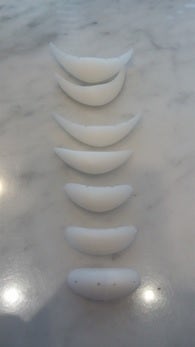
Implants come in various shapes, and different implants can be selected depending on the patient.
However, there seem to be a lot of preconceived notions about implants.
The idea that implants erode bone is, in fact, half true and half not true.
An implant placed precisely over a thick area of bone does not easily cause erosion, but an implant positioned slightly higher can cause erosion.
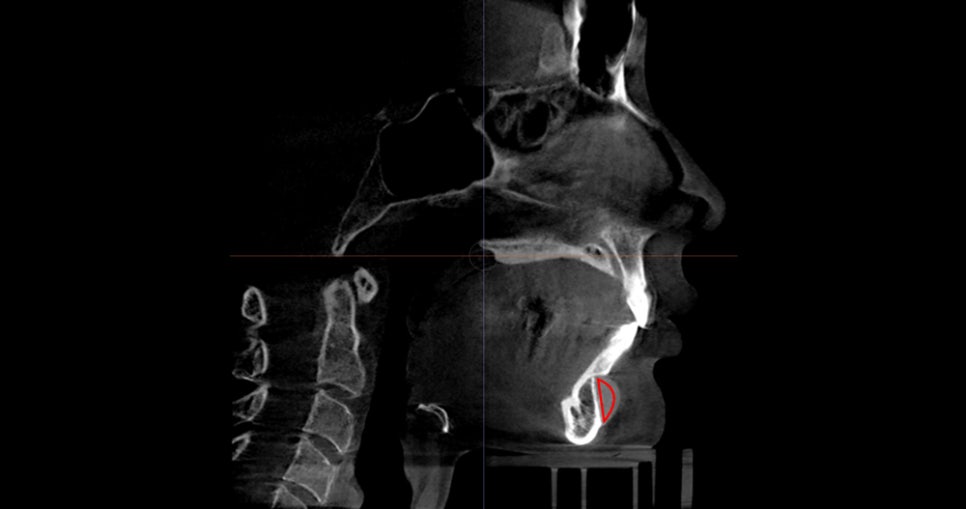
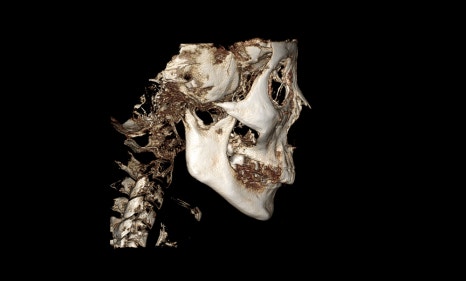
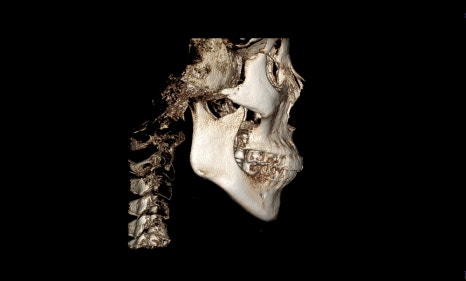
Case of bone erosion caused by an implant positioned slightly higher
As shown in the CT image above, bone erosion can be seen in the side view.
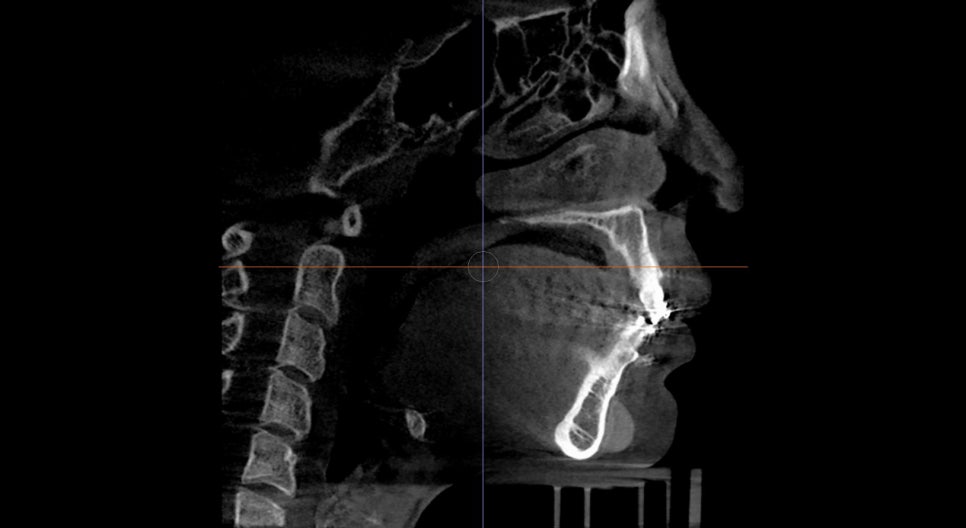
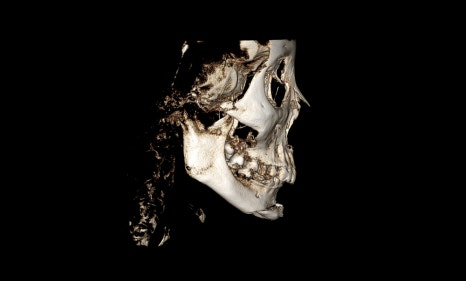
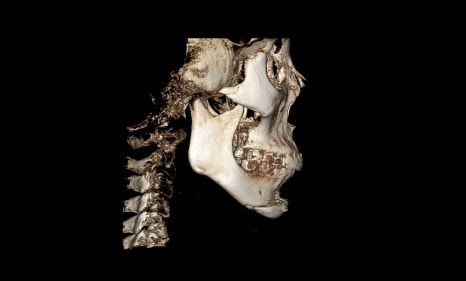
Case where no bone erosion occurred because the implant was placed over thick bone
However, when it is placed exactly over thick bone, erosion is almost nonexistent.
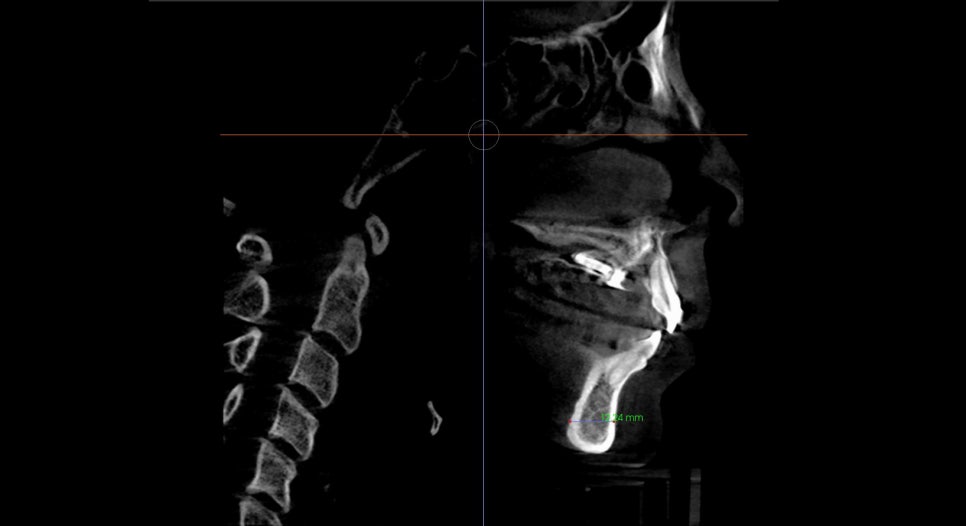
The limit of the chin advancement surgery I mentioned earlier lies in the amount of bone that can be advanced.
I tell patients that the maximum amount of chin advancement is about 5 to 6 mm.
The reason is that, in a side-view image of the bone, the thickness of the chin bone is at most about 12 mm.
In my view, about half of the chin bone thickness, or about 5 to 6 mm, needs to remain engaged for the bone to heal well and be fixed securely.
However, depending on the case, there are quite a few patients who need about 1 cm of advancement.
For such patients, advancing the bone may feel insufficient.
This is rarely the case for women, but among men there are situations where the volume is extremely lacking.
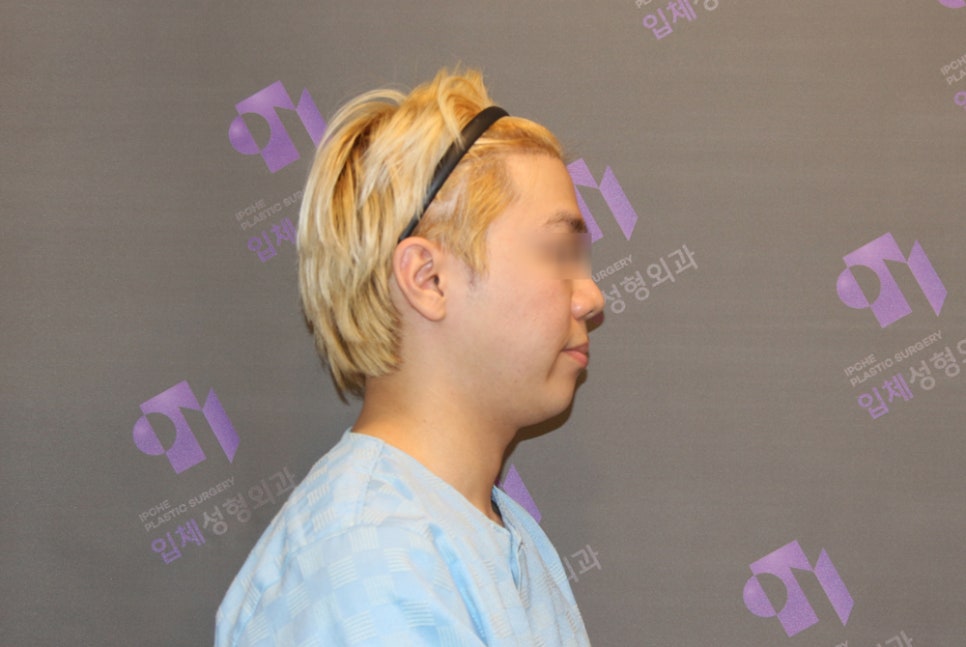
Before surgery: implant-based advancement surgery
In such cases, inserting an implant of about 1 cm can produce very good results.
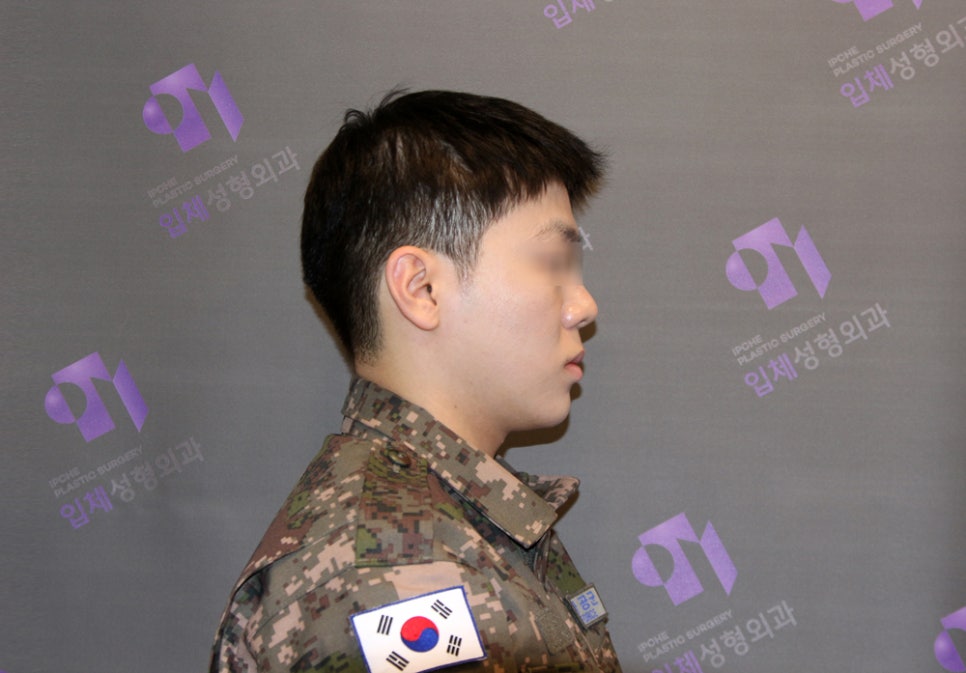
After surgery: implant-based advancement surgery
If the goal is an ideal side profile, this can produce better results than bone-based surgery.
There may be many different cases, but in my opinion, it is not necessary to always consider bone surgery in order to achieve better results.
Fat grafting, filler-based advancement
If surgery feels too frightening or burdensome, another option is fat grafting or fillers.
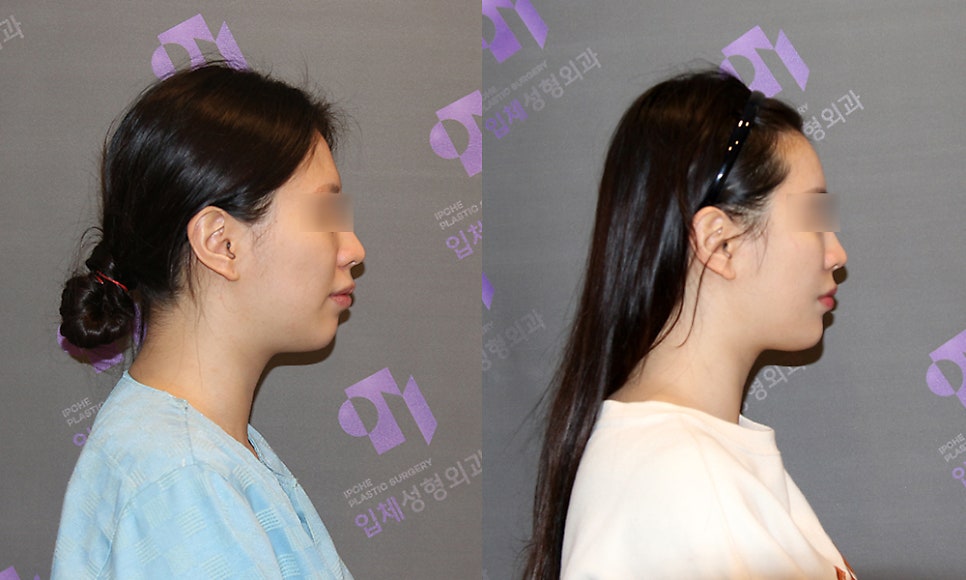
Before and after surgery: fat grafting-based advancement
As shown in the photo, the chin has advanced well after surgery.
However, what is disappointing here is the shape: unlike hard bone or implants, fat or fillers have limitations in creating a natural appearance.
In some cases, fillers can be effective for creating a pointed chin tip, but they seem far from natural.
Today, I talked about methods for correcting a recessed chin, as well as the limits and results of surgery.
Each surgery has its own advantages and disadvantages, and if patients choose the method that suits them, they may obtain more satisfying results.
Thank you.