Hello, I’m Dr. Jo Hyun-woo from 3D Plastic Surgery.
Today, let’s take a look at masseter reduction methods for improving the frontal effect.
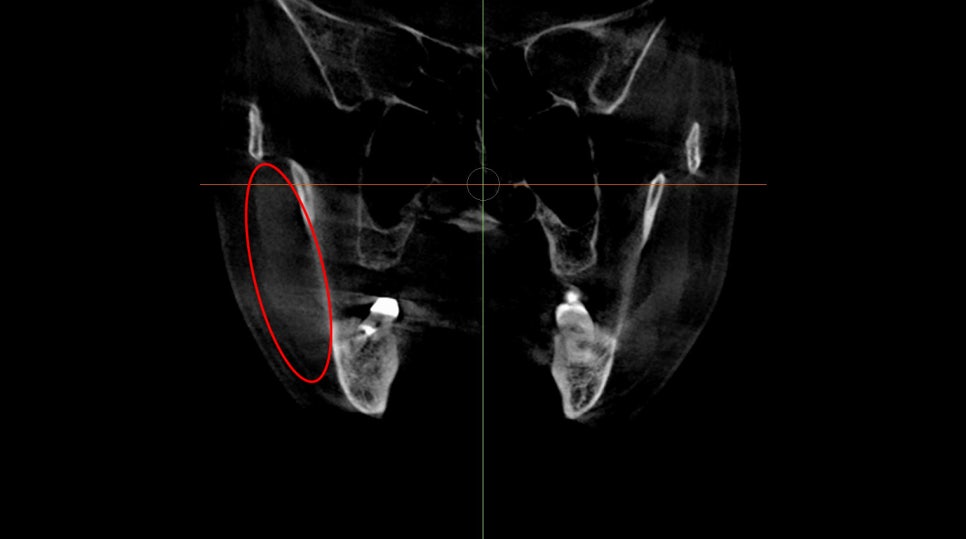
Masseter
If you take a facial CT scan, you can see the degree of the masseter muscle.
To achieve a better frontal effect, reducing the cortical bone of the square jaw, reducing the masseter muscle, and reducing facial fat can produce the maximum effect.
So, what methods are there to reduce the masseter muscle?
Botox
The easiest way to reduce the masseter muscle is Botox treatment.
Many of you may have heard of square jaw Botox.
Simply put, Botox blocks the neurotransmitters that go to the muscle, preventing the muscle from moving.
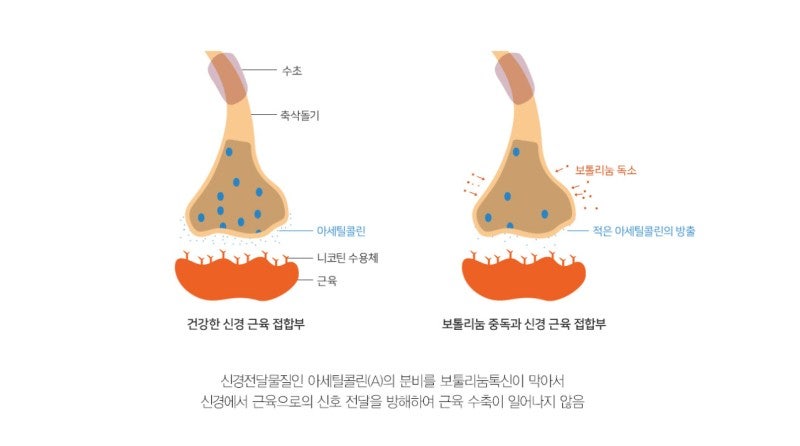
The principle behind injections in the forehead or glabella to prevent wrinkles, as shown in the image above, also comes from blocking neurotransmitters.
Masseter Botox also temporarily paralyzes the muscle, causing it to contract and atrophy.
The same principle is used in procedures that reduce the calf muscles or trapezius muscles.
The effect of Botox is usually considered to last about 3 months.
When the muscle returns, treatment is usually repeated periodically.
According to one paper, patients who received Botox for about 3 years experienced a permanent reduction in muscle volume. Another paper reported that in patients who received square jaw Botox over a long period, the bone volume also decreased slightly. For that reason, getting square jaw Botox for the frontal effect seems like a simple and good option.
Radiofrequency Masseter Reduction Surgery (Ablation)
Masseter ablation, as the name suggests, is a method of burning the muscle.
Compared with the conventional method of removing the muscle, this surgery reduces muscle volume using equipment without making a skin incision.
However, there are concerns about side effects such as damage to surrounding muscles and tissue, surface irregularities, and facial nerve injury, and because the causative trigeminal nerve is not selectively blocked in full, the possibility of recurrence is also high.
This method has long been used for calf muscle reduction as well, but because recurrence is common and there are concerns about other side effects, it seems to be used much less often nowadays.
Masseter Nerve Block
This is a method that has been performed frequently in recent years. It works by blocking part of the trigeminal nerve that goes to the muscle, producing an effect similar to Botox for a semi-permanent period.
Using a fine tip, the muscle movement is observed and the nerve is burned to block its function.
By combining this surgery with partial ablation of the masseter muscle, the effect can be enhanced.
However, this method also often sees the nerve recover, so it does not seem possible to consider it a permanent method.
Masseter Resection
Masseter resection is, literally, the method of removing part of the masseter muscle.
When performing square jaw surgery, I sometimes carry out masseter resection by removing part of the muscle to improve the frontal effect.
According to some papers, the resected muscle may recover again. However, based on the surgical results I have seen so far, it does not recover completely, but I do think some recovery may occur.
Because the masseter muscle decreases in volume as we age, removing too much of it can later cause problems with chewing function. That is why I usually remove about 10–15% of the muscle.
Also, because removing too much tissue can leave a bumpy appearance from the outside, I proceed by removing the lower part of the masseter muscle.
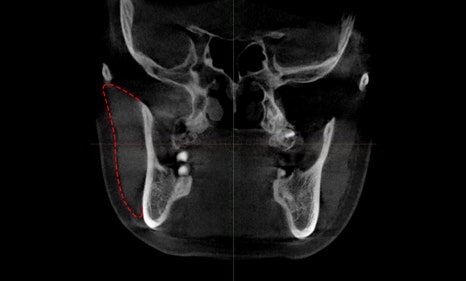
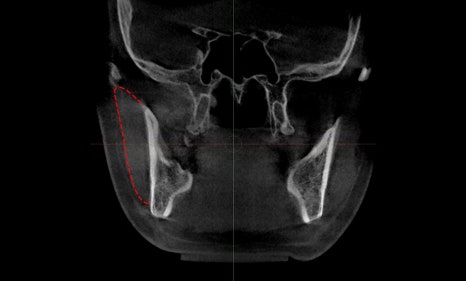
After masseter resection, you can confirm on CT that the amount of masseter muscle has decreased.
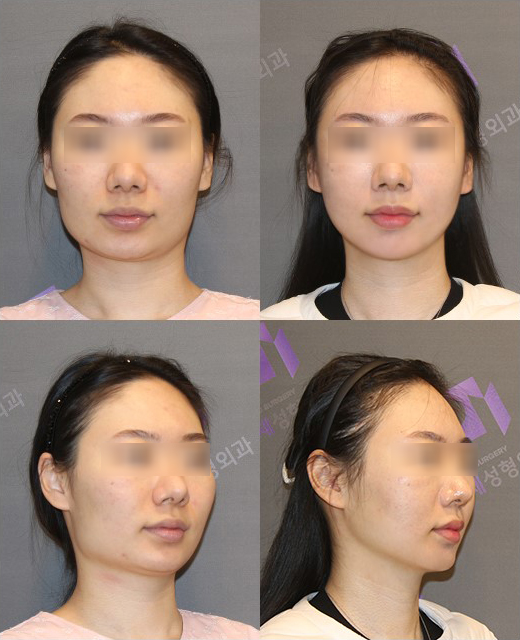
This is a patient who underwent 230-degree 3D zygoma reduction surgery, square jaw surgery, cortical osteotomy, and masseter resection.
Sometimes patients come in specifically for masseter resection alone, but I do not perform it as a standalone surgery.
To perform masseter resection, an incision must be made inside the mouth. In that case, doing it under sedation anesthesia still carries some risk, and doing it under general anesthesia feels like excessive medical treatment for the procedure, so in those cases I recommend Botox or another masseter nerve block procedure.
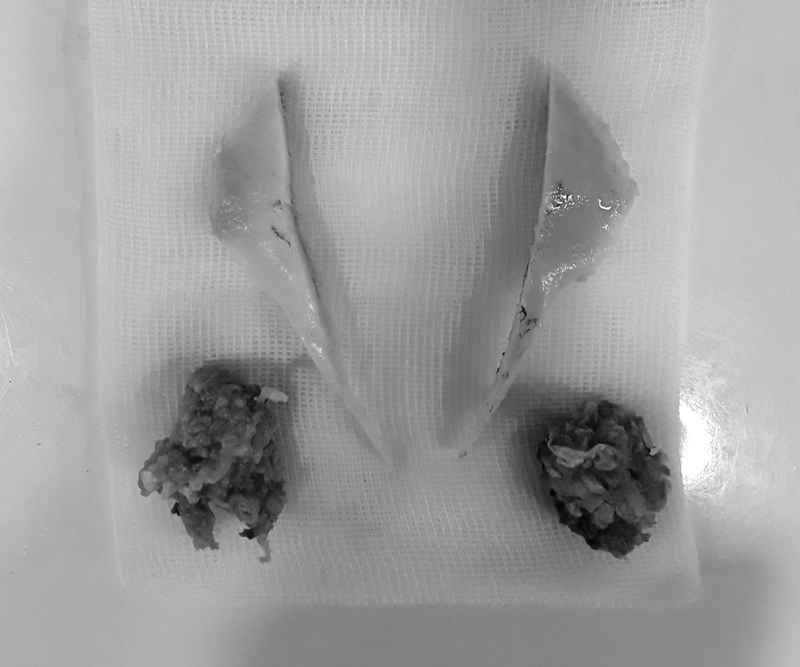
In my view, the effect of masseter resection is not greater than the effect of Botox.
In fact, reducing the masseter by 10–15% may not make an enormous difference in facial volume, and I think Botox may reduce more volume in some cases.
However, if masseter resection is performed as an option during square jaw surgery, I believe better results can be achieved.
Today, I talked about masseter reduction surgery, which is a good way to improve the frontal effect of the lower face.
There are various procedures and surgical methods, so if you choose the method that best suits the patient, good results can be achieved.
Thank you.