Hello, this is Dr. Jo Hyun-woo from Injehng Plastic Surgery.
In fact, contour surgery is one of the surgical fields in which revision surgery is not very common.
Cheekbone surgery may sometimes require revision surgery for nonunion or various other reasons, but especially for jaw angle surgery, revision surgery is not that common.
Today, I’d like to talk about the reasons why patients undergo revision jaw angle surgery.
Dissatisfaction
One of the most common reasons for considering revision jaw angle surgery seems to be dissatisfaction with the amount of surgery.
Some patients come in because they want the jaw angle to be shaved a little more, or because the result they expected before surgery is different from what they had in mind.
However, when most patients come in and get a CT scan, their nerve line is often low, and in many cases, the maximum amount that can be removed has already been removed.
Therefore, there are not many people who undergo revision surgery for this reason.
Occasionally, if someone wants a frontal slimming effect but cortical osteotomy or masseter muscle reduction was not performed during surgery, revision surgery may be considered if they want even a slight frontal slimming effect.
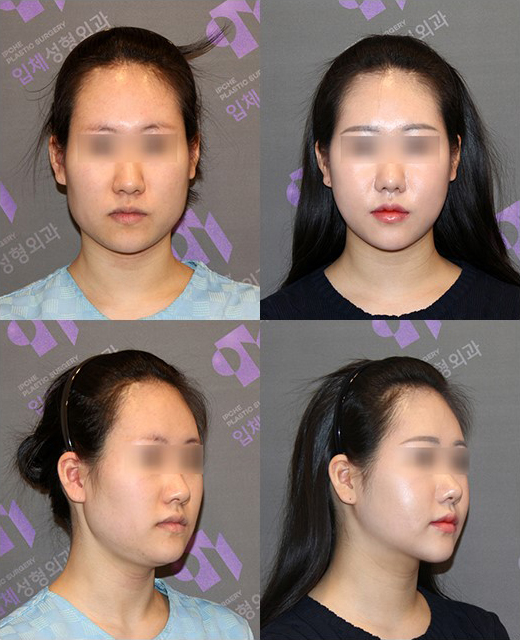
A patient who underwent jaw angle surgery along with cortical osteotomy and masseter muscle reduction to achieve a frontal slimming effect
In such cases, even if the angle of the jaw is not reduced further, a slimmer appearance from the front can be achieved.
Eliminating a secondary angle
In some cases, if only jaw angle surgery is performed, a secondary angle may appear.
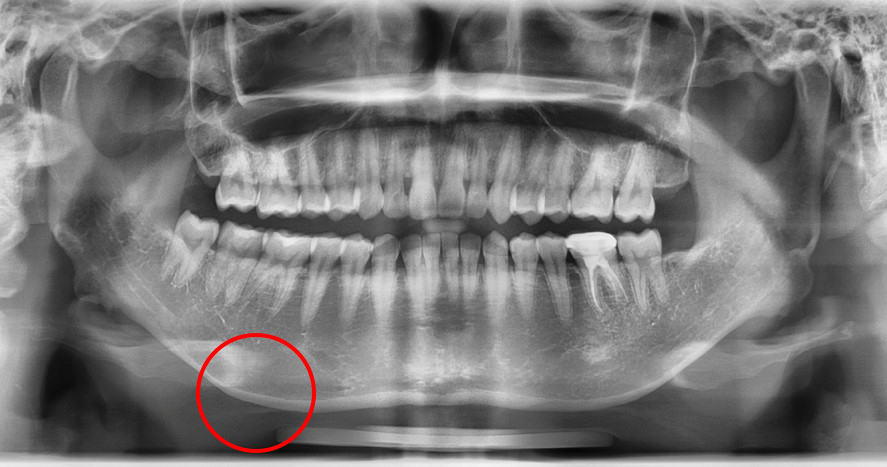
The angle in the area marked above can also be visible from the outside. In such cases, it can usually be resolved through chin surgery.
However, if the secondary angle is too close to the jaw angle area, it may also be resolved by combining jaw angle surgery and chin surgery.
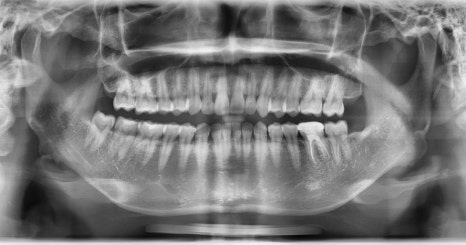
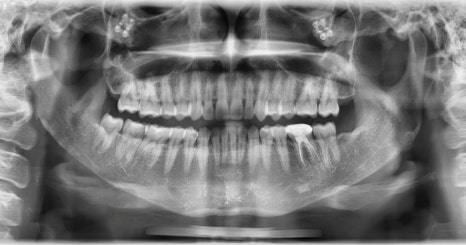
A case in which revision jaw angle surgery and chin surgery were performed together to remove a secondary angle
In fact, even when bone is cut carefully to avoid creating a secondary angle, the starting point of bone resection can still differ slightly.
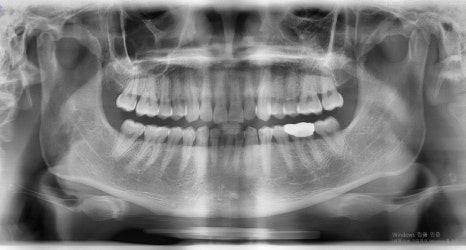
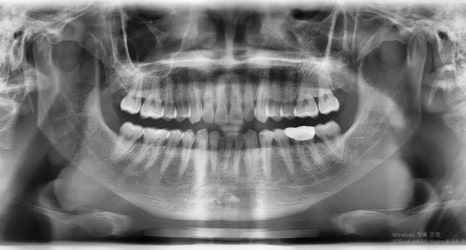
A patient who underwent only jaw angle surgery
In most cases like this, it may be palpable, but it is not visible externally at all.
Just because it can be felt does not mean you should automatically think about revision surgery.
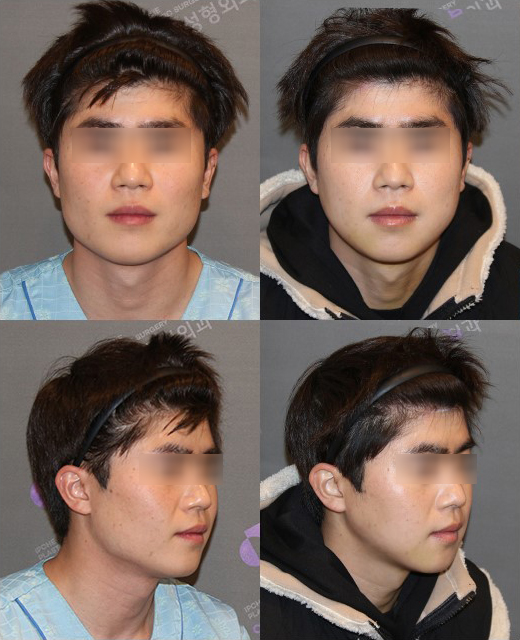
A patient who underwent only jaw angle surgery
Over-resection
If the jaw angle bone is over-resected, what people commonly refer to as a “dog jaw” or a “sunken jaw” may appear.
In such cases, reconstruction of the jaw angle can be considered.
However, in my case, I first recommend trying a simpler procedure such as fat grafting as a secondary option.
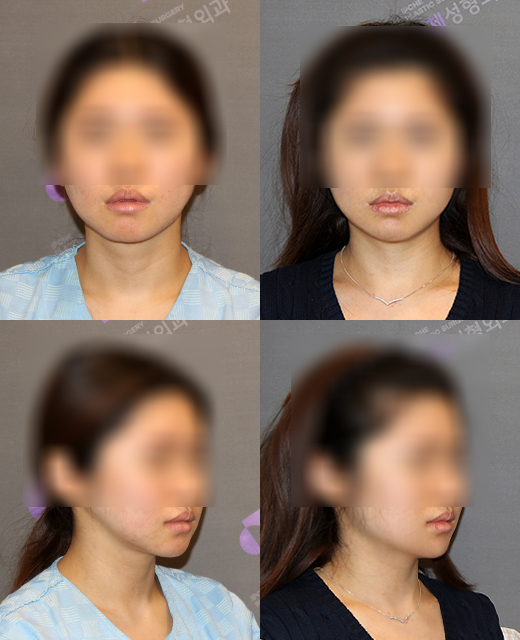
A patient who underwent fat grafting to the jaw angle area to improve a sunken jaw
If over-resection is so severe that fat grafting does not solve the problem, jaw angle reconstruction surgery may be considered.
Using 3D CT, there is a reconstructive surgery that plans the bone reconstruction and grafts artificial bone to restore the bone to its original state.
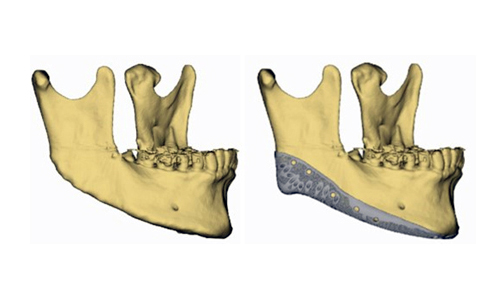
Reconstruction is actually not an easy approach and is a surgery that people may hesitate to undergo, but if over-resection is a major concern, it may be worth considering reconstruction as well.
Nerve damage
Nerve damage is actually not a common occurrence.
If the nerve is truly cut or severed due to severe over-resection, surgery to reconnect the nerve may be necessary.
One issue I have been thinking about recently is sensory changes due to nerve exposure.
This seems to happen in people whose nerve line is low or who want as much bone removed as possible.
The nerve is surrounded by a circular bony canal called the nerve canal.
During surgery, the nerve canal may be opened, and in such cases, touching that area may cause a tingling sensation or pain.
However, in most cases, those symptoms disappear as the bone grows back over the nerve.
If the nerve has not been cut, I tell patients not to worry too much.
In some cases, even after the bone covers the nerve again, those symptoms may persist.
I searched through many papers to figure out the cause, but there does not seem to be a special case.
I think I will need to do more research on how to resolve this if it happens.
The most important thing is to have jaw angle surgery safely with enough margin from the nerve line so that this does not happen in the first place.
Today, we looked at cases of patients who want revision jaw angle surgery.
Some cases can be solved simply, while others are a bit more difficult.
Rather than thinking, “I need revision surgery no matter what,” it would be better to identify the cause carefully and find the right solution. Then you may be able to achieve better results without going through trouble two or three times.
Thank you.