Hello, I’m Dr. Jo Hyun-woo of 입체성형외과.
These days, many people want to look younger. When I consult with patients, there are quite a few who look older because the area under the eyes is especially puffy.
For these patients, improvement can be achieved through lower eyelid fat repositioning or lower blepharoplasty.
Today, let’s take a look at how these two procedures differ and what their pros and cons are.
Lower Eyelid Fat Repositioning Surgery
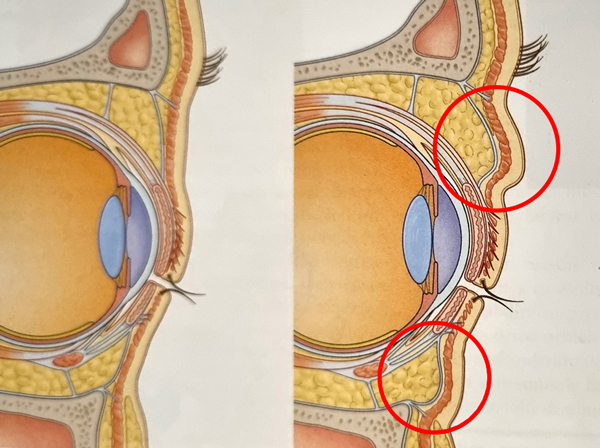
As shown in the illustration above, as we age, the septum around our eyes loosens, and the fat surrounding the eyes becomes more prominent downward due to gravity.
In this case, the face can look dull and the under-eye hollow can appear deeper, making the person look older.
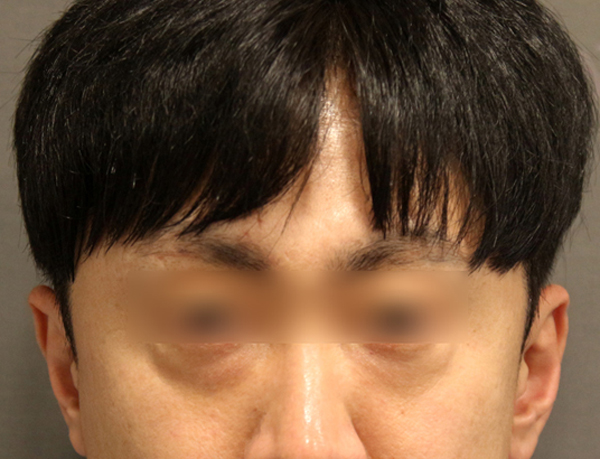
A good way to improve this is lower eyelid fat repositioning surgery.
For people whose under-eyes are simply puffy, removing a small amount of fat alone can produce good results. But for those whose under-eye hollows have deepened with age, this can be a very effective procedure.
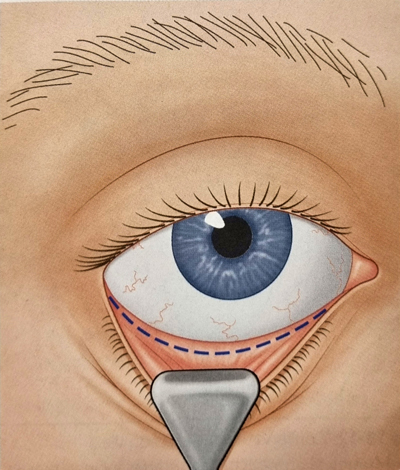
This surgery is performed by making an incision of about 5 mm on the inner side of the eye using a bovie laser.
You can think of it as smoothing out the protruding fat and then repositioning it toward the under-eye hollow.
There are several methods for lower eyelid fat repositioning.
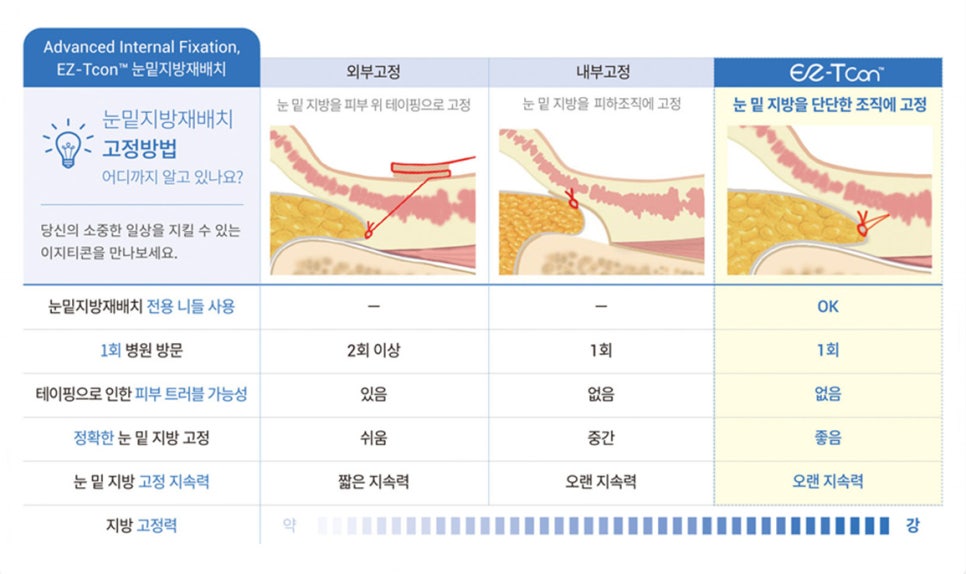
A method that has been used for a very long time is external fixation.
This involves tying off the lower eyelid fat, pulling the thread out through the skin, and securing it there.
It is a good method that I also used frequently in the past, but its drawbacks are that the thread and tape are visible outside the skin, and the patient must come back to the clinic once more to have the stitches removed.
The internal fixation method is not used very often because the location of the under-eye hollow is quite low, which means a larger incision is needed.
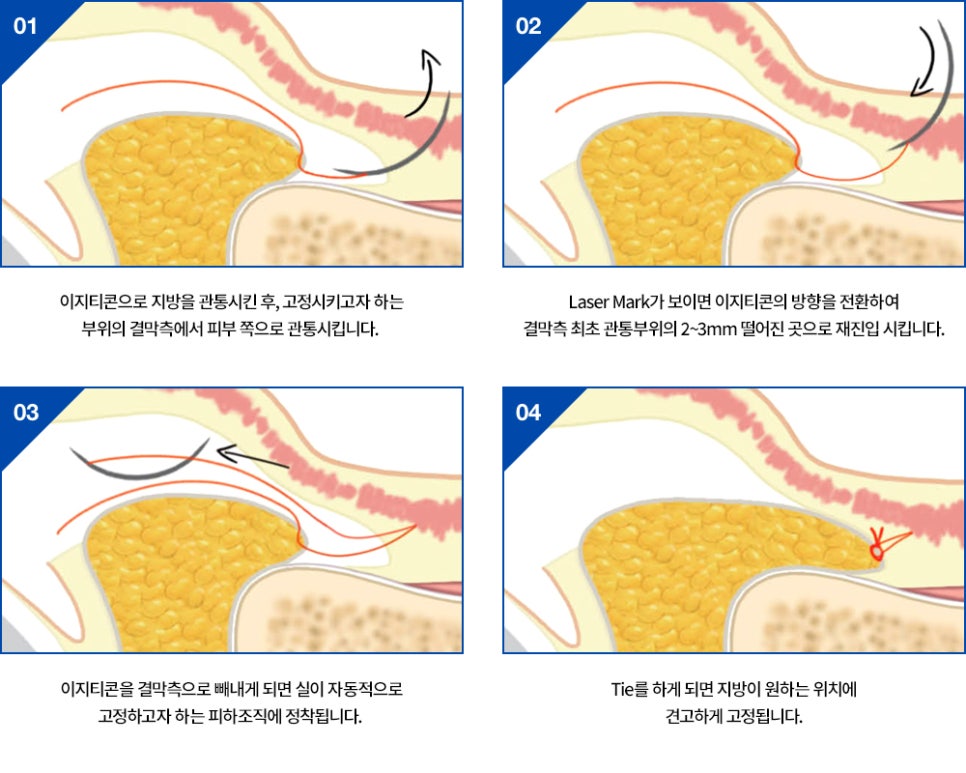
The method I mainly use is lower eyelid fat repositioning with a special thread called EZ-Tcon.
Because it is fixed internally with a specially made thread, it does not show on the outside of the skin, allowing the patient to return to daily life right away, and quick recovery is a major advantage.
Lower eyelid fat repositioning requires slight adjustments depending on the case.
For people whose under-eye hollow is sunken but whose fat is not protruding, in addition to lower eyelid fat repositioning, fat grafting with the patient’s own fat should also be considered to fill the hollow.
Also, for people whose lower eyelid fat protrudes too much, repositioning the fat may improve the hollow, but some bulging may remain, so removing an appropriate amount of fat is also very important.
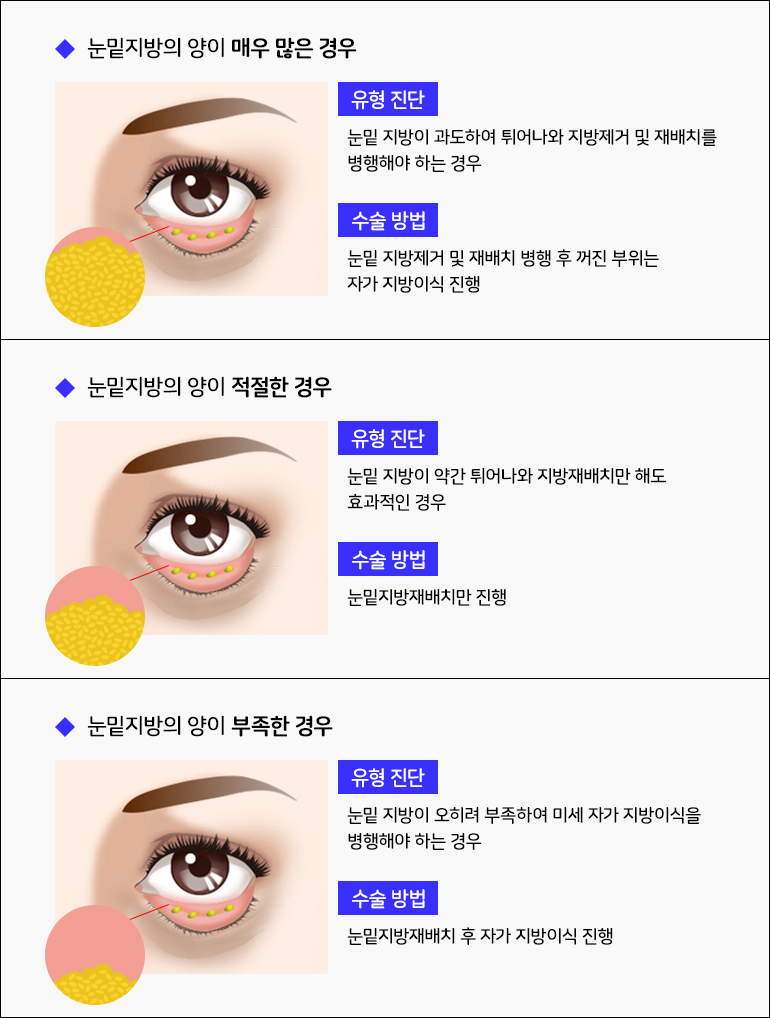
Although it may seem like a simple procedure, it is very important to apply the right method according to each patient’s case.
Let me show you a real patient case.
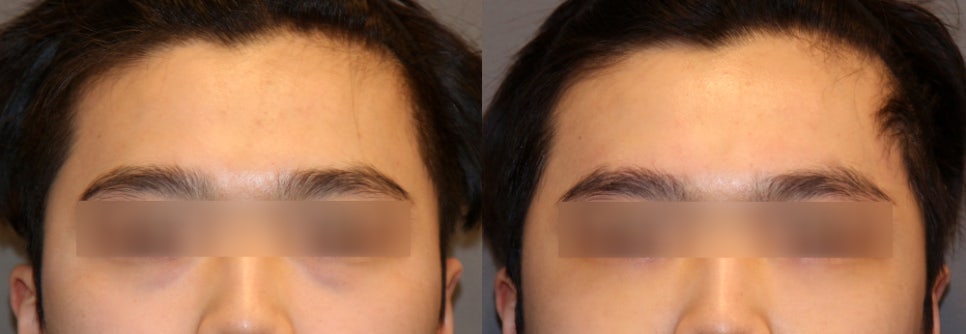
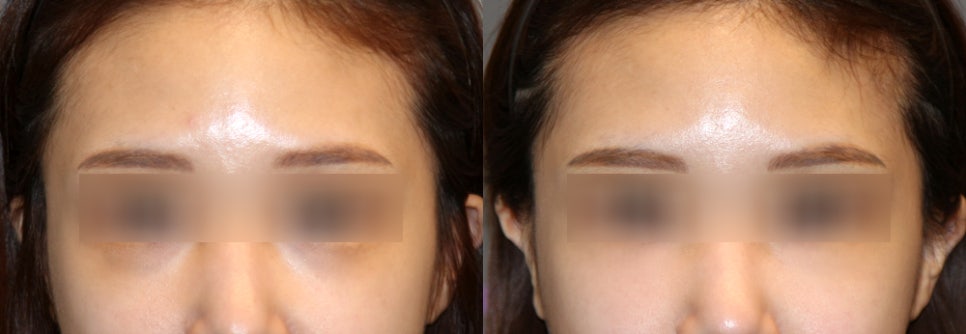
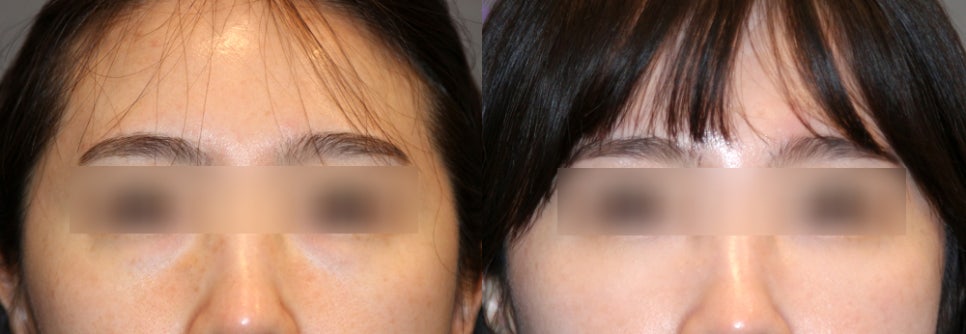
The under-eye hollow is clearly gone, and the face looks brighter, giving a more youthful effect.
Lower eyelid fat repositioning is also very effective for middle-aged patients who do not need skin removal.
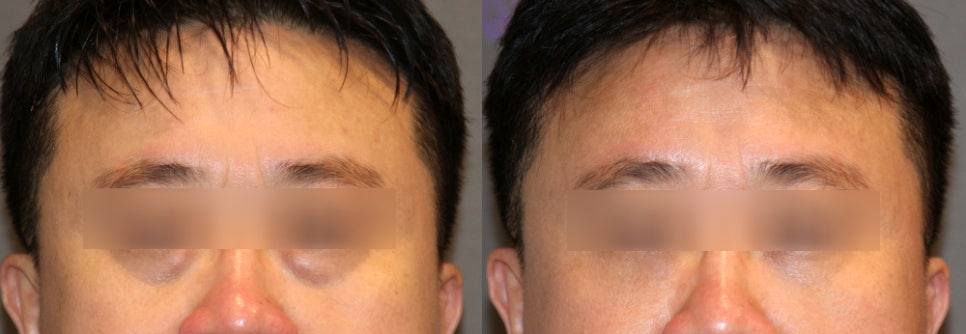
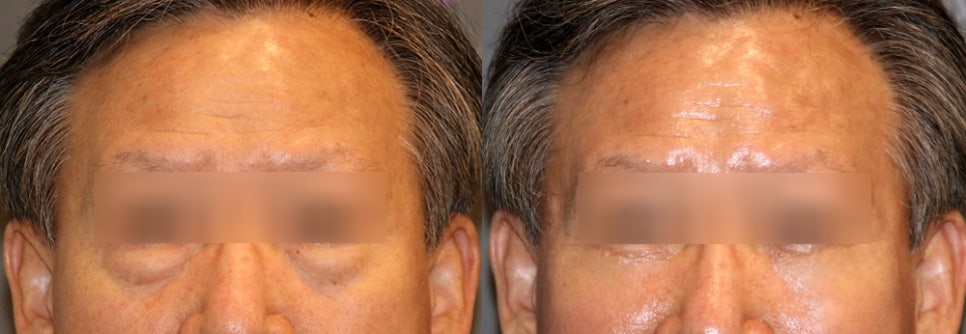
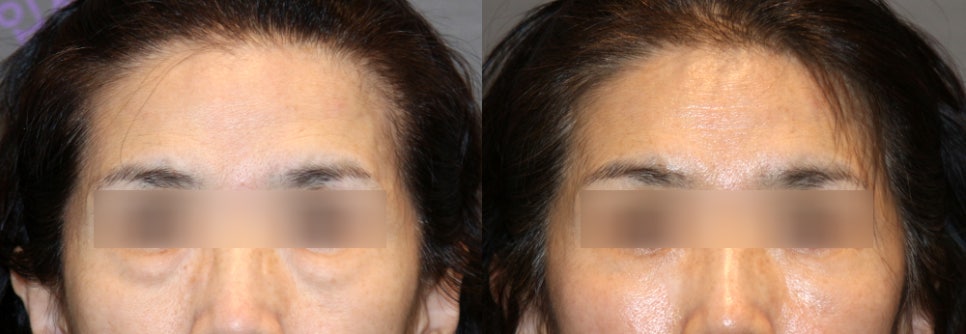
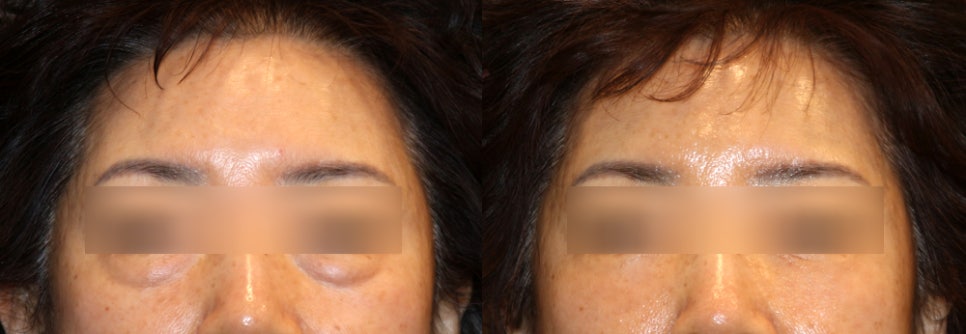
For people who have puffy lower eyelid fat but good skin elasticity, lower eyelid fat repositioning alone can produce sufficiently good results without lower blepharoplasty.
However, since this is a procedure that does not involve cutting away skin, it may be difficult to apply in people with significant skin sagging.
The surgery takes about 30 minutes, so it is a very simple procedure. If there is no bruising, you can think of it as a surgery that allows immediate return to daily life.
Lower Blepharoplasty
The next procedure I will talk about is lower blepharoplasty.
Before lower eyelid fat repositioning became widely performed, lower eyelid surgery was best performed with lower blepharoplasty.
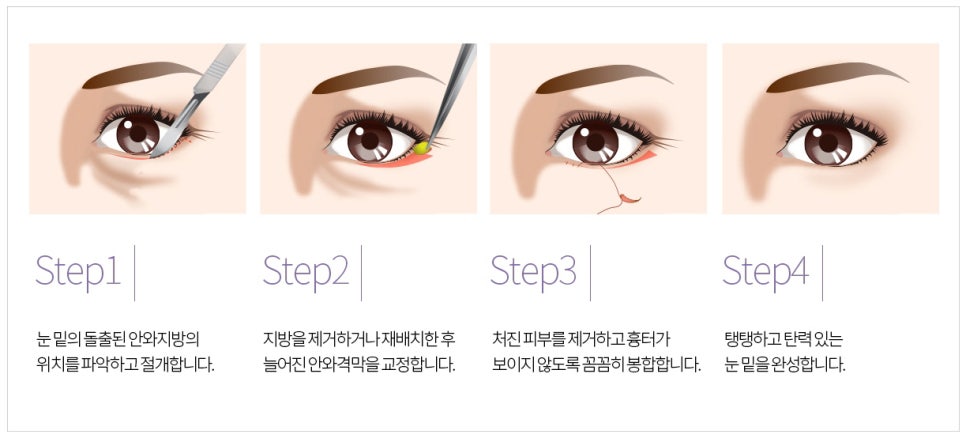
This procedure involves making an incision below the lower eyelid, repositioning the lower eyelid fat, removing the excess skin, and then suturing it again.
Lower blepharoplasty allows skin removal, which cannot be done with lower eyelid fat repositioning.
In some older patients, the bulging appearance is caused not by fat but by developed muscle. In such cases, muscle removal can also be performed at the same time.
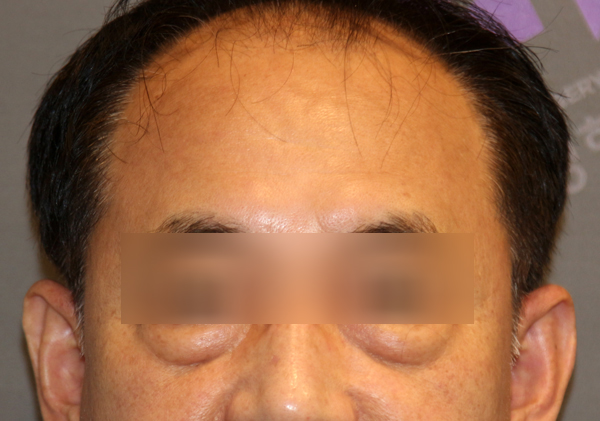
In these cases, lower eyelid fat repositioning alone may not produce a satisfying result, so lower blepharoplasty is recommended.
There are some side effects that patients worry about after lower blepharoplasty, and the most common one is ectropion.
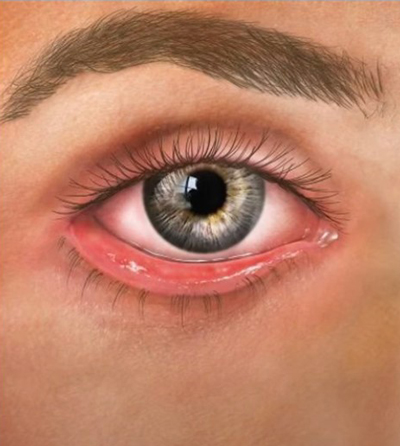
After surgery, for various reasons, the lower eyelid may turn outward and the conjunctiva become exposed.
This can happen because too much skin was removed, or because blood pooled after surgery and a lot of scar tissue formed, causing the tissue to harden and leading to ectropion.
Therefore, when performing lower blepharoplasty, it is important not to remove too much skin and to control bleeding well, as textbooks also state.
Another commonly mentioned side effect is that people say the under-eye area looks flat when the aegyo-sal disappears.
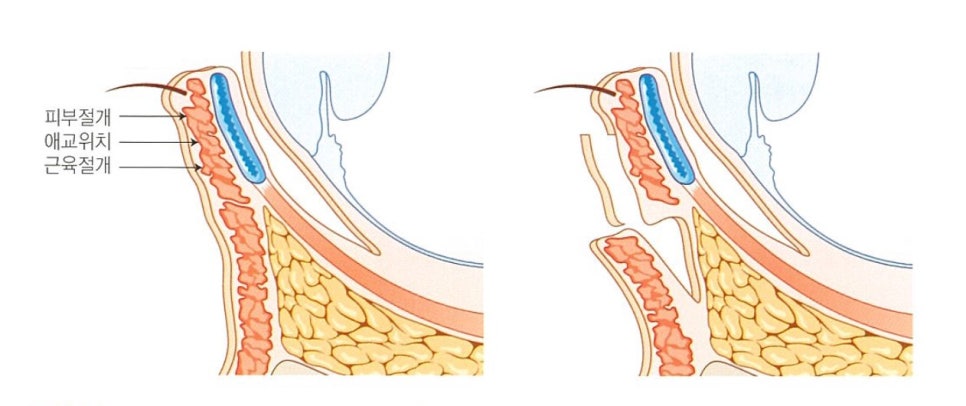
As shown in the illustration above, when performing lower blepharoplasty, the muscle in the aegyo-sal area is preserved during the incision.
If this muscle is not preserved and is removed together with the skin, the under-eye area may lose its aegyo-sal and look flat.
These days, lower blepharoplasty is often performed together with a facelift.
For those who have sagging in the midface area, it may be worth considering this procedure.
Lower eyelid fat repositioning and lower blepharoplasty each have clear advantages and disadvantages.
Lower eyelid fat repositioning cannot address skin sagging or adjust the muscle, but it has the advantage of minimizing the side effects that can occur with lower blepharoplasty.
Lower blepharoplasty, on the other hand, can address sagging skin and muscle, but it leaves a scar outside the eye and carries a slightly higher risk of side effects.
Today, I briefly explained the differences between lower eyelid fat repositioning and lower blepharoplasty.
I hope this helps you choose the right surgery. Thank you.