Hello, I’m Director Jo Hyun-woo of Ibjeong Plastic Surgery.
Today, rather than explaining a surgery, I’d like to talk about facial contouring surgery as I see it.
I started my plastic surgery training at Severance Hospital in 2005, so this year marks my 20th year by count.
When I was at the university hospital, the surgery I encountered most often was facial fracture surgery.
Since Severance Hospital is a large hospital, many patients with fractures from accidents came in, and from that time on, I think I have been restoring and fixing bones and performing facial bone surgery.
In fact, it is difficult to encounter many cases of cosmetic surgery to reduce facial bones at a university hospital.
However, maxillofacial corrective surgeries such as double jaw surgery were common, and I became interested in the dramatic changes they can bring to the face.
Cosmetic facial contouring surgery is performed more actively in private clinics than in university hospitals.
Back in the early 2010s, many of the patients who came to the hospital had very prominent cheekbones and well-developed square jaws.
I reviewed some photos of my former patients.
At that time, most of the patients who came to me had bones that were really large.
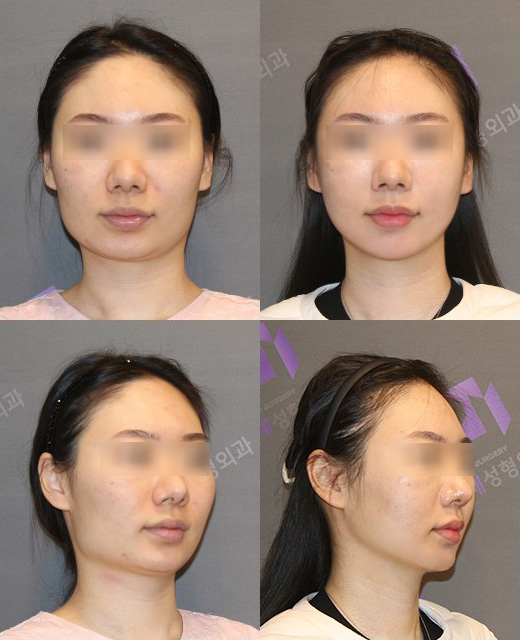 230-degree three-dimensional cheekbone reduction, square jaw surgery, cortical osteotomy, masseter muscle resection, double chin liposuction
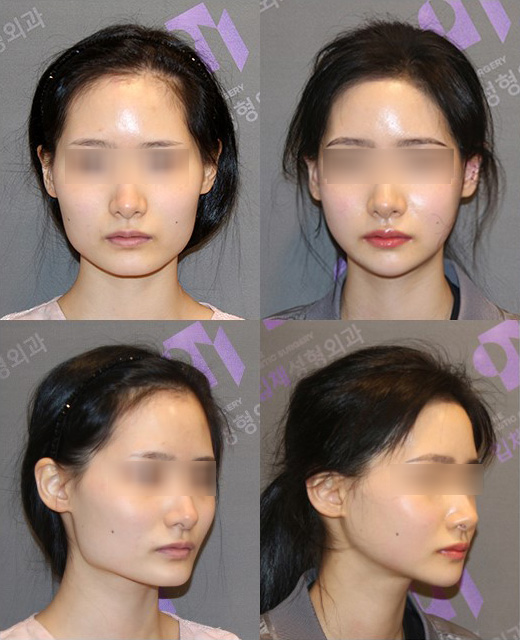 Cheekbone reduction, square jaw surgery, cortical osteotomy, masseter muscle resection, chin surgery
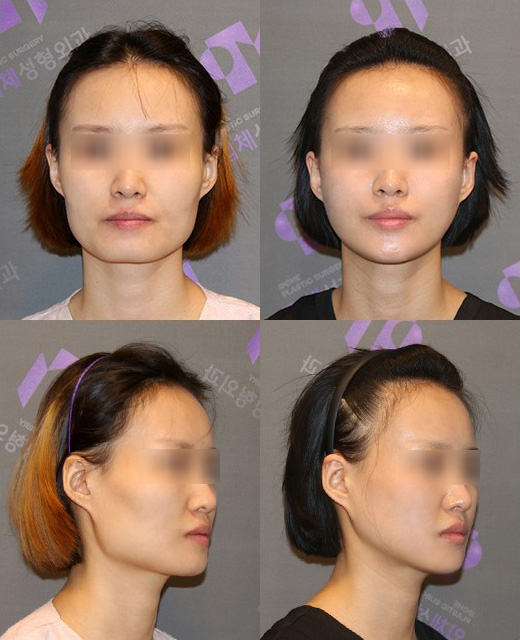 Cheekbone reduction, square jaw surgery, cortical osteotomy
If you look at the patients above, you can see that there was a lot of bone to remove and their faces changed dramatically.
However, recently, whether it is because the patients who come to me have changed or because facial bones are gradually getting smaller, there are many patients with very low nerve lines and many people whose cheekbones are not large.
When consulting with these patients, I had a lot to think about.
Compared with before, the amount of bone that can be reduced is not large, and the result is not dramatic, so I personally had many concerns about whether surgery was the right choice.
In fact, there is no absolute standard for whether surgery should or should not be performed.
So recently, I have come to realize that if someone feels self-conscious about slightly protruding cheekbones or slightly angular bones, performing surgery for that change can be helpful for patients and, in fact, lead to higher satisfaction.
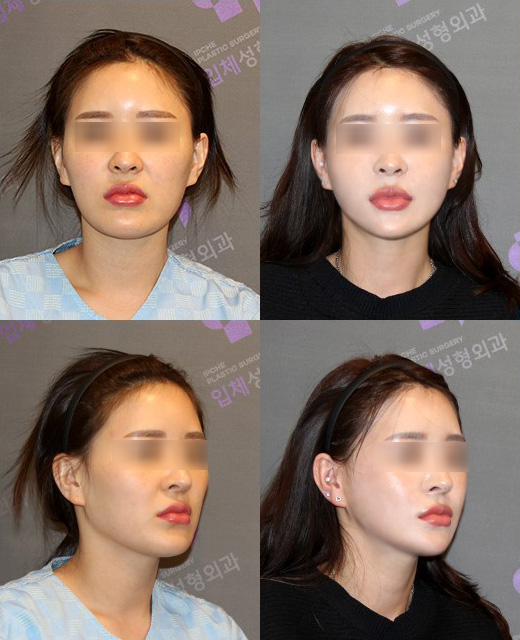 Cheekbone reduction, square jaw surgery, cortical osteotomy, chin surgery
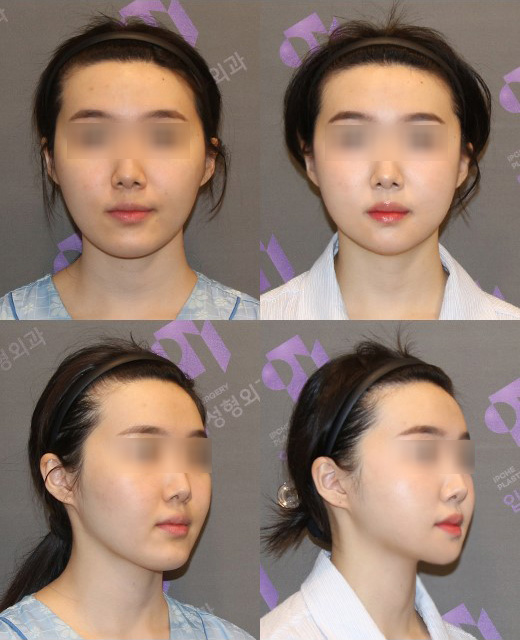 230-degree three-dimensional cheekbone reduction, square jaw surgery, cortical osteotomy, chin surgery
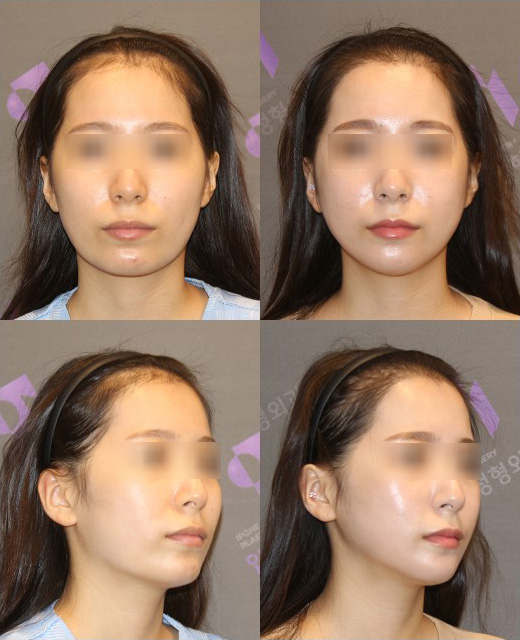 Cheekbone reduction, square jaw surgery, cortical osteotomy, chin surgery
If you look at the patients above, their bones were not especially prominent and there was not a large amount of bone to remove, but they were people who were very satisfied even with subtle changes because the surgery addressed the complexes they had been feeling.
Many people think that contouring surgery will automatically solve everything because it can make the face smaller and prettier like a celebrity’s face. But that is not actually the case.
The thickness of one’s cheekbones is fixed, and there are also limits set by the nerve line of the square jaw.
It does not seem to be the era anymore when surgeons cut away as much of the square jaw as possible and ended up with a goat-like jaw, as people used to say.
Even when cutting the square jaw, people want to leave some angle under the ear, and for the cheekbones as well, it seems to be an era when people want natural changes that do not cause sagging in the cheeks.
Therefore, do not think that if you cut a lot, you will become a completely different person. If you undergo surgery suited to your own situation, you will be able to achieve results that are sufficiently satisfying.
Thank you.