Hello, I am Director Jo Hyun-woo of 3D Plastic Surgery.
In a previous column, I explained how to correct deep-set eyes and protruding eyes.
This time, I would like to explain the surgery for correcting deep-set eyes in a little more detail.
To correct deep-set eyes, volume needs to be added to the area around the orbit, and this can be done by fat grafting or by inserting cartilage.
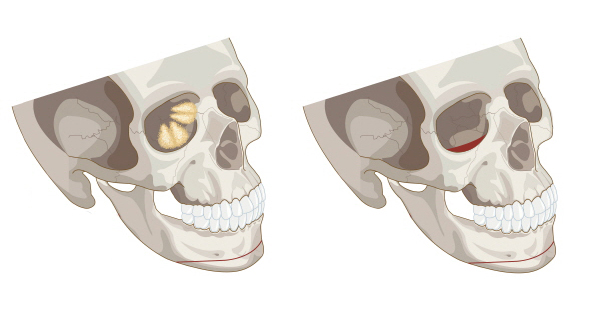
These two methods use materials from our own bodies, so they can be considered very safe methods.
However, the first drawback is absorption of the material.
As you know, transplanted fat can be absorbed by the body.
The same is true for cartilage. There is also a method of crushing cartilage into small pieces and inserting it, but this can also be absorbed.
If we could accurately determine how much of it would be absorbed, we could correct it to the exact amount we want. However, because it is difficult to know the exact amount of absorption, precise surgery can be a little difficult.
The second issue is that when fat grafting is performed, people who are somewhat older often appear to have bulging under-eye fat.
Because of these drawbacks, the surgery I have been performing recently is one that uses a 3D printer to create an under-eye implant and insert it.
These days, 3D printing technology has advanced greatly, so creating the desired shape is very easy.
A CT scan can be used to create a model of our facial bones, and an implant can be made based on that shape.
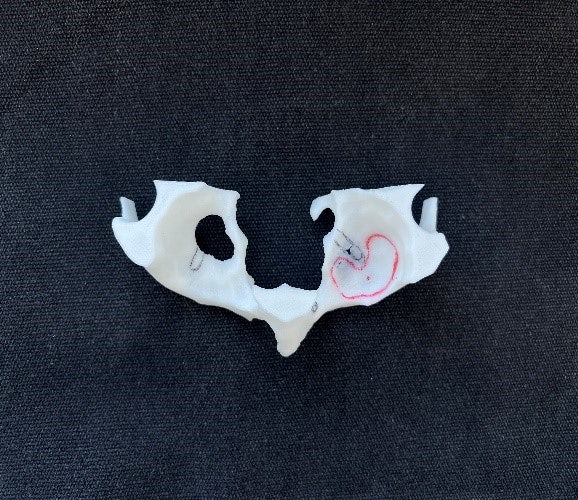
First, based on the facial CT, the shape of the bone beneath the eyes is created, and during the manufacturing stage, a kidney-bean-shaped implant is made.
It is important to design it accurately so that it does not affect or injure the superior orbital fissure, where the orbital nerves and blood vessels pass through, and to plan how much volume will be added.
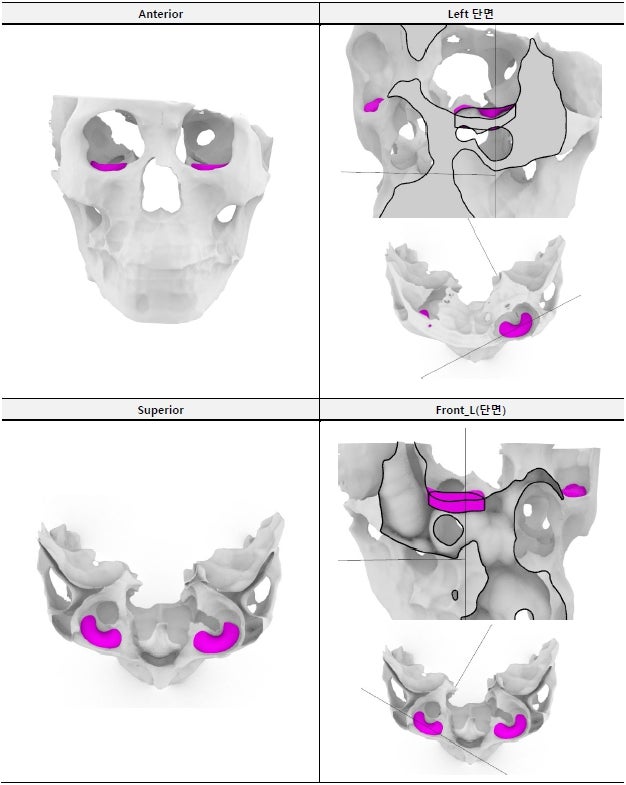
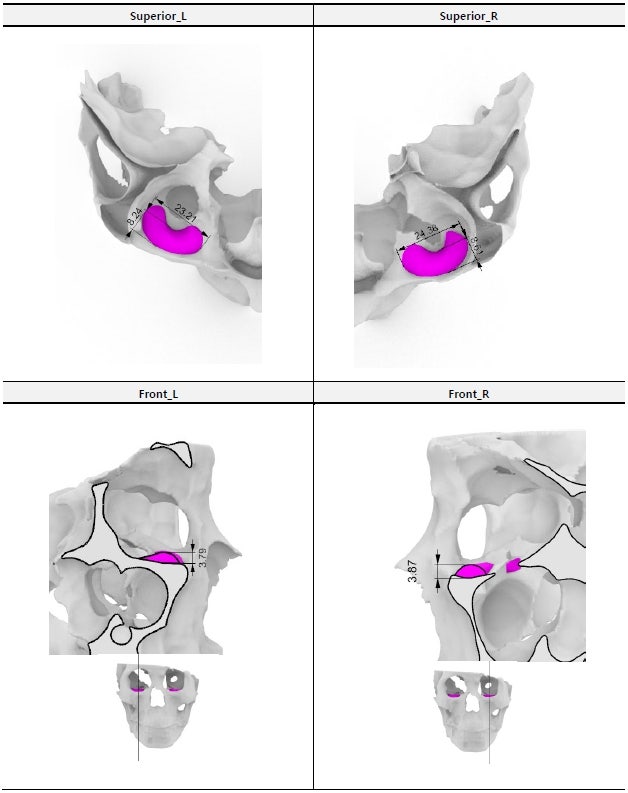
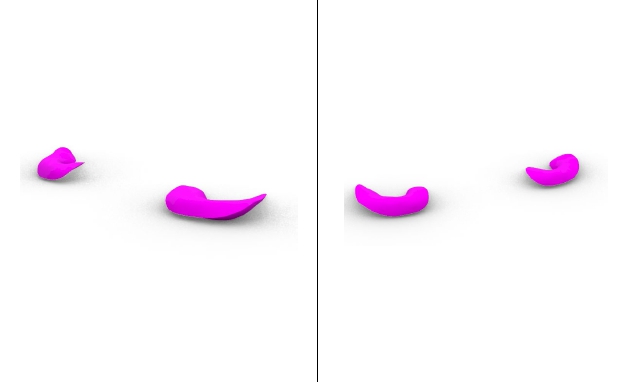
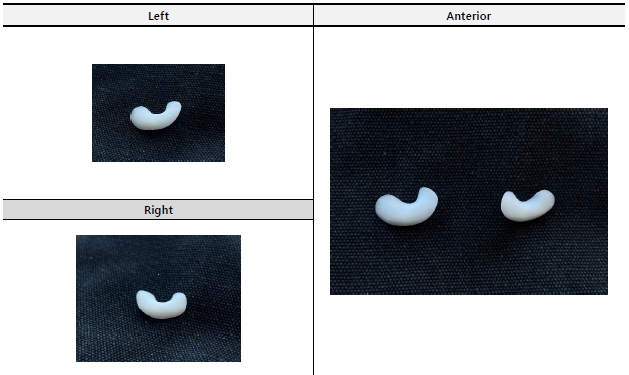
Through this process, the final implant is created.
If you look at the design for another patient as well,
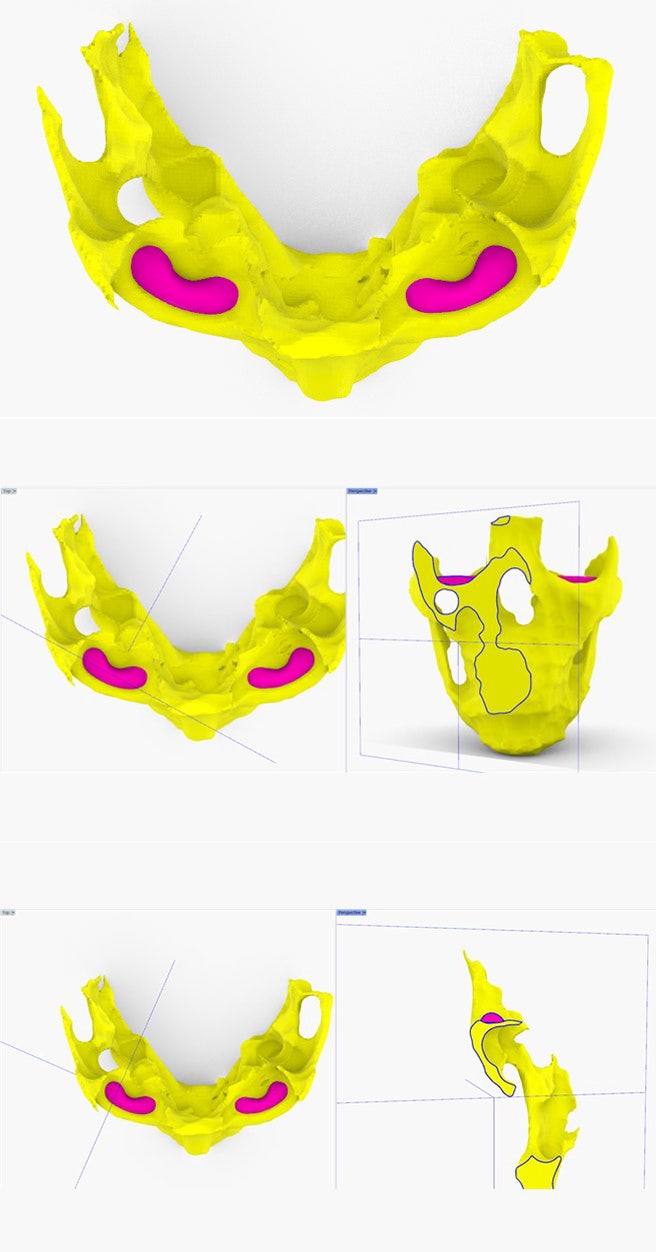
Because it is custom-made according to the shape of each person's eye socket, it fits into exactly the correct position during surgery.
The surgery is performed through the same incision used for lower eyelid fat repositioning, and it is completed by fixing the implant to the periosteum with sutures.
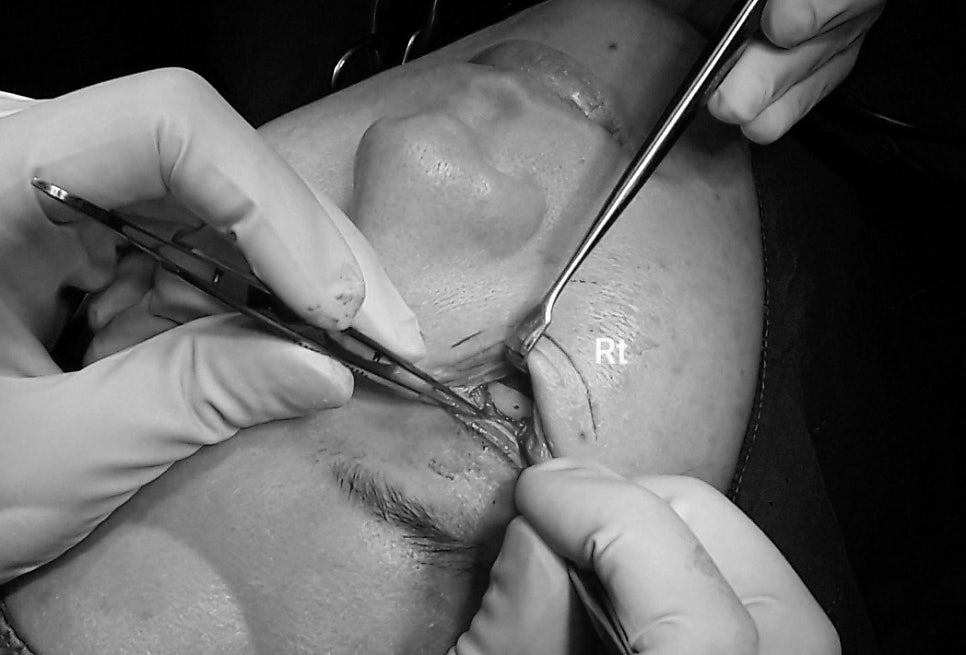
If you look at the before-and-after photos,
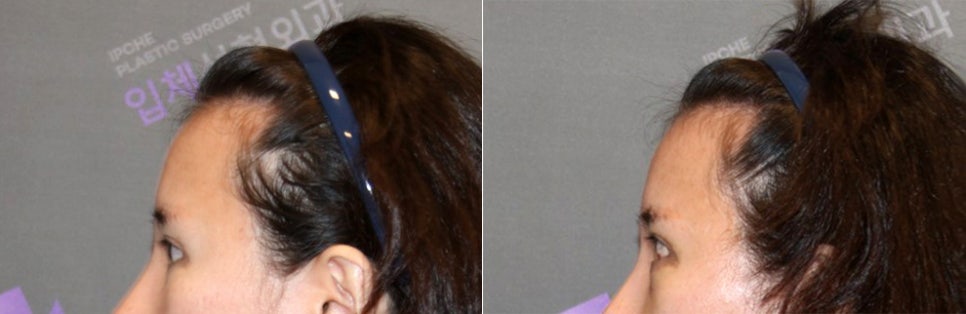
You can see that the sunken eyes have been brought forward.
In fact, because this surgical method is not a long-established procedure, deciding the size of the implant and how much to bring it forward is very important.
At present, the implant height is being set at around 4 mm to avoid excess correction, and in these cases, no double vision or other problems have appeared.
I will discuss the implant height in more detail later, separately, for those who want greater advancement in the future.
Silicone implants are safe implants that are used in various surgeries.
I think that if such implants are made using 3D printing, very good results can be obtained.
I hope this was helpful for those who are concerned about deep-set eyes.
Thank you.