Hello, this is Director Jo Hyun-woo of Ibche Plastic Surgery.
Sometimes patients ask whether they can receive private medical insurance benefits when undergoing plastic surgery.
In general, cosmetic plastic surgery is difficult to cover with private medical insurance.
However, there are some cases where private medical insurance can be applied, so let’s look at when such claims may be possible.
Private medical insurance is an insurance that covers actual medical expenses incurred during hospital treatment.
It covers treatment costs caused by illness or injury, and the insurer pays a certain percentage of the amount the patient has to pay out of pocket.
Because it reduces the burden of medical expenses, many people are enrolled in it.

Plastic surgery procedures can broadly be divided into two types.
There are cosmetic plastic surgeries performed to improve or change appearance, such as double eyelid surgery, nose surgery, and liposuction. There are also medical plastic surgeries performed to restore or improve damaged areas due to accidents or illness, such as facial reconstruction surgery, burn and scar treatment, and reconstructive surgery.
In the case of medical plastic surgery, private medical insurance may be available.
In addition, plastic surgery performed to correct problems caused not only by direct accidents but also by illness or congenital deformities may also be claimed under private medical insurance.
In such cases, medical certificates and doctors’ opinions before and after surgery are needed, and medical necessity must be proven through them.
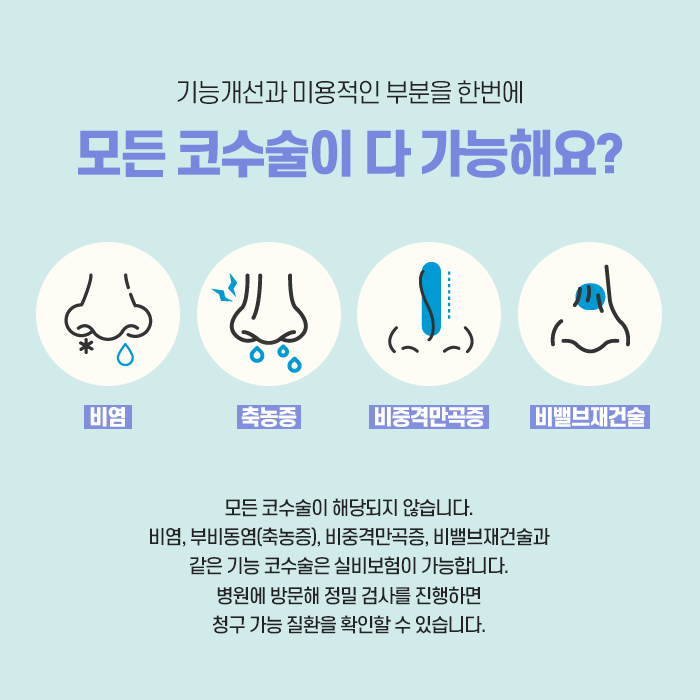
Plastic surgery done purely for cosmetic purposes cannot be claimed under private medical insurance.
However, there are occasional cases where cosmetic plastic surgery is performed using private medical insurance.
In the case of nose surgery, cosmetic and medical purposes can sometimes be carried out at the same time.
In particular, when surgery for a deviated septum is performed together with cosmetic plastic surgery to improve the appearance of the nose, the procedure is carried out as a combination of medical and cosmetic surgery.
However, this can create somewhat complicated issues when filing a private medical insurance claim.
In general, when an insurer approves a private medical insurance claim, only the medically necessary part of the surgery is covered, and the part performed for cosmetic purposes is excluded from private medical insurance.
If the doctor in charge writes an opinion clearly explaining the medical necessity, and that opinion includes that surgery was unavoidable due to the deviated septum as well as a specific explanation of any cosmetic plastic surgery portion, then there are cases where private medical insurance can be received.
In principle, it is advisable to clearly separate and claim the costs for cosmetic and medical purposes.
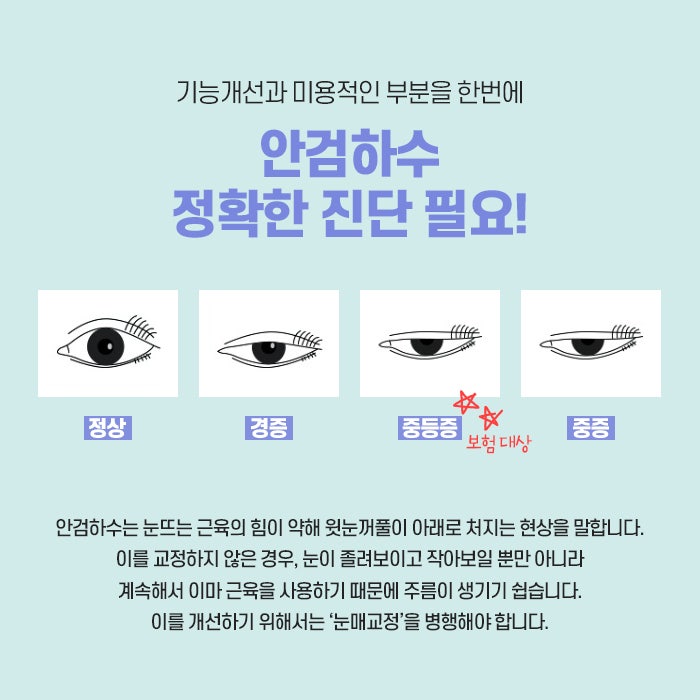
Next, there are cases in eye surgery where private medical insurance may be available.
Ptosis refers to a condition where the eyelid droops, obstructing the field of vision or preventing the eyes from opening properly.
This can cause visual obstruction, eye fatigue, headaches, and in severe cases it interferes with daily life, making surgery necessary.
Ptosis correction surgery is performed to address these functional problems, so it can be claimed under private medical insurance,
but medical necessity must also be clearly proven, and the doctor’s diagnosis and opinion must be included in the medical certificate.
For surgeries performed in ophthalmology, it is often easier to receive private medical insurance coverage, but in plastic surgery, claims are often denied, so it would be better to check carefully before proceeding with surgery.
The standard for pathological ptosis is that ptosis can be diagnosed when the upper eyelid covers 2 mm or more of the pupil.
Depending on the severity of symptoms, it can be divided into mild (the upper eyelid is slightly lower than the normal position and does not significantly affect the field of vision), moderate (the upper eyelid covers about 4 mm of the pupil and partially affects the field of vision), and severe (the upper eyelid covers more than half of the pupil and blocks a significant part of the field of vision).
In mild cases, it is not easy to judge, so an accurate diagnosis is necessary.
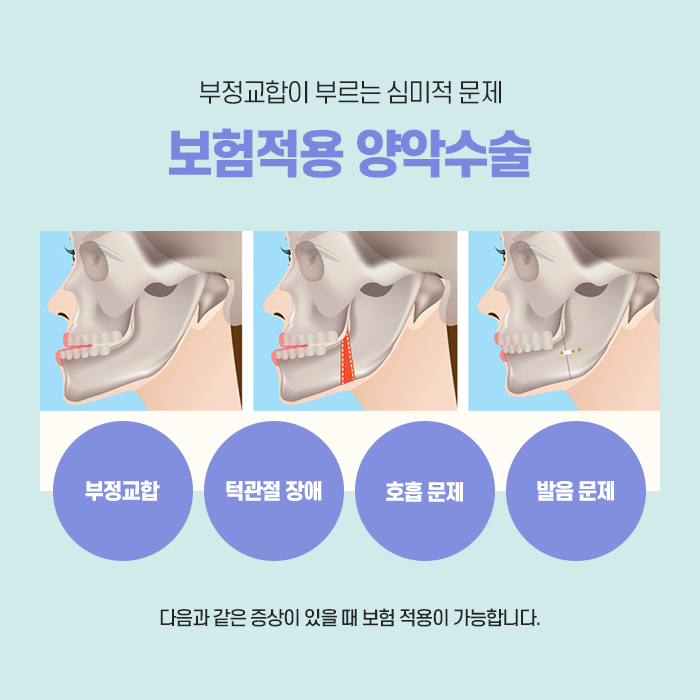
Next is orthognathic surgery. When orthognathic surgery is performed for medical necessity, a private medical insurance claim is possible.
The following situations may be recognized as medical necessity:
-
Malocclusion: difficulty chewing food due to abnormal alignment of the jaws
-
Temporomandibular joint disorders: pain or abnormalities in the jaw joint, or when orthognathic surgery is needed to adjust the jaw position
-
Breathing problems: respiratory disorders such as sleep apnea caused by structural problems of the jawbone
-
Speech problems: speech impairment caused by structural issues with the jaw, or when surgery is needed for speech correction
In cases like these, medical insurance processing applies and private medical insurance coverage may also be available.
However, cosmetic orthognathic surgery is not covered, so it would be good to check carefully.
Today, we looked at whether plastic surgery can be covered by private medical insurance.
In most cases of cosmetic surgery, it cannot be covered by private medical insurance.
However, if the surgery falls under the cases mentioned above, private medical insurance may apply, so if you check carefully and undergo surgery, it may help reduce the burden a little.
I hope today’s content was helpful.
Thank you.