Hello, this is Dr. Hyun-woo Jo from 입체성형외과.
Today, I’d like to explain chin surgery in a little more detail.
I have previously written a column explaining the various methods of chin surgery.
Although there are several surgical techniques, the same method cannot be applied to every patient because the size of the bone and the position of the nerve line differ from person to person.
I’ll go over a few examples and explain when different surgical methods are used.
A long chin with a recessed chin tip
When the chin tip is long and appears recessed, a sandwich osteotomy is used to reduce the vertical length while advancing the chin tip.
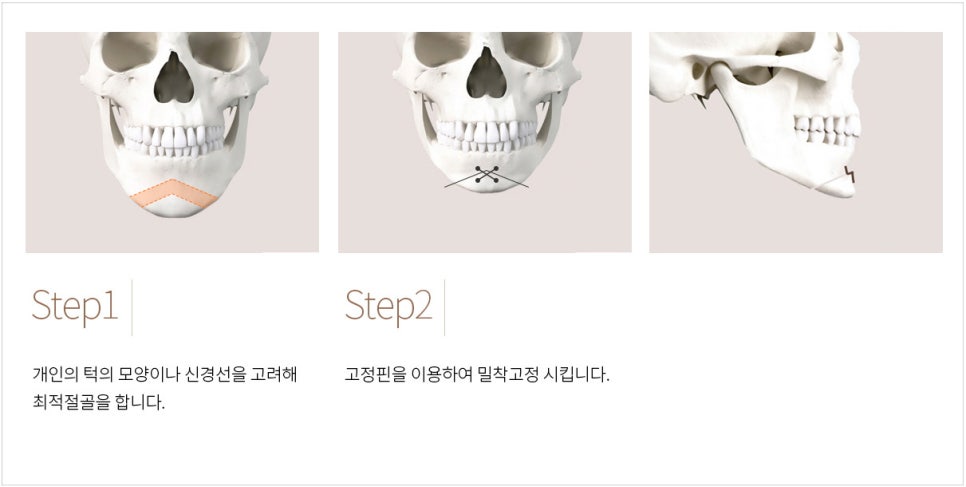
However, if the length of the chin bone is reduced with a sandwich osteotomy, a secondary angle can become more pronounced in relation to the remaining square jaw bone.
That is why I usually recommend square jaw surgery together with chin-length reduction.
This is because many patients later regret it due to the secondary angle.
If square jaw surgery is not possible, I recommend oblique advancement of the chin tip rather than a sandwich osteotomy.
This can also be applied to patients whose nerve line is low and therefore cannot have the vertical length reduced.
I once reviewed a paper on this topic.
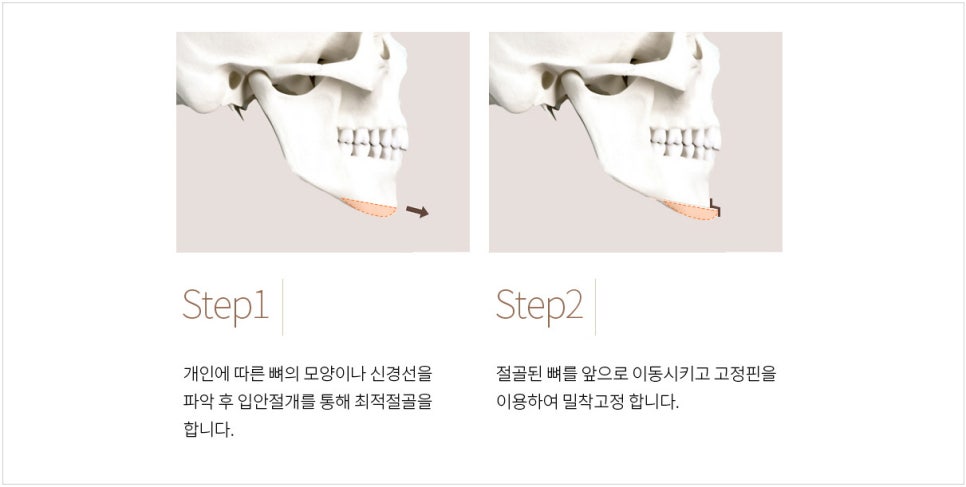
It is a surgical method that advances the chin tip while reducing its length through an oblique osteotomy.
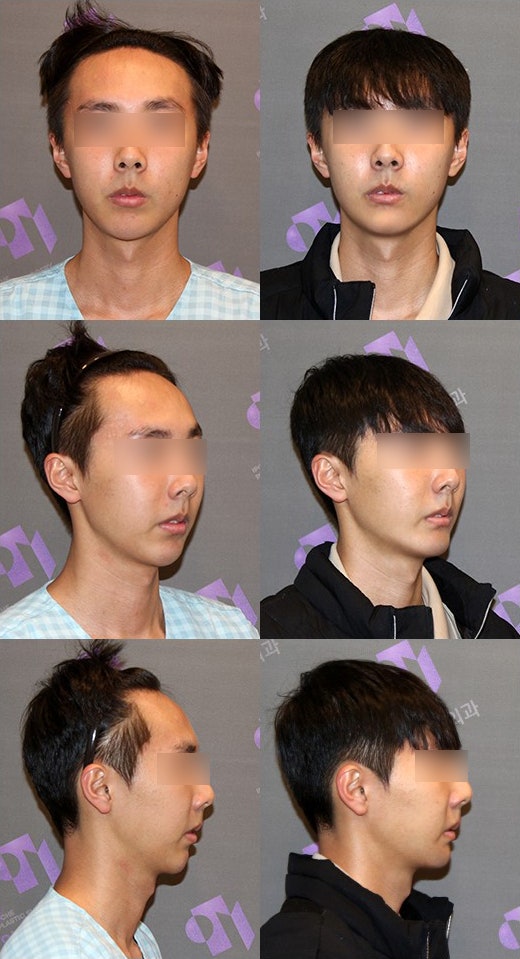
This kind of patient is a representative case of a chin that is long but recessed backward.
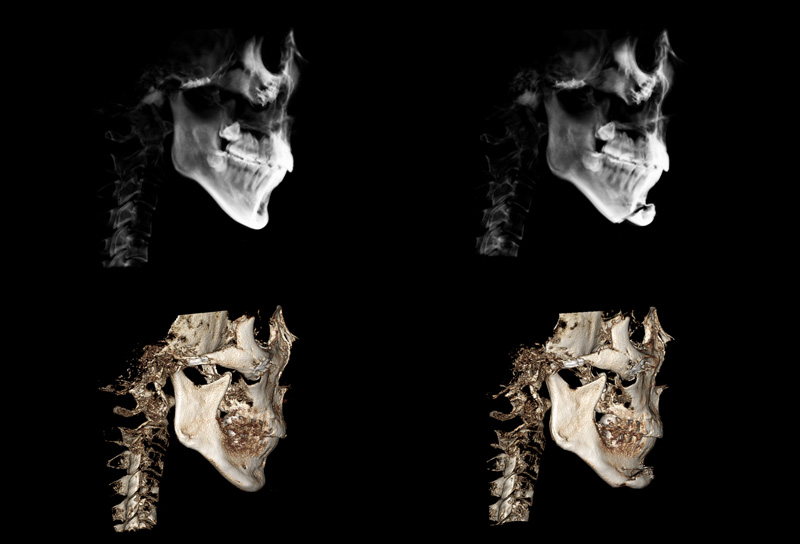
When the chin tip is advanced and lifted in an oblique direction like this, you can also expect the actual length to become shorter.
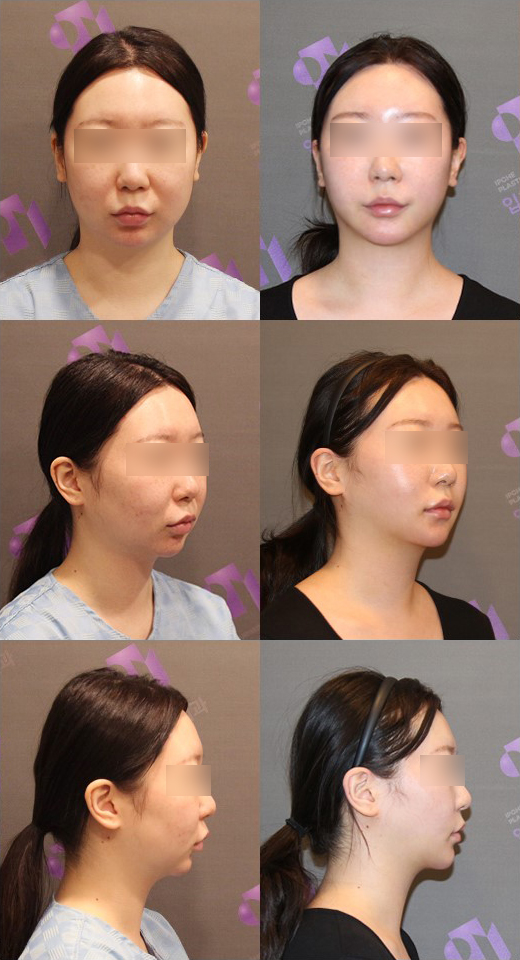
In the before-and-after photos, you can see that the chin tip looks shorter.
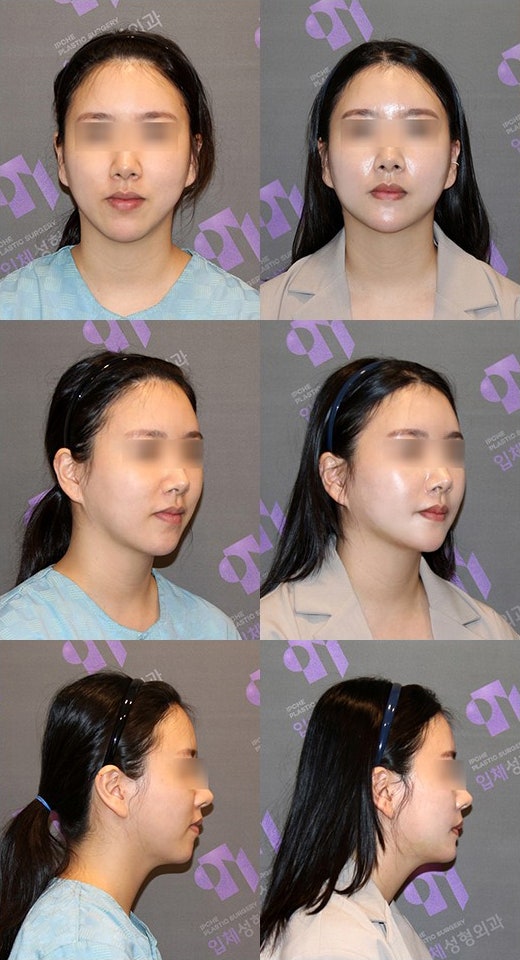
In this patient’s case as well, the face looked long from the front, but the chin was slightly recessed backward.
The patient wanted to address it with chin surgery alone, so we performed advancement in an oblique direction. This can produce good results while minimizing the step-off.
For patients who do not want square jaw surgery or who cannot undergo a sandwich osteotomy because the nerve line is low, this can be a good surgical option.
A short chin with a recessed chin tip
A chin that is short and recessed backward means the chin tip is very small. These are the cases that can truly be called a weak chin.
People with a long chin cannot really be said to have a weak chin (no chin).
In such cases, I often recommend a chin implant.
This is because the volume of the lower jaw is small, so bone surgery alone may have limitations.
However, some people do not want an implant.
In those cases, bone grafting can be used to increase the length of the chin while advancing the chin tip.
However, bone grafting also requires harvesting bone from the square jaw area, so it cannot be solved with chin surgery alone.
In this case, instead of the method described above, surgery is performed by advancing the chin tip in an oblique direction.
Of course, the effect is less than increasing the length with a bone graft, but because the direction of bone movement itself is downward, you can still achieve a sufficient lengthening effect.
Let me show you some patient examples.

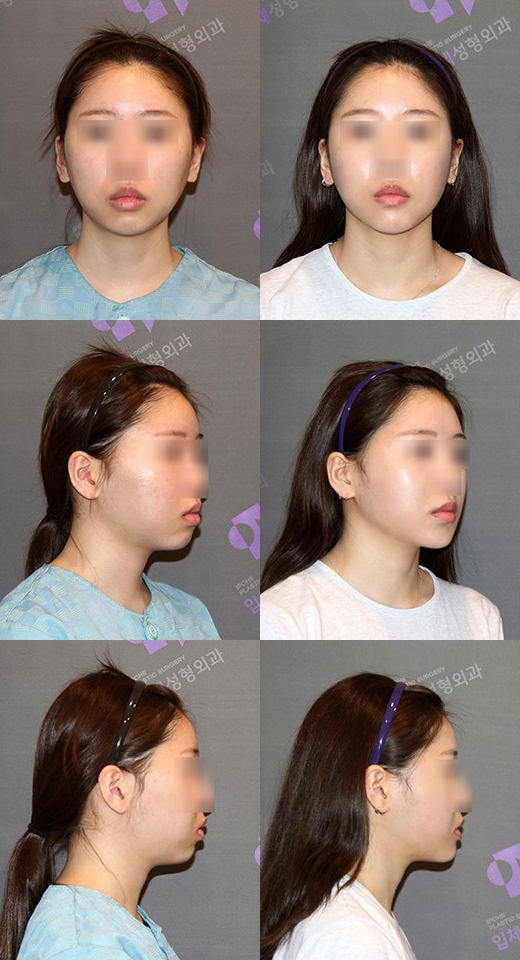
In cases like the patients above, where the chin is both short and recessed backward, this method can be used to sufficiently increase the length with chin surgery alone.
That said, I still recommend combining it with square jaw surgery whenever possible because of the secondary angle.
For patients who cannot undergo square jaw surgery for various reasons, I think this can be a good option.
Next week, I plan to explain chin recession. I will talk about my thoughts and the solutions.
I hope today’s column was helpful for those who want a procedure that lengthens or shortens the chin while advancing it.
Thank you.