Hello, this is Director Jo Hyun-woo of 입체성형외과.
Today, instead of a contouring surgery topic, I’d like to talk about the sedative anesthetics used during surgery.
Sedation is used in various medical procedures, including plastic surgery.
Some patients experience that anesthesia does not work well or that they wake up sooner than expected.
I will explain in detail why these differences occur and what factors are involved.
What is the difference between sedation and general anesthesia?
Sedation began to be widely used in the late 2000s.
Before that, eye and nose surgeries were done under local anesthesia, and somewhat larger surgeries were performed under general anesthesia.
Sedation is an anesthetic method that induces a state similar to sleep in order to minimize anxiety and pain that may occur during surgery or procedures.
In general, consciousness is not completely blocked, so the patient can breathe spontaneously and may respond to instructions from the medical staff.
For this reason, it is widely used in relatively simple plastic surgeries, endoscopic examinations, dental treatment, and some orthopedic surgeries because recovery is fast and safety is high.
On the other hand, general anesthesia completely blocks the patient’s consciousness and sensation so that no pain is felt during surgery.
Under general anesthesia, the patient cannot breathe on their own, so a ventilator must be used, and blood pressure and pulse must be continuously monitored.
It is mainly applied to surgery on major organs such as the heart and brain, or to procedures that take a long time.
Because sedation and general anesthesia differ in purpose and method, the most appropriate anesthetic method is chosen according to the patient’s condition and the type of surgery.
Then let’s look at what kinds of drugs are used for sedation in plastic surgery.
Propofol
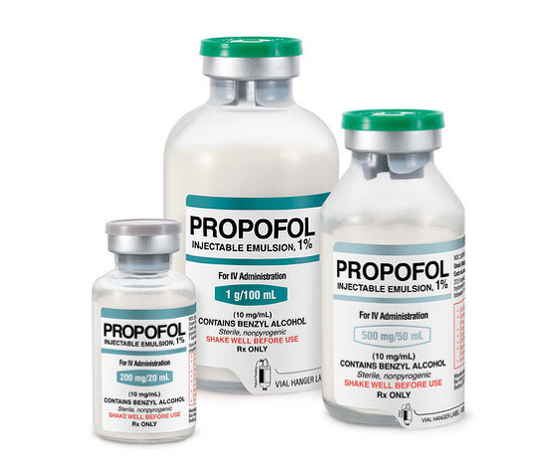
Propofol
This is probably the drug you have heard of the most.
Propofol is the most widely used intravenous anesthetic, acting quickly and wearing off very fast as well.
Its sedative effect appears within seconds after injection, and the time to wake up from anesthesia is short, which makes recovery after surgery relatively fast.
However, when used alone, it does not sufficiently suppress pain, so in procedures involving pain it is often used together with other drugs.
Because of its pharmacologic mechanism, it is a drug that lasts about 3 to 10 minutes, so if it is not maintained at a high concentration, pain may be felt.
In many cases, a high dose of propofol is first administered, local anesthesia is then applied to the necessary area, and the surgery is performed.
Also, when people hear propofol, they often think of its addictive potential.
Since the first report of propofol addiction in 1992, evidence suggesting the possibility of propofol dependence has been presented.
The reason propofol can be addictive is dopamine.
Dopamine is one of the neurotransmitters in the central nervous system and affects behavior, motivation, sleep, mood, recognition, learning, and attention.
Propofol increases dopamine concentration in the nucleus accumbens of the brain. This area plays a key role in the reward system, and as a result, tolerance develops to the amount of substance taken. This response is commonly observed in people addicted to alcohol or other drugs.
After receiving propofol and waking up, patients feel refreshed and as if they slept well, without feeling pain. Because of this feeling, ordinary people are generally less likely to become interested in or become dependent on the drug.
However, in people who are prone to substance dependence, repeated use of propofol can lead to addiction.
Therefore, propofol must always be used with great caution.
Ketamine
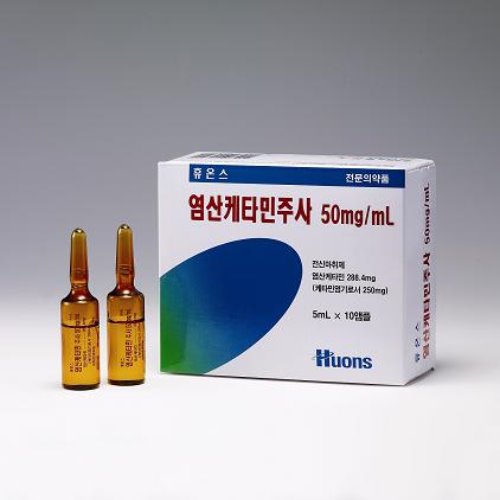
Ketamine
Ketamine has a strong analgesic effect and produces a unique dissociative anesthetic action.
In other words, the patient experiences a state as if they are cut off from the surrounding environment, with both sedative and pain-relieving effects.
As mentioned earlier, propofol has no pain-relieving effect, so in many plastic surgery clinics it is often mixed with ketamine.
When used together with propofol, the anesthetic effect is maintained more stably, and it is especially useful for patients with low blood pressure or those for whom propofol alone is insufficient. However, in some patients it may cause hallucinations, so caution is needed.
Side effects of ketamine may include mild headache, dizziness, drowsiness, increased salivation, and nausea after use.
If these side effects appear frequently, ketamine should be used carefully.
Midazolam
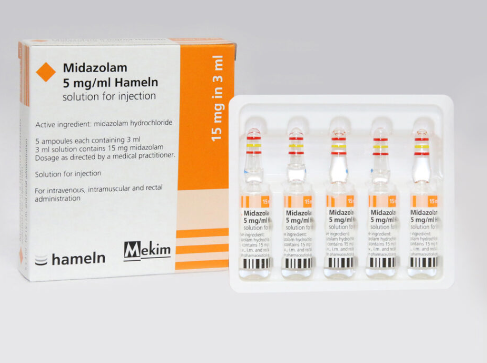
Midazolam
Midazolam is a sedative in the benzodiazepine class that induces sleep and reduces anxiety.
It acts quickly and lasts longer than propofol, so it is used for sedation before endoscopic examinations or surgery.
However, because it may suppress breathing, the patient’s condition must be closely monitored when used in high doses.
In the case of propofol, people with strong alcohol tolerance often do not sedate well, so it is sometimes mixed with midazolam.
Etomidate
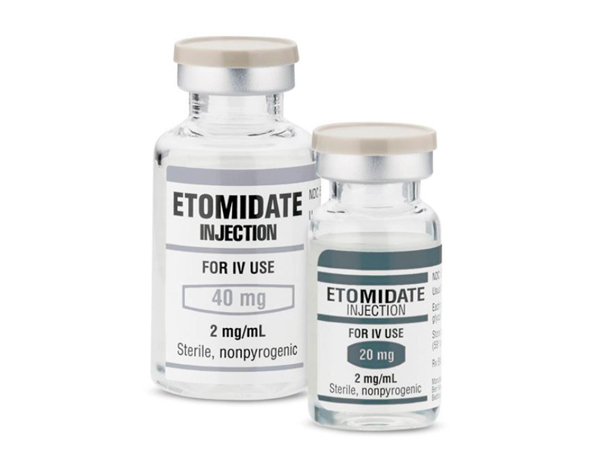
Etomidate
Etomidate is a non-barbiturate general anesthetic used to induce general anesthesia.
It acts on GABA receptors, which transmit inhibitory signals in the brain, increasing the central nervous system–suppressing effect.
Its anesthetic effect lasts for an extremely short time, has little impact on the cardiovascular system, and because its mechanism of action is similar to propofol, it is sometimes classified as a propofol-like agent.
However, etomidate is not classified as a psychotropic drug.
Compared with propofol, it is more likely to cause respiratory depression or a drop in blood pressure, so it is considered a medication that requires great caution.
It is also a drug that suppresses central nervous system function and causes loss of consciousness and perception. When administered, the patient cannot feel pain, and compared with propofol, there are very few cases in which patients feel pain and move.
Precedex
Precedex
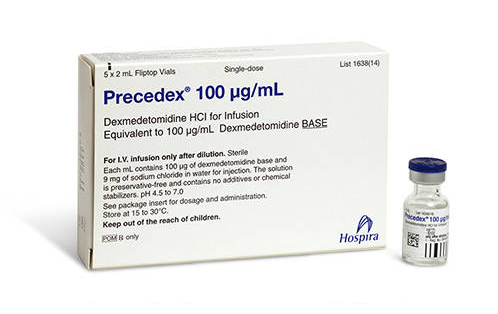
Precedex is one of the drugs that has recently attracted attention in sedation, and it acts on the α-2 adrenergic receptor to induce a smooth and natural sedative effect.
Unlike propofol, it carries a lower risk of respiratory depression, so it can create a safer sedated state, and it also has the advantage of allowing the patient to remain relatively comfortable when waking from anesthesia.
Precedex can be a suitable alternative, especially for patients with sleep disorders or patients for whom propofol alone is insufficient.
However, because it tends to lower blood pressure, careful use is needed in patients with hypotension.
Why does sedation not work well?
Due to differences in drug metabolism speed, patients who metabolize propofol quickly in the liver may experience a shorter or weaker anesthetic effect.
Even when the same dose is administered, the effect of anesthesia can differ depending on an individual’s nervous system responsiveness.
If anti-anxiety medications, sleeping pills, or alcohol are used frequently, tolerance to propofol may develop.
Is there a way to address weak sedation?
Sedation is a safe and effective anesthetic method, but the effect of the medication can vary from person to person.
Using Precedex, midazolam, ketamine, and other drugs together with propofol can strengthen the anesthetic effect.
Recently, methods that combine drugs such as Precedex to maintain a smoother and more stable anesthetic effect are also being used, so for patients for whom propofol does not work well, it is important to consider nervous system sensitivity, drug metabolism speed, and whether they are currently taking other medications, and to choose the anesthetic method that is most suitable for them through sufficient consultation with medical staff.
You do not need to know and memorize all of the medications, but if you read through this once, it may help you understand what drugs are used during sedation and prepare for surgery.
I hope today’s column was also helpful.
Thank you.