Hello, I’m Dr. Jo Hyun-woo of Ipmyeong Plastic Surgery.
Winter has already passed, and March has arrived with warmer weather. This winter seemed to go by especially quickly.
The hospital also recently relocated, and we opened a new dermatology clinic, so it feels like we’ve been extremely busy.^^
Today, I’d like to talk about the secondary angle that can appear after chin surgery.
When patients want only chin surgery, they often worry a lot about the secondary angle that may appear after the operation.
In principle, if only chin surgery is performed, a secondary angle is unavoidable.
However, it can be refined so that it is hardly visible. Even so, there are still cases where some degree of secondary angle remains no matter how carefully it is refined. I’ll explain this with examples from each type of surgery.
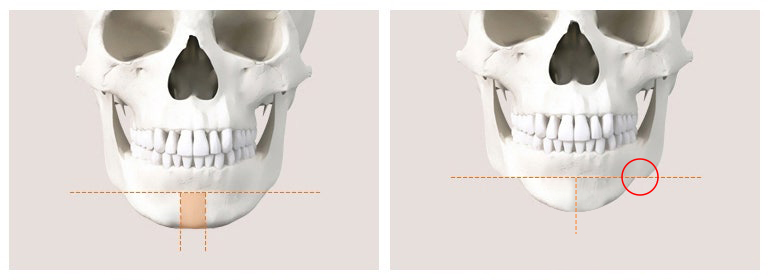
T-osteotomy surgery
T-osteotomy surgery
As shown in this illustration, when the bone is brought together, a remaining secondary angle is unavoidable.
That is why I usually remove these secondary angles by cutting or shaving them down.
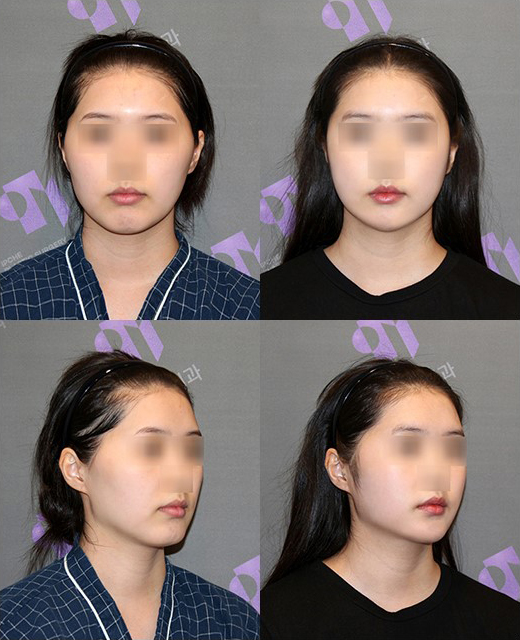
This patient had the chin made slimmer through T-osteotomy surgery.
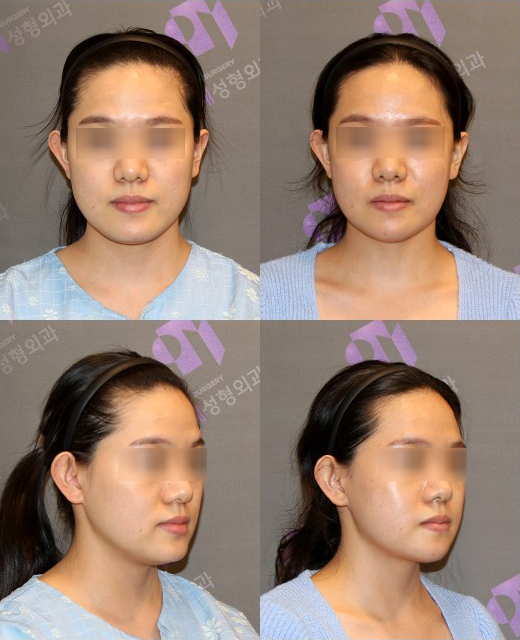
This patient had the chin moved backward through T-osteotomy surgery.
If you look at the before-and-after photos, some patients show almost no step-off, while others show a slight one.
Even with T-osteotomy surgery, the type of step-off that appears differs depending on whether the chin is moved forward or backward.
From my experience over many years of surgery, if T-osteotomy is performed and the chin is moved forward or simply brought together, the secondary angle is barely noticeable.
However, the situation is a little different when moving it backward.
When the chin is moved backward, the bone from the original square jaw area remains.
In such cases, even if the step-off is carefully refined, the shape can sometimes become slightly awkward.
Therefore, for patients who want backward movement, I recommend combining it with square jaw surgery so that a secondary angle does not form.
Some time ago, for personal reasons, I performed chin setback surgery on a patient who could not undergo square jaw surgery.
That patient was very disappointed because the chin looked square after surgery, and since then, I generally do not perform chin setback alone unless absolutely necessary.
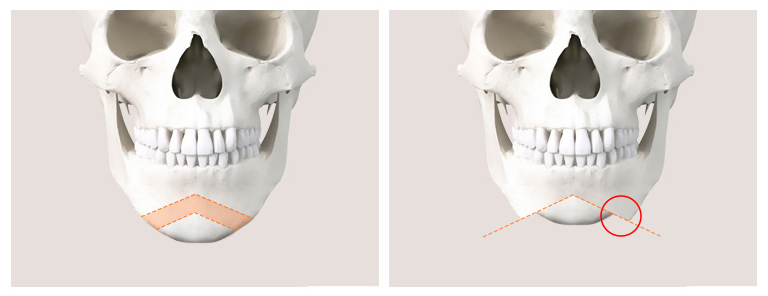
S-osteotomy (chin length reduction)
S-osteotomy (chin length reduction)
As with setback surgery, surgery to shorten the chin also involves a large amount of bone removal, so a secondary angle can form.
No matter how well the secondary angle is refined, some degree of it will still remain. I’ll show you with a panoramic image.
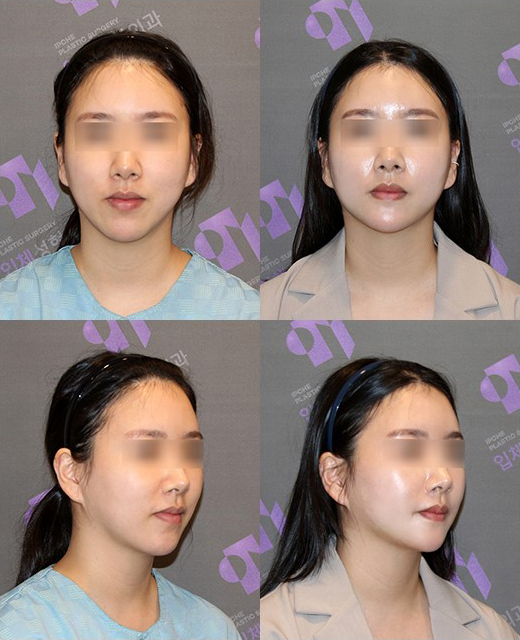
This patient had the chin length reduced through S-osteotomy.
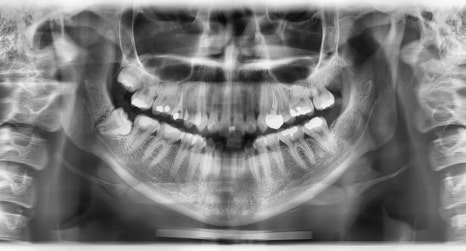
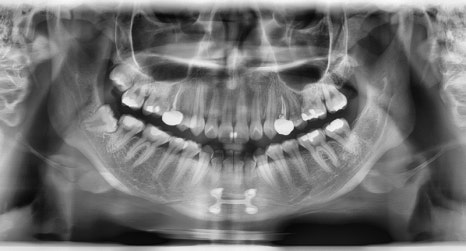
You can see that the length has been reduced well, but a secondary angle has formed where the square jaw bone begins.
At first, you may feel that the secondary angle does not matter, but if you keep touching it and noticing it over time, it can become a source of stress, so it’s good to keep that in mind beforehand.
V-osteotomy (lower chin margin resection)
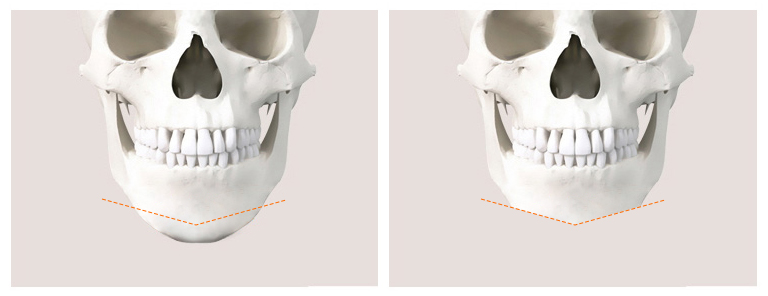
V-osteotomy (lower chin margin resection)
With this surgical method, it is possible to perform the operation without creating a secondary angle.
By cutting farther outward and reducing the amount accordingly, the secondary angle can be minimized to the point where it is barely noticeable.
However, the drawback of this surgery is that if it is performed without square jaw surgery, there is not much bone that can be removed.
If too much is removed, the secondary angle can become too pronounced.
Therefore, if V-osteotomy is performed on the chin alone, it is best suited for patients whose chin bone is particularly developed and pointed.
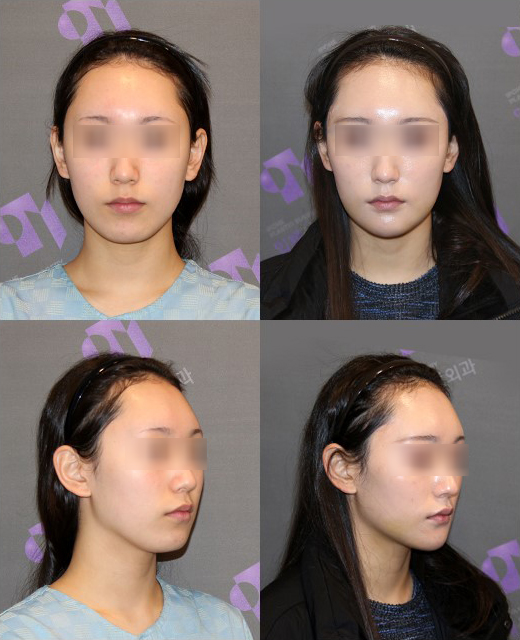
This patient had the chin made slimmer through V-osteotomy.
To put it simply, surgeries that reduce bone have a higher chance of causing a secondary angle.
If you are planning surgery that moves the bone backward or shortens the bone length, you should definitely consider the secondary angle. But when performing surgery that moves the bone forward, the secondary angle generally does not become noticeable enough to be a concern.
So far, we’ve looked at the secondary angle that can appear after chin surgery. Surprisingly, many people are troubled by this issue.
If you proceed with chin surgery alone simply to reduce cost, you may later need another surgery because of the secondary angle. So before surgery, it may be a good idea to think carefully about how much of a secondary angle might remain.
Of course, the degree to which a secondary angle forms also depends on the shape of the bone, so if you have surgery after 충분한 상담, you are more likely to get a better result. I hope today’s post was helpful.
Thank you.