Hello, I’m Director Heo Jae-won of Ipchaek Plastic Surgery.
Many people naturally think of facelift or lifting surgery as an operation that pulls the face upward when they hear those words.
However, from the perspective of a plastic surgeon who actually performs facelift surgery, this perception needs to be corrected.
Lifting surgery is not a pulling operation. I’ll explain what I mean in two parts.
The starting point and the destination are different.
First, anatomically speaking, facial sagging usually occurs at the front of the face.
Nasolabial folds, jowls, and sagging in the front cheek area are the changes people notice first when they look in the mirror.
However, the incision line for surgery usually begins in front of the ear.
In other words, the area that needs to be corrected is at the front of the face, but the surgery starts from the side of the face. It is a contradictory structure.
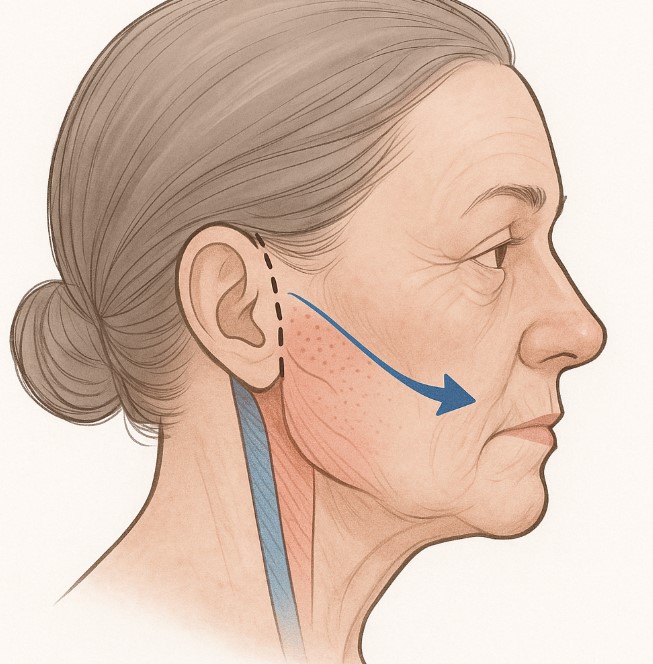
Because of this, the surgery must, so to speak, tunnel forward from in front of the ear to safely reach the problem area at the front of the face.
It must avoid the structures that need to be avoided while still 반드시 reaching the destination. This is a difficult technique and an area where know-how is essential.
If there is not enough experience and the surgeon fails to avoid the structures that should be avoided, or if fear prevents them from reaching the destination and they stop halfway, side effects or insufficient results will occur.
Do not pull; reduce.
In the early days, many doctors tried to obtain results by partially dissecting only and pulling from the midpoint without reaching the destination.
This seemed to produce good results, but the effects often disappeared within a few months. The reason is simple.
Our skin is a tissue that responds to pulling force by stretching.
This is clearly seen in pediatric plastic surgery cases using tissue expanders.
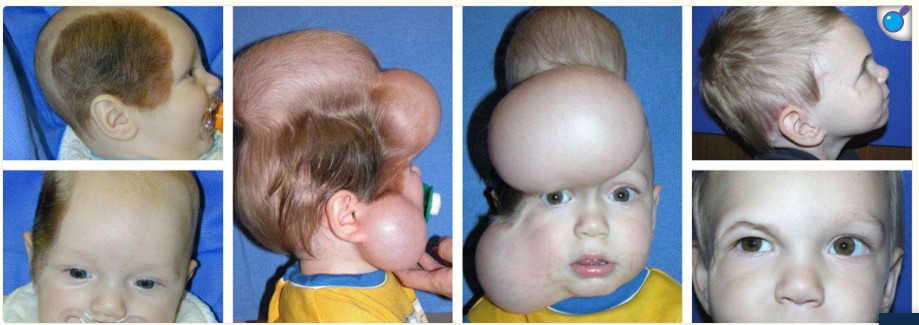
(Zöllner, A.M., Buganza Tepole, A., Gosain, A.K. et al. Growing skin: tissue expansion in pediatric forehead reconstruction. Biomech Model Mechanobiol 11, 855–867 (2012))
When constant tension is applied continuously through a tissue expander, the skin produces new cells and truly stretches.
In other words, if you try to solve facial sagging simply by pulling, the result will only be temporary, and the skin will adapt to the tension and stretch again.
Therefore, facelift surgery is not simply an operation that pulls the skin; it is an operation that reduces excess skin and sagging soft tissue.
It is similar to forcing an ill-fitting rubber glove onto your hand.
At first it may seem to fit, but over time the glove will tear or only the pulled parts will stretch.
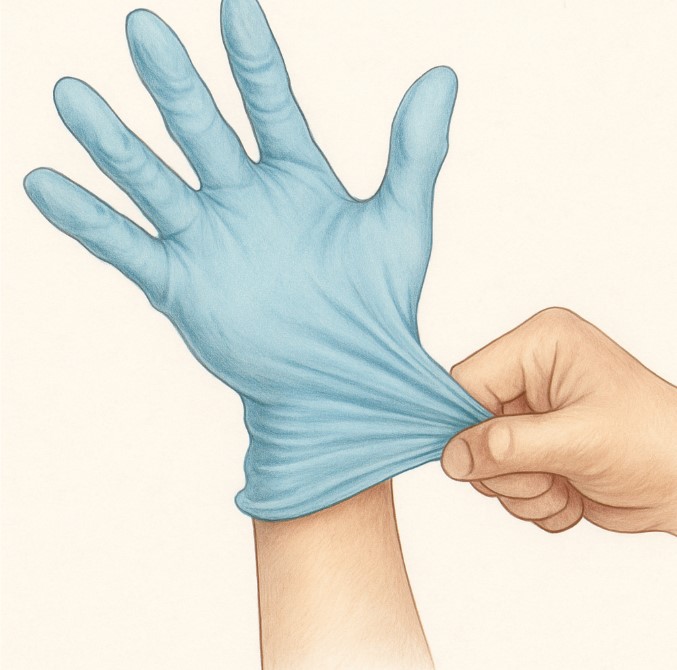
In other words, only a method that reaches the excess portion and reduces it by exactly the necessary amount can produce a result that lasts.
In the West, this procedure is referred to by two terms.
One is Facelift, meaning to pull the face upward, and the other is Rhytidectomy, meaning to remove wrinkles.
Personally, I think the latter concept explains the essence of facelift surgery more accurately.
As a board-certified plastic surgeon, this reflects the clinical experience I have gained while performing surgery, anatomical facts, and the scientific insights obtained from papers.
If you are interested in more detailed information, you may also refer to the blogs I have written myself.
If you have any questions, please feel free to leave a comment at any time, and I will answer sincerely.
Thank you for reading.