Hello, I’m Dr. Jo Hyun-woo of 입체성형외과.
Lately, when I consult with patients, some of them ask, “Which contouring procedure should I get? Or can I have contouring 5?”
I was also surprised to hear that there were up to five contouring procedures, so I looked it up online and, with help from ChatGPT, I’ll try to organize it here.
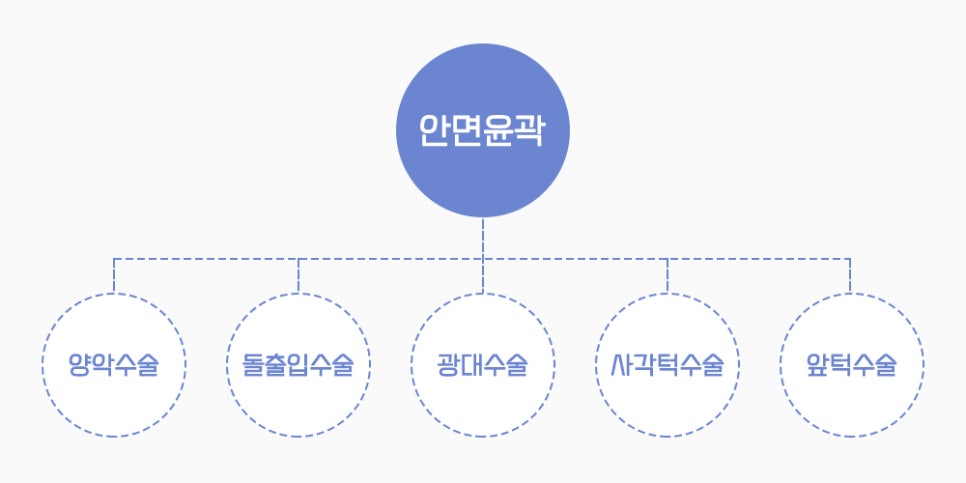
When people say facial contouring surgery, they may be referring broadly to surgery that deals with the bones of the face.
This can include double-jaw surgery and protruding mouth surgery, but recently, facial contouring surgery is often discussed separately from orthognathic surgeries such as double-jaw surgery and protruding mouth surgery, which require correction.
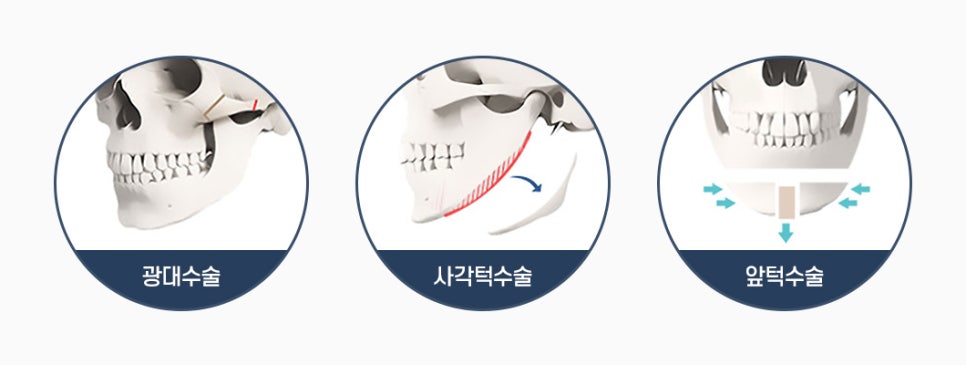
As shown in this diagram, it currently seems to be divided into three types: zygoma surgery, square jaw surgery, and chin surgery.
So what are the so-called contouring 4, 5, and 6 procedures that hospitals talk about?
I looked into this with the help of ChatGPT.
- Hospital A (a representative contouring specialty hospital) focuses on contour line correction
This combination aims for 360-degree contour improvement, considering the front, side, and 45-degree angles.
- Hospital B (a hospital that emphasizes natural results) focuses on minimal osteotomy and soft contours
It includes not only bone surgery but also fat manipulation to complete a soft contour.
- Hospital C (a hospital that emphasizes frontal improvement) focuses on achieving a small, attractive face from the front
-
45-degree zygoma reduction surgery
-
Chin osteotomy (including W osteotomy)
-
Mandibular body cortical bone removal
-
Square jaw resection
-
Lower jawline resection
-
Front zygoma reduction or temple line refinement
It includes smaller areas such as the 45-degree zygoma and front zygoma to further enhance frontal improvement.
These are explained using examples from three hospitals, but it is said that most of these are simply marketing terms used by hospitals.
In my view as well, it seems right to think that all of these procedures are ultimately included within the basic contouring 3 procedures.
In addition to zygoma surgery, square jaw surgery, and chin surgery, another procedure that may be performed is cortical bone osteotomy.
I have introduced cortical bone shaving many times through my columns, and personally, I think there are many patients who can benefit greatly from it.
In particular, I think cortical bone shaving should definitely be included for its frontal effect.
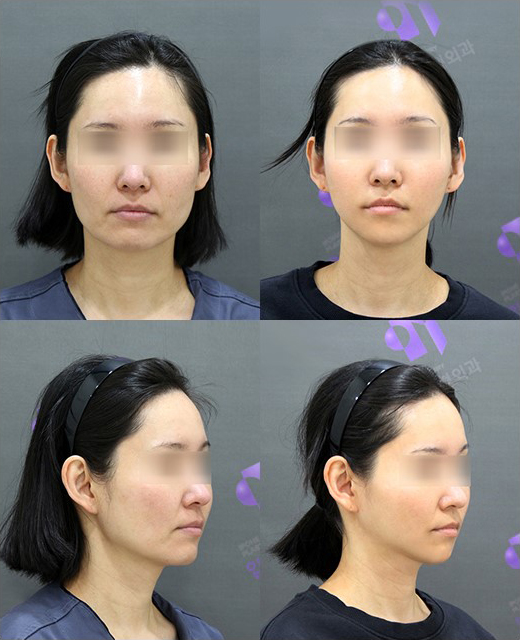
Patient who underwent square jaw surgery, cortical bone shaving, and masseter muscle reduction surgery
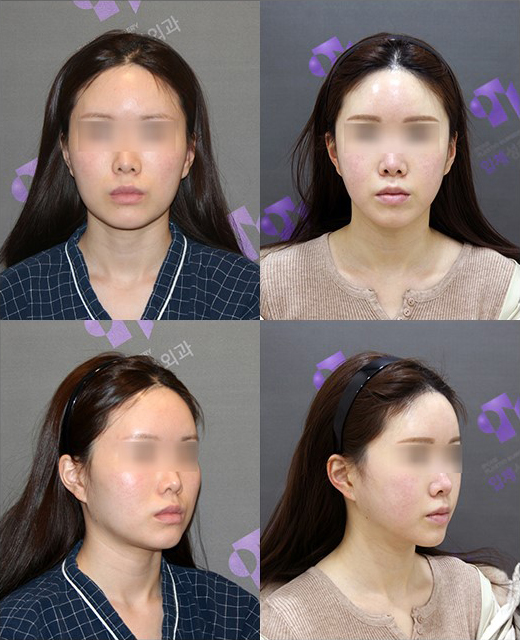
Patient who underwent zygoma surgery, square jaw surgery, cortical bone shaving, masseter muscle reduction surgery, and chin surgery
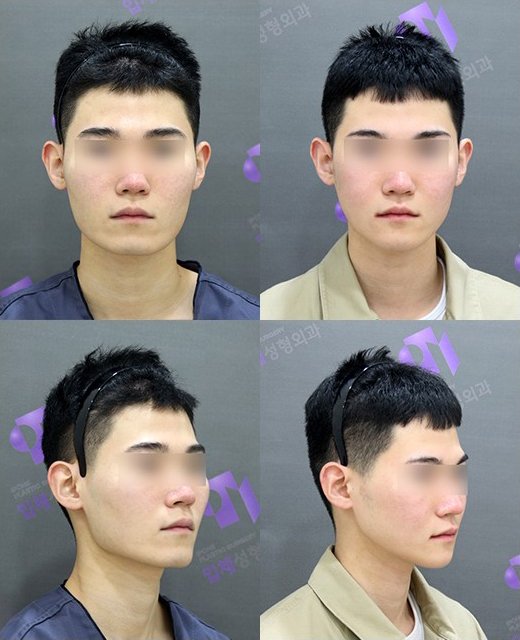
Patient who underwent zygoma surgery, square jaw surgery, cortical bone shaving, and chin surgery
Cortical bone shaving is somewhat technically demanding and requires a lot of experience.
It must be performed very carefully so as not to injure the nerve by accurately identifying the position of the nerve line. In my case, if the nerve line is attached too close to the cortex, I may recommend cortical shaving to the patient.
Therefore, I strongly recommend having the procedure done at a place with plenty of experience.
Another additional procedure is masseter muscle reduction surgery.
Masseter muscle reduction surgery is also likely a procedure that people may have mixed opinions about.
There are papers saying that the muscle recovered after masseter muscle reduction surgery, and on the other hand, there are papers saying that the muscle was effectively reduced.
If I combine and think about several papers, cutting the bone of the square jaw reduces the bone, and the reduced nutrients coming from the bone may also reduce the muscle. If the masseter muscle is also reduced together, the effect may be doubled.
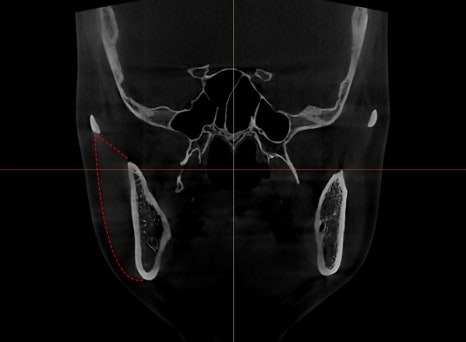
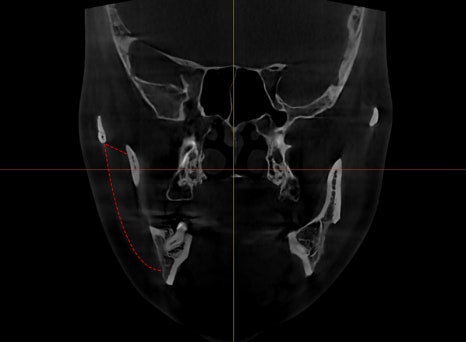
Reduced masseter muscle volume on CT after masseter muscle reduction surgery
If you compare muscle volume on CT in patients who actually underwent masseter muscle reduction surgery, you can see that the masseter muscle has decreased like this.
Another additional procedure is liposuction.
In general, people with a lot of facial fat are more likely to have a reduced effect from contouring surgery.
No matter how much the inner bone is reduced, if there is too much fat on the outside, the result will not show well.
In such cases, we first recommend dieting together, and sometimes also recommend liposuction.
If liposuction is performed, the effect of contouring surgery can be further enhanced.
Finally, there is the double chin muscle tightening procedure that I mentioned recently.
Just as a balloon that was full becomes wrinkled when the air comes out, our skin also develops excess tissue, which appears as sagging.
In the case of the mandible, a double chin often becomes more pronounced, so performing double chin muscle tightening surgery can help prevent this in advance.
Today, I talked about what the surgeries called contouring 4, 5, and 6 are.
It seems that in most cases, these are just the basic contouring 3 procedures with added options or techniques that are often performed together.
If you understand in advance the additional procedures beyond zygoma, square jaw, and chin surgery, it may help you when consulting and undergoing surgery.
Thank you.