Hello, I’m Dr. Jo Hyun-woo of 입체성형외과.
Since I became more interested in cheek hollow correction a few years ago, I have been performing these surgeries.
In the first blog I posted, I talked about why cheek hollows occur and said that cheek hollowing is not caused by zygoma reduction surgery.
After that, many patients came in—some had not undergone zygoma surgery, and many others had—so I have performed a lot of cheek hollow correction surgeries.
That is why the blog I posted said that it is enough to aim for about 80% improvement in cheek hollow correction to feel satisfied.
However, if you read the blog above, I mentioned that there are patients whose improvement is only about 10%, not even 80%, after cheek hollow correction.
In many cases, the non-incision method does not resolve the problem well no matter how much space we try to create between the ligaments, so the surgery I recommended was incision-based cheek hollow correction.
Today, I will talk about cheek hollow correction using the incision method.
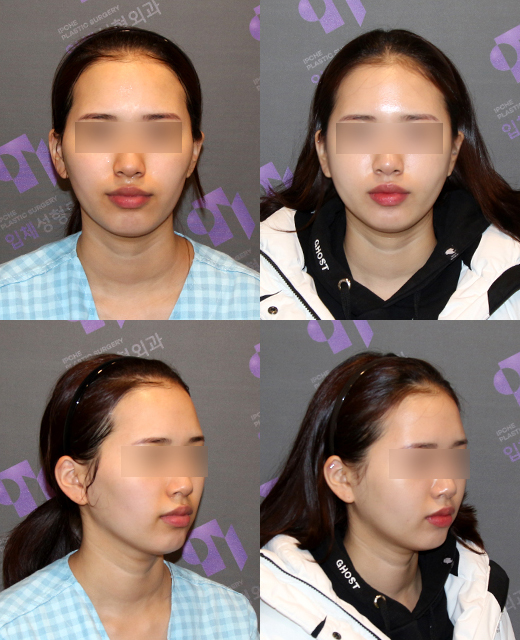
Case 1 with a slight hollow remaining after cheek hollow correction
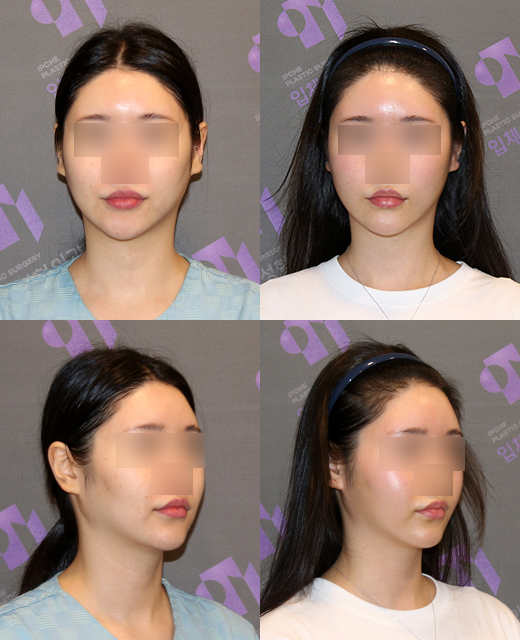
Case 2 with a slight hollow remaining after cheek hollow correction
As you can see, there are patients who undergo cheek hollow correction but do not improve as much as expected.
In fact, these are the kinds of patients for whom we could predict to some extent even before surgery that the ligaments were holding firmly.
So I devised a new approach: making an incision and more boldly releasing the ligaments.
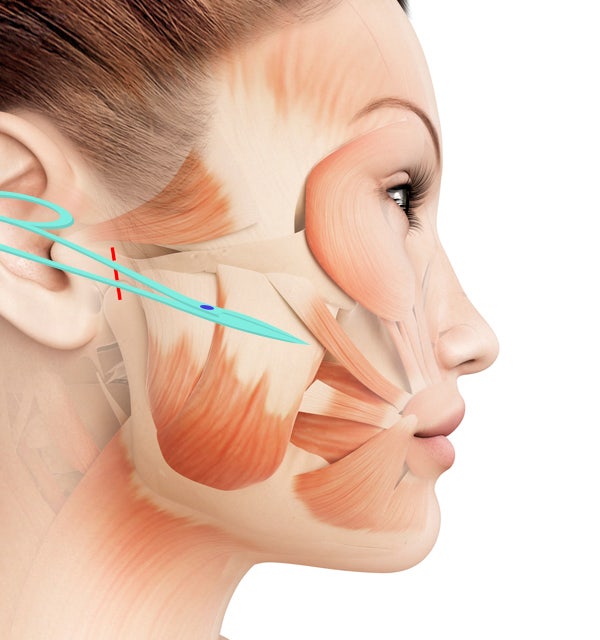
Cheek hollow correction (incision method)
If you make an incision of about 0.5 cm behind the sideburn area and dissect inward, you can feel the firmly attached ligaments and stretch them more aggressively.
This method is similar to a lifting procedure.
When I performed the surgery using this incision method, I was able to see a clearly better result.
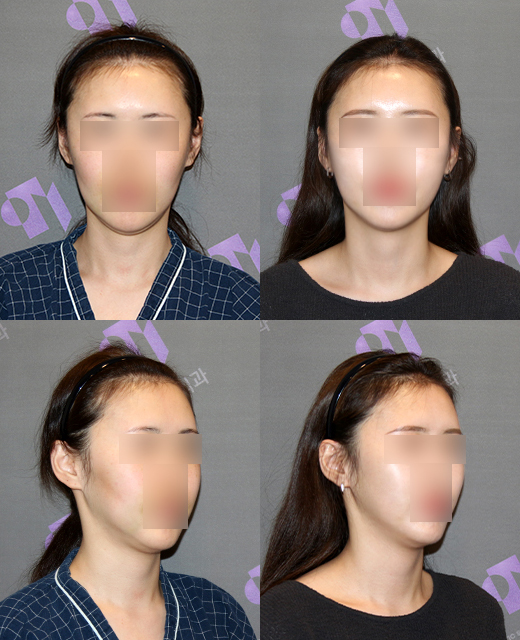
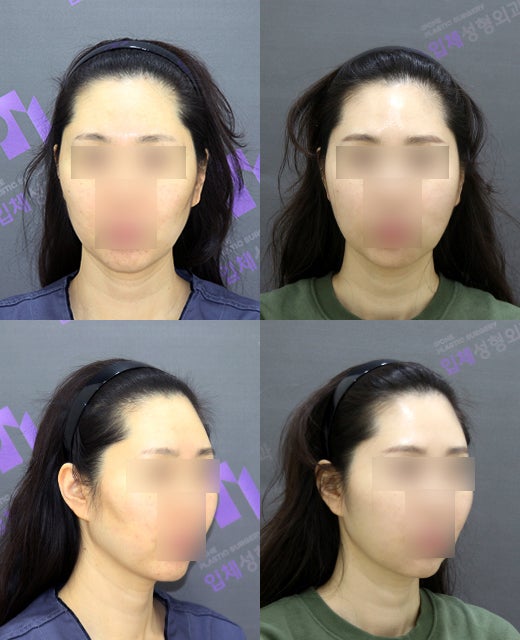
This patient visited because the cheek hollow had become more severe after zygoma reduction surgery at another hospital 7 years ago. This is 2 months after incision-based cheek hollow correction at our clinic.
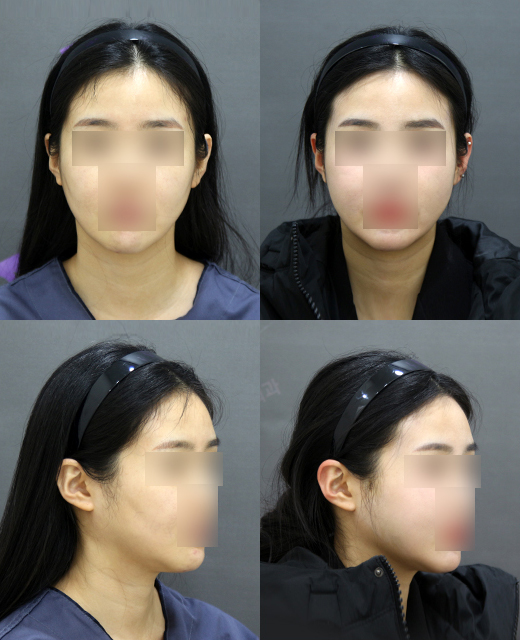
This patient wanted only cheek hollow correction. This is 1 month after incision-based cheek hollow correction.
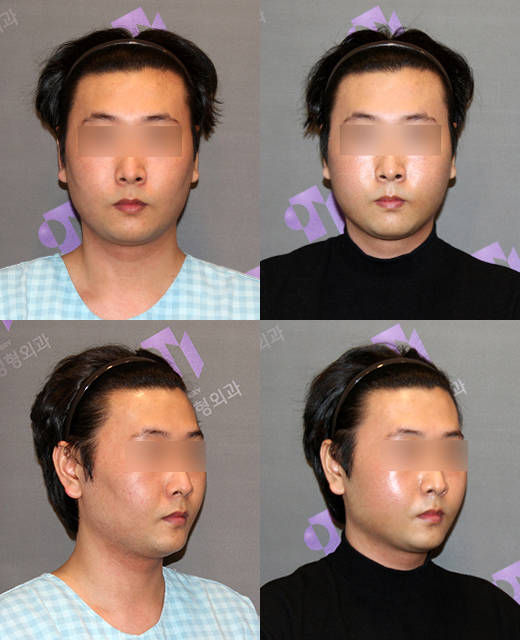
This patient visited because of concerns about cheek hollows. This is 7 days after incision-based cheek hollow correction.
This patient had undergone zygoma reduction surgery 4 months earlier and wanted cheek hollow correction. This is 6 weeks after incision-based cheek hollow correction.
In the four patients shown above, I think you can see that there were firmly fixed ligaments, so the non-incision method would inevitably have had less of an effect.
With this incision method, the scar is actually well hidden and barely visible. Also, if the patient has had zygoma surgery, the same sideburn incision is used, so there is no burden related to the incision.
The main non-major complication I explain to patients when performing this surgery is that bruising can occur.
When releasing the ligaments, bleeding often happens suddenly, and if you look at anatomy books,
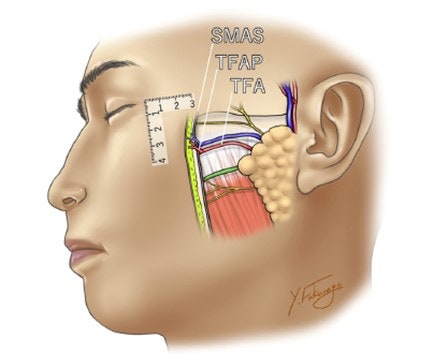
There is a blood vessel pathway passing through the exact area where this ligament is attached.
In fact, it is not a major blood vessel that bursts, but small vessels branch off from larger vessels and run toward the skin.
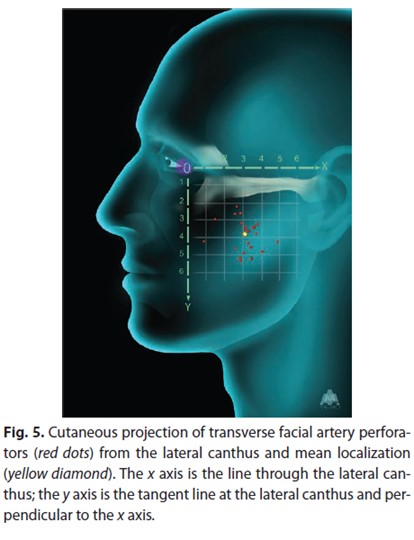
According to the paper, the red dots indicate areas where blood vessels are densely distributed.
Even I was surprised after seeing this paper because there are so many tiny blood vessels.
Because these vessels can be damaged and cause bleeding and bruising, I explain to patients that bruising may occur and that they should be aware of this.
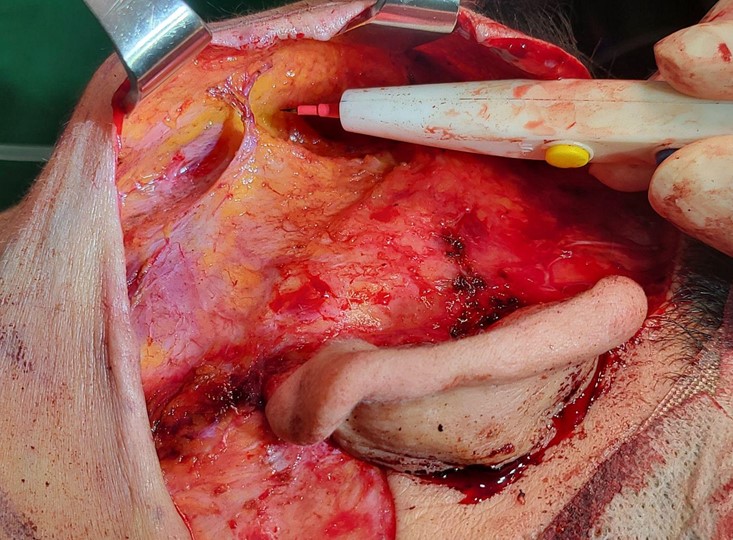
When performing an actual lifting procedure, you can see thick blood vessels rising from the base of the skin toward the skin like this.
Of course, we are not cutting these vessels during cheek hollow correction, but caution is still necessary.
Other than cases where blood vessels are damaged and significant bleeding occurs,
the conclusion so far is that cheek hollow correction using the incision method is more effective than the non-incision method.
However, I do not recommend the incision method for every patient.
If the ligaments are somewhat loose, the non-incision method can still achieve about 80% of the desired effect, so through sufficient consultation before surgery, we can decide which method would be best.
Today, I talked about incision-based cheek hollow correction.
By operating on many patients, I have developed my own know-how, and I feel proud that I can help patients who are concerned about cheek hollows. I hope today’s content can also be of great help to you.
Thank you!