Hello. I am plastic surgeon Hyunwoo Cho.
Recently, one of the questions I hear frequently from patients is:
"Doctor, would contouring surgery alone be enough for me? Or should I get a lift as well?"
This question may seem simple, but in fact it is a very important and sensitive one.
Because every patient has a different facial bone structure, skin elasticity, amount of fat, and soft tissue condition, there is no single correct answer.
Today, I would like to explain in more depth when facial contouring surgery and facelift surgery may be needed together.
The Difference Between Facial Contouring Surgery and Facelift Surgery
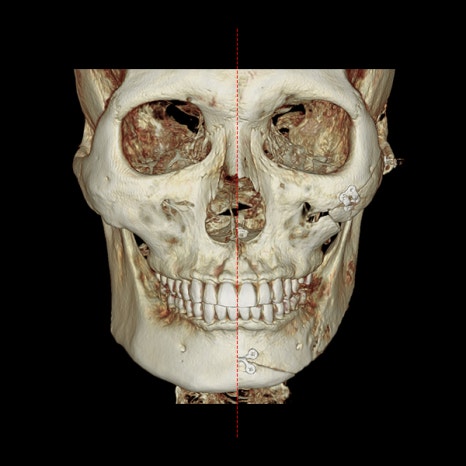
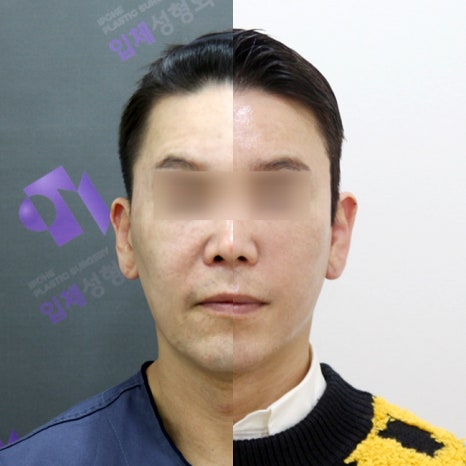
Facial contouring surgery reshapes the bone structure of the face, such as the cheekbones, chin, and square jaw, to create a more balanced and three-dimensional face shape.
Many people seek it out when they want to improve a face that looks large or angular.
On the other hand, facelift surgery (Face Lift) is mainly performed to address sagging skin and soft tissue caused by aging and gravity.
By lifting up to the SMAS layer, it provides results that are on a completely different level from simple skin-tightening lifts.
The two surgeries have different purposes, but in some cases both are needed. Why is that?
Why Skin Sagging Can Occur After Facial Contouring Surgery
Because contouring surgery involves shaving down bone, the skeletal volume of the face is reduced compared with before surgery.
However, soft tissues such as skin, fat, and muscle cannot suddenly contract to match the reduced bone structure.
This is especially true if the patient is older or has decreased skin elasticity.
As a result, after surgery, the skin can lose firmness and sag downward, a phenomenon commonly referred to as cheek sagging or a weakened jawline.
In such cases, there are limits to how much facial contouring surgery alone can make the face smaller and more refined.
When Should the Two Surgeries Be Considered Together?
- Patients in their 40s or older
In this age group, elastic fibers in the skin are significantly reduced.
Because the skin left after contouring surgery does not contract naturally, adding a facelift can help achieve a more natural and firm result.
- Faces with a history of weight loss or little facial fat
People with thin skin and little fat are more likely to lose soft tissue support and see it droop downward after the cheekbones or square jaw are reduced.
This may be accompanied by hollow cheeks or deeper nasolabial folds, and in such cases, a mini lift or mid-face lift can create a much more refined result.
Also, the thinner the skin, the more sensitively it reflects changes in the underlying bone, so whether to combine a lift has a major impact on the completeness of the result.
- People whose professions make the jawline especially important
For actors, broadcasters, instructors, and others who need a sharp facial line, bone contouring alone is not enough; the skin also needs to be tightened with a facelift to maintain a firm appearance.
For occupations that are especially sensitive to stage lighting or camera angles, the balance between contouring and lifting is very important.
Actual Studies and Reported Cases
Aesthetic Surgery Journal, 2017
A study of 82 women aged 40 and older found that the group that underwent SMAS lifting at the same time as contouring surgery had significantly higher scores in perceived rejuvenation and satisfaction than the group that had contouring surgery alone.

Journal of the Korean Society of Plastic and Reconstructive Surgeons, 2020
It was reported that, as a strategy to address reduced midface soft-tissue volume and decreased skin elasticity after contouring surgery, combining minimally invasive mid-face lift or lower face lift is recommended.
Plastic and Reconstructive Surgery, 2021
In a contouring-only group in which soft tissue sagging was left untreated, satisfaction was lower and revision surgery was relatively more common; particularly in cases with thin skin types and advanced aging, a clear imbalance in the results was observed.
Should the Surgeries Be Done at the Same Time, or Separately?
When performed at the same time
- When skin sagging is already clearly visible
- When you want to complete the recovery period all at once
- When you want to resolve everything in one surgery under general anesthesia
When performed in stages
- When you want to observe the skin condition after contouring surgery before deciding
- When the surgical burden is significant or you want recovery to be gradual
In actual clinical practice, it is also common to perform contouring surgery first, observe the recovery process for about 3 to 6 months, and then recommend a lift if it is judged necessary.
However, if the patient is already concerned about skin sagging, planning a combined surgery from the beginning is also a wise choice.
Frequently Asked Questions

Q. Doesn’t contouring surgery alone have a lifting effect?
A. Immediately after contouring surgery, swelling can create a temporary tightened feeling, but as time passes, sagging often becomes more noticeable.
This is especially true when skin elasticity is weak.
Q. Won’t there be a lot of scarring?
A. Facelift surgery uses incisions in less noticeable areas such as in front of and inside the ear, or within the hairline.
If postoperative care is done well, the scars are hardly noticeable.
These days, incision lines are designed more precisely, and recovery is also faster thanks to scar ointments and laser treatment, among other management.
Q. Isn’t recovery much more difficult with a combined surgery?
A. Since contouring surgery and facelift surgery often involve overlapping areas, if planned well, recovery can actually be faster than having the surgeries done separately.
However, swelling and bruising may last somewhat longer immediately after surgery, and 충분한 rest and cold compresses are needed.
Side Effects and Precautions
Combined surgery covers a wider range than either surgery alone, so thorough planning and the skillful performance of the procedure by an experienced specialist are necessary.
The main side effects and precautions are as follows.
- Swelling and bruising: Both contouring surgery and facelift surgery cause swelling and bruising, and they may last longer when the surgeries are done together.
In particular, bruising around the under-eye and cheek areas may last for more than 2 to 3 weeks, and cold compresses and wearing a fixation band are important.
- Risk of nerve injury: Contouring surgery is performed near the inferior alveolar nerve, and facelift surgery is performed near branches of the facial nerve, so a precise anatomical approach is needed during surgery.
There may be temporary sensory decrease, but most cases recover within a few months.
- Asymmetry and scarring: Right and left sides may look different immediately after surgery, and they naturally recover over time as swelling and soft tissue relaxation improve.
Incisions are made in less noticeable areas such as in front of the ear and inside the hairline, but depending on the individual's constitution, pigmentation or keloid scars may develop, so aftercare is essential.
- Understanding the duration of results: Lift surgery does not produce a permanent result; it slows the aging process and improves sagging.
It is usually maintained for 7 to 10 years, though this can vary depending on lifestyle habits.
Actual Surgical Cases
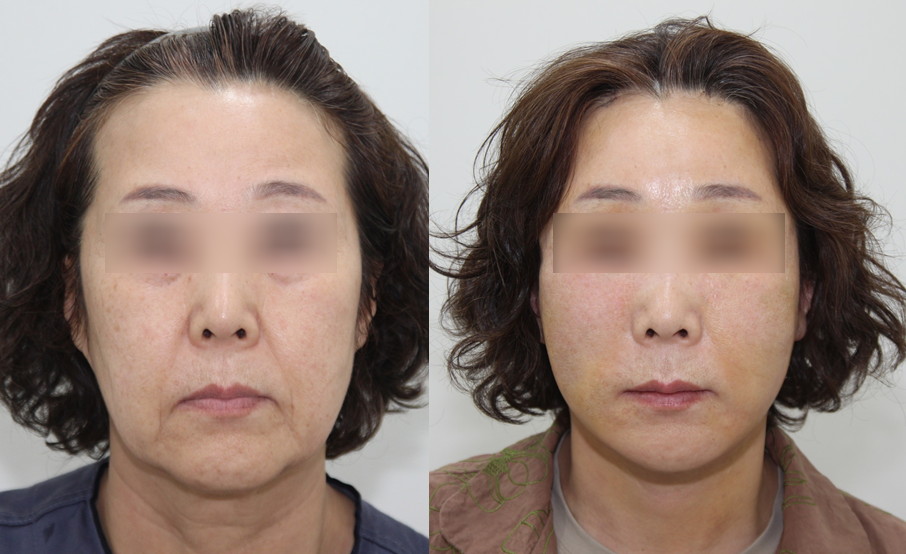
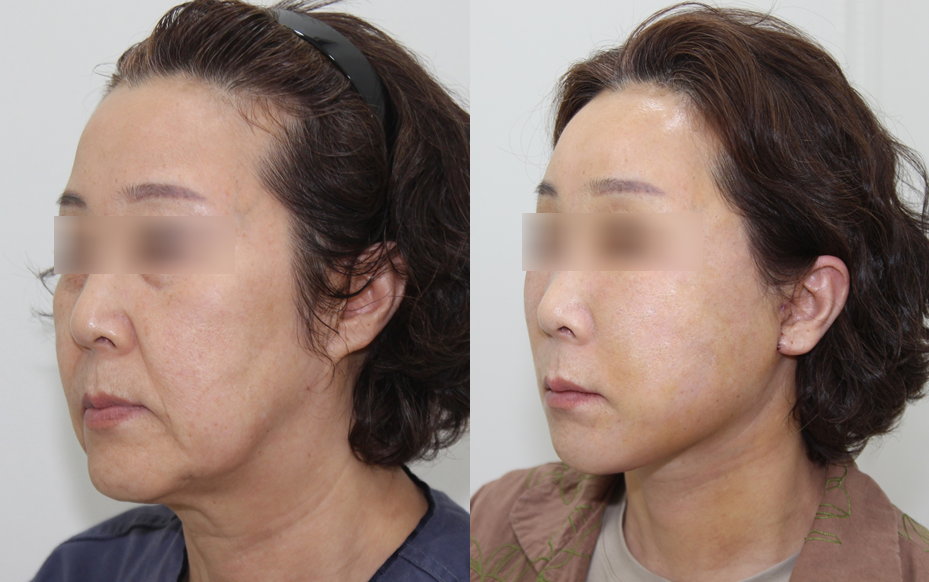
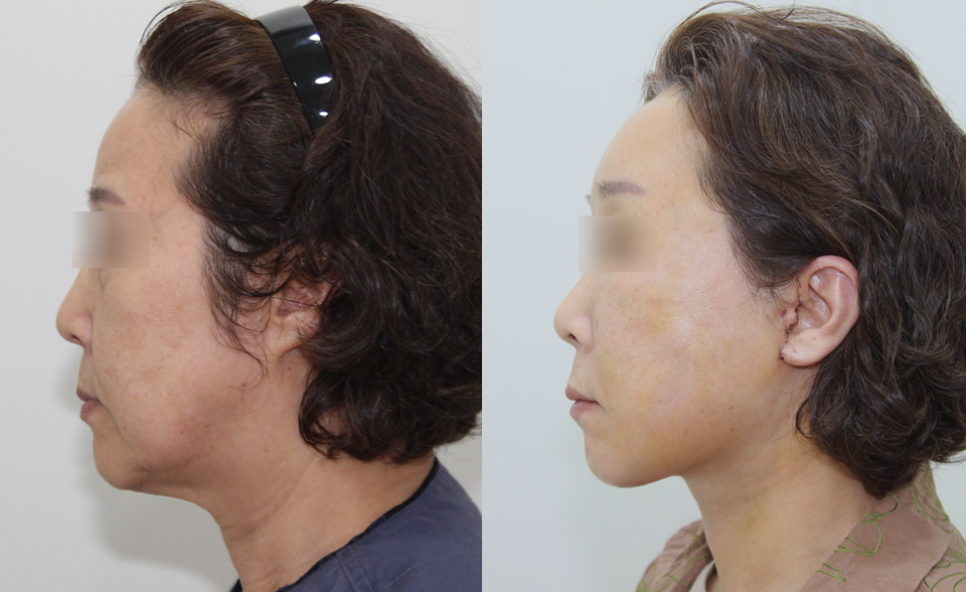
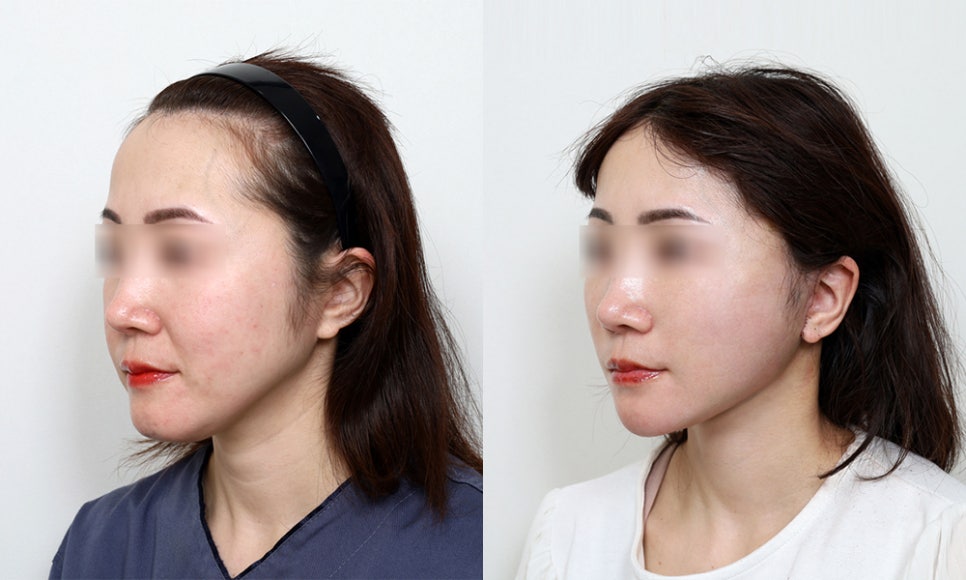
This patient lost weight through dieting, after which the face sagged and the cheekbones and jawline remained unnaturally prominent, leading to concerns about facial contouring.
By reducing the cheekbones and combining it with a mid-face lift, a natural and refined appearance was restored.
In particular, the patient reported feeling more confident at work and in outside activities.
Facial contouring surgery is a powerful way to fundamentally change the shape of the face.
However, simply reducing the bone does not automatically make the face look younger or more beautiful.
How the remaining skin and soft tissue are managed determines the result.
In other words, facial contouring surgery and facelift surgery are not competing procedures; they are partners that complement each other.
A surgery that emphasizes only one side may instead produce an unnatural result.
Because the procedures needed differ depending on each person's condition, it is most important to create a customized plan based on an accurate diagnosis and consultation.
If you understand the structure of the face and the aging process and take a systematic approach, you can achieve a much more stable and satisfying result.
Thank you.