Hello. I am plastic surgeon Heo Jae-won, who studies surgeries that make people look younger.
In my previous post, I looked at second- and third-generation lower blepharoplasty.
Today, I will explain the most advanced form of lower blepharoplasty, fourth-generation lower blepharoplasty, and the direction of its future development.
Fourth-Generation Lower Blepharoplasty: Expanded to Midface Lift
Fourth-generation lower blepharoplasty is not simply about treating the area under the eyes; it aims for three-dimensional restoration of the entire midface.
Why was a "fourth generation" needed?
In youth, the fullness of the cheek area in front of the cheekbone, often called "baby fat," is abundant, so the retaining ligaments are not clearly visible.
But as we age, this volume gradually shrinks and sags downward, and the retaining ligaments that were once hidden become visible and start to look like grooves.
In particular, the three retaining ligaments (tear trough ligament, orbital retaining ligament, zygomatic cutaneous ligament) correspond to the tear trough, lateral groove, and Indian fold, respectively.
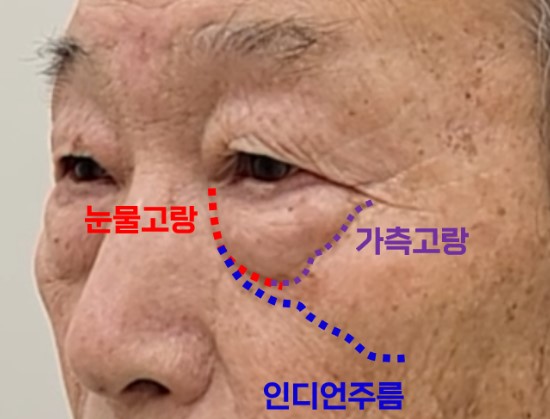
The key point of fourth-generation lower blepharoplasty is this.
-
Release the three major retaining ligaments of the midface
-
Separate the deep fat (SOOF, DNLF)
-
Reposition the two fat pads to their original cheek volume area
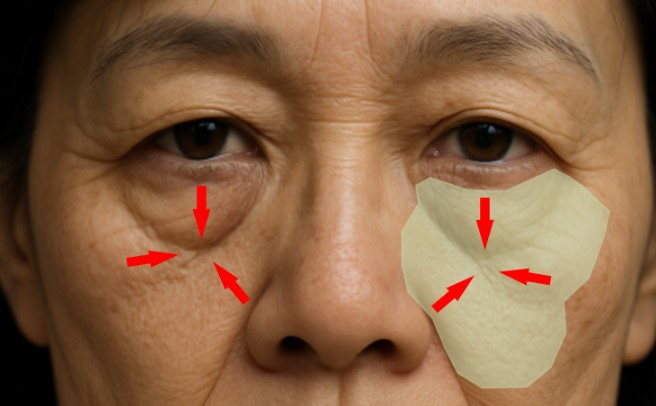
This is not simply a redistribution of under-eye fat; it is a three-dimensional lift that also includes the deep fat of the midface.
The midface refers to the area from below the eyes to the upper one-third of the nasolabial fold, and from below the eyes to around the alar base, meaning the "front cheek."
The range extends from the under-eye area to the cheekbone, the nasolabial fold, and the front cheek.
Simply put, it is the process of releasing all the grooves in the Y-shape and then gathering the three fat pads to the "center" where the three lines of the Y meet.
When fourth-generation lower blepharoplasty is organized anatomically:
• Under-eye fat: preserved + repositioned
• Orbicularis oculi muscle: preserved + suspended
• Three major retaining ligaments of the midface: all released
• SOOF and DNLF: separated and repositioned
As a result, the hollowed front cheek becomes fuller, the boundary between the eyes and cheeks becomes more natural, and the midface regains a more youthful contour.
It is especially effective for people like these:
• People with deep hollows under the eyes
• People whose front cheekbones have become flat and whose nasolabial folds have deepened
• People who felt that previous lower blepharoplasty did not provide enough natural volume
• People who felt that simple under-eye surgery was not enough
However, this surgery requires a high level of anatomical understanding and precise dissection and fixation techniques.
Because it is performed through a narrow incision, it is much more technically demanding than surgeries up to the previous third generation.
In addition, it requires basic knowledge and experience in lifting procedures beyond eye surgery.
Since a midface lift is also a type of facial lift, even doctors with extensive experience in eye surgery often feel a barrier when it comes to midface lifting.
Therefore, experience in both eye surgery and lifting surgery is necessary.
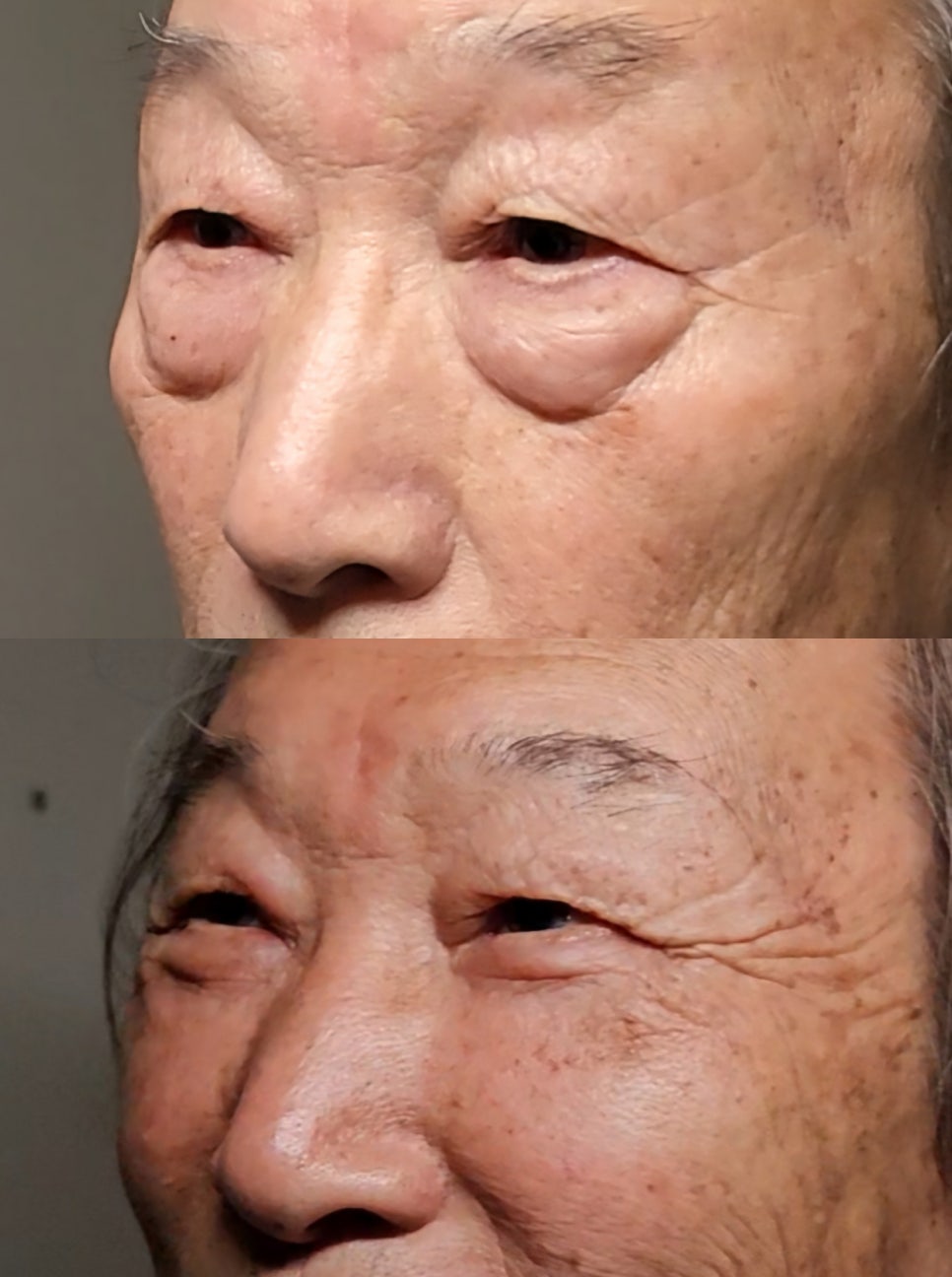
Lower blepharoplasty patient
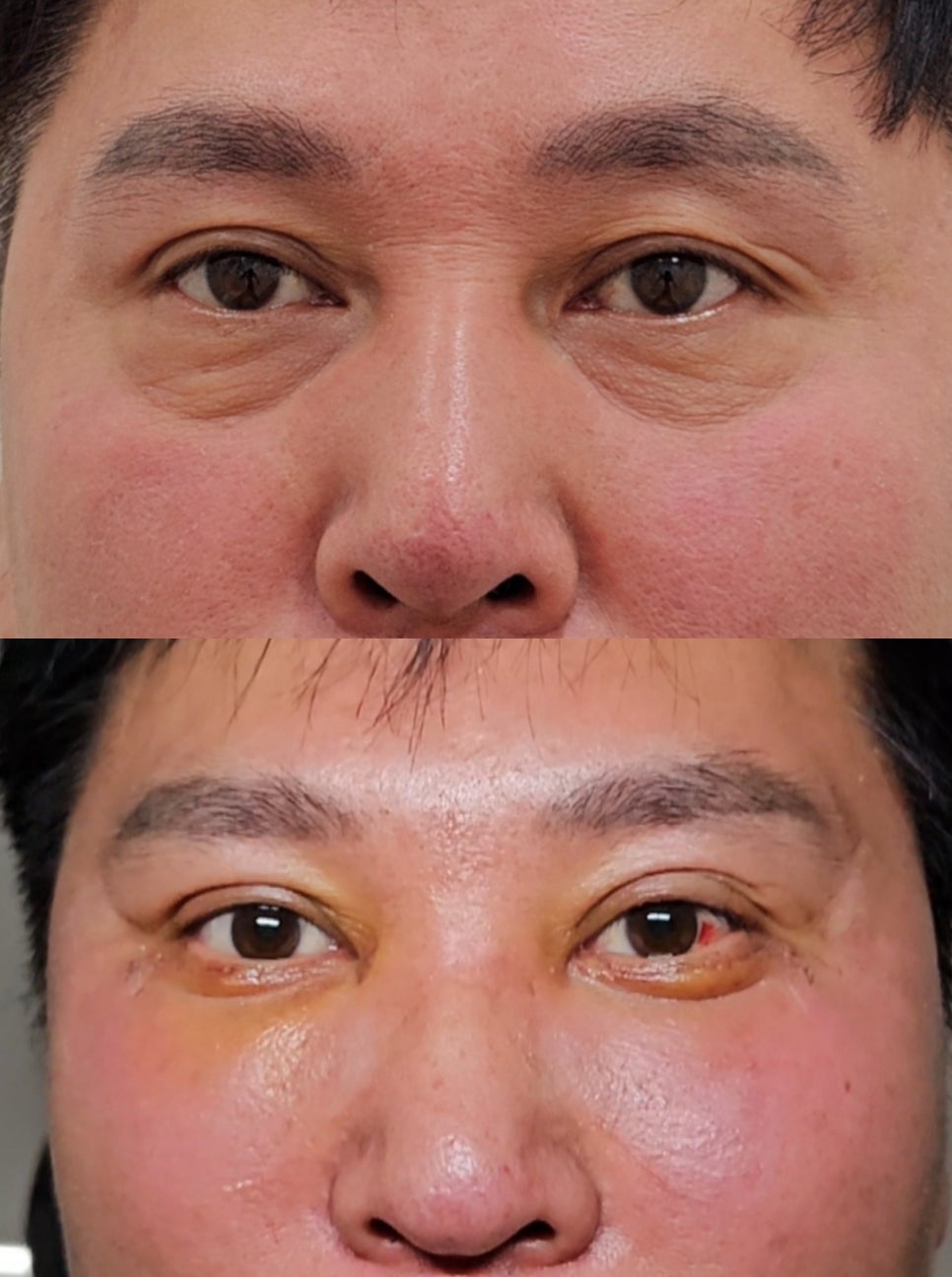
Lower blepharoplasty + midface lift patient
Fourth-generation lower blepharoplasty goes beyond simple cosmetic surgery under the eyes and makes three-dimensional restoration of the entire midface possible.
If you would like to read a more detailed post, please visit the link below as well.
Thank you for reading. Sincerely, Heo Jae-won, plastic surgeon.